INSPECTION FINDINGS · FROM OUR INSPECTION RECORDS
A venting problem can be visible even when no one has reported an operating complaint. Our records include a disconnected furnace exhaust found at reinspection, an open vent left at a missing water-heater location, heat damage where a flue met wood and heavy scaling at a wood-stove flue. Each required its own description because the operating circumstances were different.
The absent water heater is an important detail. That photograph does not show a running appliance exhausting through an open pipe. It shows an incomplete installation that needed correction before equipment could be installed and operated. By contrast, the furnace reinspection documented a vent joint that had come apart and a recommendation to keep the furnace out of service until repaired and checked.
Photographs and documented observations
A flue left hanging open
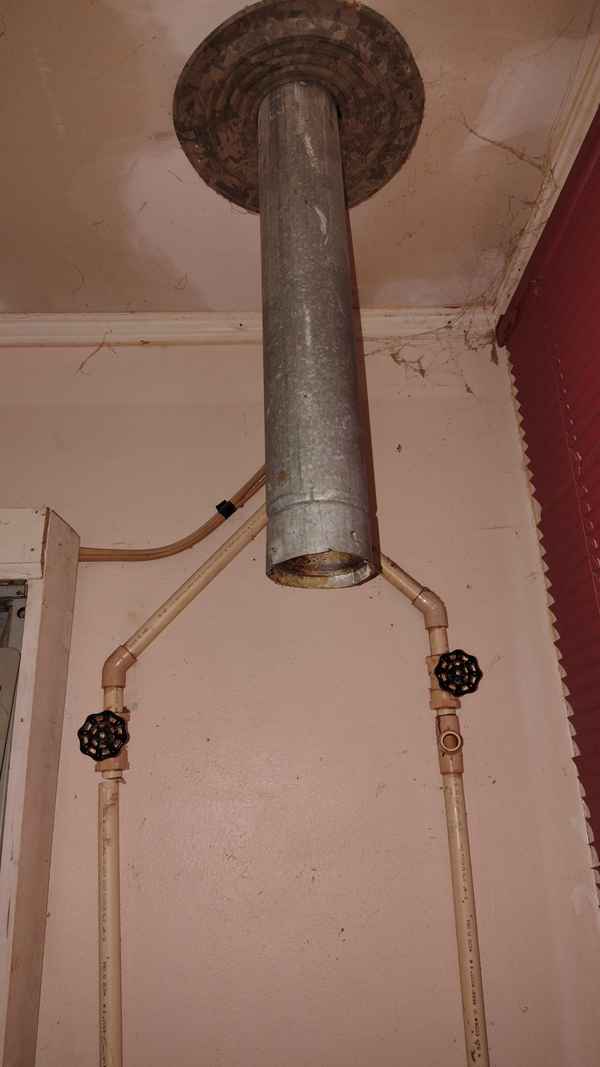
The vent intended for a gas-fired water heater was open and disconnected. We flagged the venting for professional correction before any new combustion appliance was put into service.
The furnace exhaust had come apart
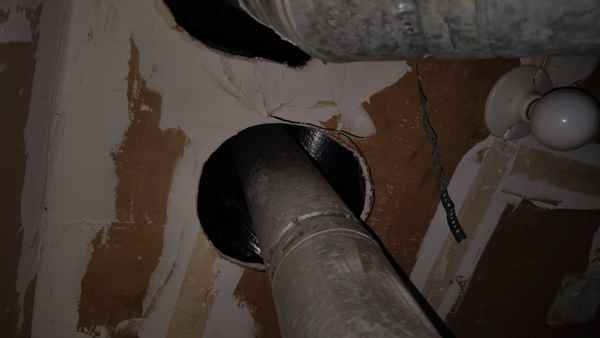
At reinspection, we found the furnace exhaust vent disconnected at a joint. The report called for keeping the furnace out of service until an HVAC contractor repaired the venting and verified safe operation.
Heat damage where a flue met wood
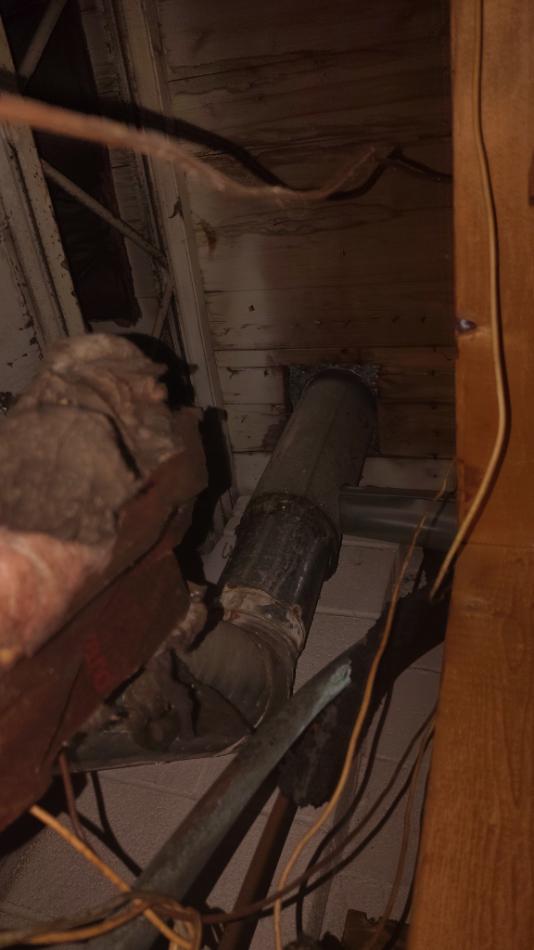
The flue appeared to touch combustible material where it passed through the assembly. The nearby wood was darkened in a pattern consistent with heat exposure. We flagged the vent and its clearance for qualified evaluation.
Heavy rust scaling at the wood-stove flue
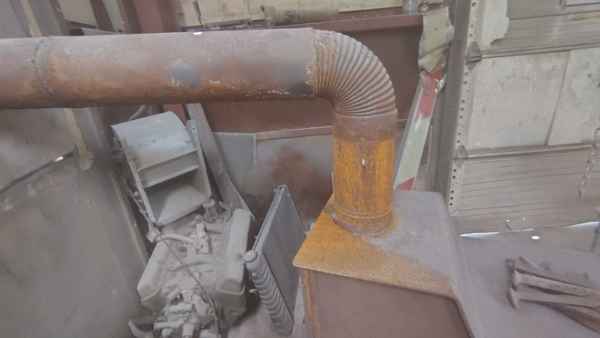
We found heavy corrosion and scaling at the flue elbows and seams, along with heat discoloration. The report flagged the deteriorated joints for repair by a qualified professional.
The entire route needs evaluation
A vent connection is part of a route from the appliance to its termination. The report photographs document the visible problem, but they do not verify every concealed section. CPSC guidance includes checking chimneys and flues for corrosion and partial or complete disconnections during professional heating-system inspection.
Operating approval belongs after the repair
The original recommendations called for qualified heating, chimney or plumbing professionals as appropriate to the affected equipment. A repaired joint or replacement component should be followed by the contractor's verification of the system. These inspection photographs are evidence of why that work was needed, not a certification that an appliance is safe to operate now.
Related inspection insights
For related context, read Navigating the Hearth: Common Fireplace and Chimney Safety Issues Uncovered by Home Inspectors and Silent Threats: Unveiling Common Carbon Monoxide and Gas Leak Issues Discovered by Home Inspectors.
Learn more about our home inspection services and the way we document building conditions for buyers and property owners.
By Wesley Upchurch. This article draws on documented inspection observations and photographs. Images show conditions at the time of inspection; later repairs are not established unless stated. Property addresses and client details are omitted.