
INSPECTION FINDINGS · FROM OUR INSPECTION RECORDS
Foundation photographs are most useful when they show more than a line in masonry. In these inspections, we recorded stair-step cracking, wall displacement, cracking with water-entry evidence and a wall with measurable bowing. The reports identified the location and form of each concern so the next professional could evaluate the actual condition, rather than work from a buyer's description of a crack somewhere under the house.
These examples should not be read as a photo guide for deciding that all cracks are equivalent. The bowed wall, the displaced blockwork and the stair-step pattern raise different questions. We also cannot tell the rate of movement from a single inspection photograph.
Photographs and documented observations
A stair-step crack in a block wall
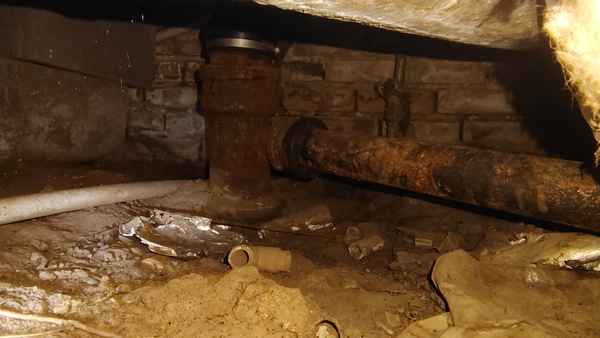
We found a crack following the mortar joints in a stair-step pattern. We documented its shape and location and recommended evaluation of the wall and nearby floor structure.
A cracked wall with signs of water entry
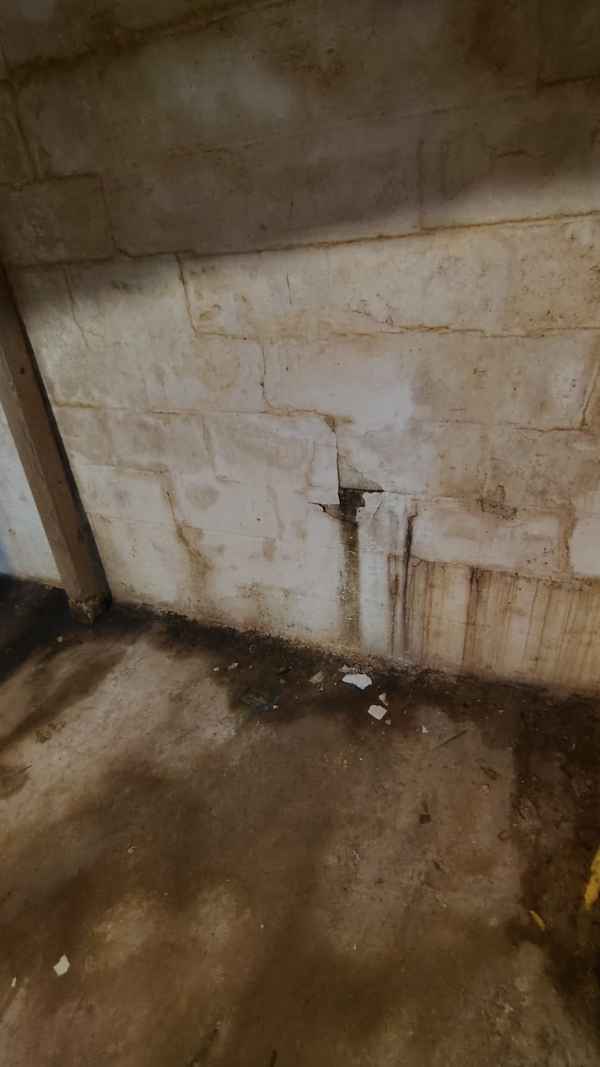
We found cracking in the foundation wall and moisture evidence nearby. The report flagged both the wall condition and the need to trace the water entry.
Cracking and displacement in a block wall
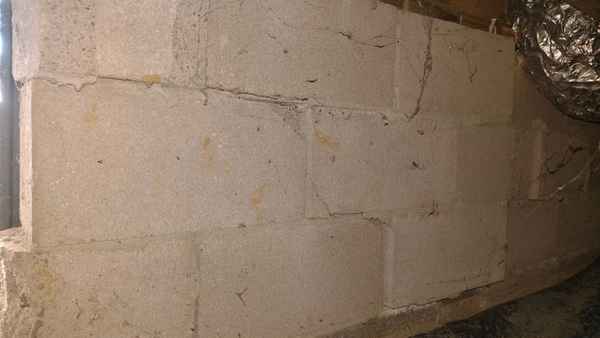
We found a cracked and displaced section of block wall. The report flagged it because displacement gives the evaluator more to investigate than a surface crack alone.
A bowed foundation wall
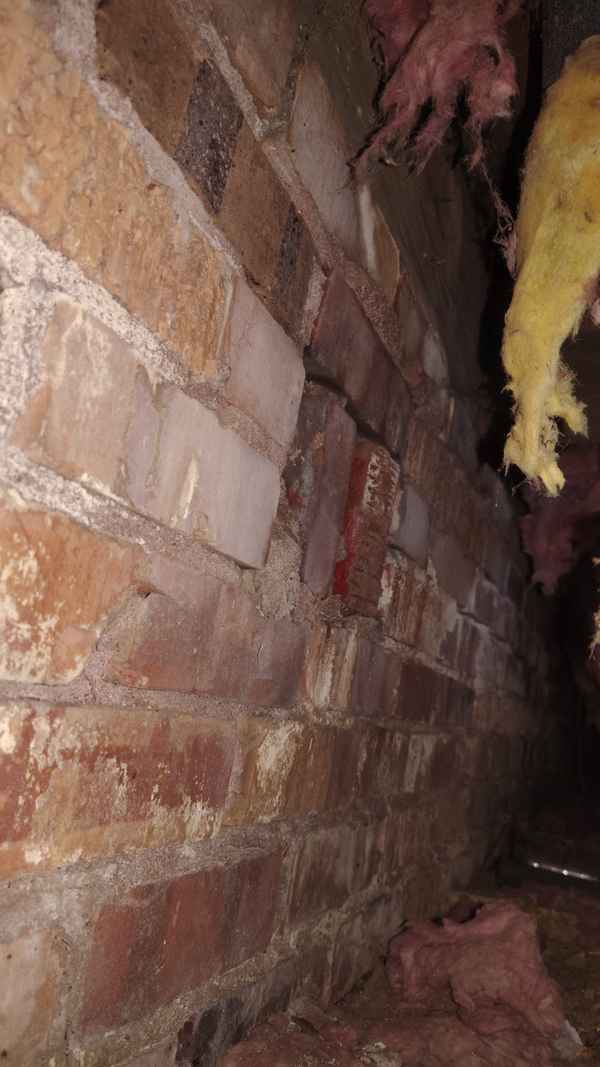
The report documented measurable bowing in a visible foundation wall. We recommended that a structural engineer evaluate the movement and its cause.
Shape, position and associated conditions
A crack's pattern helps describe it, but interpretation also depends on the wall, the surrounding support and associated conditions. That is why the original reports paired the visible observations with recommendations for further evaluation. The bowed-wall report specifically called for a structural engineer to assess the movement and its cause.
Preserve the evidence before cosmetic repairs
For buyers, a patched surface is not a substitute for an evaluation of the original condition. Keep the inspection photographs and ask what the repair was intended to accomplish. Where structural evaluation was recommended, the useful documentation is the professional's assessment and repair scope, not simply a receipt for mortar or paint. These photographs establish the concerns that needed to be answered.
Related inspection insights
For related context, read How to Tell if Basement Wall Is Bowing and Heaving vs Settlement: How to Tell What’s Moving Your Foundation.
Learn more about our home inspection services and the way we document building conditions for buyers and property owners.
By Wesley Upchurch. This article draws on documented inspection observations and photographs. Images show conditions at the time of inspection; later repairs are not established unless stated. Property addresses and client details are omitted.