
INSPECTION FINDINGS · FROM OUR INSPECTION RECORDS
Stairs and guards are easy to take for granted until something moves, opens up or breaks. Our records include a loose laundry-room step, excessive openings in a deck railing, a damaged exterior stairway, a split support board and an open edge above stairs. We also documented separation between a stair and porch and exposed nail points beneath a staircase. These are different conditions, and the report should tell the reader exactly which one is present.
The measurement in the railing photograph and the close view of the split stair support make the findings easier to understand. Neither requires a dramatic headline. The evidence is the opening we measured or the component we could see had failed.
Photographs and documented observations
The gaps in a deck railing were too wide
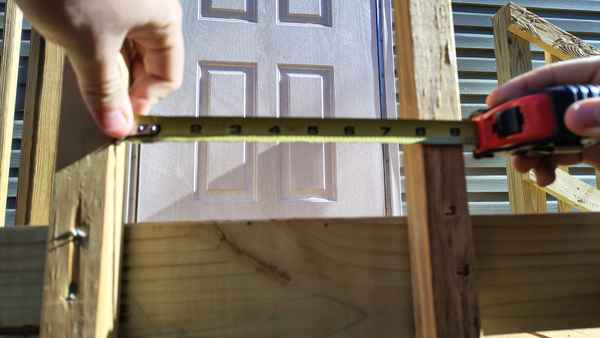
We measured the openings between the deck railing balusters and documented excessive spacing. We flagged the railing for correction by a qualified deck contractor.
A step that wasn’t secured
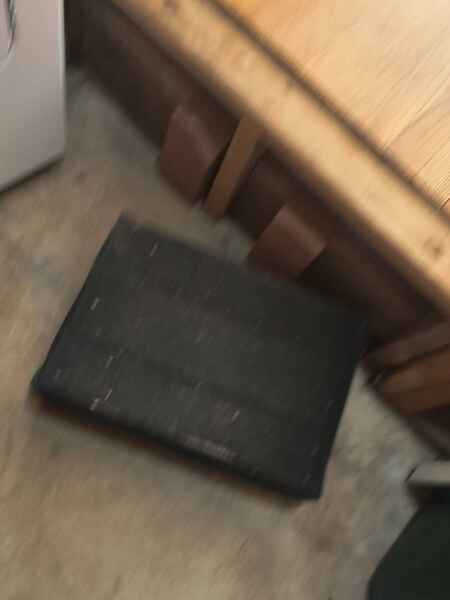
The step into the laundry room wasn’t properly secured. We documented it because the step could shift when someone put weight on it. We recommended securing it.
Nails projecting below the stairs
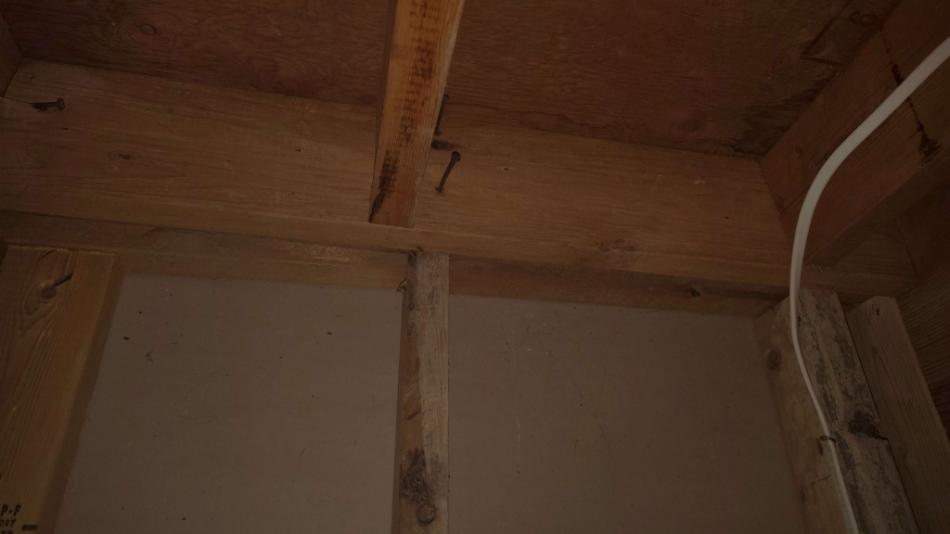
We found nails sticking out of exposed framing under a staircase. Anyone reaching into that area could come in contact with the points. We recommended having the protruding fasteners addressed.
A gap between the stairs and porch
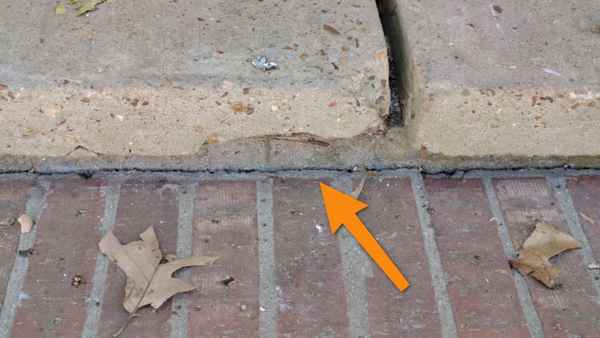
We found a separation crack at the junction of the stairs and porch. The photo shows exactly where the two surfaces opened up. The report flagged the area for a mason to evaluate.
An open edge above the stairs
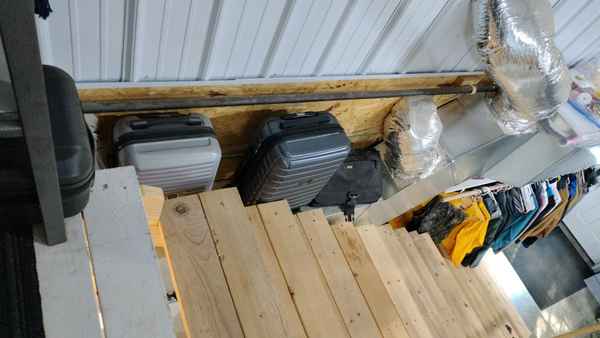
We documented an unguarded edge at an elevated stair area. The report flagged the fall exposure and recommended installing a suitable guard.
A stairway too damaged to keep in service
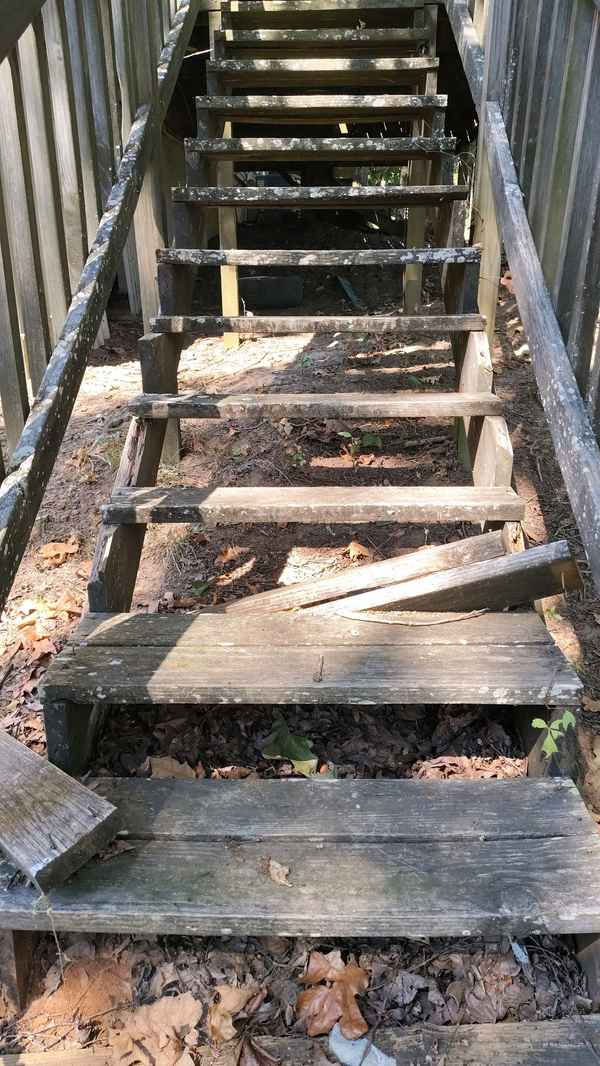
We found heavily damaged steps and unsafe construction at this stairway. The report recommended removing the stairs and having a qualified contractor install a properly constructed replacement.
The board holding up the steps had split
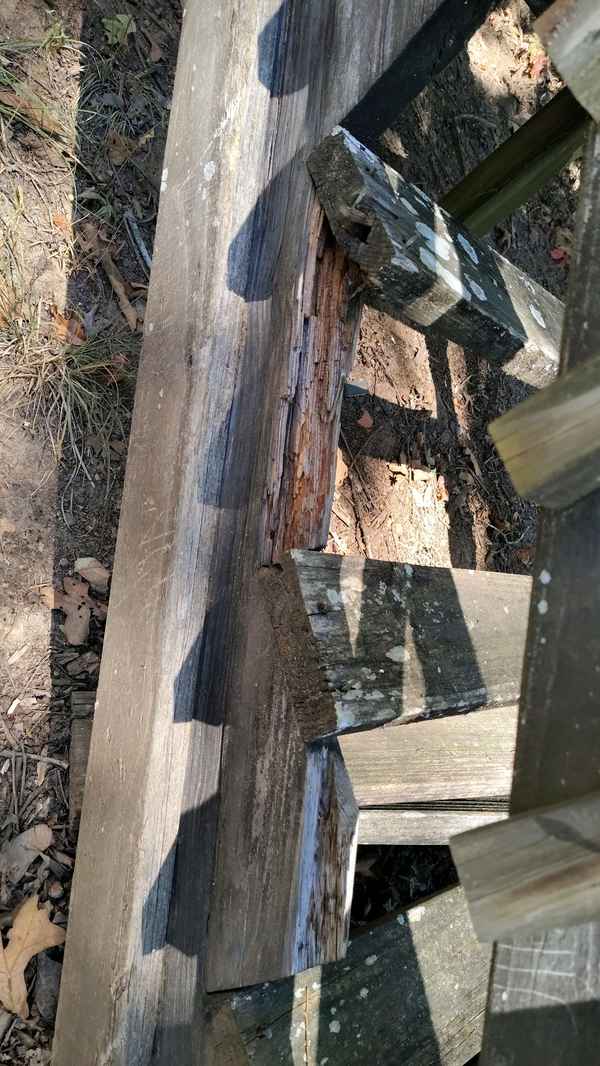
We found splitting in the stair stringer, the angled board that carries the treads. The report recommended replacing the damaged stringer.
Separate finish concerns from support concerns
A separation crack at a masonry junction requires a different evaluation from a deteriorated wood stairway or an unsecured step. The original reports made those distinctions in their recommendations. The most deteriorated stairway was identified as unsuitable to remain in service without correction; the masonry junction was referred for masonry evaluation.
Make the repair specific to the finding
A useful repair description identifies the affected step, guard, support or connection. It should not simply say that the stairs were checked. When the defect involves deterioration, the contractor also needs to determine the extent of the affected material. The photographs preserve the location and appearance of the original concern so the completed work can be compared with what the inspection actually documented.
Related inspection insights
For related context, read Deck Safety: Essential Tips for a Safe and Secure Outdoor Space and Unsteady Grounds: Common Unsafe Decking Issues Uncovered by Home Inspectors.
Learn more about our home inspection services and the way we document building conditions for buyers and property owners.
By Wesley Upchurch. This article draws on documented inspection observations and photographs. Images show conditions at the time of inspection; later repairs are not established unless stated. Property addresses and client details are omitted.