
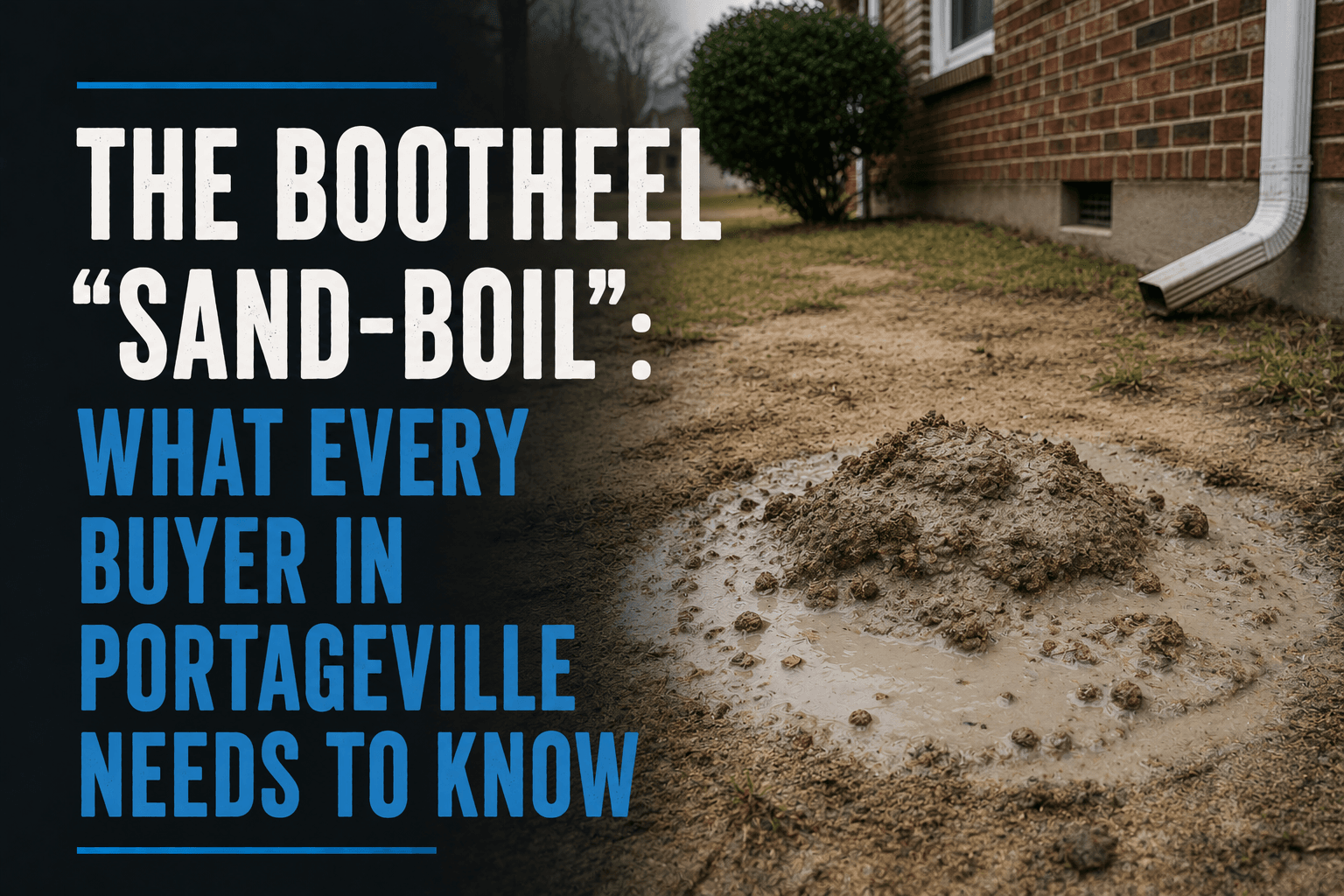
Foundation movement in the Missouri Bootheel doesn’t always start with settlement. In parts of New Madrid County, especially around Portageville, the real risk lies beneath the surface — in soil conditions shaped by one of the most violent seismic events in U.S. history.
The 1811–1812 New Madrid earthquakes didn’t just shake buildings. They permanently altered the soil profile across the region, and those effects still influence how homes behave today.
A Legacy Written in the Soil
During the New Madrid events, saturated sand layers liquefied and erupted upward, forming what geologists call sand blows or sand boils. Those eruptions redistributed soil layers, leaving pockets of loose, water-sensitive material beneath otherwise stable ground.
Modern construction often sits atop these disturbed layers without anyone realizing it. On the surface, the yard looks flat and dry. Below grade, soil density can change abruptly within a few feet.
Soil Liquefaction Isn’t Just a History Lesson
Liquefaction doesn’t require another major earthquake to cause problems. In Bootheel conditions, prolonged saturation can reactivate loose sand layers, allowing them to shift under load.
That movement can lead to:
- Differential foundation settlement
- Slab cracking without clear exterior cause
- Interior floor deflection that feels “springy”
When I see these symptoms in Portageville-area homes, I’m thinking about soil behavior first — not framing defects or cosmetic finishes.
Understanding Bootheel Soil Layering
Typical Bootheel soil profiles include:
- Topsoil and silty clay
- Underlying fine sand lenses
- Deeper saturated sand deposits
These layers don’t drain uniformly. Water becomes trapped in sand lenses, reducing bearing capacity during wet cycles. Over time, structures above them respond by shifting, cracking, or rotating slightly — often without obvious warning signs.
What Inspectors Look for in Seismic Soils
Inspections in New Madrid County require a different mindset. I pay close attention to:
- Foundation crack orientation and width changes
- Slab edges pulling away from walls
- Door and window alignment patterns
These clues help distinguish between normal aging and soil-driven movement tied to historic liquefaction zones.
Why Buyers in the Bootheel Need Context
Most buyers aren’t told about sand boils during a showing. They’re invisible until something moves. That’s why local soil knowledge matters just as much as construction knowledge in this part of Missouri.
For buyers evaluating properties across Southeast Missouri, understanding Bootheel soil history can prevent expensive surprises after closing.
Learn more about how we inspect homes in seismic-influenced areas here:
https://upchurchinspection.com/our-service-areas/home-inspections-in-southeast-missouri/
In the Bootheel, the ground remembers what happened — even if the house doesn’t show it yet.