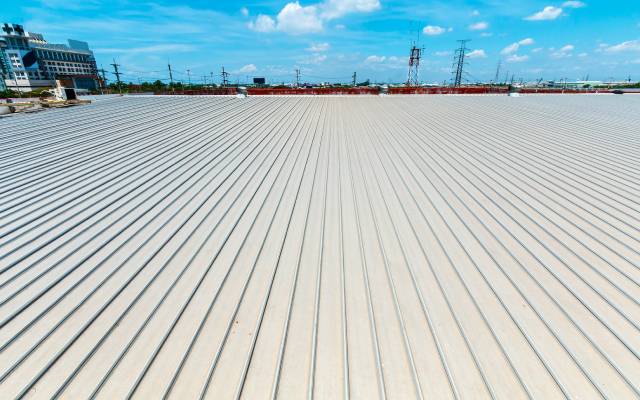
If I had a dollar for every time a commercial roof in West Tennessee “looked fine from the ground,” I wouldn’t be inspecting roofs anymore.
Commercial roofs don’t usually fail because someone did one big thing wrong. They fail because our climate beats the hell out of them every single year, and nobody accounts for it properly. Heat, humidity, UV exposure, and ponding water work together like a slow-motion demolition crew.
In Madison County, I routinely see commercial roofs that are five to ten years shy of their expected lifespan. Not because the materials were bad—but because West Tennessee is brutal on flat roofs, and owners underestimate that reality.
This Isn’t Just Heat — It’s Heat Plus Moisture
Everybody understands heat is rough on roofs. What gets missed is what humidity does when heat is already maxed out.
Here’s the cycle I see over and over:
- Hot summer days superheat the membrane
- Humid air saturates insulation and seams
- Afternoon storms dump water that never fully drains
- Overnight cooling traps moisture inside the system
- UV exposure dries the surface but not what’s underneath
That cycle repeats hundreds of times a year.
Roofs aren’t dying suddenly. They’re being worn down from the inside.
TPO Roofs: Great on Paper, Punished in Reality
I inspect a lot of TPO roofs in West Tennessee. When installed perfectly and maintained properly, they can perform well. The problem is they’re rarely installed perfectly, and they’re almost never maintained the way manufacturers imagine.
What I see in Madison County:
- Heat-welded seams that were never properly fused
- Seams stressed by thermal expansion
- Membranes thinning under UV exposure
- Minor ponding that becomes major over time
Once seams start failing, water migrates laterally. By the time leaks show up inside, the insulation has already been compromised.
Modified Bitumen Isn’t Bulletproof Either
Modified bitumen roofs get treated like tanks. And yeah—they’re tougher than some systems. But they’re not immune.
Common issues I see:
- Blistering from trapped moisture
- Cracking at transitions and penetrations
- Granule loss accelerating UV damage
- Flashing failures where repairs were layered instead of corrected
Once moisture gets between layers, you’re no longer dealing with a surface problem. You’re dealing with a system failure.
Ponding Water: The Silent Multiplier
If there’s one thing I wish commercial buyers understood better, it’s this:
Ponding water isn’t just water sitting there. It’s added weight, added heat, and added time.
In Madison County, I regularly see flat roofs where:
- Drains are partially clogged
- Roof slope was never adequate
- HVAC units were added without re-evaluating drainage
- Repairs changed water flow patterns
Water that sits longer than 48 hours after rainfall is doing damage—even if it’s not leaking yet.
UV Degradation Happens Faster Here
West Tennessee sun is unforgiving. Combine high UV exposure with high ambient heat, and roofing materials age faster than manufacturer charts suggest.
What I commonly see:
- Brittle membranes
- Shrinking material at penetrations
- Loss of flexibility around seams
- Premature cracking in flashings
These aren’t installation defects. They’re environmental realities.
HVAC Traffic Is Killing Roofs Early
Every rooftop unit is a foot traffic problem waiting to happen.
On commercial roofs, I routinely see:
- Crushed insulation paths
- Membrane wear around units
- Improvised walk pads that don’t actually protect anything
- Service tech damage that goes unnoticed
Roof systems aren’t designed to be walked on repeatedly unless they’re protected. In real life, they get walked on constantly.
The “It’s Only Five Years Old” Trap
I hear this all the time:
“The roof’s only five years old.”
That means nothing without context.
I’ve seen five-year-old roofs that need replacement and fifteen-year-old roofs still performing. The difference isn’t age—it’s installation quality, drainage design, and maintenance.
In West TN, age alone is a bad metric.
Repairs vs. Replacements: Where Owners Get Burned
Temporary repairs keep getting extended because:
- Leaks stop (for now)
- Budgets are tight
- Tenants aren’t complaining yet
But layering repairs on failing systems does two bad things:
- It hides the true condition
- It increases replacement complexity later
By the time replacement becomes unavoidable, costs are higher and options are fewer.
What I Look for During Commercial Roof Inspections
When I’m walking a commercial roof in Madison County, I’m paying attention to:
- Drainage patterns and low points
- Seam condition, not just surface appearance
- Evidence of repeated repairs
- Insulation softness underfoot
- Flashing integrity at every penetration
I’m not asking “Is it leaking?”
I’m asking “How close is it to failing?”
Why West TN Roofs Fail Early (The Short Version)
If I had to boil it down:
- Heat accelerates aging
- Humidity traps moisture
- UV breaks down materials
- Ponding water magnifies everything
- Deferred maintenance finishes the job
That’s the suicide cycle.
What Buyers Should Be Asking Before Closing
If you’re buying a commercial property, don’t ask:
- “Does the roof leak?”
Ask:
- “What’s the remaining useful life in this climate?”
- “Has insulation been compromised?”
- “Is drainage actually working as designed?”
- “What’s the replacement timeline—not the hope?”
Those answers matter more than cosmetic condition.
Final Thoughts
Commercial roofs in West Tennessee don’t die peacefully. They get cooked, soaked, stressed, and ignored until they fail.
In Madison County, roofs don’t reach textbook lifespans unless they’re designed and maintained with our climate in mind. Assuming otherwise is how buyers inherit six-figure surprises.
Protecting your West Tennessee investment starts with a forensic eye. View our West Tennessee Service Area to see a full list of towns we serve.