Most buyers assume that a home inspection is the same everywhere. That if an inspector follows a recognized standard, the results should be interchangeable whether the home is in Memphis, Nashville, Little Rock, or Cape Girardeau.
On paper, that sounds reasonable. In practice, it’s wrong.
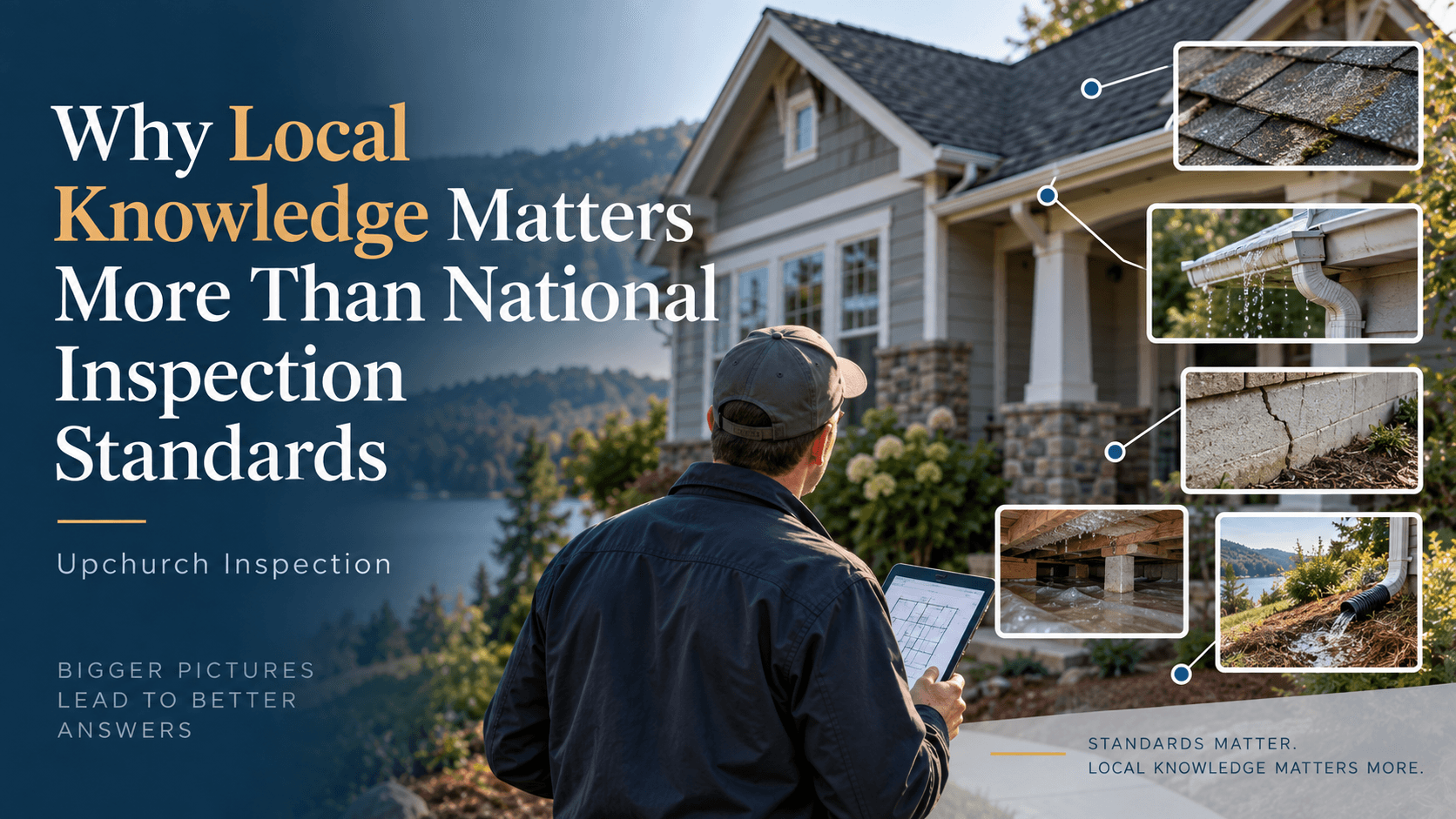
National standards matter. They create a baseline. But local knowledge is what turns an inspection from technically correct into genuinely useful. And this is where experienced regional inspectors separate themselves from generic, checkbox-style inspections.
At Upchurch Inspection, this is one of the things we’re most deliberate about—because homes don’t exist in a vacuum. They exist in specific soil, weather, building cultures, and development patterns that shape how they age and where they fail.
Houses Fail Along Regional Fault Lines
Every region has recurring problems that don’t show up the same way elsewhere.
In West Tennessee, expansive soils and drainage issues quietly drive foundation movement and crawl space moisture problems. In Middle Tennessee, rapid development and cut-and-fill lots create grading and runoff patterns that stress newer foundations. In Central Arkansas, we see consistent moisture behavior tied to clay soils and crawl space design. In Southeast Missouri, older housing stock brings a different mix of aging materials and long-term settlement.
A national standard won’t tell you that. Experience will.
Inspectors who work a region every day learn where homes tend to struggle—not theoretically, but repeatedly.
The Same Defect Doesn’t Mean the Same Thing Everywhere
A hairline crack in drywall doesn’t carry the same weight in every market.
In one area, it may be cosmetic shrinkage that never changes. In another, it may be an early indicator of soil movement that tends to worsen over time. The crack looks the same. The context doesn’t.
The same applies to moisture staining, floor slopes, attic conditions, and crawl space behavior. Without local context, defects get documented but not interpreted.
Authority comes from knowing which issues are normal, which are tolerable, and which tend to escalate in this specific environment.
Building Practices Are Local — Even When Codes Are National
Homes aren’t built the same way everywhere, even under similar codes.
Different regions favor different foundation types, framing approaches, roof assemblies, and moisture strategies. Builders repeat what works in their area—or what sells—sometimes for decades.
When inspectors know local building patterns, they know where shortcuts are common, where workmanship is typically strong, and where problems show up years later.
That knowledge doesn’t come from textbooks. It comes from inspecting hundreds or thousands of homes in the same markets.
Soil, Water, and Weather Do Most of the Damage
Inspectors who rely only on standards tend to focus on components. Inspectors with regional expertise focus on forces.
Water movement. Soil expansion. Seasonal humidity. Temperature swings. Wind patterns. Drainage paths.
Those forces explain why homes behave the way they do over time.
A foundation issue doesn’t start with a crack—it starts with water. An HVAC problem doesn’t start with failure—it starts with moisture load. Electrical corrosion doesn’t start at the panel—it starts with environmental exposure.
Local inspectors understand how those forces play out here, not in abstract terms.
Why Buyers Feel Let Down by “Generic” Inspections
Buyers who feel disappointed after inspections often didn’t get bad inspections—they got incomplete ones.
The report listed defects, but didn’t explain which mattered most in this market. It documented conditions, but didn’t connect them to long-term ownership reality. It followed standards, but missed context.
That’s when buyers feel blindsided months later, even though the inspection technically “covered everything.”
Authority isn’t about finding more defects. It’s about explaining what those defects mean where the home actually exists.
How We Approach This at Upchurch Inspection
We don’t just inspect homes—we inspect homes in these markets.
When we evaluate a property, we’re drawing on:
- Regional soil behavior
- Local construction patterns
- Common failure points we see repeatedly
- How homes here tend to age over time
We explain not just what we see, but how that condition typically plays out locally. That’s the difference between information and guidance.
Standards Create Consistency. Experience Creates Insight.
National standards ensure inspections meet a minimum level of completeness. They don’t ensure relevance.
Local experience fills that gap. It tells buyers which issues deserve immediate attention, which are normal for the area, and which tend to become expensive if ignored here, even if they seem minor elsewhere.
That’s what authority looks like in practice—not louder opinions, not scarier language, but better interpretation grounded in real regional experience.
When buyers choose an inspection, they aren’t just choosing someone to look at a house. They’re choosing whose understanding of that house they trust.
In markets like ours, that trust is earned locally.