
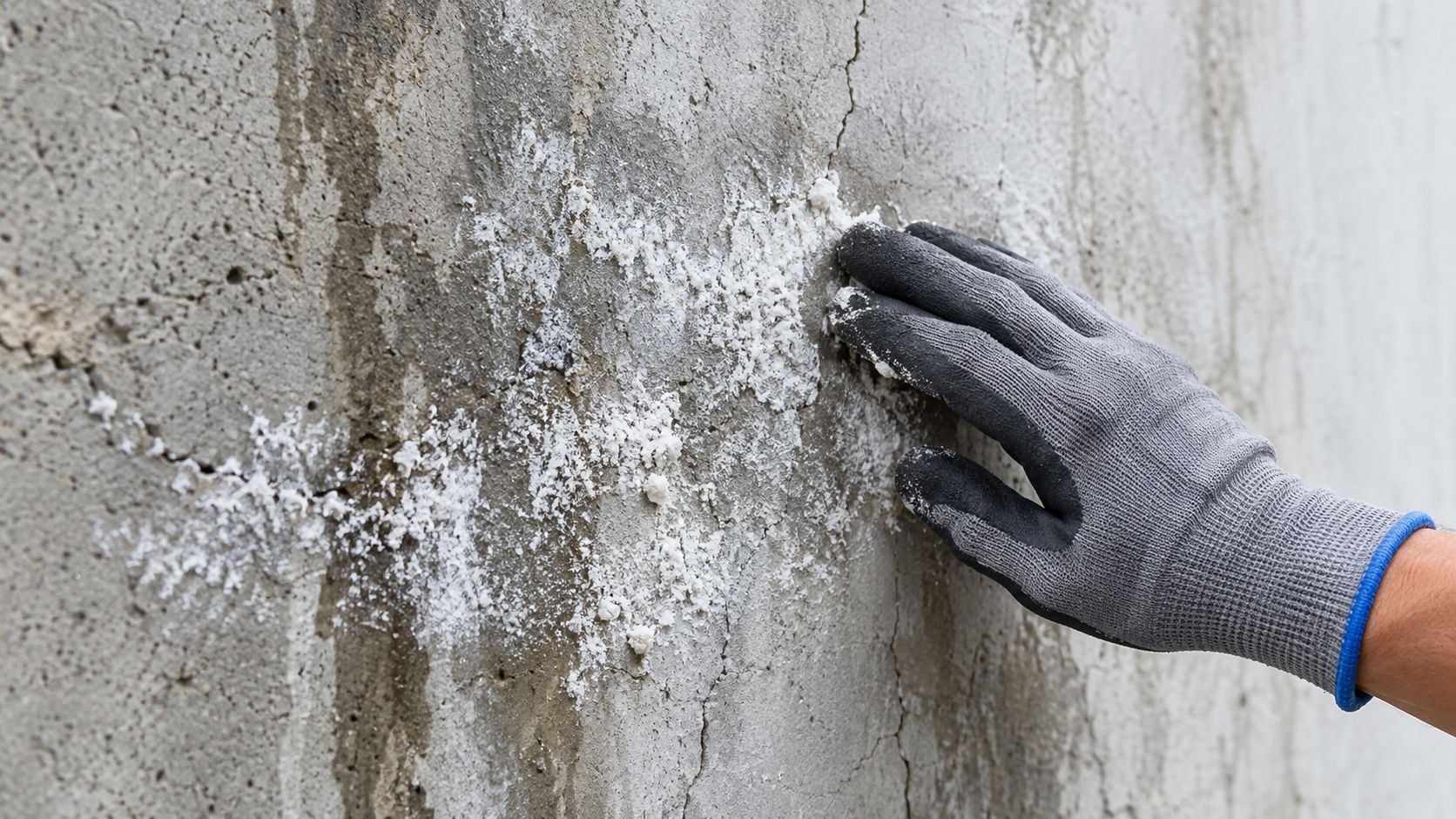
You notice it while moving a box, checking a furnace, or preparing a home for sale. There's a chalky white film on the basement wall, and the immediate questions are usually the same: Is it mold? Is it salt? Is the foundation failing?
In most basement inspections, white powder on concrete block, brick, or poured concrete is efflorescence, a mineral deposit created by moisture moving through porous masonry. The powder itself usually isn't the root problem. It's a visible clue that water has traveled through the wall, carried dissolved salts, and evaporated at the interior surface. National masonry guidance explains this moisture-and-salt process.
That distinction matters in Southeast Missouri and Mid-Missouri homes, where basements, crawlspaces, older drainage systems, and changing soil moisture can all influence how water behaves around a foundation. A patch in a basement in Cape Girardeau, Jackson, Poplar Bluff, Columbia, or Jefferson City deserves the same calm first question: where did the moisture come from, and is it still moving?
The right response isn't panic, and it isn't just painting over the wall. You want to identify the residue, look for related moisture signs, check what you can safely check, and know when an inspector or specialist should evaluate the condition.
Table of Contents
- Introduction What That White Powder Is Trying to Tell You
- Why White Powder Forms on Basement Walls
- How to Tell Efflorescence From Mold and Other Residues
- Safe DIY Checks You Can Do Before Calling a Pro
- How Serious It Is Health and Structural Risk Explained
- Fixing the Moisture Source and Preventing It From Coming Back
- When to Call an Inspector or Specialist in the Mid South
Introduction What That White Powder Is Trying to Tell You
A homeowner may wipe the wall clean and feel relieved when the powder disappears. Then, after rain or a damp season, the white film returns in the same area. That pattern tells you more than the color does. The wall may be showing a continuing moisture pathway rather than a one-time surface spill.
White powder on a basement wall usually means moisture has moved through the wall assembly. Efflorescence forms when water passes through porous concrete, block, brick, or mortar, dissolves soluble minerals, and leaves those minerals behind as the water evaporates. The deposit is often dry, gritty, and chalky. Masonry Institute guidance describes efflorescence as salts transported through masonry by moisture.
Practical rule: Treat the powder as a moisture-movement signal, not as a complete diagnosis.
That signal doesn't automatically mean the foundation is failing. It also doesn't prove that the basement has a dangerous mold problem. A small, isolated deposit on an otherwise dry wall may need observation, while recurring deposits with dampness, cracking, flaking concrete, or musty odors deserve more attention.
A useful inspection starts with simple observations. Look at whether the area is wet, whether the powder returns, what material it sits on, and whether nearby drywall, wood, cardboard, insulation, or stored belongings show moisture damage. You can gather useful information without cutting into the wall or applying aggressive chemicals.
The sections ahead focus on visual identification, safe homeowner checks, risk assessment, and practical moisture control. The goal is to help a buyer, seller, or property owner decide whether the condition is mainly cosmetic, a maintenance issue, or a reason to bring in a qualified professional.
Why White Powder Forms on Basement Walls
Efflorescence is easiest to understand as a wicking and evaporation process. Imagine a porous masonry wall as a group of tiny pathways. Moisture enters from soil, rainwater, groundwater, a crack, or another source, then travels through those pathways toward a drier surface.
As the water moves, it can dissolve salts and minerals inside the concrete, mortar, brick, or block. When the water reaches the basement side of the wall and evaporates, the minerals remain behind. The result is a pale deposit that may look like flour, chalk dust, frost, or small crystals.
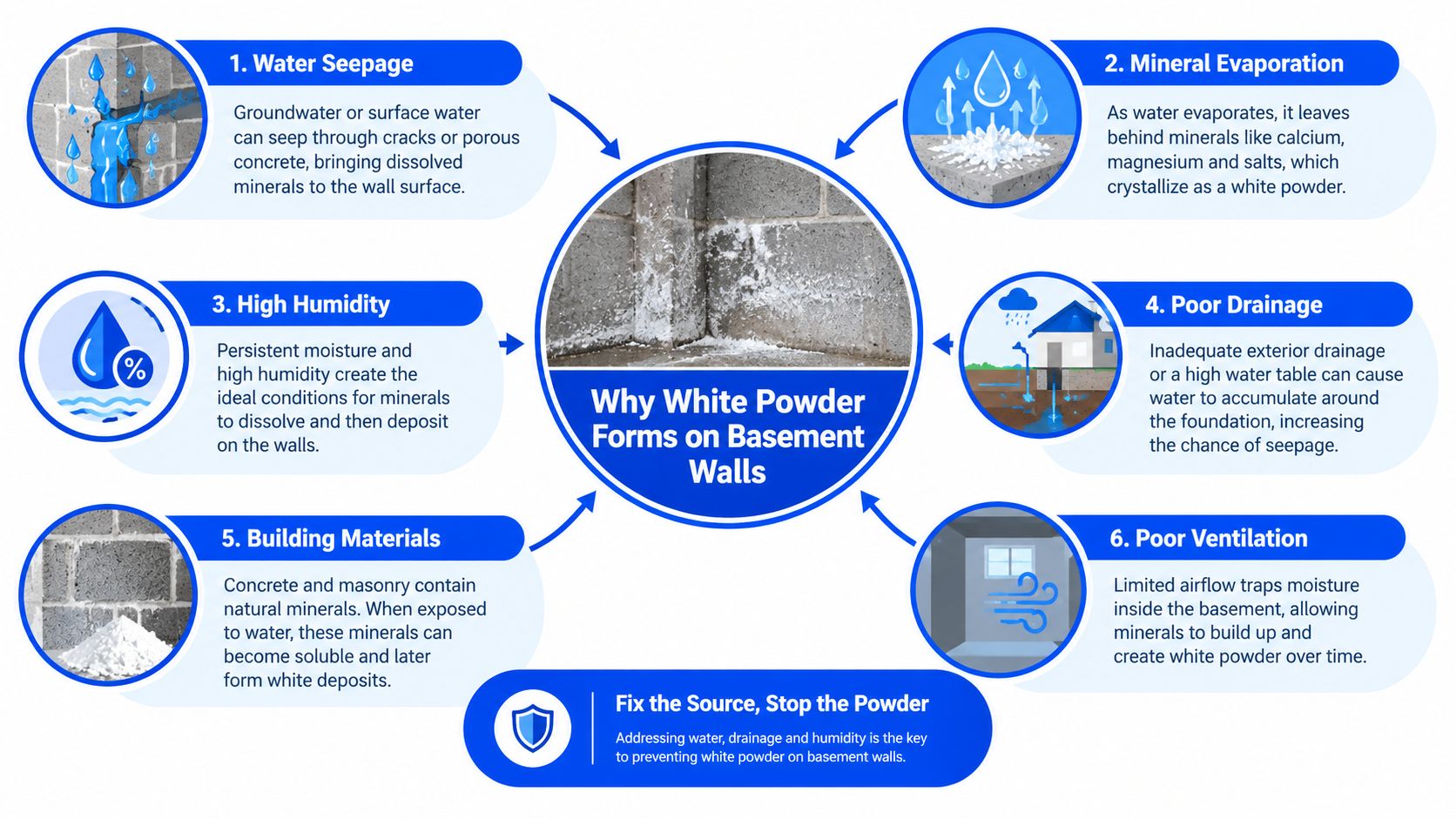
The wall is showing the path water took
The important point is that the powder didn't appear independently. Water carried the material to the surface. That makes efflorescence different from an ordinary stain left by furniture, paint, or dirt.
Moisture may enter because exterior soil directs water toward the foundation, gutters overflow, downspouts discharge too close to the house, footing drainage isn't working as intended, or a crack provides a direct route. Hydrostatic pressure can also push water against below-grade walls. In some settings, moisture can rise from below through masonry, a condition technical guidance associates with rising damp.
Recurring or excessive efflorescence deserves investigation because it can indicate excessive internal moisture or another unresolved water condition. The National Institutes of Health Office of Research Facilities identifies repeated efflorescence as a possible sign of moisture problems that warrant follow-up.
Why repetition matters
A single old patch may remain after the wall dries. A deposit that keeps coming back after cleaning points to a continuing source or pathway. That doesn't tell you exactly where the water originates, but it narrows the inspection question.
In Missouri homes, the practical investigation often starts outside. Check the ground near the wall, the condition of gutters, and where downspouts release water. Then compare those observations with interior evidence such as staining, peeling paint, dampness, or deposits concentrated around a crack or wall joint.
How to Tell Efflorescence From Mold and Other Residues
The question “Is white powder on a basement wall mold?” comes up often. On bare concrete or masonry, a white, gritty mineral deposit is typically efflorescence, not mold. A practical inspection reference distinguishes gritty, water-soluble efflorescence from mold growth.
That distinction changes when the residue is on drywall, wood, cardboard, insulation, or painted organic materials. Mold and mildew can vary in color and texture, may look fuzzy or slimy, and often occur with a musty odor. Still, appearance alone can't confirm a mold type or rule out a moisture problem.
A quick visual comparison
| Feature | Efflorescence | Mold or Mildew | Other Residue |
|---|---|---|---|
| Typical surface | Bare concrete, block, brick, mortar, or masonry | Drywall, wood, paper, fabric, insulation, and other organic materials | Painted surfaces, plaster, stored items, or areas exposed to dust |
| Appearance | White, chalky, powdery, crystalline, or gritty | May be fuzzy, slimy, patchy, or varied in color | Can look like dust, paint residue, plaster debris, or insect material |
| Texture | Often gritty and dry | Can feel soft, damp, fuzzy, or smeared | Varies based on the material |
| Response to gentle water | Mineral residue may dissolve or loosen | Growth doesn't behave like a simple mineral deposit | May smear, clump, or remain unchanged |
| Odor | Usually no musty odor from the mineral deposit itself | May occur with a musty smell | Depends on the source |
| Main concern | Evidence of moisture movement through masonry | Moisture and possible indoor air quality concerns | Identify the material before disturbing it |
Don't confuse identification with risk
Efflorescence itself is generally a mineral symptom. The moisture behind it can still create conditions that support mold on nearby organic materials. A clean-looking concrete wall doesn't guarantee that drywall behind a finished surface, wood framing, or stored cardboard is dry.
Photograph the area before brushing it. Include a wider view showing the wall, floor, nearby materials, and any cracks or staining. Then take a close image of the residue. For buyers and sellers, dated photos help show whether the condition is isolated, recurring, or changing.
If the material is on drywall or wood, appears fuzzy, spreads beyond the masonry, or is accompanied by a strong musty smell, don't treat it as a simple salt stain. Follow the moisture trail and consider an appropriate assessment. This guide to how moisture problems lead to mold growth in homes can help explain why the visible material and the underlying moisture condition should be evaluated separately.
Safe DIY Checks You Can Do Before Calling a Pro
Start with observation, not demolition. You don't need to remove wall finishes, drill concrete, or pour harsh cleaners onto the surface to learn whether the condition deserves follow-up.
Begin with a dry-wall check
If the wall is visibly wet, let the area dry under normal ventilation before cleaning. Don't use heat in a way that creates a fire risk, and don't close up a damp area just to make it look better for a showing.
Once the surface is dry, wear basic eye protection and gloves, then brush a small amount of loose residue onto disposable material. A stiff brush can remove surface deposits. Avoid creating a cloud of dust, especially if you don't know what the material is or if other suspect growth is nearby.
A small amount of residue may loosen or dissolve with water, which supports the possibility of mineral salts. That observation isn't a laboratory diagnosis. It adds one piece of information.

Look for the moisture pattern
After cleaning a small area, mark its location with a photo rather than writing directly on the wall. Check it again after wet weather and during ordinary basement use. Note whether the powder returns, whether staining expands, or whether the surface becomes damp.
Look nearby for:
- Wall and floor clues: Damp spots, dark staining, peeling paint, flaking concrete, cracked mortar, or water lines.
- Air and material clues: Musty odors, damp framing, softened cardboard, wet insulation, or damaged drywall.
- Exterior clues: Soil touching or sloping toward the foundation, gutter overflow, and downspouts releasing water beside the house.
- Location clues: Deposits concentrated around a crack, wall joint, window opening, or floor connection.
Don't scrub suspected mold growth aggressively or disturb contaminated porous materials. If the condition involves organic materials, spreads beyond a small area, or causes irritation, stop the DIY process and arrange an evaluation.
A useful reference for documenting interior and exterior clues is this guide to water coming through a basement wall after rain. Your notes won't identify the source by themselves, but they can make a professional inspection more focused.
How Serious It Is Health and Structural Risk Explained
Efflorescence doesn't automatically mean the foundation is failing. The powder itself is generally not hazardous to touch, but it indicates that moisture has moved through the masonry. Inspection guidance explains why efflorescence should be treated as a symptom of moisture movement rather than a standalone cosmetic issue.
The seriousness depends on what accompanies it. A small, dry patch that doesn't return may be a maintenance observation. Widespread deposits, repeated bloom, active seepage, or damp finishes point to a condition that needs more attention.
Lower-concern patterns
A relatively limited concern may include:
- A dry, isolated deposit on bare masonry.
- No visible cracking, bowing, spalling, or flaking.
- No damp framing, wet drywall, or musty odor nearby.
- No return after the wall dries and the loose material is removed.
Even in that situation, keep photos and watch the area. A quiet wall today can still show a drainage problem during a wetter period.
Higher-concern patterns
Escalate the evaluation when the powder appears with:
- Continuing moisture: Active seepage, damp spots, or water entering after rain.
- Masonry deterioration: Cracked mortar, flaking concrete, or sections that are breaking down.
- Movement clues: Bowing walls, significant cracks, or openings that appear to be changing.
- Interior impact: Wet framing, damaged drywall, musty odors, or moisture affecting stored materials.
The white residue doesn't prove structural failure. It does prove that the wall has experienced moisture movement.
For buyers, this distinction helps keep an inspection finding in perspective. The next question isn't only whether efflorescence exists. It's whether the evaluator can identify an active source, related damage, or a pattern that requires a foundation, drainage, plumbing, or mold specialist.
Fixing the Moisture Source and Preventing It From Coming Back
Cleaning the wall can improve its appearance, but it won't stop new deposits if water continues moving through the masonry. The lasting fix addresses the pathway, not just the residue.
Start outside when conditions allow
Walk the perimeter during dry weather and after rain. Look for soil that directs water toward the foundation, gutters that overflow, and downspouts that discharge too close to the house. Extend downspouts away from the foundation and keep the ground shaped so water drains away rather than collecting beside the wall.
These steps are practical maintenance, not a guarantee that the foundation is waterproof. If the source is a plumbing leak, a foundation crack, failed drainage, or groundwater pressure, exterior adjustments may not resolve the whole issue.

Clean only after the wall dries
Use a stiff brush to remove loose deposits from dry masonry. A gentle rinse can remove remaining material, but avoid high-pressure washing that drives water farther into the wall or damages a weak surface. Let the area dry again and monitor it.
Painting over the deposit is usually a poor first move. Coatings can hide the evidence temporarily while moisture remains behind the surface, and the residue may return or cause the finish to peel.
Missouri homes need location-specific judgment. Clay-rich soil can hold water against foundations, while seasonal moisture changes and freeze-thaw conditions can stress masonry. Older basements and crawlspaces in Southeast and Mid-Missouri communities, including Sikeston, Poplar Bluff, Farmington, Perryville, Columbia, and Sedalia, may also have drainage details that need closer review. Those possibilities don't diagnose a problem, but they explain why the same white deposit can have different causes from one property to another.
If basic drainage maintenance doesn't change the pattern, a qualified contractor may need to evaluate grading, gutters, cracks, waterproofing, or drainage systems. Use this guide to stop water coming into a basement after heavy rain as a practical starting point, then match the repair to the confirmed source.
When to Call an Inspector or Specialist in the Mid South
Call for professional help when the powder keeps returning, covers broad areas, or appears with active seepage, musty odors, cracked mortar, flaking concrete, bowing, or damp framing. Those combinations suggest more than a surface cleanup issue.
A home inspector can document visible conditions, trace likely moisture pathways, photograph related defects, and recommend the next appropriate specialist. A foundation contractor may be the right fit for suspected foundation movement or significant wall cracking. A drainage professional can address grading, gutters, downspouts, or exterior water management, while a plumber is more appropriate when the pattern suggests a supply, drain, or sewer leak.
For buyers and sellers in communities such as Cape Girardeau, Jackson, Columbia, Jefferson City, Fulton, Boonville, and surrounding Mid-South areas, an inspection can help separate an old inactive deposit from an active moisture concern. Additional services may also be appropriate when the evidence points beyond the wall, including mold assessment, radon testing, or a sewer scope.
Upchurch Inspection can provide a detailed inspection with photos and recommendations to help prioritize the next step. Gather your photos, note when the powder returns, and share whether the basement has had rain-related seepage before scheduling an evaluation.
If white powder keeps returning on your basement wall, Upchurch Inspection can document the moisture clues and help identify whether you need drainage, foundation, plumbing, mold, radon, or another specialist. Visit the site to schedule an inspection and get clear recommendations based on the condition of your home.