
TL;DR:
- Preparing thoroughly for commercial property inspections prevents costly delays, re-inspections, and compliance gaps.
- Organizing key records, controlling access, and understanding inspection standards like ASTM E2018 enhance asset management and valuation.
Walking into a commercial property inspection unprepared is one of the most avoidable and expensive mistakes a property owner or manager can make. Missed documentation, locked mechanical rooms, or unclear scope boundaries can derail a timeline, trigger re-inspection fees, and expose compliance gaps that a lender, buyer, or regulator will not overlook. ASTM E2018 is the most cited U.S. standard for transactional scopes of work supporting commercial real estate acquisitions, financing, and capital planning. This guide gives Mid-South commercial property owners a practical roadmap to prepare thoroughly, stay in control, and turn every inspection into a strategic asset management tool.
Table of Contents
- Understand the inspection process and standards
- What to gather and organize before the inspection
- Controlling access and scope: Avoiding inspection surprises
- Go beyond the basics: Life safety and compliance systems
- Maintaining records and planning for long-term compliance
- What most commercial owners get wrong—and how to get it right
- Get expert help with your next commercial inspection
- Frequently asked questions
Key Takeaways
| Point | Details |
|---|---|
| Set the right scope | Tailor your inspection scope to your property’s unique systems and compliance needs for better results every time. |
| Centralize documentation | Organized, accessible records help inspectors work efficiently and let you prove compliance when it counts. |
| Control access proactively | Make sure inspectors can reach all needed areas with no delays to avoid costly re-inspections. |
| Prioritize life safety systems | Fire, emergency egress, and regulated infrastructure must be fully ready before inspection to pass compliance checks. |
| Plan for long-term compliance | Regular audits and well-maintained records protect your investment and simplify every future inspection. |
Understand the inspection process and standards
With the stakes clear, let’s start by understanding the foundational frameworks and what a commercial inspection really covers.
A commercial property inspection is not a simple walkthrough. It is a structured evaluation of major building systems, covering structural components, roofing, electrical, plumbing, HVAC, and moisture conditions. Multiple stakeholders rely on the findings: buyers, lenders, insurers, property managers, and in some cases, regulatory agencies. Each party may have different priorities, which is why defining the scope of work before the inspector ever sets foot on your property is so important.
ASTM E2018 (Baseline Property Condition Assessment Process) is widely used as the framework and aims to identify material deficiencies across primary building systems based on the user’s scope of work. The standard helps ensure that nothing critical slips through the cracks because the process is too informal or inconsistently applied. Using it as your baseline also signals credibility to lenders and buyers, who recognize it as the industry benchmark.
Our inspection checklist overview walks through the specific systems evaluated under a typical commercial scope, and it is a useful starting point before you begin organizing your own property records.
Here is a quick comparison of how common inspection frameworks differ in scope and purpose:
| Framework | Primary use | Key focus areas | Who typically requires it |
|---|---|---|---|
| ASTM E2018 | Acquisitions, financing, due diligence | All primary building systems, material deficiencies | Lenders, buyers, investors |
| Code compliance inspection | Permitting, certificate of occupancy | Regulatory code adherence | Local municipalities |
| Insurance inspection | Policy underwriting, renewal | Roof, electrical, HVAC, liability hazards | Insurance carriers |
| Annual maintenance audit | Ongoing asset management | Deferred maintenance, capital planning | Owners, property managers |
Key takeaways from this comparison:
- ASTM E2018 is the right standard for any transaction involving financing or investment decisions.
- Code compliance inspections focus on whether the building meets current municipal requirements, which may differ from its original permitted condition.
- Insurance inspections zero in on risk exposures that drive premium calculations.
- Annual maintenance audits are internal tools for managing long-term asset value and planning capital expenditures.
Understanding which inspection type applies to your situation helps you prepare the right records, communicate clearly with your inspector, and avoid bringing irrelevant documentation that wastes time.
What to gather and organize before the inspection
Now that you know the inspection framework, set yourself up for success by assembling everything your inspector and you will need before the scheduled date.
A practical preparation methodology for commercial inspections starts before the inspector arrives: review property records, request and organize documentation including maintenance and service records, prior inspection reports, and environmental assessments, confirm access to all areas, define the inspection scope, and ensure appropriate equipment is available. This front-loaded effort saves hours during the inspection and reduces the risk of missed scope items that require a costly return visit.
Here is a prioritized list of the documents every commercial property owner should have ready:
- As-built drawings for the current configuration of structural, mechanical, electrical, and plumbing systems
- Maintenance and service logs for HVAC units, elevators, roofing systems, and any equipment under service contracts
- Permits and certificates of occupancy for original construction and any subsequent renovations
- Prior inspection reports including findings, corrective actions taken, and re-inspection results
- Environmental assessments such as Phase I or Phase II Environmental Site Assessments if applicable
- Utility records showing consumption trends that might indicate system inefficiencies or moisture intrusion
- Warranty documentation for major systems still under manufacturer or contractor warranty
Beyond documentation, physical access preparation is equally critical. Confirm the following before inspection day:
- All mechanical and electrical room keys are available and labeled
- Access codes for secured areas are written down and shared with the escort
- Tenant-occupied spaces have been notified with sufficient advance notice
- Roof hatches, attic access panels, and crawl space entries are unobstructed
- Any temporary storage blocking equipment has been cleared
When you are evaluating property for investments, organized records do more than speed up the inspection. They signal to lenders and buyers that the property has been managed proactively, which directly supports valuation and negotiating position.
Pro Tip: Digitize all records into a single shared folder organized by system (structural, mechanical, electrical, etc.) before the inspection. A PDF of every maintenance log, permit, and prior report means your inspector can reference documents in real time without waiting on paper files or tracking down building staff.
| Document category | Examples | Why it matters |
|---|---|---|
| Structural records | As-built drawings, foundation reports | Confirms current vs. original configuration |
| Mechanical records | HVAC service logs, equipment specs | Reveals deferred maintenance and service life |
| Safety records | Fire alarm tests, sprinkler certifications | Required for compliance documentation |
| Environmental records | Phase I/II ESA, mold assessments | Flags liability exposure for buyers and lenders |
Controlling access and scope: Avoiding inspection surprises
Records in hand, the next hurdle is ensuring nothing obstructs a thorough and timely inspection.
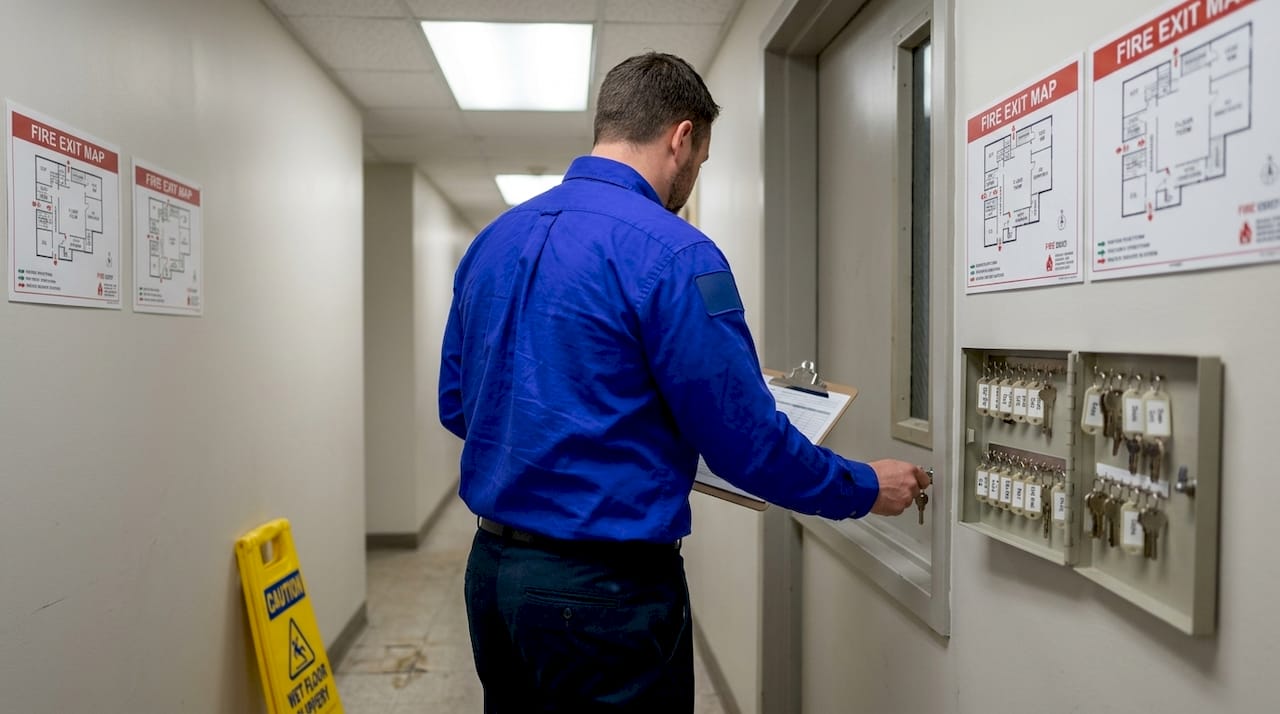
Consistent inspection outcomes depend on three things: scoping the assessment to what decision-makers need, controlling visit logistics including unobstructed access to mechanical, electrical, and roof areas, and centralizing records. When any one of these breaks down, the inspection either runs over time, returns incomplete findings, or has to be rescheduled entirely. A rescheduled inspection costs money and can delay a closing or refinancing by weeks.
Access failures are more common than most owners realize. Tenant resistance, unlabeled keys, storage blocking equipment panels, and locked roof hatches are among the most frequent causes of incomplete inspections. The solution is a pre-inspection coordination meeting, either in person or by phone, with your building engineer, facilities manager, and key tenants at least one week before the scheduled date.
Scope clarification is equally important. Know in advance what is included and what is not:
- Included: Structural systems, roofing, HVAC, electrical, plumbing, life safety systems, exterior envelope
- Typically excluded: IT infrastructure, specialized manufacturing equipment, environmental testing (unless separately contracted)
- Negotiable based on use: Elevators, parking structures, generator systems, irrigation
Compliance and inspection reliability depend on clear access, centralized records including as-builts, and an audit trail of inspections, deficiencies, and corrective actions. When a scope item is unclear, put it in writing before the inspection date to avoid disputes about what was and was not evaluated.
Warning: Locked or obstructed hazardous areas such as electrical vaults, boiler rooms, and roof access points must be made accessible before the inspection. An inspector who cannot safely access a system cannot evaluate it, and an incomplete report creates liability gaps that lenders and buyers will flag during underwriting.
Review inspector safety tips and share relevant access protocols with your team so everyone understands what the inspector needs and why. For fire suppression and alarm systems specifically, fire alarm access procedures outline what inspection teams typically need to evaluate these systems safely and completely.
Go beyond the basics: Life safety and compliance systems
Controlling the basics is vital, but major liabilities lurk in specialized compliance and emergency systems. Here is how not to overlook them.
Life safety systems carry the highest stakes of any building component. A failure or compliance gap in fire protection, emergency egress, or backup power is not just a costly repair. It can trigger regulatory fines, void insurance coverage, and create personal liability for the property owner or manager. Yet these systems are among the most commonly under-prepared areas we see heading into commercial inspections.
A credible commercial inspection preparation plan should include explicit life-safety systems readiness, covering fire protection, emergency power, and egress-related components, because these are repeatedly identified as high-stakes areas where deficiencies carry the most serious consequences.
Here is a preparation checklist for life safety and compliance systems:
- Fire alarm panel should have a current inspection tag and the last annual test report on file
- Sprinkler systems need records of the most recent hydrostatic testing and any corrective repairs
- Emergency egress lighting must be tested to confirm battery backup is functional
- Exit signage should be operational with no burned-out indicators
- Fire extinguishers need current annual inspection tags mounted at all required locations
- Emergency generator (if present) should have recent load testing documentation
Beyond fire and egress, mid-South property owners need to pay close attention to site infrastructure. Stormwater control measures (SCMs) are a category that catches many owners off guard. Many municipalities and counties require ongoing maintenance and annual inspections by certified professionals, and owners may be responsible for maintaining those records. Detention ponds, bioretention cells, and permeable pavement installations all fall under this category and are increasingly scrutinized during due diligence.
Additional compliance areas to prepare:
- Backflow preventers on domestic water connections, as some jurisdictions require annual third-party testing; see this backflow testing checklist for a practical reference
- ADA accessibility features including ramp grades, restroom compliance, and signage
- Elevator inspections with current state certificates posted in each cab
Review our full inspection checklist to confirm your property’s systems align with what a qualified inspector will evaluate. For fire protection specifically, this fire inspection guide provides detailed preparation steps you can adapt for your building.
Maintaining records and planning for long-term compliance
A successful inspection is not a one-time event. Here is how to streamline future inspections and prove compliance over time.
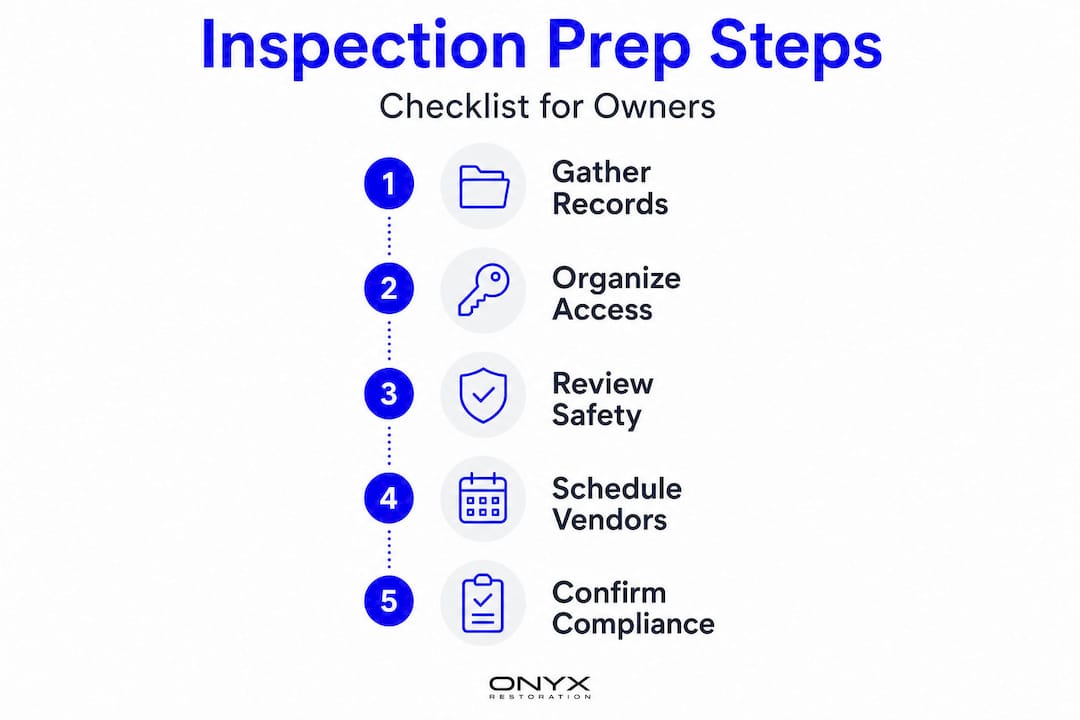
Lifecycle compliance best practices recommend maintaining structural assessments, fire and life safety audits, and accessibility reviews on a scheduled basis, while ensuring as-built drawings are updated and stored centrally for faster troubleshooting and more reliable inspections. Following this approach means each future inspection starts with a complete picture of the property’s condition history rather than a blank slate.
What to log and maintain after every inspection:
- Findings summary noting each identified deficiency by system and severity
- Corrective action log tracking who is responsible, what work was done, and when it was completed
- Re-inspection records confirming that corrective work addressed the original deficiency
- Updated as-built drawings reflecting any system changes, additions, or removals since the last documentation
- Vendor and contractor records documenting who performed repairs and under what warranty terms
Scheduling is the other half of long-term compliance. Here is a practical audit cycle for most Mid-South commercial properties:
| Compliance area | Recommended frequency | Certifying party |
|---|---|---|
| Fire alarm and sprinkler | Annually | Licensed fire protection contractor |
| Stormwater control measures | Annually (or per local requirement) | Certified inspector or engineer |
| ADA accessibility audit | Every 3 to 5 years | Certified Access Specialist |
| Structural assessment | Every 5 years or after major event | Licensed structural engineer |
| Full property condition assessment | At acquisition and every 5 years | Qualified commercial inspector |
Working with licensed third-party professionals for these recurring inspections creates an audit trail that is defensible to regulators, insurers, and future buyers. This inspection documentation resource explains why maintaining a documented inspection record matters beyond simple compliance. Explore pre-inspection organization tips for additional guidance on how to structure your recordkeeping system before inspection day.
What most commercial owners get wrong—and how to get it right
Here is the perspective that separates property managers who protect their assets from those who are constantly reacting to problems.
Too many commercial owners treat inspections as a pass/fail moment. They scramble to gather documents the week before, hope no major deficiencies surface, and file the report in a drawer when it is done. That approach works right up until it doesn’t, and when it fails, it fails expensively. We have seen transactions collapse, insurance claims denied, and regulatory fines issued because an owner could not produce a simple maintenance log or a fire alarm test report that should have been on file for years.
The owners who consistently protect their investments see inspections differently. They use each inspection cycle as a management checkpoint, reviewing findings against prior reports to spot trends like accelerating HVAC decline or recurring moisture intrusion before those trends become capital emergencies. They maintain living records that do not have to be rebuilt from scratch before each due diligence event.
There is also a financial argument that most owners miss. Inspection findings, properly documented and actioned, become an ROI-guided capital planning tool. When you know that your roof has five years of service life remaining and your HVAC is approaching replacement threshold, you can budget strategically and negotiate smarter on future transactions. When your records show consistent, professional maintenance, lenders and buyers have less ammunition to discount your property’s value. We recommend thinking of your smart investment evaluations as a continuous process, not a single pre-transaction event.
The bottom line: inspection preparation is not bureaucratic box-checking. It is active asset stewardship. The properties that perform best over time are the ones whose owners treat documentation and compliance not as a burden but as the foundation of long-term value.
Get expert help with your next commercial inspection
You do not have to tackle this alone. Upchurch Inspection brings regional expertise and rigorous methodology to commercial property assessments across Tennessee, Arkansas, Mississippi, and Southeast Missouri. Our qualified inspectors go beyond surface-level walkthroughs, evaluating structural components, HVAC, electrical, plumbing, roofing, and moisture conditions in detail so you get findings you can actually act on.
Whether you are preparing for acquisition due diligence, refinancing, or an annual compliance review, our commercial inspection checklist gives you a clear starting point. Ready to go deeper? Our due diligence guide walks through exactly what a thorough commercial assessment covers and how to use the findings to protect your investment. Reach out to our team to schedule a consultation or a full-scope inspection. We are here to make sure your property is ready, your records are complete, and your next inspection has no surprises.
Frequently asked questions
What documents are most important to prepare for a commercial inspection?
Focus on as-built drawings, maintenance logs, inspection records, and any reports on repairs or compliance actions. As recommended by commercial inspection best practices, organizing maintenance and service records along with prior inspection and environmental reports significantly speeds up and improves the inspection process.
How can I ensure all areas are accessible to the inspector?
Coordinate with tenants and building staff ahead of time so all necessary spaces, including roofs and mechanical rooms, are unlocked and available. Inspectors need confirmed access to all areas, including roofs, mechanical rooms, electrical rooms, and tenant spaces, before the inspection begins.
Do stormwater controls need to be ready for every inspection?
If your property includes stormwater control measures, local regulations may require them to be inspected and maintained with records available. Many municipalities require annual inspections by certified professionals and hold property owners responsible for ongoing maintenance documentation.
Why is the ASTM E2018 standard important for inspections?
ASTM E2018 provides a trusted, structured approach for evaluating commercial buildings and is often required for due diligence and financing. It is the most cited U.S. standard for transactional scopes of work supporting commercial real estate acquisitions, financing, investments, and capital expenditure planning.
What’s the best way to keep inspection records organized?
Store digital copies of all inspection and corrective action records in a central, regularly updated system. Best practices recommend keeping as-built drawings updated and centrally stored so inspectors and managers can access the full deficiency and corrective action history quickly when needed.