

Negotiating after a home inspection is about converting inspection findings into a clear, reasonable ask. Start by reviewing the report with your agent, separating safety, structural, and major system problems from cosmetic wear. Then get written estimates, choose the right remedy—repairs, a seller credit, or a price reduction—and submit a short written request before your inspection-contingency deadline.
This process is common, not confrontational. Recent market data shows buyers regularly use inspection findings to negotiate concessions, credits, or price changes, including surveyed buyer requests after inspection and broader seller-concession trends. The goal is not to make an older house perfect. It is to avoid inheriting material defects without compensation.
Your Home Inspection Report Is In—Now What?
If you want the short answer on how to negotiate after home inspection, follow this order: review the report carefully, separate serious defects from cosmetic items, get contractor estimates for the expensive issues, decide whether to ask for repairs, a seller credit, or a price reduction, and have your agent send a written request with a deadline tied to your inspection contingency.

The key is prioritization. Ask for items that change the cost, safety, livability, insurability, or financeability of the home—not every scratched outlet cover or sticky window. In our review of inspection negotiations, the strongest requests are usually the shortest ones because they focus on a few documented issues with real financial impact.
Turning Information Into Action
An inspection report is not a pass/fail grade. It is a decision document. One large repair analysis covering 50,000 homes found more than one million repairs identified, with average repair costs around about $10,000 per home. That helps explain why buyers often negotiate after inspection: the numbers are often too large to ignore.
This is also a standard part of the transaction. Research cited by Clever found that up to 46% of buyers negotiated with inspection results, and RISMedia reported that many transactions now include some form of concession or credit in the broader deal structure through inspection-related concessions and closing-cost help.
Charting Your Next Moves
To help you get a clear view of the road ahead, here’s a quick summary of the negotiation process.
Initial Home Inspection Negotiation Roadmap
| Phase | Objective | Key Action |
|---|---|---|
| Report Review | Understand the report’s findings | Read through the report with your agent to identify key issues. |
| Prioritization | Focus on what truly matters | Separate major safety/structural defects from minor cosmetic items. |
| Gather Estimates | Get hard numbers for repairs | Contact qualified contractors to get professional quotes for major issues. |
| Strategy Session | Decide on your “ask” | Work with your agent to determine the best approach: repairs, credit, or price reduction. |
| Formal Request | Submit your proposal to the seller | Your agent will draft and send a formal repair request or addendum. |
Use this roadmap to organize the discussion, but do not treat it like a license to ask for every defect on the report. The goal is to negotiate material issues that affect cost, safety, function, insurance, or financing.
Before you send anything, get organized. The comprehensive home inspection checklist can help you track findings, estimates, and deadlines. If the report includes wood-destroying insect concerns, Pestless Inc.'s guide is a useful primer on why termite findings can become a meaningful part of the repair conversation. For a broader overview of next steps, see what happens after the inspection.
How We Evaluate Inspection Findings Before Negotiating
Not every defect belongs in a repair addendum, so we use a simple screening method before recommending that a buyer press the issue.
The five criteria that matter most
We give the most weight to findings that involve:
- Immediate safety risk: exposed wiring, unsafe panels, gas leaks, trip hazards at critical areas, or conditions that can cause injury.
- Active failure: a roof leaking now, plumbing leaking now, an HVAC system not cooling, or a water heater that is already failing.
- Five-figure replacement exposure: foundation movement, sewer line replacement, major moisture remediation, or a roof near total replacement cost.
- Insurance or lender impact: defects that may affect underwriting, habitability standards, or whether the property can close with the loan program.
- Functional vs. cosmetic condition: a worn countertop is cosmetic; a dead GFCI in a wet area is functional and safety-related.
We'd prioritize this differently when the issue affects safety or financing. Cosmetic wear may bother a buyer more day to day, but unsafe electrical equipment or an active roof leak is more likely to justify a concession because it changes risk, not just appearance.
Old does not automatically mean negotiable
Age matters, but condition matters more. A 19-year-old furnace that is operating safely may not support a strong demand by itself. A furnace of the same age that is short-cycling, leaking, or flagged for unsafe operation is a different conversation. The same logic applies to roofs, water heaters, and service panels. Upchurch’s own component life expectancy resource is useful for context, but useful life is only the starting point.
In our review, buyers get better results when they stop arguing that a component is merely old and instead show that it is defective, unsafe, or near failure. That distinction tends to make sellers, agents, lenders, and insurers take the request more seriously.
Why methodology matters
This framework also keeps negotiations credible. A long punch list of cosmetic items often weakens a buyer’s bargaining position on the items that matter. A short request tied to safety, active defects, and documented cost exposure usually lands better because it reads like a business case, not buyer’s remorse.
Decoding the Report: Minor Flaws vs. Major Dealbreakers

The hardest part of reading an inspection report is not spotting defects. It is deciding which defects deserve money, repairs, or a serious rethink of the deal. A useful report can still overwhelm buyers because it documents everything from a missing handrail to signs of structural settlement.
The cleanest way to sort it is to rank findings by consequence. Start with what could injure someone, trigger major water damage, require a large replacement, or create insurance or loan trouble. Then separate those from routine maintenance and cosmetic wear. To see how inspectors document conditions, review this sample inspection report.
Ranked findings most worth negotiating
These are usually the strongest candidates for a concession or repair request, roughly in order of urgency:
- Active roof leaks or roof failure, especially where water intrusion is already affecting ceilings, decking, or insulation. Insurance carriers may scrutinize roof condition closely, and the FEMA advice on mold after water damage underscores how quickly moisture problems can escalate.
- Structural movement, bowing walls, major settlement cracks, shifting supports, or framing concerns that need engineering review.
- Unsafe electrical conditions, overheating, double-tapped breakers where prohibited, exposed wiring, or known-problem panels. The U.S. Consumer Product Safety Commission on Federal Pacific panels is a reminder that some electrical findings are more than minor code housekeeping.
- Plumbing leaks or sewer issues, active leaks, drain failures, sewer backups, or hidden moisture that can damage finishes and framing.
- Moisture intrusion or mold growth, especially where the source is ongoing. If mold is tied to HVAC or duct contamination, this air duct mold removal guide can help explain the remediation side of the problem.
- Failed HVAC equipment, not just older equipment, but units that are not heating, cooling, venting, or draining properly. The U.S. Department of Energy guidance on maintaining heating and cooling systems is a useful baseline for understanding when a problem moves beyond routine upkeep.
- Radon or other environmental hazards, and the EPA radon overview makes clear that elevated radon is a health issue with a defined mitigation path.
- Issues likely to affect insurance or financing, damaged roofs, missing handrails on appraisal-required repairs, peeling lead-based paint in some contexts, or serious health-and-safety defects.
Old but functional vs. defective or near-failure
This distinction matters more than buyers expect. A roof that is older but not leaking, a furnace near the end of its statistical life but operating properly, or windows with cosmetic seal wear may support only a modest conversation, if any. A component that is actively failing, unsafe, or likely to stop working soon is what usually justifies a meaningful request.
We'd draw the line here: age alone is often a budgeting issue for the buyer; active defect is a value issue in the transaction. Sellers usually negotiate more readily when the request is tied to present condition instead of future planning.
True walk-away findings vs. modest-credit findings
Some findings are serious enough that buyers should consider terminating unless the seller addresses them adequately. Examples include major structural instability, severe hidden moisture damage, unsafe electrical conditions with broad scope, significant sewer failures, or any condition that your lender or insurer may reject.
Other findings support a smaller credit rather than a showdown: an aging but working water heater, several non-critical GFCI updates, moderate exterior wood rot at one trim area, or a furnace that still operates but has service recommendations. Those items still cost money, but they do not always justify an all-or-nothing stance.
If you need a broader buyer planning document while sorting issues, this home inspection checklist template can help you compare report items against your own priorities.
Which Inspection Findings Are Worth Negotiating?
Buyers often overestimate the value of cosmetic defects and underestimate the negotiating power created by a few documented major problems. The findings most worth negotiating are the ones that would make a reasonable future buyer hesitate or would require immediate spending after closing.
Usually worth negotiating
- Safety hazards
- Active leaks or water intrusion
- Roof defects with remaining-life concerns and present damage
- Structural concerns needing specialist review
- Sewer or major drain-line problems
- Non-working HVAC, water heater, or electrical service components
- Termite or wood-destroying insect damage when it affects structure or requires treatment
- Items that may create lender, insurance, or occupancy issues
Usually not worth leading with
- Cosmetic wall damage
- Minor window adjustments
- Loose hardware
- Worn flooring unless tied to subfloor or moisture damage
- Small maintenance items you would expect in a lived-in home
Do sellers usually negotiate after inspection? Often, yes—but not on everything. Buyers commonly ask, and sellers commonly respond with some mix of compromise, refusal, or counteroffer rather than a full yes. In our view, the deciding factor is not whether a buyer asks, but whether the request is narrow, documented, and tied to defects that materially change the economics of the deal.
Can you negotiate a lower price after inspection? Yes, especially when the issue is expensive and a seller credit will not solve the cash-flow problem at closing. But a lower price helps over the life of the loan; it does not put immediate repair money in your account. That is why many buyers still prefer a credit when the loan program allows it.
Building Your Case with Professional Repair Estimates
Walking into a negotiation armed only with an inspection report is like showing up to a debate with opinions but no facts. The report is fantastic at identifying potential issues, but it’s not a price list.
It’ll tell you the roof is old, but it won’t tell you a replacement will cost $12,000. You need to shift from finding problems to defining their financial impact.
Getting professional repair estimates is your single most powerful move in the entire negotiation process. It transforms a vague concern from the report, like “evidence of moisture intrusion in the crawl space,” into a concrete, evidence-backed proposal. A written quote from a licensed pro validates the inspector’s findings and gives you the hard numbers needed to justify your request, whether that’s for a seller credit or a price drop.
Why Estimates Are Non-Negotiable
Let’s be honest: sellers are far more likely to take your requests seriously when they see official documentation. A casual ask for money off because “the HVAC is old” is easy for them to dismiss.
But when you present a detailed estimate from a reputable HVAC company for $8,500 to replace a failing unit? That’s a compelling piece of evidence that can’t be easily ignored.
This step protects you, too. It gives you a realistic grip on the true costs you’re facing, which helps you decide what’s reasonable to ask for and what you can afford to take on if the seller says no. Without quotes, you’re just guessing. That can lead to asking for too little and getting stuck with a massive bill, or asking for too much and killing the deal entirely.
An inspector’s job is to find the problem; a contractor’s job is to price the solution. Obtaining written estimates bridges this gap, turning your negotiation from a subjective discussion into an objective, fact-based conversation about the home’s real-world condition and value.
Finding the Right Professionals
Your real estate agent is your best first call for finding trusted, licensed contractors. They almost always have a network of go-to professionals—from electricians and plumbers to roofers and structural engineers—who are responsive and get the time-sensitive nature of a real estate deal.
When you start reaching out for estimates, keep these things in mind:
- Focus on Major Issues: Don’t waste your time (and the contractor’s) getting quotes for leaky faucets or a cracked tile. Concentrate on the big-ticket items—the critical defects or major system repairs you already identified.
- Get It in Writing: A verbal quote is useless in a negotiation. You need a detailed, written estimate that breaks down the cost of labor and materials. This is the document you’ll submit with your repair request.
- Obtain Multiple Quotes for Big Jobs: For anything significant, like a roof replacement or foundation work, getting two or three estimates is a smart move. It strengthens your position by showing that your requested amount is based on a fair market rate, not just the highest price you could find.
Using Estimates to Strengthen Your Position
Once you have the quotes, you have bargaining power.
Let’s say the inspection report notes the water heater is past its typical lifespan. To figure out what that means financially, you can reference a guide on the expected component life expectancy to see it’s on borrowed time. Then, you get a quote for $1,800 for a full replacement and installation.
Suddenly, your request is no longer about an “old” appliance; it’s about a documented, end-of-life system with a clear replacement cost. This data-driven approach strips the emotion and subjectivity out of the discussion, making it much harder for a seller to refuse or come back with a lowball counteroffer.
By building a case supported by professional documentation, you aren’t just asking for concessions—you are demonstrating the true cost of bringing the home to a safe and functional standard. This is the foundation of a successful negotiation.
Choosing Your Strategy: Repairs, Credits, or a Price Drop?
Okay, you’ve got the estimates. Now the decision is not whether to ask for something, but what form of concession gives you the best outcome.
When to ask for seller repairs
Repairs make the most sense when the issue is specific, limited in scope, and easy to verify after completion. Think replacing a missing GFCI near a sink, repairing an active plumbing leak under one fixture, adding a safety handrail, or correcting a code-related electrical issue. These are jobs where the result is clear and the seller can reasonably complete the work before closing.
Repairs are less attractive when the job is large, invasive, or quality-sensitive. We’re cautious any time a buyer would be relying on the seller to choose the lowest bidder on roofing, mold remediation, drainage correction, or structural work.
When credits are usually better
A seller credit is often the cleanest option when the buyer wants control over the contractor, materials, and timing. Instead of hoping the seller fixes the problem well, you close on time and handle the work yourself. That tends to work especially well for HVAC replacement, roof work, water intrusion repairs, or any issue where workmanship matters.
This is also where lender rules matter. Seller credits are generally limited by loan type and cannot exceed actual closing costs. Freddie Mac explains that interested party contributions have maximum limits, and Fannie Mae also sets seller concession limits by occupancy and loan-to-value. Before you ask for a large credit, confirm with your lender that the structure works under your specific loan.
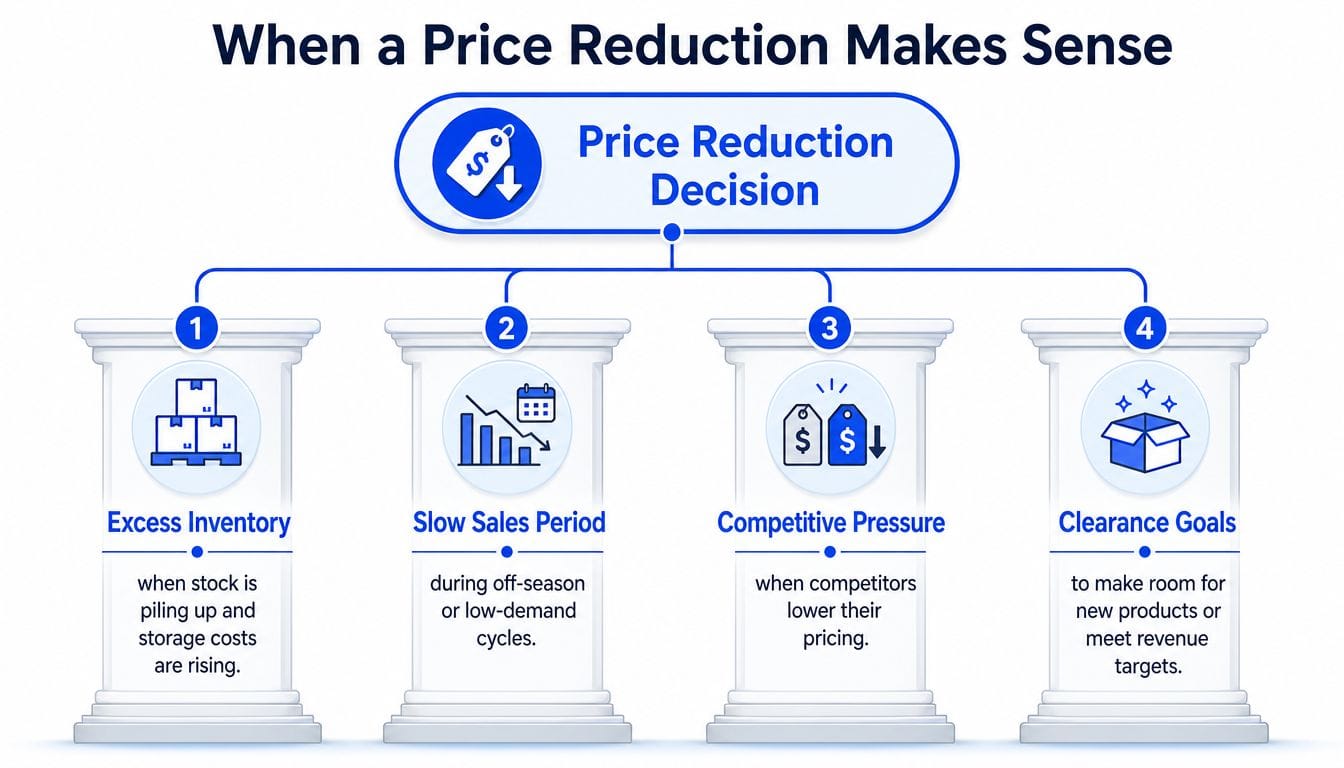
When a price reduction works best
A price reduction is usually the better fit when repair costs are large and you have enough cash to do the work after closing. It can also help when your closing-cost bucket is already full and there is no room for a larger credit. The tradeoff is liquidity: lowering the price changes your long-term loan cost more than your immediate repair budget.
What if the repair costs exceed lender or closing-cost limits?
At this point many buyers lose time. If the repair issue is expensive and the seller credit would exceed your allowable closing costs or lender caps, you have a few practical options:
- reduce part of the request to a purchase-price reduction,
- ask for a smaller seller credit plus selected pre-closing repairs,
- increase your own cash contribution if the deal still makes sense,
- or renegotiate only the highest-priority items.
In our review, the best move is to involve the lender early rather than after the seller agrees to a structure your loan cannot accept. That avoids rewriting addenda at the last minute.
One $8,000 issue, handled three different ways
Assume the inspection finds a failed HVAC system with a contractor estimate of $8,000.
- As a repair request: You ask the seller to replace the system before closing using a licensed HVAC contractor and to provide paid invoices and transferable warranties.
- As a seller credit: You ask for an $8,000 credit at closing, assuming your loan program and closing-cost totals can support it, so you can choose the installer yourself after closing.
- As a price reduction: You ask for the purchase price to drop by $8,000, which lowers your loan balance but leaves you responsible for funding the replacement out of pocket.
For many buyers, the credit is the most practical middle path. For a cash-strong buyer, the price reduction may still be worthwhile. For a narrow safety fix, repairs can be perfectly reasonable.
This handy decision tree can help you visualize which path makes the most sense for your specific situation.
As you can see, a lot comes down to how much the repairs will cost and how much cash you have available to tackle them.
To help you weigh the options side-by-side, here’s a quick breakdown of the advantages and disadvantages of each approach.
Comparing Negotiation Outcomes: Repairs vs. Credit vs. Price Reduction
| Negotiation Request | Primary Advantage | Potential Downside | Best For… |
|---|---|---|---|
| Seller Repairs | No upfront cash required from the buyer; work is done before closing. | Lack of control over quality; potential for cheap fixes and closing delays. | Minor, straightforward repairs when the buyer has limited cash. |
| Closing Cost Credit | Buyer has full control over repairs; frees up cash after closing; avoids delays. | Limited by total closing costs and lender rules; requires managing contractors. | Most common scenarios, especially for buyers who want control over the work. |
| Price Reduction | Lowers the loan amount and lifetime interest paid. | Doesn’t provide immediate cash for repairs; minimal impact on monthly payment. | Very expensive repairs and for buyers who have ample cash reserves. |
Ultimately, the right choice is the one that best protects your investment and financial health.
Don’t forget to factor in the temperature of the current housing market, too. In a hot seller’s market, your bargaining power is reduced, and sellers might just expect you to take the property “as-is.” In a buyer’s market, the tables are turned, and you can usually ask for more. For a deeper dive, check out these excellent negotiating tactics on structuretech.com.
Crafting a Repair Request That Gets Results
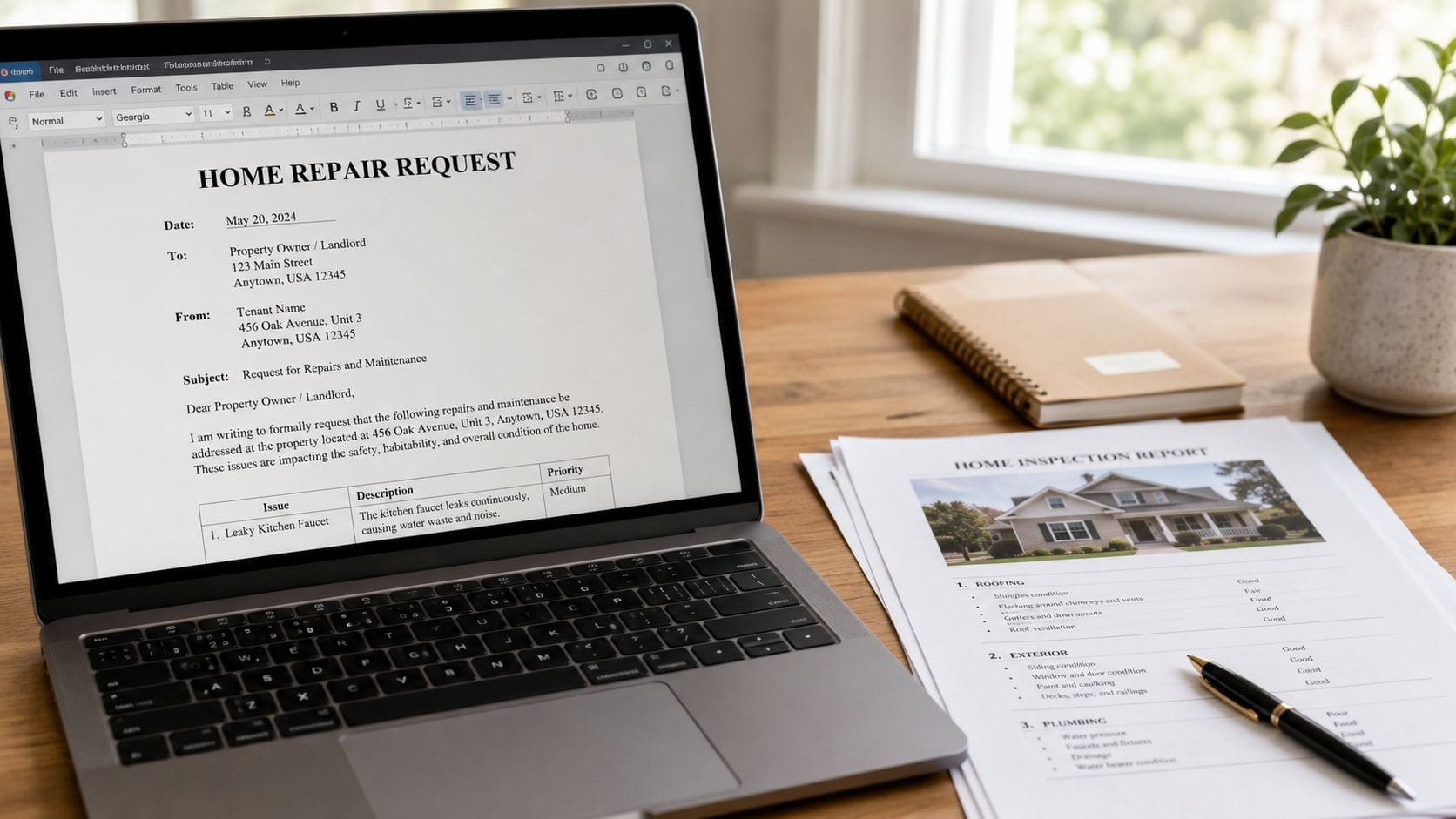
A strong request is not a vague complaint and it is not a 25-item punch list. It is a short document that points to the report, names the priority defects, attaches estimates, states the remedy you want, and gives the seller a response deadline tied to the contract.
What to include, in order
- Reference to the inspection report, cite page numbers or item numbers.
- Priority issues only, focus on the defects that affect safety, function, cost, insurance, or financing.
- Attached estimates, include written contractor quotes where available.
- Requested remedy, repair, credit, or price reduction.
- Inspection-contingency deadline, make clear when a response is needed.
- Fallback preference, say what you prefer if the seller declines your first choice.
We recommend bundling related issues instead of sending a scattered list. For example, “electrical safety corrections” reads more clearly than four separate bullets for missing GFCIs, exposed wiring, reversed polarity, and an open junction box.
Fill-in-the-blank repair-request template
Use this as a starting point with your agent:
Buyer requests the following based on the attached inspection report dated [date]. Please see report pages [x, y, z] and attached contractor estimates.
- Address the following priority items: [brief list of 2–5 material issues].
- Buyer requests that seller [complete licensed repairs before closing / provide a credit of $___ at closing / reduce purchase price by $___].
- Supporting estimates are attached for the following items: [issue + estimate amount].
- Buyer requests seller response no later than [date/time] pursuant to the inspection contingency.
- If seller declines repairs, buyer’s fallback preference is [credit / price reduction] in the amount of $___.
Sample seller-credit request
Here is a cleaner example for a credit request:
Per the attached inspection report (pages 11, 14, and 18) and the attached estimates from licensed contractors, the property has three material issues: active roof leakage, unsafe electrical defects at the main panel, and a failed HVAC condenser. Buyer requests a seller credit of $9,750 at closing in lieu of repairs. If seller prefers not to offer the full credit, buyer’s secondary request is for licensed repair of the electrical hazards before closing and a reduced credit for the remaining items. Please respond by [inspection contingency deadline].
Tone matters, but specificity matters more
A professional tone helps, but details close the gap. “Please repair everything on the inspection report” is weak because it is broad, subjective, and easy to reject. “Please provide a $4,200 credit for the attached plumbing and electrical estimates referenced on report pages 7 and 12” is far easier to evaluate and counter.
The best requests read like a memo, not an argument. They are brief, documented, and limited to what changes the deal.
Knowing When to Stand Firm and When to Walk Away
You’ve done your part and sent over the repair request. Now comes the hard part: waiting for the seller’s response. Negotiations can be a real emotional rollercoaster, and this is the moment you’ll find out if you and the seller are on the same page.
So, what happens if they come back with a flat-out “no,” or their counteroffer feels like a lowball? That's when all that prep work you did, defining your budget and your non-negotiables, really comes into play. You have to look at their response objectively, not just react emotionally. If they’ve agreed to some fixes but not others, there’s usually room to find a reasonable compromise. But if they’re refusing to budge on serious safety or structural problems, you’ve hit a critical fork in the road.
Evaluating the Seller’s Response
When the seller’s counteroffer lands in your inbox, sit down with your agent and break it down. Are they pushing back because of the cost, or do they just not want the headache of coordinating repairs? You’ll find that sometimes a seller who says no to doing the work themselves will be perfectly fine offering a credit instead.
Other times, they might try to offer a home warranty in place of fixing an ancient HVAC system. Be wary of this—it’s rarely an equal trade. A warranty won’t cover pre-existing conditions and often comes with service fees and coverage gaps.
Understanding where they’re coming from helps you craft one last, smart counteroffer. Maybe you can meet in the middle on the credit amount. Or perhaps you agree to take on a few more of the smaller items yourself if they’ll handle that one major safety hazard. This is your final shot to find that common ground.
Red Lines and Deal Breakers
Every single buyer needs a “walk-away” point. This isn’t about being dramatic; it’s about being smart. These are the absolute, essential issues that make the house a bad deal for your finances or your family’s well-being.
So when is it officially time to walk? Here are some clear signs:
- Refusal to address serious safety hazards. We’re talking about things like faulty electrical wiring, significant mold problems, or a shaky foundation. These aren’t cosmetic.
- The problems are just too big. The inspection uncovered issues so massive that the repair costs blow your budget out of the water, even if the seller offers a concession.
- A seller who is completely unwilling to negotiate. If they won’t budge on any of the major defects, that leaves you shouldering the entire financial and logistical burden.
Ultimately, the decision boils down to one simple question: Can you afford to absorb the cost of these repairs if the seller won’t help? Go back to your budget and be brutally honest with yourself. Don’t let the dream of the house cloud your financial reality.
Your inspection contingency is your ultimate protection. Think of it as a contractual safety net that gives you the power to walk away from a bad deal without losing your earnest money. Using it isn’t a failure—it’s a smart financial decision.
Unfortunately, haggling over repairs has become a major hurdle in real estate. Disagreements over inspection findings are now the top reason contracts fall apart, accounting for a staggering 70.4% of all failed deals. This has pushed contract cancellations to a record high of 15.1% as buyers and sellers just can’t find a middle ground. You can discover more insights on why home deals are canceled on Fortune.com.
Knowing when to stand your ground on the critical stuff—and when it’s time to use your contingency and walk away—is the final, most important part of negotiating after a home inspection. Making that call with confidence is what ensures you buy a home that’s a sound investment, not a money pit.
Common Questions About Home Inspection Negotiations
Going back to the seller after an inspection can feel like walking on eggshells. You’re trying to be fair but also protect your investment. To make it less stressful, here are some straight answers to the questions I hear all the time from buyers trying to figure out their next move.
How Much Is Reasonable to Ask for After a Home Inspection?
I wish there were a magic number, but what’s reasonable depends directly on what the inspector found. The key is to focus your request on significant defects, not small, cosmetic issues anyone could live with. A fair request is grounded in professional cost estimates for major problems that affect the home’s safety, structure, or essential systems.
Think in these categories:
- Safety Hazards: Things like a faulty electrical panel, scary-high radon levels, or a significant mold problem require immediate attention.
- Structural Issues: Problems with the foundation or a roof that’s seen better days cannot be ignored.
- Failing Systems: An HVAC unit on its last legs or a leaking water heater is not just an inconvenience, it is a major expense waiting to happen.
Asking for credits to cover these big-ticket items is completely standard. While some agents might throw out a benchmark like asking for 1-2% of the purchase price for moderate issues, your best bet is always to let detailed repair quotes guide your negotiation. That way, you’re dealing with real numbers, not guesswork.
Can a Seller Refuse to Make Any Repairs?
Yes, they absolutely can. Most standard real estate contracts state the property is sold “as-is,” which gives the seller the right to decline every single one of your requests. This is especially common in a hot seller’s market where they know another buyer might be waiting right behind you.
But a seller’s “no” isn’t the end of the road—it’s just a decision point for you. Your power is in the inspection contingency clause in your contract. It gives you the ability to walk away from the deal and (usually) get your earnest money back if you can’t reach a fair agreement.
Is It Better to Get a Credit or Have the Seller Do Repairs?
Talk to any experienced real estate agent, and they’ll almost always tell you to push for a credit at closing instead of letting the seller handle the repairs. Why? Because a credit puts you in the driver’s seat.
When you get a credit, you get to choose your own contractor, oversee the quality of the work, and make sure they use materials that will last. When sellers are in charge, their primary motivation is often finding the cheapest, quickest fix—which might not be the best fix for you in the long run. Plus, asking for a credit helps avoid potential closing delays if the seller’s repairs drag on longer than expected. The only time it might make sense to have the seller do the work is for a few very simple, minor fixes.
Feeling confident about your property’s condition is important. For a thorough evaluation in the Greater Memphis area, trust the experts at Upchurch Inspection to uncover the details that matter. Schedule your home inspection today by visiting us at https://upchurchinspection.com.



One Response
An inspection contingency provides valuable protection for buyers. If repair requests are rejected and no fair resolution is reached, you may have the option to cancel the contract without losing your earnest money.