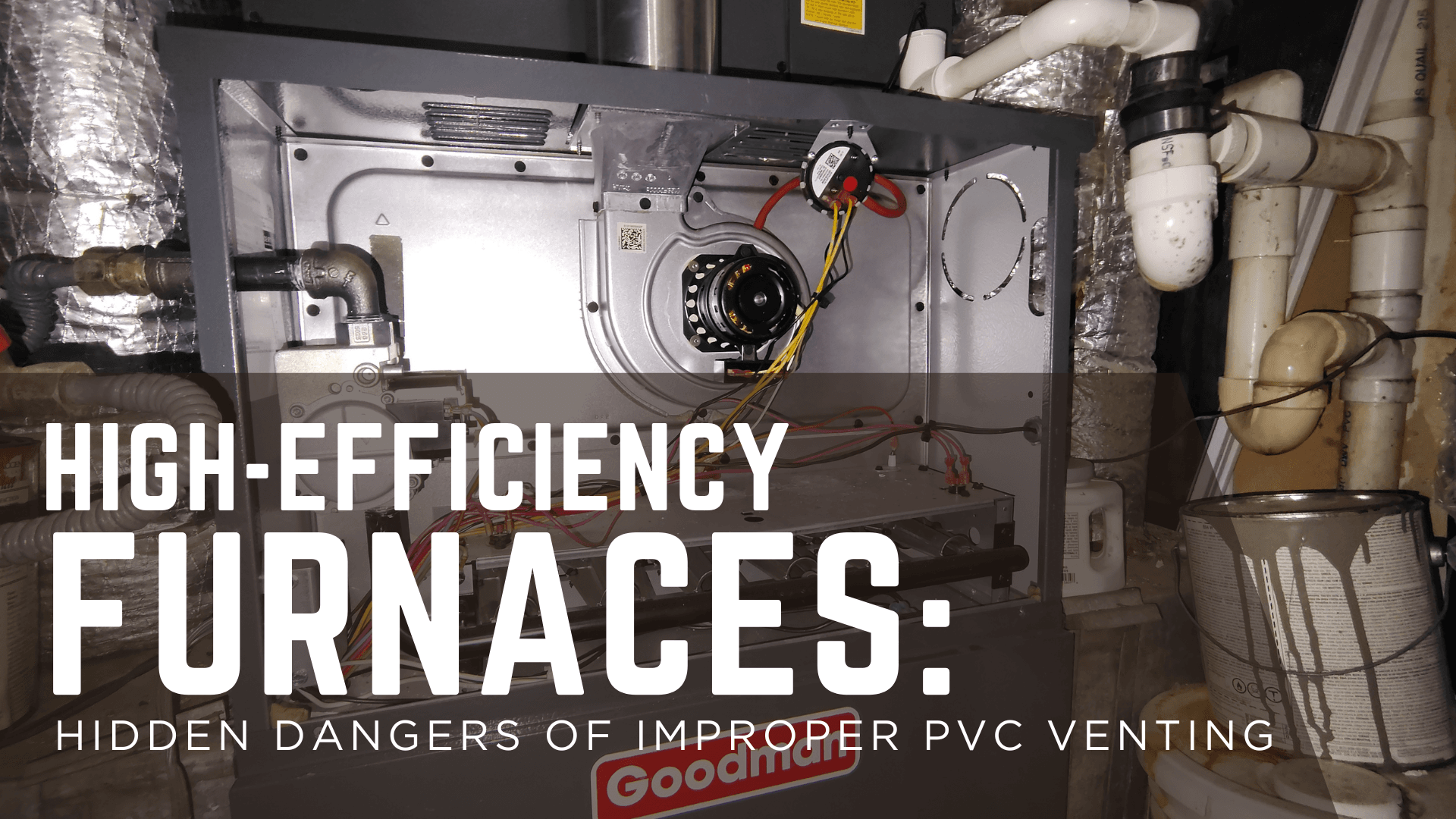
High-efficiency furnaces are great when they’re installed correctly. Quiet, efficient, and cheaper to run — on paper.
In the field? I find more venting mistakes on high-efficiency furnaces than almost any other heating system. And most homeowners have no idea anything is wrong.
PVC venting looks simple. That’s the problem.
Why High-Efficiency Furnaces Are Different
These furnaces don’t vent like older metal flue systems. They use PVC to exhaust combustion gases and often a second PVC line for intake air.
That means:
- Combustion gases are cooler
- Moisture is present in the exhaust
- Venting relies entirely on correct slope, fittings, and termination
If any of that is wrong, bad things happen quietly.
A Real Inspection Where “It Passed” Still Wasn’t Safe
I inspected a home in Collierville where the furnace had passed a recent service call with flying colors. Sticker on the unit. Clean filter. System heating fine.
But the PVC exhaust was sloped back toward the furnace.
Condensate had been draining into the heat exchanger instead of out of the system. There were early signs of corrosion inside the cabinet and rust staining near the inducer motor.
That furnace worked — but it was being damaged every time it ran.
The Most Common Venting Mistakes I See
PVC venting fails in very predictable ways:
- Improper slope (flat or back-pitched)
- Too many elbows
- Unsupported horizontal runs
- Glue joints that aren’t fully seated
- Wrong pipe material
- Terminations too close to windows or soffits
I’ve also seen intake and exhaust lines swapped. Yes — really.
Why Condensate Is the Silent Killer
High-efficiency furnaces produce water as part of normal operation. That water must drain away from the furnace.
When it doesn’t:
- Heat exchangers corrode prematurely
- Inducer motors fail early
- Pressure switches malfunction
- Furnaces short-cycle or lock out
- Carbon monoxide risks increase
I inspected a home in Arlington where condensate had been pooling in the exhaust pipe for years. The furnace was only eight years old — and already compromised.
Termination Problems Outside the Home
Even when the interior piping looks fine, terminations are often wrong.
Common issues include:
- Exhaust too close to grade
- Intake pulling in exhaust gases
- Snow or mulch blocking pipes
- Improper screens clogging with lint or ice
In Lakeland, we inspected a home where the exhaust terminated under a deck. Moisture damage was visible on the framing above it, and combustion gases were being pulled right back into the intake.
That setup never should’ve passed inspection.
Why These Problems Get Missed
PVC looks harmless. It doesn’t rust. It doesn’t look “dangerous.”
But just because it’s plastic doesn’t mean it’s forgiving.
A single bad joint or wrong slope can slowly destroy a furnace without ever triggering an obvious failure — until one day it does.
How I Inspect PVC Venting
When I inspect high-efficiency furnaces, I:
- Check slope on every accessible run
- Look for proper support and spacing
- Verify material type
- Inspect glue joints
- Trace intake and exhaust routing
- Evaluate termination locations
If I can’t see the full run, that limitation gets documented. Hidden venting doesn’t get the benefit of the doubt.
What Buyers Need to Understand
High-efficiency doesn’t mean low-risk.
When PVC venting is wrong, repairs aren’t minor. Damage often happens inside the furnace where you can’t see it — and replacement becomes the only real option.
The Inspector’s Bottom Line
PVC venting failures don’t announce themselves with smoke or noise. They work quietly, slowly, and expensively.
High-efficiency furnaces demand precision. When installers treat PVC like plumbing instead of combustion venting, systems suffer.
That’s why I never glance at PVC and move on. If it’s venting combustion gases, it deserves a closer look — every time.