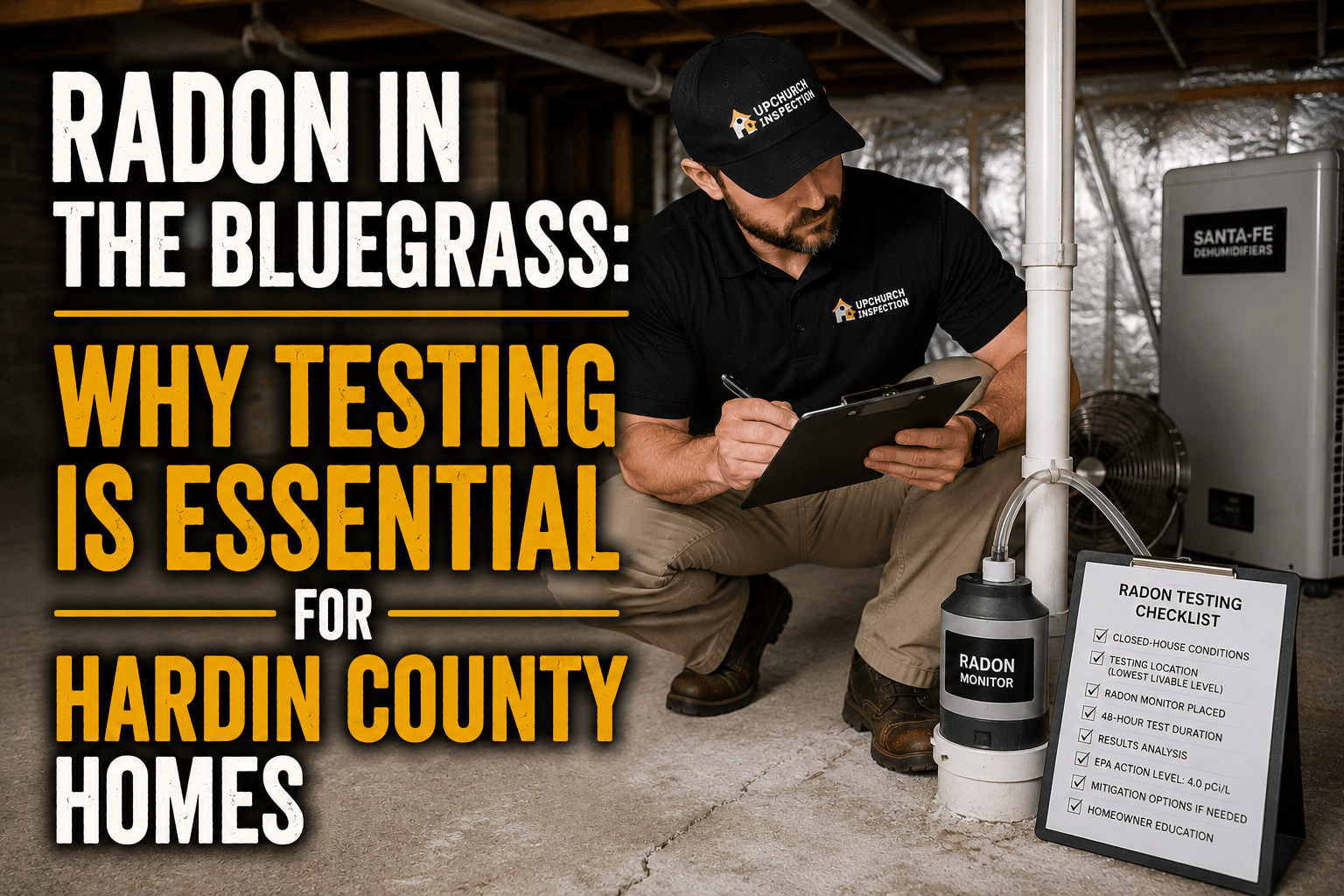
When I review inspection reports from Hardin County, radon testing is one of the items I pay the closest attention to — especially for families relocating to the Elizabethtown and Radcliff area. Kentucky consistently ranks among the higher radon states, and Central Kentucky’s geology plays a big role in that.
Radon isn’t something you can see or smell, but it shows up clearly in the data our inspectors collect.
Why Radon Is a Real Concern in Central Kentucky
Radon is a naturally occurring radioactive gas released as uranium breaks down in soil and rock. In areas with limestone and fractured bedrock, like much of the Bluegrass region, radon can move easily from the ground into homes.
The reports I review from Hardin County frequently show elevated readings, even in newer construction. Tight building envelopes and modern energy efficiency can actually increase indoor radon levels by trapping gases inside.
What Our Inspector Sees in Elizabethtown and Radcliff
Our Central Kentucky inspector regularly conducts radon testing as part of the inspection process. The results don’t follow a predictable pattern based on age or price of the home.
We see elevated radon levels in:
- Older homes with basements
- New construction with sealed foundations
- Slab-on-grade homes with minimal visible openings
- Homes that otherwise show no moisture or air quality concerns
Radon doesn’t care how “nice” a house is.
Why Military Families Should Pay Attention
Radcliff serves a large population of military families, many of whom are relocating on tight timelines. When I review reports for these buyers, radon testing is especially important because it provides objective information about indoor air quality before move-in.
Long-term radon exposure is linked to lung cancer, and families with children spend more time indoors than they realize. Testing is a simple step that removes uncertainty.
How Radon Enters the Home
Our inspector documents potential entry points, including:
- Foundation cracks and control joints
- Gaps around plumbing penetrations
- Sump pits and basement slabs
- Crawlspace soil exposure
Even well-sealed homes can allow radon entry through pressure differences between indoor and outdoor air.
Why Testing Matters More Than Assumptions
One misconception I see often is buyers assuming radon “isn’t an issue” because neighbors haven’t mentioned it. Radon levels can vary dramatically from one house to the next, even on the same street.
That’s why our inspections in Hardin County treat radon testing as a safety-first measure. In the Bluegrass, testing isn’t about fear — it’s about knowing what you’re breathing and addressing it early if needed.