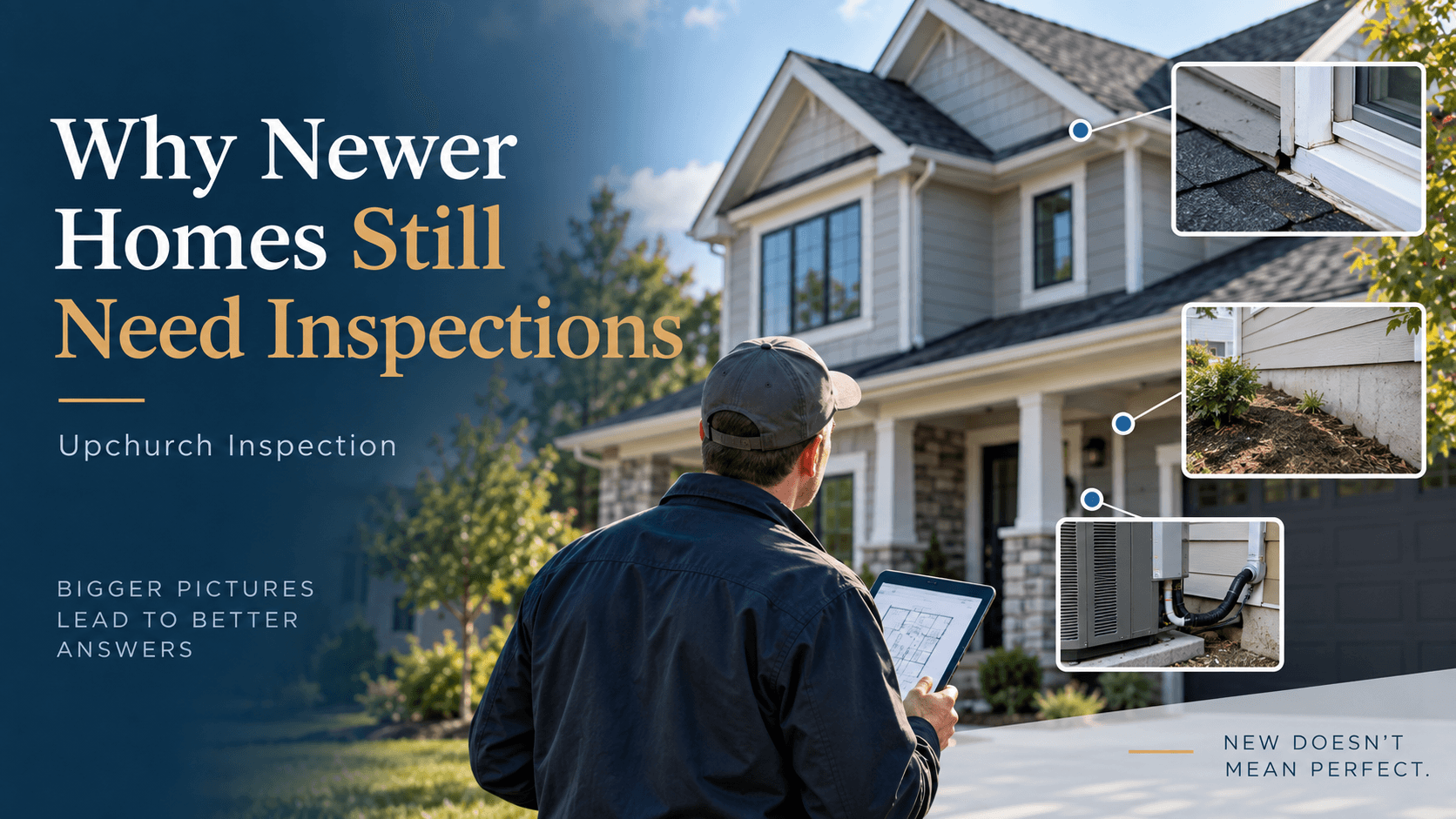
One of the most common assumptions buyers make is that newer homes are somehow exempt from inspection concerns. If the house was built recently—especially within the last five to ten years—it’s easy to believe the big risks are behind you.
After all, everything looks clean. Systems feel modern. Materials haven’t had time to age.
From experience, this is exactly why newer homes deserve just as much attention during an inspection as older ones—sometimes more.
New Doesn’t Mean Settled
Newer homes are still adjusting to their environment.
Soils compress. Framing dries. Materials acclimate. Mechanical systems begin operating under real, daily loads instead of occasional use. This settling period is when a lot of issues quietly reveal themselves.
We regularly inspect newer homes where:
- Doors and windows have shifted slightly
- Floors show early movement
- Drywall cracks have appeared after the first few seasons
- Grading has changed as soil settles
None of these are unusual. But they matter, because they tell us how the house is responding to real-world conditions—not ideal ones.
Speed Is the Defining Risk in New Construction
Modern homebuilding is fast.
Crews rotate constantly. Schedules are tight. Materials arrive just in time. Quality control often depends on how closely each trade follows plans rather than how carefully work is executed.
That environment doesn’t guarantee problems—but it increases variability.
We frequently find:
- Missed fasteners
- Inconsistent sealing and flashing
- Improvised solutions where materials didn’t line up perfectly
- Systems that technically meet requirements but weren’t optimized
These aren’t dramatic defects. They’re small execution gaps that become more meaningful over time.
Moisture Management Is Still the Biggest Unknown
Newer homes are tighter and more energy efficient. That’s good—but it also means moisture has fewer ways to escape.
If ventilation, drainage, or sealing details weren’t handled correctly, moisture problems don’t show up immediately. They build quietly.
We’ve inspected newer homes with:
- Attics retaining more humidity than expected
- Crawl spaces struggling to dry
- Condensation forming in places buyers wouldn’t think to look
The home looks perfect. The environment inside the structure tells a different story.
Systems Haven’t Been Tested Yet
Older homes show you how systems age. Newer homes haven’t had that chance.
A furnace that’s only run for two seasons hasn’t been stressed. A roof hasn’t seen multiple storm cycles. A plumbing system hasn’t experienced years of thermal expansion and contraction.
Inspections of newer homes are often about design and installation, not wear. We’re looking for whether systems were set up to succeed long-term—not whether they’ve already failed.
Builder Fixes Can Create Blind Spots
Many newer homes have already had warranty repairs. That’s normal.
What matters is how those repairs were handled.
Sometimes fixes address symptoms instead of causes. A crack gets patched. A leak gets sealed without correcting drainage. A system gets adjusted without addressing layout or load.
By the time a home is resold, those repairs can obscure the original issue.
An inspection helps buyers understand whether the fix resolved the problem—or just paused it.
Why Buyers Feel Shocked When New Homes Have Issues
Buyers expect older homes to need work. They don’t expect it from newer ones.
So when an inspection report flags concerns in a five-year-old home, it feels wrong. Like something must have gone badly.
In reality, the inspection is often catching early-stage issues at the best possible time, when they’re easiest to address.
Ignoring them because the home is “new” is how small problems turn into expensive ones later.
How We Approach Newer Homes at Upchurch Inspection
When we inspect newer homes, we don’t assume quality—and we don’t assume failure.
We focus on:
- Execution details
- Moisture behavior
- System layout and load
- Early signs of movement or stress
We explain which issues are typical, which deserve monitoring, and which should be addressed sooner rather than later.
Newer homes don’t need inspections because they’re likely to be bad. They need inspections because this is the moment when early decisions either prove themselves—or start to show cracks.
Catching those things early doesn’t take away from the appeal of a newer home. It protects it.