At some point during almost every inspection, a buyer asks a version of the same question:
“Okay, but which of these things really matters?”
It’s a fair question. Inspection reports can feel dense. Issues are documented individually, often with similar formatting and similar language. To someone new to the process, everything can start to look equally urgent.
What surprises people is that inspectors don’t rank defects for clients in a simple hierarchy—and that’s not an oversight. It’s intentional.
Importance Depends on the Buyer, Not Just the House
A defect doesn’t exist in a vacuum. Its importance depends on who’s buying the home, how they plan to live in it, and what their tolerance for risk looks like.
A cracked tile might be irrelevant to one buyer and a deal-breaker to another. An aging HVAC system might be manageable for someone with cash reserves and stressful for someone already stretching their budget.
If an inspector tried to assign universal importance, they’d be substituting their priorities for yours.
That’s not helpful—and it’s not honest.
The Inspector’s Role Is to Describe, Not Decide
Our job is to identify conditions, explain what they mean, and describe the risks they introduce.
Your job is to decide how those risks fit into your life.
That division of responsibility matters. When inspectors start ranking issues as “minor,” “moderate,” or “major” without context, buyers often take those labels as recommendations instead of descriptions.
A “minor” issue can become major if it affects safety, financing, or future plans. A “major” issue may be acceptable if it’s priced into the deal.
A Real Example: Two Buyers, Same Report
We’ve inspected the same house for different buyers at different times and watched them respond completely differently to the same findings.
One buyer fixates on foundation movement and walks away. Another sees it as stable, understood, and negotiable.
One buyer is unfazed by an aging roof because they planned to replace it anyway. Another sees it as an immediate financial strain.
The report didn’t change. The buyer did.
That’s why ranking defects without knowing the buyer’s priorities would be misleading.
Why Equal Formatting Doesn’t Mean Equal Severity
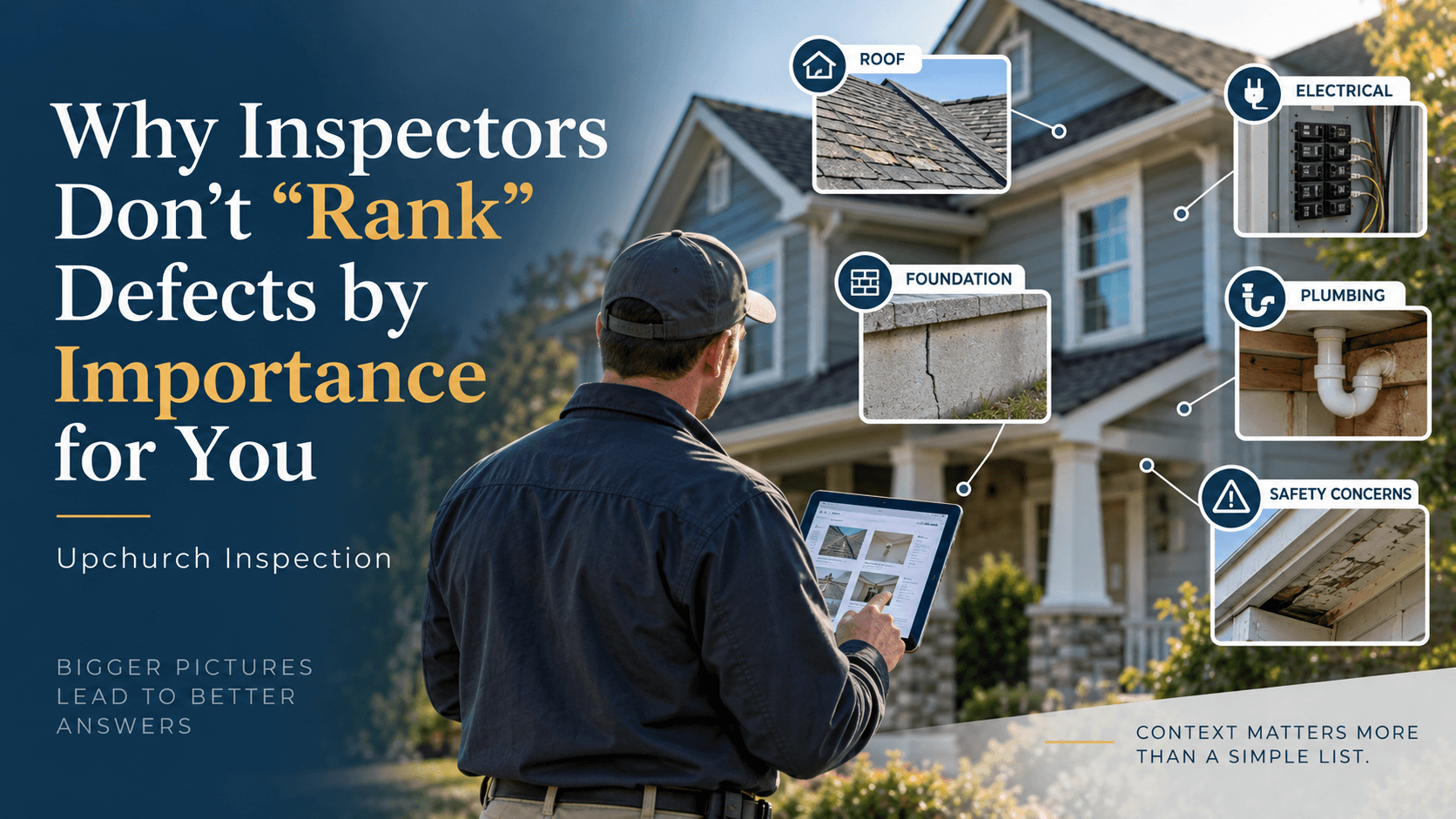
Inspection reports are structured for clarity and consistency. Each issue gets its own section. Each section gets photos and explanations.
That structure makes reports readable—but it also makes every issue feel equally weighted.
In reality, they’re not.
Some issues affect safety. Some affect cost. Some affect comfort. Some affect long-term durability. Some may never matter at all.
Understanding which is which requires conversation, not labels.
How Inspectors Actually Think About Severity
Internally, inspectors do think about severity—but not in a single linear ranking.
We’re considering:
- Safety risk
- Likelihood of failure
- Consequences of failure
- Cost and disruption of repair
- Whether the issue is active or dormant
Those factors don’t stack neatly into a top-ten list. They interact.
That’s why a walkthrough discussion often matters more than the report itself.
Why Buyers Should Be Wary of Over-Simplified Rankings
Some inspection summaries attempt to rank issues or assign color codes. While that can feel helpful, it can also flatten nuance.
A red item might sound terrifying when it’s manageable. A green item might feel harmless when it deserves attention.
Homes don’t fail in ranked order. They fail where stress, time, and neglect intersect.
How We Handle This at Upchurch Inspection
Rather than ranking defects for clients, we talk through them.
We explain:
- Which issues affect safety first
- Which issues affect budgeting
- Which issues are normal for the home’s age
- Which issues deserve monitoring versus immediate action
We help clients prioritize based on their situation, not a generic scale.
That approach takes more time—but it leads to better decisions.
The Question That Works Better Than “What Matters Most?”
Instead of asking which defects matter most in general, a better question is:
“What should I be paying attention to first, given how I plan to live in this home?”
That shifts the conversation from abstract severity to practical ownership.
Inspection reports aren’t meant to make decisions easier by ranking problems. They’re meant to make decisions better by providing clarity.
When buyers understand that, reports stop feeling overwhelming and start feeling useful—because they’re being used the way they were intended to be used.