

A gutter overflows on one side of the house. You notice a draft near the back door, then see a narrow crack in the basement wall. None of these findings automatically means the home has a major defect, but each one raises the same practical question: what needs attention before Missouri's first hard freeze, and what can wait?
That question matters in Southeast Missouri communities such as Cape Girardeau, Jackson, Sikeston, Poplar Bluff, Farmington, and Perryville, as well as Mid-Missouri areas including Columbia, Jefferson City, Fulton, Boonville, and Sedalia. Fall weather varies across the state, and a mild afternoon can be followed by a damaging cold snap. The useful approach to fall home maintenance in Missouri is to control water first, prepare heating and plumbing systems next, then check the building envelope and specialized safety concerns.
The list below separates safe homeowner observations from work that calls for an inspector, contractor, HVAC professional, chimney specialist, or other qualified trade. An inspection can document observable conditions in areas such as a roof, attic, foundation, basement, crawlspace, HVAC system, and drainage. It doesn't automatically diagnose every hidden defect or replace specialized testing.
Table of Contents
- 1. Inspect and Clean Gutters and Downspouts
- 2. Check Roof Condition and Look for Missing or Damaged Shingles
- 3. Test and Service Your HVAC System Before Winter
- 4. Inspect Windows and Doors for Drafts, Cracks, and Seal Failure
- 5. Drain and Winterize Outdoor Faucets and Irrigation Systems
- 6. Seal Cracks and Gaps in Basement and Crawlspace Walls
- 7. Inspect Chimney and Fireplace Condition
- 8. Clear Debris from Attic Vents, Soffits, and Roof Penetrations
- 9. Test Sump Pump Operation and Check Drainage Around the Foundation
- Missouri Fall Home Maintenance: 9-Point Comparison
- Turn the Checklist Into a Maintenance Schedule
1. Inspect and Clean Gutters and Downspouts
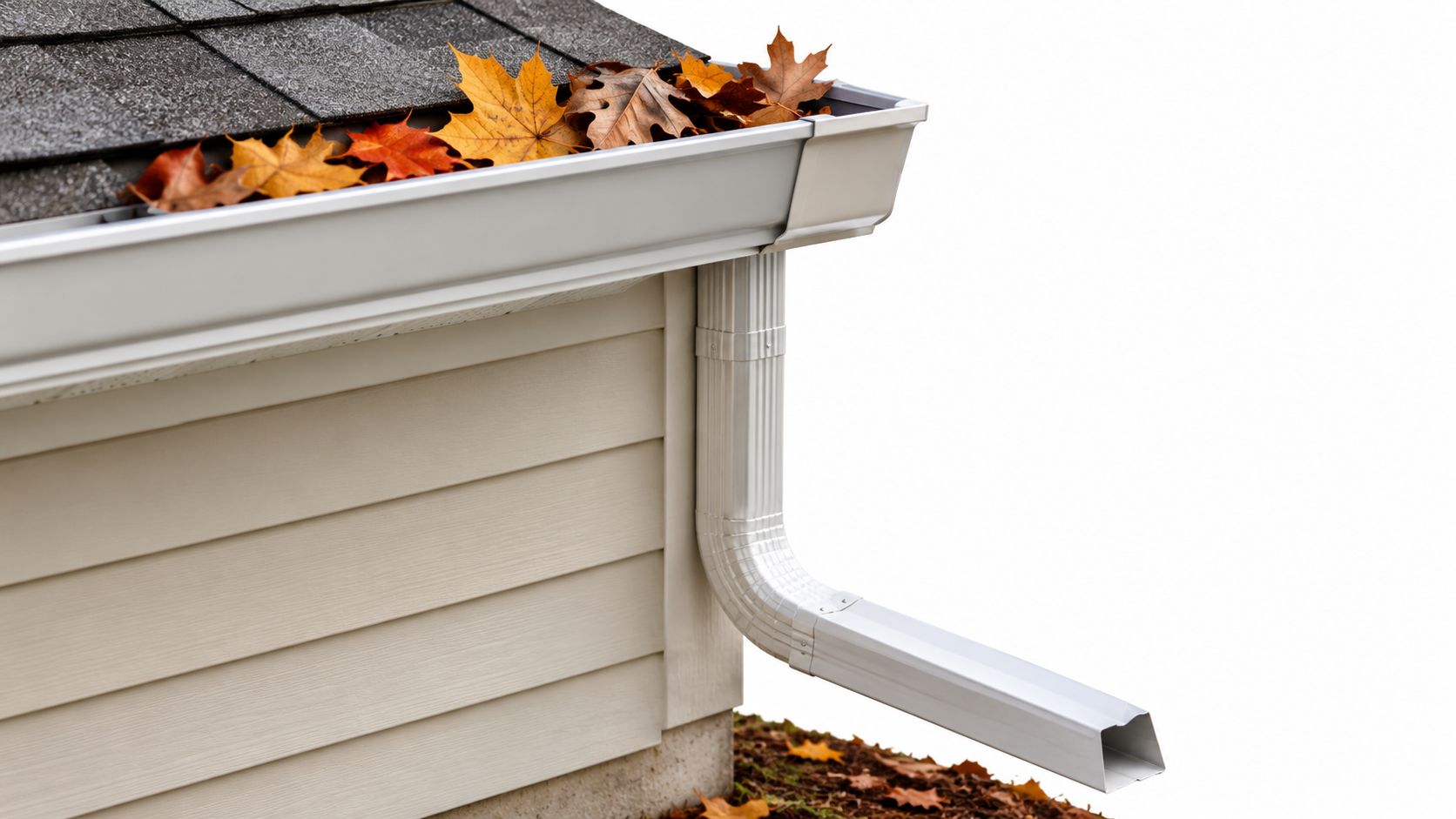
Gutters are one of the first places to start because they manage water at the roof edge. Leaves, twigs, and sediment can block the channel, causing water to spill onto siding, fascia, soil, and foundation walls. Missouri Extension guidance specifically recommends cleaning gutters and related drainage areas during fall maintenance, along with checking whether grading carries water away from the house. Missouri Extension's home maintenance guidance also recommends checking basements and crawl spaces for dampness after wet weather.
Walk the property after rain if you can. Look for overflowing sections, sagging gutters, rust holes, separated joints, and streaks on the siding. A gutter that has pulled away from the fascia may need more than cleaning. It may have loose fasteners, deteriorated wood behind it, or a slope problem.
What you can safely check
Use gloves, a sturdy ladder, and another person to stabilize the ladder. Scoop debris into a bucket rather than dropping it beside the foundation. Then run a hose through each downspout and watch where the discharge goes.
- Check the exit point: Add an extension or splash block if water lands beside the foundation or creates erosion.
- Watch for pooling: Standing water near the house can indicate poor grading or a blocked underground drain.
- Treat guards as maintenance, not a cure: Gutter screens reduce debris, but they still need periodic inspection and cleaning.
A downspout that ends too close to the house can keep the soil beside a basement or crawlspace wet. If you see recurring moisture, settlement-looking cracks, or soil erosion, document the location and have the drainage pattern evaluated rather than adding more caulk.
For practical ideas on extending discharge away from the foundation, see this guide to gutter and downspout extensions. An inspector can document visible drainage conditions, but a drainage contractor or foundation specialist may be needed to design corrective work.
2. Check Roof Condition and Look for Missing or Damaged Shingles
A roof may look sound from the driveway while trouble develops around valleys, vents, chimneys, and flashing. In Missouri, fall is the right time to check these areas before wind, ice, and repeated temperature changes test weak materials. The Missouri Department of Natural Resources weatherization program places roof and building-envelope repairs alongside insulation and heating-system improvements, and recommends addressing roof leaks before winter. The Missouri Department of Natural Resources weatherization program
Begin at ground level with binoculars. Look for missing or displaced shingles, curled edges, cracks, bare patches, loose flashing, and dark areas that remain after rain. Granules in the gutters can indicate shingle wear, but a small amount does not establish the roof's age or remaining service life. Photograph concerns from a safe location and record the roof slope or nearby feature, such as the west slope near the ridge or flashing above a rear addition.
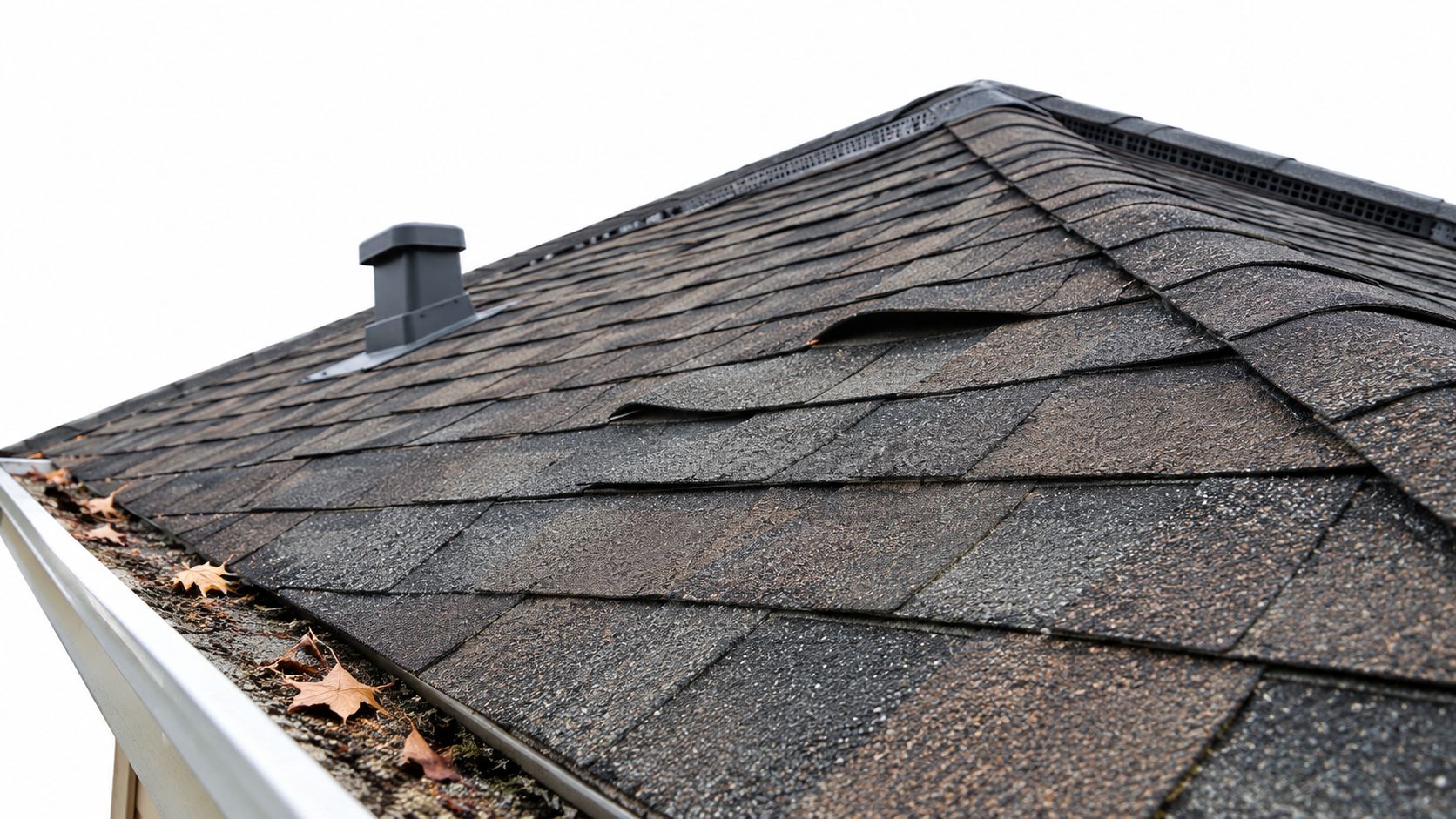
Look from below before climbing
Check the attic for water staining on roof decking, rafters, or insulation. A stain confirms that moisture was present, but it does not prove the leak is active. Wind direction, rain intensity, condensation, and an older repaired leak can all influence the evidence.
Practical rule: Do not climb a wet, steep, icy, or visibly damaged roof. Ground-level photos and an attic check provide safer first steps.
Homeowners can document visible conditions, but roof repairs require a qualified roofing contractor when shingles are missing, flashing is loose, leakage is suspected, or storm damage is possible. The contractor can identify a suitable repair method and confirm that replacement materials match the existing roof.
Prioritize a professional inspection if the attic contains damp insulation, fresh wood staining, or signs of animal entry. These findings do not automatically call for full replacement. They do require the moisture or access point to be identified before winter weather turns a localized defect into concealed damage. For rental or managed properties, dated photos and precise locations give owners a clear repair record and help separate routine maintenance from urgent work.
3. Test and Service Your HVAC System Before Winter
The first cold morning is a poor time to discover that the furnace won't ignite or the heat pump is struggling. Turn the system on before heating demand becomes urgent. Listen during startup and operation for grinding, rattling, banging, repeated clicking, or a blower that cycles unusually.
Homeowners can replace an accessible filter, confirm that supply and return registers aren't blocked, and check whether the thermostat responds. Missouri Department of Natural Resources guidance says furnace filters should be cleaned or replaced monthly as needed during the heating season, so fall service should begin a recurring habit rather than end with one filter change. Missouri Public Service also advises having the furnace inspected and tuned before the heating season.
National homeowner survey data reports that 72% of homeowners manage HVAC or furnace maintenance annually, and 71% prefer to handle routine maintenance themselves. The same survey places a Missouri furnace tune-up for a single heating system at about $100 to $250. The Nationwide homeowners report provides that benchmark, but actual pricing depends on equipment, access, service area, and needed repairs.
Know where DIY stops
Filter size and the filter's MERV rating are useful details to record before buying a replacement. A filter that's too restrictive for the equipment can create airflow problems, while a neglected filter can reduce performance. Don't remove burner components, adjust gas controls, or work inside electrical compartments unless you're qualified.
A heat pump's outdoor unit should be clear of leaves and other debris. Oily residue near refrigerant connections, persistent ice, or poor heating performance calls for an HVAC professional. For additional seasonal preparation, review this resource on preparing your HVAC for fall, then use the Mid-Missouri seasonal home maintenance checklist to organize the rest of the property.
4. Inspect Windows and Doors for Drafts, Cracks, and Seal Failure
A draft is useful evidence, but it isn't a diagnosis. Cold air may enter through worn weatherstripping, gaps in caulk, loose trim, a poorly adjusted door, or a larger opening hidden behind the finish. Missouri's repeated temperature changes can stress caulk, seals, and frames, so fall is a practical time to find these openings while the heating system is still easy to test.
Check the perimeter of each exterior door and window. Look for cracked or missing caulk, deteriorated weatherstripping, peeling paint, sill rot, and condensation between insulated glass panes. Moisture trapped between panes usually indicates a failed seal. The window may still operate, but the insulated unit may need replacement.
Use simple tests carefully
On a cool day, hold a thin strip of paper near the frame and watch for movement. An incense stick can also show air movement, but use care around curtains, children, pets, and combustible materials. Don't use an open flame to look for drafts.
- Test the weatherstrip: Close a dollar bill in the door or window. If it slides out with little resistance, the seal may be worn.
- Inspect the sill: Soft wood, bubbling paint, or staining can point to water entry from above or at the frame.
- Check the trim line: A discontinuous caulk joint can allow air and water into the wall assembly.
Replacing weatherstripping is often a reasonable maintenance task. Re-caulking can help when the joint is clean, dry, and otherwise sound, but it won't correct a rotted sill, shifted frame, failed flashing, or water problem above the opening. This draft-control guide offers practical sealing ideas. If you find widespread rot, movement, or recurring water stains, an experienced window contractor or inspector should evaluate the cause before cosmetic repairs hide it.
5. Drain and Winterize Outdoor Faucets and Irrigation Systems
Exterior plumbing needs attention before the first freeze, especially at older homes, rental properties, vacant houses, and buildings where no one may notice a leak immediately. Disconnect garden hoses, locate the interior shut-off for each exterior faucet, and open the faucet after shutting off the supply so trapped water can drain.
The shut-off may be in a basement near the foundation wall, under a sink, or in a utility area. If the faucet continues to drip after the interior valve is closed, the valve may not be working properly. Don't assume an exterior faucet is protected just because it is labeled frost-free. A hose left attached can prevent drainage and keep water trapped in the assembly.
Irrigation needs a different approach
In-ground irrigation lines generally require more than opening a faucet. A qualified irrigation professional can use compressed air to clear the lines with the correct equipment and pressure. Improper blowout procedures can damage valves, fittings, or components, so this isn't a good task to improvise.
Drain decorative fountains, bird baths, and other water features unless the manufacturer specifically identifies them as freeze-resistant. Inspect exposed pipes for sagging, leaks, and unprotected sections, but don't cut into plumbing to create a drain point without understanding the system.
This task matters for property managers because an unoccupied building can sustain concealed water damage before a tenant, maintenance worker, or owner sees it. Record which shut-offs were closed and where they are located. If you can't identify the correct valve, a plumber can trace and label the system before cold weather arrives.
6. Seal Cracks and Gaps in Basement and Crawlspace Walls
Basement and crawlspace checks deserve more attention than a quick glance at the floor. Missouri homes can experience moisture entry through wall cracks, floor cracks, window wells, plumbing penetrations, and poorly drained soil. A crack may be cosmetic, settlement-related, or part of a more serious structural or drainage concern. Its appearance alone doesn't establish the cause.
Use a flashlight to inspect walls, ceilings, plumbing connections, and areas around windows after wet weather. Look for dampness, staining, efflorescence, peeling paint, musty odors, and new water marks. Missouri Extension guidance recommends checking basements and crawl spaces for dampness after rain, along with inspecting window areas and drainage features.
Maintenance versus evaluation
A small, dry, stable crack may be cleaned and sealed with a compatible concrete sealant as a maintenance measure. That repair may reduce air or water entry, but it doesn't prove the wall is structurally sound. A crack that is wet, widening, displaced, accompanied by leaning walls, or associated with sticking doors and windows needs professional evaluation before sealing.
Radon belongs on this same fall inspection list. Missouri Department of Health and Senior Services says radon is present in every county, and the EPA action level is 4.0 pCi/L. Homes at or above that level should be fixed, while readings from 2.0 to 4.0 pCi/L warrant considering mitigation. Testing is the only way to know a home's level, and sealing a crack doesn't automatically solve a radon problem.
A state health newsletter reports that approximately one in three Missouri homes tested for radon exceeds the EPA action level. That Missouri radon publication supports testing in basements and crawlspaces, including homes in Cape Girardeau, Jefferson City, Columbia, Poplar Bluff, and Farmington. Use a test kit as directed, then involve a certified radon mitigator when results come back high.
7. Inspect Chimney and Fireplace Condition
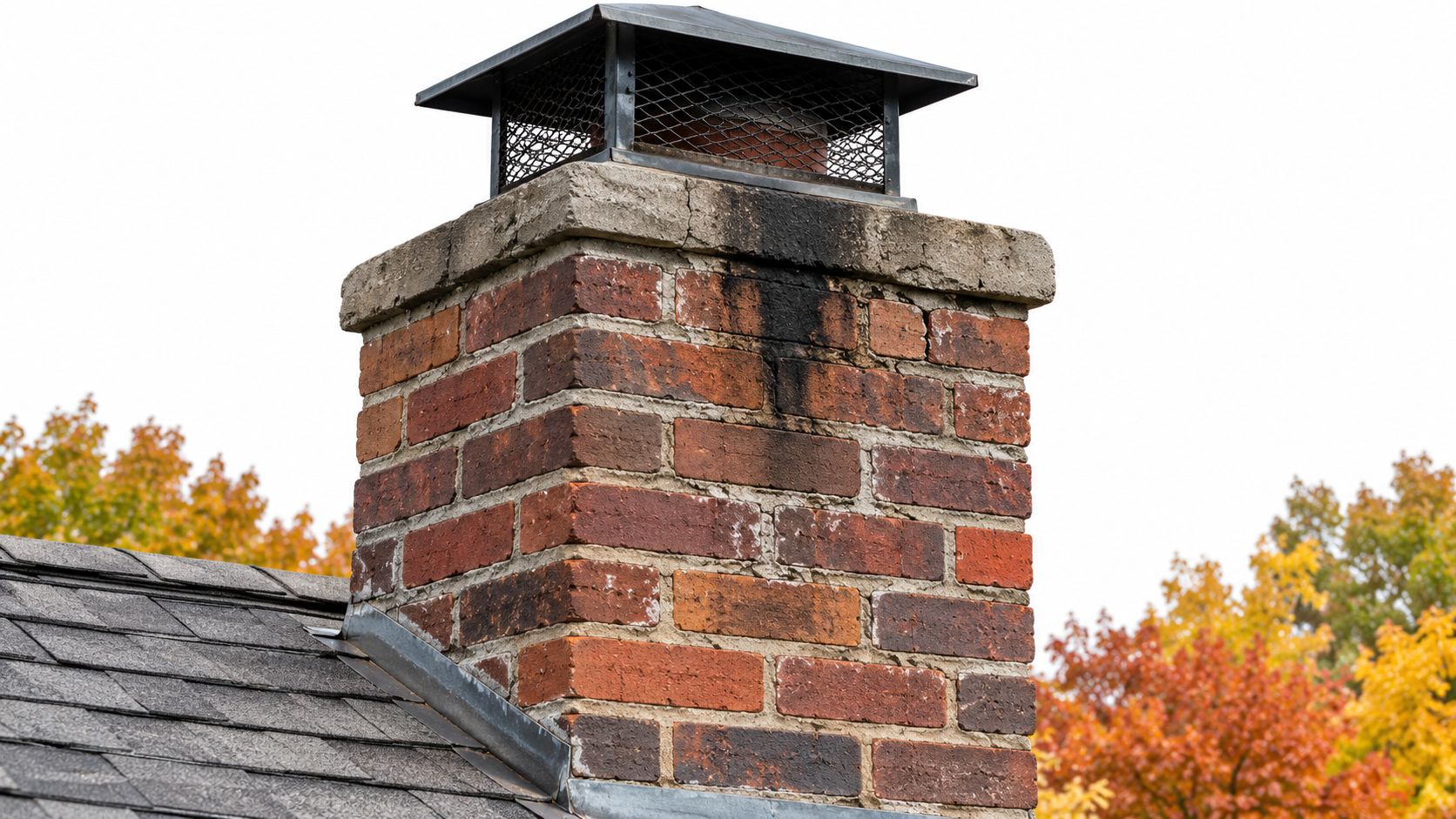
A fireplace or wood stove should be ready before the first serious heating day, not after smoke enters the living room. From the ground, use binoculars to look for displaced bricks, missing mortar, a damaged cap, and flashing that appears loose. Inside, check the firebox, damper, and visible surfaces for excessive soot, loose masonry, or evidence of water entry.
A stuck damper can interfere with venting and allow conditioned air to escape. Smoke smell when the damper is closed may indicate a drafting, sealing, or flue problem. Creosote and other deposits also need professional attention because a visual look into the firebox doesn't show the full condition of the chimney liner.
Schedule specialized service when needed
If you use a fireplace or wood stove, arrange a chimney cleaning and appropriate inspection before regular use. A chimney professional can assess the flue, liner, firebox, cap, masonry, and clearances. This is especially important in older homes and historic properties where repairs or previous alterations may not be visible from the living space.
Missouri's wet weather and freeze-thaw exposure can deteriorate masonry and mortar. That deterioration doesn't automatically mean the chimney is unsafe, but missing mortar, leaning masonry, cracked liners, or water stains should not be treated as a caulk project.
Keep the inspection boundary clear. A general home inspection can document accessible and visible fireplace or chimney conditions, but it doesn't replace a chimney sweep's internal cleaning or specialized flue evaluation. Stop using the appliance if you see significant smoke entry, damaged masonry, or another condition that could affect safe venting.
8. Clear Debris from Attic Vents, Soffits, and Roof Penetrations
A blocked attic vent can look minor in October and become a winter maintenance problem. Leaves, cobwebs, animal nests, insulation, and stored items can restrict soffit, ridge, or gable vents. Reduced airflow leaves moisture with fewer escape routes and allows heat to collect near the roof deck.
Fall is the right time to check these areas, before cold weather makes attic access harder. Missouri weatherization guidance places air sealing, attic insulation, floor and foundation insulation, and pipe or duct insulation among measures that support energy efficiency and building durability. The program's Missouri guidance supports checking airflow and leakage along with removing visible debris.
Inspect without creating a new hazard
Only enter an attic with safe access and reliable footing. Walk on framing or installed boards, never between joists, where a misstep can break through the ceiling. Keep away from exposed wiring, hot equipment, and unstable insulation.
- Check soffit paths: Insulation should not cover openings along the eaves.
- Look for baffles: Baffles help maintain an air path from the soffit into the attic.
- Inspect roof penetrations: Check around roof vents, plumbing stacks, and chimneys for stains, wet insulation, or damaged surrounding materials.
- Stop for pests: Droppings, nests, and active animals call for a wildlife professional. Do not handle them by hand.
Use a flashlight and take photographs from a safe position. Homeowners can clear loose leaves near accessible openings, but compressed insulation, wet areas, damaged wiring, and suspected roof leaks require an insulation contractor, roofer, electrician, or qualified inspector. Vent cleaning does not diagnose the cause of moisture.
Missouri has no single statewide building code. Local jurisdictions adopt and enforce residential energy requirements, so confirm the rules for the property's city or county before changing insulation or ventilation. The Missouri energy-code material provides context for differing local requirements, including the code histories described for Kansas City and St. Louis.
If loose-fill insulation is present, check for depth markers. Missouri code material calls for markers for blown-in or sprayed fiberglass and cellulose, with one or more markers for every 300 square feet of attic area. The Missouri provision on insulation markers and vent baffles provides a reference. Missing markers alone do not establish a defect, while gaps, compression, dampness, or blocked airflow justify an energy audit or insulation review.
9. Test Sump Pump Operation and Check Drainage Around the Foundation
A sump pump can fail while the basement looks dry. Test it before winter and record what happens. Pour water into the pit until the float activates, then confirm that the pump starts, sends water through the discharge line, and shuts off when the water level drops.
Listen for grinding, squealing, rattling, or unusual vibration. Check that the lid is secure and that the discharge line isn't blocked, disconnected, or draining back toward the foundation. An extension or splash area should carry water away from the house without creating a nuisance for a neighbor.

Read the ground as well as the pump
Walk the foundation perimeter after rain. Water should move away from the house rather than collect beside basement walls or crawlspace piers. Check downspout outlets, window wells, low areas, retaining walls, and places where soil has settled.
Water near the foundation is a drainage observation, not proof of a foundation failure. The next step is to determine whether the water is recurring, where it comes from, and how the building responds.
Active seepage, damp wall finishes, mold-like growth, efflorescence, or recurring standing water should be documented with photos and dates. The Missouri basement moisture guide can help organize observations, but persistent water may require a drainage contractor, waterproofing professional, plumber, or foundation specialist.
Property managers should test pumps in vacant and occupied units, identify whether a backup pump or alarm exists, and keep access clear. A pump that works today still deserves monitoring during heavy rain and spring runoff. A home inspection can document visible drainage and sump conditions, while repair design belongs to the appropriate specialist.
Missouri Fall Home Maintenance: 9-Point Comparison
| Task | Implementation complexity | Resource requirements | Expected outcomes | Ideal use cases | Key advantages |
|---|---|---|---|---|---|
| Inspect and Clean Gutters and Downspouts | Moderate (ladder work; safety risk) | Ladder, gloves, bucket, hose; gutter guards or pro for sagging/underground fixes | Restored drainage; reduced roof/fascia/foundation damage | Tree-lined lots; after heavy leaf fall | Low-cost prevention; extends gutter life; reduces water damage risk |
| Check Roof Condition and Look for Missing or Damaged Shingles | Low (ground inspection) to High (roof access) | Binoculars, ladder; roofer for repairs or detailed inspection | Early leak detection; fewer winter failures; extended roof life | Older roofs, post-storm, before winter | Prevents leaks and structural rot; allows timely repairs |
| Test and Service Your HVAC System Before Winter | Moderate | New filters, basic tools; professional tune-up for burners/refrigerant ($150–$300) | Improved efficiency, reliability, and indoor air quality | Systems >10 years, rising energy bills, pre-heating season | Energy savings; longer system life; fewer mid-winter failures |
| Inspect Windows and Doors for Drafts, Cracks, and Seal Failure | Low | Caulk, weatherstripping, basic tools; contractor for replacement | Reduced drafts and heat loss; improved comfort and lower bills | Drafty or single-pane windows; older homes | Inexpensive DIY fixes; immediate comfort and energy gains |
| Drain and Winterize Outdoor Faucets and Irrigation Systems | Low to Moderate | Locate shut-off valves; hose removal; compressor or pro for irrigation blow-out | Prevents frozen/burst pipes and costly repairs | Homes with exterior faucets or irrigation lines | Very low cost to prevent high repair bills; simple winterization |
| Seal Cracks and Gaps in Basement and Crawlspace Walls | Low (small cracks) to High (structural) | Concrete caulk, hydraulic cement; foundation pro for large cracks | Reduced moisture, radon entry, and mold risk | Basements with hairline or active seepage cracks | Cheap DIY for small cracks; decreases moisture-related problems |
| Inspect Chimney and Fireplace Condition | Moderate to High (professional recommended) | Certified chimney sweep for cleaning/Level 1 inspection ($150–$300); masons for repairs | Lower fire and CO risk; better draft; identified masonry issues | Regular wood-stove/fireplace users; historic chimneys | Safety-critical maintenance; improves heating efficiency |
| Clear Debris from Attic Vents, Soffits, and Roof Penetrations | Low to Moderate | Ladder, flashlight; baffles for insulation; pest or mold pro if needed | Improved attic ventilation; less mold, ice damming, and shingle wear | Homes with blocked vents or recent pest activity | Quick DIY yield; protects roof and attic systems |
| Test Sump Pump Operation and Check Drainage Around the Foundation | Low | Water for test, inspect discharge line; plumber for repairs or battery backup | Assured pump function; reduced basement flooding risk | Homes with sump pumps in high water-table or clay soils | Fast test with high impact; prevents major water damage |
Turn the Checklist Into a Maintenance Schedule
Fall maintenance works best when you sort findings by consequence and timing instead of trying to complete every task on the same weekend. A small gutter overflow, a noisy furnace, and a damp basement crack may all appear on one walk-through, but they don't carry the same response.
Do immediately before freezing weather
Prioritize exterior water control and exposed plumbing. Clean gutters, clear downspouts, extend discharge away from the foundation, disconnect hoses, drain outdoor faucets, and arrange irrigation winterization. If a sump pump doesn't activate, if water is already entering the basement, or if the foundation perimeter holds water, don't wait for colder weather to expose the weakness.
Roof leaks and damaged flashing also belong in this group when rain is entering the attic or living space. A missing shingle can be a simple repair, but a roof that is actively leaking needs prompt attention from a roofer. Keep photographs, locations, and dates so a contractor can work from specific observations rather than a general concern.
Schedule before winter when safety or a system is involved
Arrange furnace service, heat pump evaluation, chimney cleaning, and specialized radon testing before the heating season is fully underway. Missouri guidance treats fall as a core maintenance season for heating systems, filters, foundations, basements, drainage, and exterior components. The work is not a one-time ritual. Filters need recurring attention during heating season, and moisture conditions should be rechecked after significant rain.
Professional help also makes sense when the task involves combustion, gas, electrical components, roof access, structural-looking cracks, attic hazards, suspected mold, or radon. National homeowner data reports that 35% of homeowners delayed routine maintenance, 25% delayed necessary repairs, and cost was the main reason for 60% of those deferrals. The homeowner maintenance reporting also reports that 92% of homeowners have at least one maintenance project they wouldn't attempt themselves. Deferring a task doesn't remove the risk. It can leave the property exposed during the least convenient season.
Monitor minor or uncertain conditions
Not every crack needs immediate structural repair, and not every stain proves an active leak. Photograph the finding with a nearby reference, record its location, note whether it changes after rain or temperature swings, and compare it during later visits. This approach helps homeowners, buyers, investors, and property managers distinguish a stable maintenance issue from a developing pattern.
An inspection can document observable conditions at the roof, attic, foundation, basement, crawlspace, HVAC system, and drainage areas. Upchurch Inspection can also help clarify when a home needs a sewer scope, radon test, mold assessment, thermal imaging, or another specialized service. Repairs and specialized evaluations should remain with licensed or otherwise qualified trade professionals, including roofers, HVAC technicians, electricians, plumbers, engineers, chimney specialists, and radon mitigators.
Don't treat this list as a diagnosis. If you see active water intrusion, unsafe roof or attic access, heating or combustion concerns, significant chimney deterioration, suspected mold, or radon levels that are higher than recommended, pause the DIY work and bring in the right professional. A clear report with photographs and prioritized observations is especially useful for a buyer deciding whether to proceed, a seller preparing a property, or a manager tracking maintenance across multiple homes.
For related annual planning, you can also review these annual home maintenance and window cleaning tips. The most useful schedule is the one you can repeat. Record the date of each check, keep invoices and service notes, and revisit moisture-prone areas after heavy rain and before the next heating season.
Upchurch Inspection offers annual maintenance and real estate inspection services that can document visible roof, attic, foundation, basement, crawlspace, HVAC, and drainage conditions in Southeast Missouri and the broader Mid-South region. If you need clear findings to prioritize fall repairs, arrange an inspection through Upchurch Inspection.