TL;DR:
- Attic insulation inspections help identify hidden issues that cause energy waste, moisture damage, and structural risks. Regular assessments improve energy efficiency, prevent costly repairs, and protect property value by detecting problems early. Thermal imaging and precise measurements ensure targeted upgrades for better home performance.
Attic insulation inspection benefits include lower energy bills, early moisture detection, and structural protection that most homeowners never see coming. Heating and cooling account for 50–70% of typical home energy costs, and your attic is where much of that money quietly escapes. A professional insulation assessment, sometimes called an attic energy audit or thermal envelope evaluation, gives you a clear picture of what is actually happening above your ceiling. Upchurchinspection inspectors see the same pattern repeatedly: the attic looks fine from the hatch, but the real problems are invisible until someone measures them.
1. Attic insulation inspection benefits start with energy savings
The most direct payoff from an insulation assessment is a lower utility bill. Under-insulated homes waste up to 20% of energy costs through heat loss at the attic floor. That waste is not a slow leak. It compounds every month across every heating and cooling season.
Proper attic insulation can reduce energy costs by 10–20%, often paying for itself within 2–5 years. The U.S. Department of Energy treats attic insulation as one of the highest-return improvements a homeowner can make. An inspection tells you exactly how far short your current insulation falls before you spend a dollar on materials.
2. Air leaks cause more heat loss than thin insulation
Most homeowners assume adding more insulation is the fix. The real problem is usually air movement, not conduction. Air leaks through soffit gaps, recessed lights, and duct penetrations account for up to 40% of convective heat loss in a home.
Insulation slows heat transfer through solid material. It does almost nothing to stop air moving through gaps. That is why air sealing before insulating is the most important step, saving 15–25% on heating and cooling costs. An inspection identifies exactly where those gaps are, so you seal the right spots instead of guessing.
Pro Tip: Ask your inspector to check recessed light fixtures and attic hatch covers specifically. These two spots are among the worst air leak offenders in older Mid-South homes.
3. R-value measurement tells you what you actually have
R-value is the standard measure of insulation resistance to heat flow. The higher the R-value, the better the insulation performs. IECC climate zone standards and ASHRAE 90.1-2019 set minimum R-values by region, and many older homes fall well short of those benchmarks.
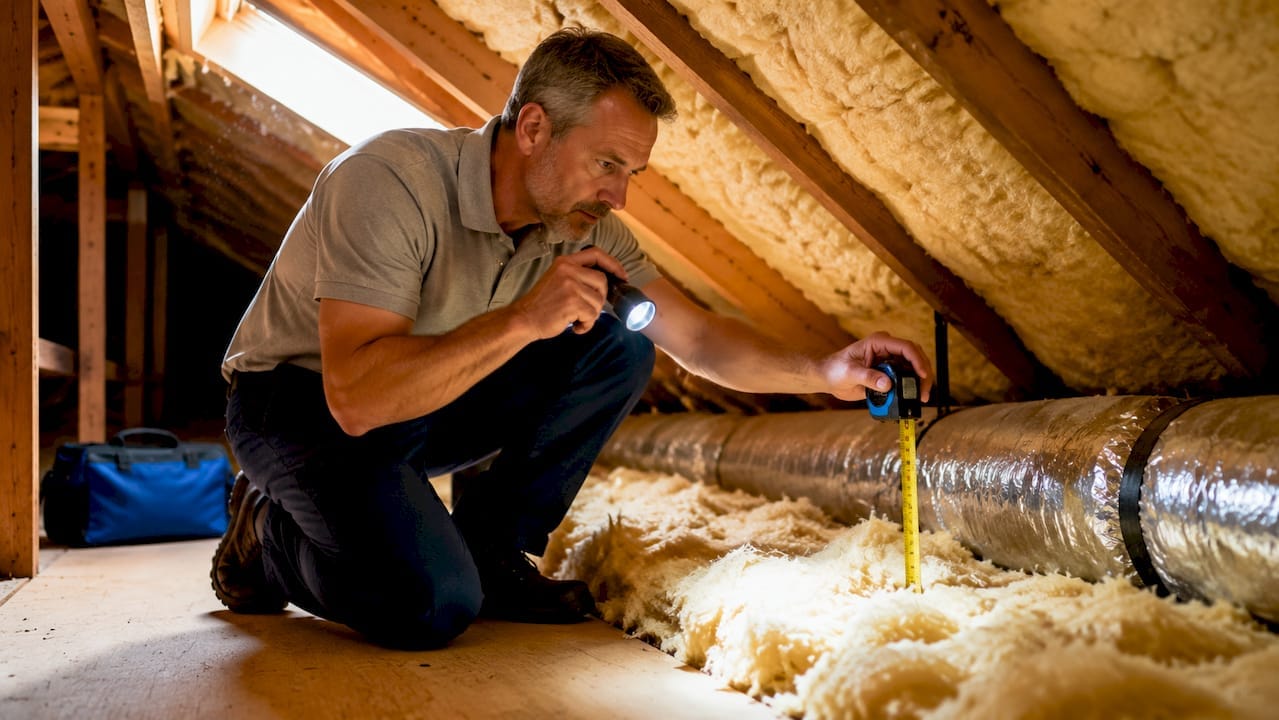
An inspection physically measures insulation depth and calculates the real R-value present. A visual glance from the hatch does not tell you this. Settled or compressed insulation can look adequate but perform far below its rated value. Knowing your actual R-value is the starting point for any meaningful upgrade decision.
4. Moisture detection prevents the most expensive repairs
Poor attic ventilation causes moisture buildup, leading to condensation, mold growth, and wood rot. These problems harm indoor air quality and compromise the structural integrity of your roof framing. Left alone, they do not stabilize. They get worse.
Inspectors look for moisture stains on sheathing, rusted nail heads, frost on roof decking in winter, and visible mold colonies. Each of these signals a different stage of the same problem. Catching moisture at the stain stage costs far less than addressing it at the mold remediation or roof replacement stage.
“Undetected attic moisture can significantly lower property value and create health risks that are not visible from inside the living space.” — Best Attic Inspection Checklist Guide 2026
5. Ventilation baffle blockage is a hidden structural risk
Ventilation baffles keep insulation from blocking the intake vents along the eaves. When insulation covers those vents, outside air cannot enter the attic, and moisture has nowhere to go. Baffle blockage causes moisture buildup, mold, ice dams in colder climates, and wood rot in a repeating cycle.
This is a common finding in homes where insulation was added without a professional assessment. The homeowner paid for more insulation and accidentally created a ventilation problem. An inspection catches this before the damage cycle starts. In East Tennessee and the broader Mid-South, where humidity is already high, blocked intake vents accelerate mold growth faster than most homeowners expect. Upchurchinspection’s attic ventilation findings in the region confirm this pattern repeatedly.
6. Thermal imaging finds what the eye misses
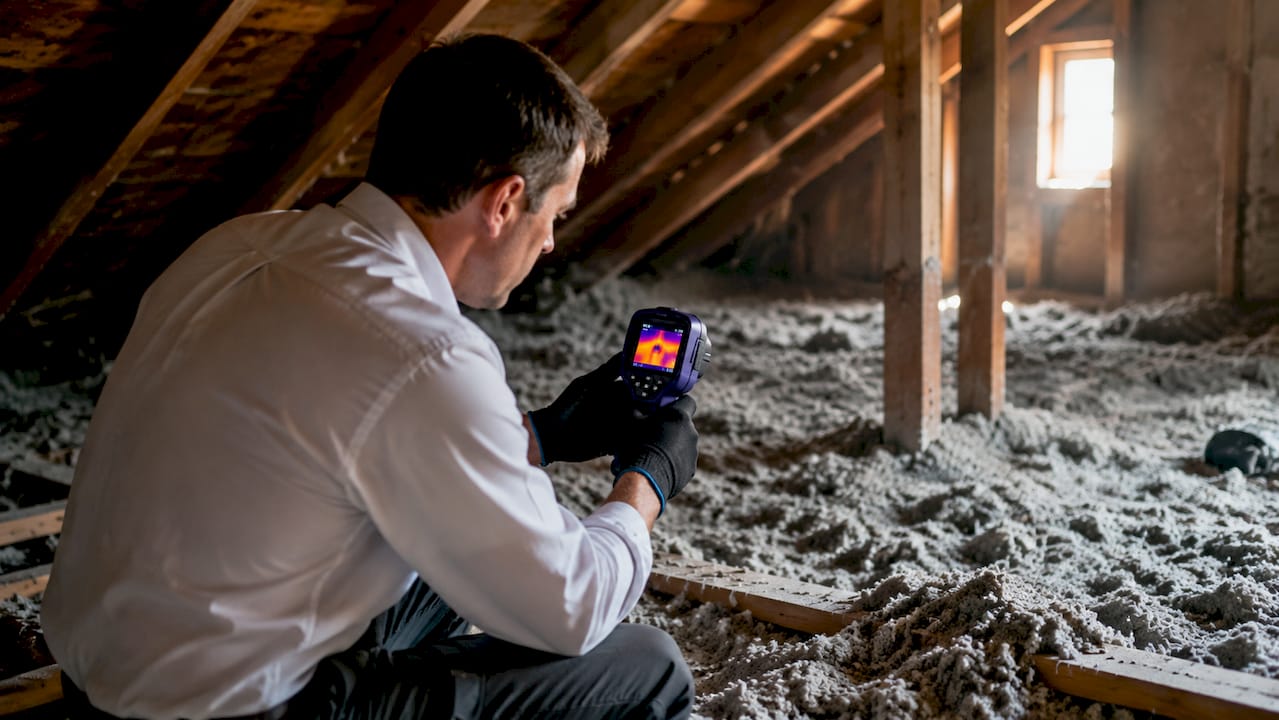
Infrared thermal imaging and blower door tests uncover hidden insulation gaps and air leaks that a visual inspection cannot detect. Thermal imaging shows temperature differentials across surfaces, revealing exactly where heat escapes or cold air enters. It can also detect moisture behind walls before visible staining appears.
This technology changes the inspection from a rough estimate to a precise map of your home’s thermal envelope. Upchurchinspection uses thermal imaging as part of its inspection process, which means clients receive specific locations for problems rather than general recommendations. That specificity matters when you are deciding where to spend money on repairs.
7. A professional inspection follows industry standards
A professional attic insulation inspection typically lasts under one hour and covers insulation depth, moisture levels, ventilation pathways, and structural elements. Inspectors reference ASHRAE 90.1-2019 and IECC climate zone requirements to evaluate whether your insulation meets current performance standards.
The process follows a structured sequence:
- Check attic access for safety and clearance
- Measure insulation depth at multiple points across the attic floor
- Calculate actual R-value and compare to climate zone minimums
- Inspect ventilation baffles, ridge vents, and soffit vents for blockage
- Look for moisture indicators including stains, rust, frost, and mold
- Identify air leak locations at penetrations, recessed lights, and framing gaps
- Document structural condition of rafters, sheathing, and decking
Pro Tip: Clear a path to your attic hatch before the inspector arrives. Blocked access limits what can be evaluated and may require a return visit. Upchurchinspection covers attic access requirements in detail for homeowners preparing for inspection.
8. Regular inspections protect HVAC system life
Stable attic temperatures reduce the workload on your heating and cooling equipment. When insulation is thin or air leaks are present, your HVAC system runs longer cycles to maintain indoor temperature. Longer cycles mean more wear, more maintenance calls, and earlier replacement.
An insulation assessment that leads to proper sealing and insulation upgrades directly extends HVAC service life. This is a compounding benefit. You save on energy costs monthly and avoid a major equipment replacement that can run several thousand dollars. The attic and the HVAC system are connected systems, and inspectors who understand both give you a more complete picture.
9. Inspections support property value and buyer confidence
Buyers and their agents pay attention to attic condition during transactions. A documented inspection showing adequate insulation, clean ventilation, and no moisture damage is a concrete asset. It reduces the number of seller disclosures and gives buyers confidence in the home’s condition.
Conversely, undisclosed attic moisture or inadequate insulation discovered during a buyer’s inspection can derail a sale or force a price reduction. The benefits of home inspection for both buyers and sellers are clearest when the attic is part of the evaluation. Sellers who inspect proactively avoid surprises. Buyers who insist on attic evaluation protect their investment from day one.
10. Annual inspections catch settling and damage early
Insulation settles over time. Blown-in cellulose and fiberglass both compress under their own weight, reducing effective R-value without any visible sign from below. Annual attic checks prevent costly repairs such as mold remediation or premature roof replacement by catching problems at the maintenance stage rather than the emergency stage.
Pest intrusion is another factor. Rodents nest in attic insulation and create pathways for moisture and air movement. A yearly inspection catches this early. The cost of an annual inspection is a fraction of the cost of mold remediation, roof sheathing replacement, or HVAC repair caused by conditions that went undetected for years.
Key takeaways
A professional attic insulation inspection delivers measurable energy savings, prevents structural moisture damage, and protects property value by identifying problems before they become expensive repairs.
| Point | Details |
|---|---|
| Air sealing comes first | Sealing gaps before adding insulation saves 15–25% on heating and cooling costs. |
| R-value must be measured | Visual checks do not reveal settled or compressed insulation performing below rated value. |
| Moisture is the biggest risk | Blocked ventilation causes mold and wood rot that harm air quality and roof structure. |
| Thermal imaging adds precision | Infrared tools find hidden heat loss and moisture that visual inspection misses entirely. |
| Annual checks prevent major costs | Catching settling, pest damage, and moisture early avoids mold remediation and roof replacement. |
What I’ve learned after years of attic inspections
The attic is the most neglected space in most homes I inspect. Homeowners repaint kitchens and replace fixtures, but the attic sits untouched for decades. The interior looks fine, so the assumption is that everything above the ceiling is fine too. That assumption costs people real money.
The pattern I see most often is insulation added without air sealing. Someone hired a contractor, the contractor blew in more insulation, and the homeowner felt good about it. But the air leaks at the recessed lights and the framing penetrations were never touched. The insulation improved conductive resistance and did almost nothing for the convective losses driving the high utility bills. The moisture problems behind walls that develop from poor ventilation are the part that really surprises people.
The other thing I want homeowners to understand is that attic moisture does not announce itself. You will not smell it from the living room. You will not see it on the ceiling until the damage is severe. By the time a stain appears on your drywall, the sheathing above it has often been wet for months. That is why inspection matters even when nothing seems wrong. The absence of visible symptoms is not the same as the absence of a problem.
My honest recommendation: schedule an attic inspection before you add any insulation, before you list your home for sale, and once every year or two if your home is older than 20 years. The cost is low. The information is worth far more than the fee.
— Holly
Upchurchinspection’s approach to attic insulation evaluations
Upchurchinspection conducts thorough attic evaluations as part of its residential inspection services across the Mid-South. Inspectors measure insulation depth and R-value, check ventilation pathways, identify air leak locations, and document moisture indicators using thermal imaging where needed. Reports include specific recommendations for sealing, insulation upgrades, and ventilation corrections. If you want to know what your attic is actually doing to your energy bills and your home’s structure, the benefits of regular inspections are documented and concrete. Schedule an inspection before spending money on upgrades or before closing on a property.
FAQ
What are the main attic insulation inspection benefits?
An attic insulation inspection identifies insulation deficiencies, air leaks, moisture problems, and ventilation failures that drive up energy costs and cause structural damage. Addressing these issues can reduce energy costs by 10–20% and prevent expensive mold remediation or roof repairs.
How often should you inspect attic insulation?
Annual inspections are the standard recommendation for homes older than 20 years. Inspections should also occur before any insulation upgrade, after a roof repair, and before listing a home for sale.
Does attic insulation inspection include air leak detection?
Yes. A professional inspection checks for air leaks at soffit gaps, recessed lights, duct penetrations, and framing gaps. Sealing these leaks before adding insulation saves more energy than insulation alone.
Can attic moisture problems affect property value?
Undetected attic moisture lowers property value and can cause a sale to fall through when discovered during a buyer’s inspection. Early detection through regular assessments prevents the kind of damage that triggers price reductions or failed transactions.
What tools do inspectors use in an attic insulation evaluation?
Inspectors use tape measures for insulation depth, moisture meters for wood and insulation, and infrared thermal imaging to detect hidden heat loss and moisture behind surfaces that visual inspection cannot reach.