TL;DR:
- Gas station inspections are ongoing and focus on environmental, safety, and documentation compliance, not just one event.
- Operators must maintain comprehensive records, regularly train staff, and proactively engage with regulators to ensure consistent compliance.
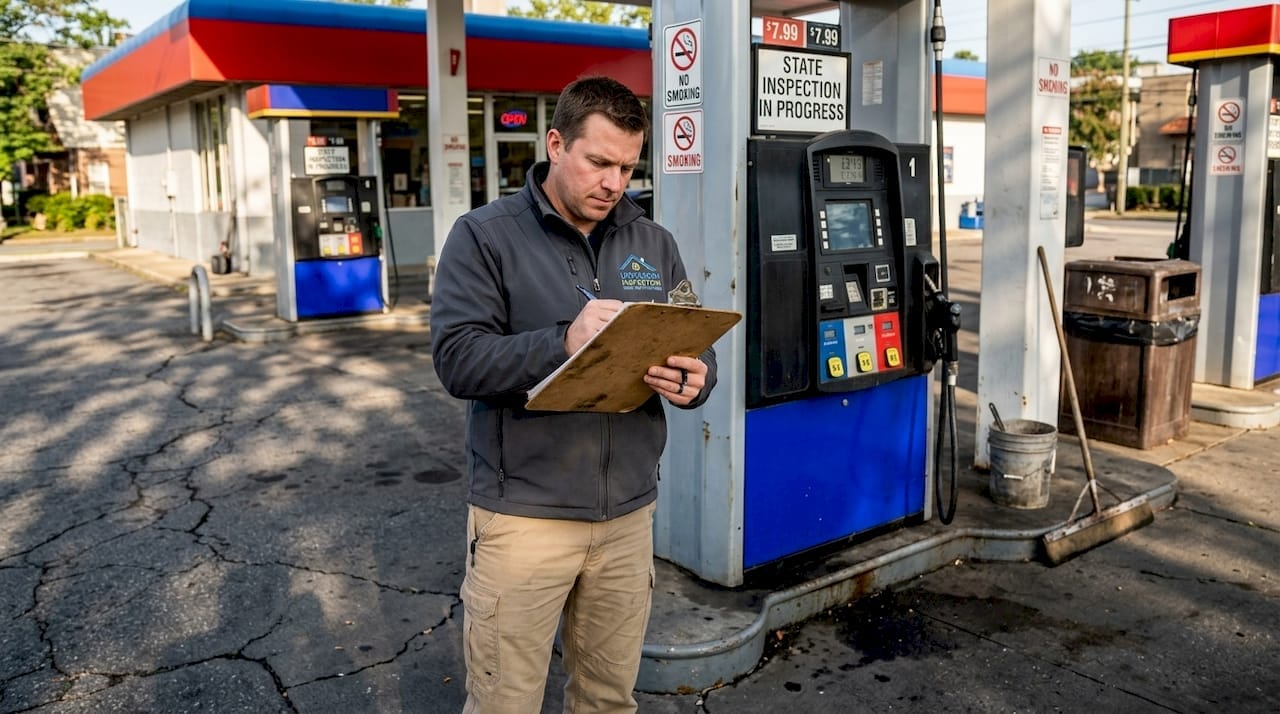
Running a gas station means operating under some of the most demanding regulatory oversight of any commercial business. A gas station inspection isn’t a single event you pass or fail once and forget. It’s a continuous process covering environmental risk, fire safety, fuel quality, and equipment integrity. Many operators discover this the hard way, facing fines that exceed $42,000 or operational shutdowns because of documentation gaps rather than actual equipment failures. This guide breaks down exactly what inspectors look for, what you’re responsible for maintaining, and how to build a compliance culture that protects your business year-round.
Table of Contents
- Key takeaways
- What a gas station inspection actually covers
- Safety equipment checklist: daily, monthly, and annual tasks
- Environmental compliance and documentation best practices
- Preparing for your next inspection
- Regional regulatory standards: a comparison
- My perspective on building a compliance culture
- How Upchurch Inspection can support your compliance efforts
- FAQ
Key takeaways
| Point | Details |
|---|---|
| Inspections follow a 3-year cycle | Physical compliance inspections occur every three years, but daily and monthly monitoring obligations never stop. |
| Documentation is as critical as equipment | Regulators increasingly cite operators for missing records, not just broken hardware. |
| Underground tanks carry strict liability | Fuel found in containment sumps signals an automatic failure requiring immediate corrective action. |
| Staff training reduces inspection risk | Emergency action plans practiced regularly lower both liability exposure and inspection failure rates. |
| Regional rules vary significantly | State-level requirements in places like California and New Jersey exceed federal EPA baseline standards. |
What a gas station inspection actually covers
Most operators assume a gas station inspection is a walk-around with a clipboard. The reality is far more structured. Inspections operate across federal, state, and local jurisdictions simultaneously, and each layer has its own triggers, frequencies, and documentation expectations.
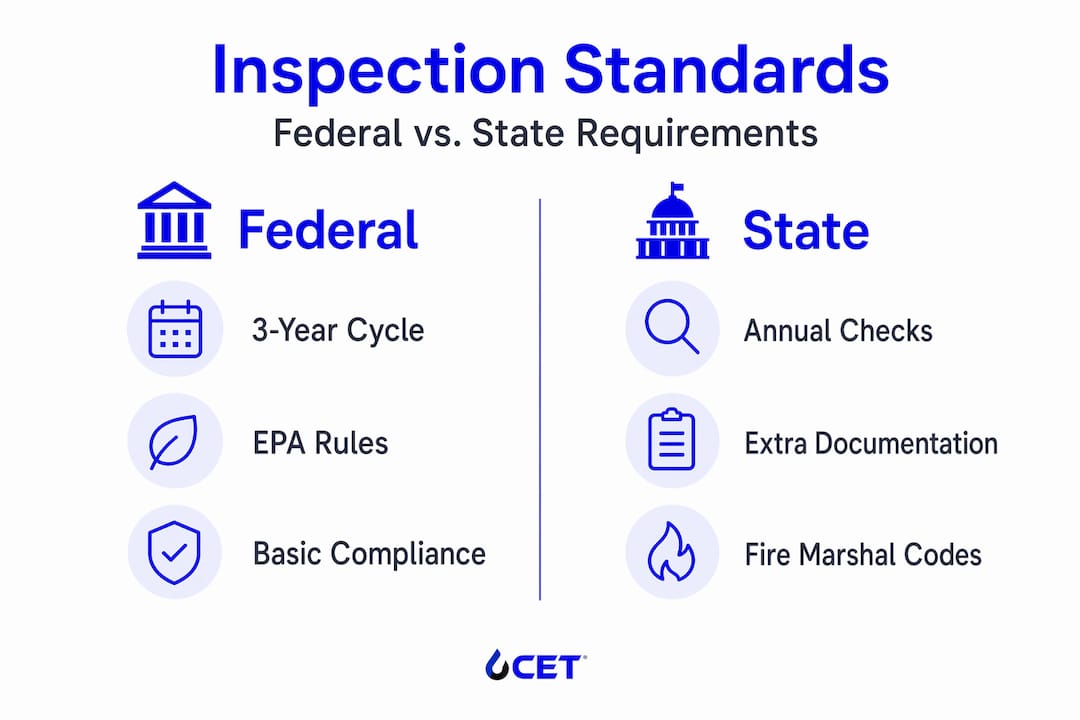
At the federal level, the EPA sets baseline standards for underground storage tanks (USTs) through 40 CFR Part 280. These rules govern leak detection, spill and overfill prevention, corrosion protection, and release response. States then build on that foundation, often adding stricter requirements for equipment certification, inspection frequency, and environmental impact assessment protocols.
Key triggers for a gas station inspection include:
- Routine scheduled visits: Physical compliance inspections occur on a 3-year cycle in many jurisdictions, though continuous operational compliance is required throughout.
- Complaints and suspected leaks: A single complaint from a neighbor or employee can initiate an unannounced site visit.
- Ownership or operational transitions: Buying or selling a station almost always triggers a compliance review, including a full underground tank inspection.
- Permit renewals: License renewals frequently require documented proof of recent equipment testing and monitoring results.
- Prior violations: Stations with a history of compliance are placed on higher-frequency inspection schedules.
Florida offers a useful benchmark. In 2023, state inspectors conducted over 11,000 inspections across nearly 24,000 regulated facilities. That volume reflects just how active enforcement has become. Fuel station compliance is not a passive obligation you can revisit every few years. It demands continuous attention.
Safety equipment checklist: daily, monthly, and annual tasks
The gas station safety checklist that regulators use is organized by inspection frequency. Understanding this structure helps you build internal processes that mirror what inspectors expect to see.
Here’s how the critical equipment categories break down by required inspection interval:
- Daily tasks: Visually inspect fuel dispensers for leaks, drips, or damage. Check that emergency shutoff switches are accessible and unobstructed. Review automatic tank gauge (ATG) readings and log any anomalies. Confirm that spill buckets around fill ports are clear of liquid or debris.
- Monthly tasks: Test emergency shutoff switches for proper function. Inspect breakaway couplings on dispenser hoses. Regulators treat breakaway couplings as safety-critical devices. Mandatory replacement after any activation is required, regardless of apparent damage. Inspect vapor recovery systems for hose integrity and proper connections. Check fire extinguisher pressure gauges and confirm correct placement near dispensers and inside the building.
- Annual tasks: Have a licensed technician perform leak detection equipment testing. Schedule professional servicing of fire extinguishers, including internal inspection and recharging if needed. Conduct a full review of vapor recovery system components and submit results where state regulations require reporting.
Pro Tip: Keep a single binder or digital log organized by inspection frequency. When an inspector arrives, you want to hand over a complete, dated record without searching through files. Operators who can produce organized logs on the spot signal competence and reduce the likelihood of extended scrutiny.
Leak detection equipment requires annual testing, and dispensers must be checked daily for leaks. Missing either creates a documentation gap that regulators treat as a violation, even if no actual leak occurred. The equipment working correctly is not enough. You must prove it was checked.
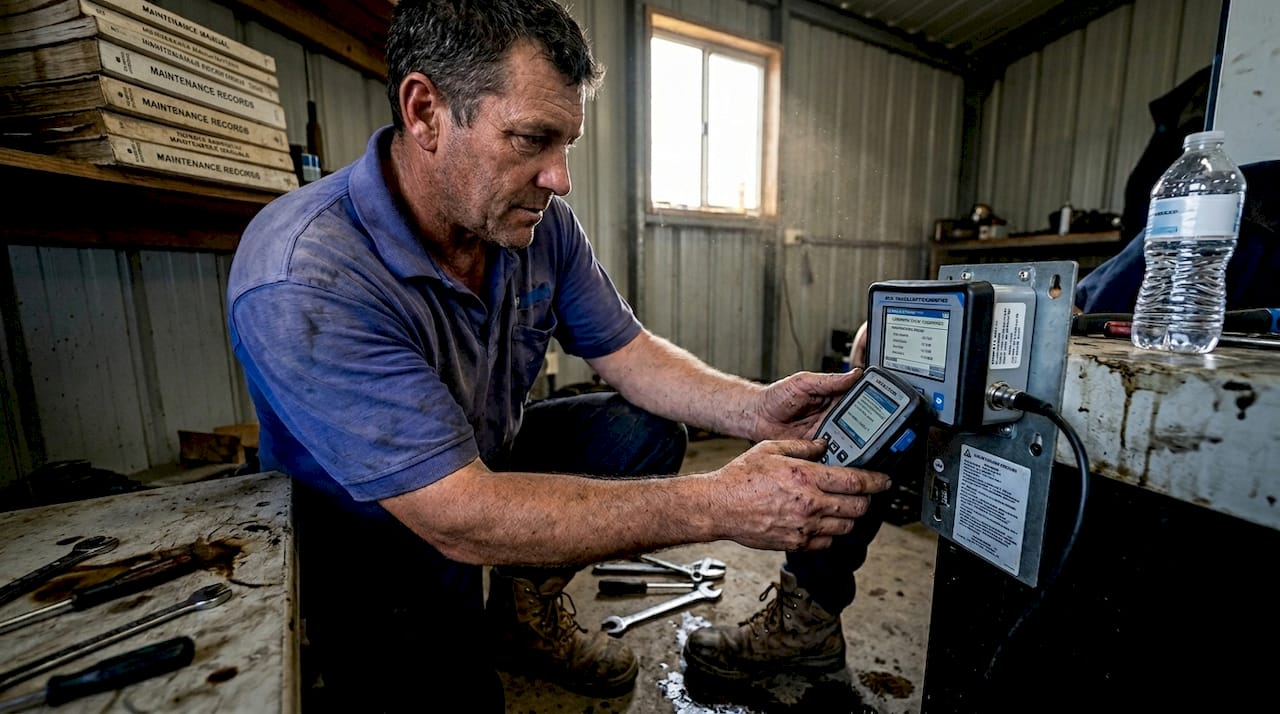
OSHA mandates Emergency Action Plans for all workforces, with penalties up to $161,323 for willful violations. That plan must be written, posted, and practiced. A binder on a shelf that employees have never read does not satisfy the requirement.
Environmental compliance and documentation best practices
Environmental compliance is where many operators get into serious trouble. The physical equipment may be functioning perfectly, yet regulators increasingly target documentation gaps in inventory monitoring and equipment testing as the primary enforcement mechanism.
The approved methods for leak detection at UST facilities include:
- Interstitial monitoring: Sensors placed between the inner and outer walls of double-walled tanks and piping detect fuel before it reaches the environment.
- Automatic tank gauging (ATG): Electronic systems that track fuel levels continuously and flag statistical anomalies that may indicate a leak.
- Statistical inventory reconciliation: Monthly comparison of fuel deliveries, sales, and measured tank levels to identify unexplained losses.
Each method has specific documentation requirements. Monthly monitoring results must be logged and retained. Annual equipment tests must be performed by certified professionals and the results filed. Operators are held liable for documentation. Incomplete records trigger heavy fines even when the underlying equipment is operating correctly.
Fuel inventory reconciliation deserves particular attention. Successful operators maintain daily fuel inventory logs and dispenser integrity checks to avoid the “document gap” triggers that inspectors flag. A discrepancy of even 1% between book inventory and measured inventory over several months can initiate a formal investigation.
Pro Tip: Reconcile your fuel inventory at the close of every business day, not just at month-end. Daily reconciliation catches small discrepancies before they compound into patterns that look like unreported leaks on your monthly report.
Regulators treat underground storage tanks and associated piping as a strict liability area. If fuel is found in a containment sump during an inspection, that finding is treated as an automatic failure requiring immediate corrective action, regardless of how it got there. There is no “it was just a small spill” defense in this context.
Preparing for your next inspection
Preparation is not something you do the week before an inspector calls. The operators who consistently pass inspections without citations treat compliance as an operational habit, not a pre-inspection sprint.
Here are the practical steps that separate well-prepared stations from those that scramble:
- Organize your logs by category and date. Inspectors want to see daily, monthly, and annual records in a format they can review quickly. Disorganized files signal deferred maintenance even when the work was done.
- Train every employee on emergency procedures. Effective emergency plans are living documents practiced regularly with employees. A new hire who cannot locate the emergency shutoff switch is a liability during both an incident and an inspection.
- Schedule certified maintenance proactively. Licensed contractor certifications are required for tank repairs and testing. Failures to use licensed contractors lead to stop-sale orders. Book annual testing well before your compliance deadlines, not after.
- Build a relationship with your local regulator. Most state environmental agencies and fire marshals welcome proactive communication. Operators who call with questions before an issue develops are treated very differently from those who only respond to enforcement notices.
- Conduct internal pre-inspection walkthroughs. Walk your site using the same criteria an inspector would apply. Check spill bucket conditions, hose integrity, extinguisher placement, and ATG alarm logs. Fix what you find before someone else does.
Operators should view inspections as opportunities to align maintenance schedules with EPA regulations, rather than as audit events to survive. That mindset shift is the single most effective preparation strategy available.
Regional regulatory standards: a comparison
Federal EPA rules set the floor. Many states build significantly higher requirements on top of that baseline. Understanding where your state sits on this spectrum determines how much additional compliance work you carry.
| State / Jurisdiction | Inspection frequency | Notable requirements beyond federal baseline |
|---|---|---|
| Federal EPA (baseline) | 3-year physical cycle | UST leak detection, spill/overfill prevention, corrosion protection |
| California | Annual or more frequent | Enhanced vapor recovery certification, CARB-compliant equipment, local air district permits |
| New Jersey | Annual UST inspections | State-licensed UST operators required on-site; strict financial assurance rules |
| Washington State | Triggered by violations | Aggressive penalty structure; fines exceeding $42,000 for repeated documentation failures |
| Florida | 3-year cycle, continuous monitoring | Over 11,000 inspections conducted in 2023; active enforcement across 24,000 facilities |
Local fire marshal codes add another layer that many operators overlook. Fire marshals inspect independently of environmental agencies and focus on suppression systems, extinguisher placement, emergency lighting, and fuel dispenser setbacks. A station that passes an environmental inspection can still receive fire code citations the same week. Coordinating your gas station safety checklist to address both sets of requirements simultaneously is the most efficient approach.
My perspective on building a compliance culture
I’ve worked with enough operators facing enforcement actions to recognize a pattern. The stations that get cited repeatedly are rarely the ones with the worst equipment. They’re the ones where compliance is treated as someone else’s job.
In my experience, the most common misconception is that passing a scheduled inspection means you’re compliant until the next one. That thinking ignores the continuous monitoring obligations that run every single day. When an inspector arrives unannounced because of a complaint, they’re not checking whether you passed three years ago. They’re checking what happened yesterday.
What I’ve learned is that integrating inspection tasks into daily operations, the way you’d integrate opening and closing procedures, removes the anxiety entirely. When your staff logs ATG readings every morning as a matter of routine, that data is already there when you need it. You’re not scrambling to reconstruct records or explain gaps.
The operators I’ve seen avoid enforcement actions consistently share one trait. They engage with regulators before problems develop. They call their state agency with questions. They invite fire marshals for informal walkthroughs. That relationship pays dividends when something does go wrong, because regulators distinguish between good-faith operators and those who only respond to pressure.
Compliance isn’t a destination. It’s a daily practice, and the documentation you generate today is your best defense tomorrow.
— Holly
How Upchurch Inspection can support your compliance efforts
Gas station operators carry a significant compliance burden, and gaps in documentation or equipment condition can surface at the worst possible time. Upchurch Inspection’s commercial inspection services are designed to help fuel station operators identify hidden compliance risks before regulators do. Our team conducts thorough site assessments that evaluate the condition of safety equipment, documentation practices, and environmental monitoring systems against current regulatory standards.
Whether you’re preparing for a scheduled inspection, managing a station acquisition, or simply want an independent review of your current compliance posture, Upchurch Inspection delivers the detailed, actionable reports that give you a clear picture of where you stand. Visit our commercial inspection guide to learn more about how we approach fuel station and commercial property evaluations.
FAQ
How often is a gas station inspection required?
Physical compliance inspections for underground storage tank facilities occur on a 3-year cycle in most jurisdictions, but operators must maintain continuous daily and monthly monitoring obligations between those visits.
What are the biggest causes of gas station inspection failures?
Documentation gaps are the leading cause. Regulators increasingly cite operators for missing monthly monitoring logs and annual equipment test records, even when the physical equipment is functioning correctly.
What happens if fuel is found in a containment sump during an inspection?
Regulators treat fuel in a containment sump as an automatic failure requiring immediate corrective action. There is no minimum threshold. Any fuel present signals a release that must be addressed and documented.
Do gas station owners need licensed contractors for tank work?
Yes. Tank repairs, integrity testing, and leak detection equipment servicing must be performed by licensed contractors. Using unlicensed workers can result in stop-sale orders and the voiding of compliance documentation.
How do state inspection requirements differ from federal EPA rules?
Federal EPA regulations set the baseline for underground storage tank compliance. States like California, New Jersey, and Washington impose additional requirements, including annual inspections, mandates for state-licensed operators, and stricter penalty structures for violations.