TL;DR:
- Buying commercial real estate without a thorough inspection risks unforeseen costly repairs and structural issues. Professional evaluations following ASTM E2018-24 standards assess key building systems, provide detailed cost estimates, and support negotiations. Proper preparation and active use of inspection reports protect investors from future capital obligations and enhance transaction confidence.
Buying commercial real estate without a thorough commercial property inspection service is one of the most expensive mistakes an investor can make. The systems inside a commercial building — HVAC, electrical, plumbing, structural components, fire suppression — carry repair and replacement costs that can reach six figures without warning. This guide covers the top 10 inspection types and services you need to evaluate, how to prepare for them, and how to use the findings to protect your capital before you close.
Table of Contents
- Key takeaways
- What a commercial property inspection service must cover
- Top 10 commercial property inspection services and evaluations to consider
- 1. General commercial building inspection
- 2. Property Condition Assessment (PCA)
- 3. Structural evaluation
- 4. Environmental assessment
- 5. Fire and life safety audit
- 6. Roofing certification and survey
- 7. HVAC system evaluation
- 8. Electrical system inspection
- 9. Plumbing and wastewater inspection
- 10. Elevator and vertical transport examination
- Choosing the right inspection service for your transaction type
- How to prepare before the inspection day
- How to use inspection findings to protect your investment
- My take on what commercial buyers consistently get wrong
- Get the inspection coverage your investment deserves
- FAQ
Key takeaways
| Point | Details |
|---|---|
| ASTM E2018-24 sets the standard | Choose inspection providers who follow this benchmark for consistent, credible commercial assessments. |
| Reports serve multiple stakeholders | A quality report informs buyers, lenders, insurers, and boards — not just the buyer. |
| Preparation reduces delays | Organizing documents and clearing access before inspection day prevents costly re-inspections. |
| Inspections are negotiation tools | Use cost-to-cure estimates in reports to negotiate price concessions before closing. |
| Specialized evaluations are often required | Complex systems like elevators and fire suppression need certified specialists beyond a general inspection. |
What a commercial property inspection service must cover
Not all inspections are created equal. A residential inspector walking through an office buildling or warehouse is not the same as a qualified commercial building inspection team evaluating that property against professional standards. The difference matters financially.
ASTM E2018-24 is the primary industry benchmark for commercial property inspections in the United States. It defines what a Property Condition Assessment (PCA) must include, how findings should be documented, and what cost projections should accompany identified deficiencies. Any inspection service you hire should be able to speak to this standard directly.
A credible commercial property inspection service must evaluate:
- Structural systems: Foundation, load-bearing walls, framing, and visible signs of settlement or movement
- Roofing: Membrane condition, drainage, flashing, and estimated remaining service life
- Electrical systems: Panel capacity, wiring condition, grounding, and code compliance
- HVAC: Equipment age, condition, maintenance history, and replacement cost projections
- Plumbing: Supply lines, drain systems, water heater condition, and signs of leaks or corrosion
- Fire and life safety: Suppression systems, alarms, egress paths, and code compliance
- Accessibility: ADA compliance for public-facing spaces
- Site conditions: Parking, drainage, grading, and paving
Inspection reports must translate physical observations into financial risk assessments. A list of defects without cost context leaves buyers guessing. The report should serve buyers, lenders, insurers, and boards simultaneously.
Pro Tip: Ask any inspection provider whether their reports include Immediate Repair Costs and a 12-year capital reserve schedule. If they look confused, keep looking.
Top 10 commercial property inspection services and evaluations to consider
The inspection types that protect your investment
Here are the 10 inspection services and evaluations every commercial buyer and investor should understand before entering a transaction.
1. General commercial building inspection
This is the starting point for most transactions. A general commercial building inspection covers all visible and accessible systems and components across the property. The inspector documents deficiencies, notes deferred maintenance, and flags systems nearing the end of their service life.
It is not a code compliance audit or an environmental assessment. Think of it as a professional snapshot of the building’s current condition, designed to surface issues that require further investigation or immediate attention.
2. Property Condition Assessment (PCA)
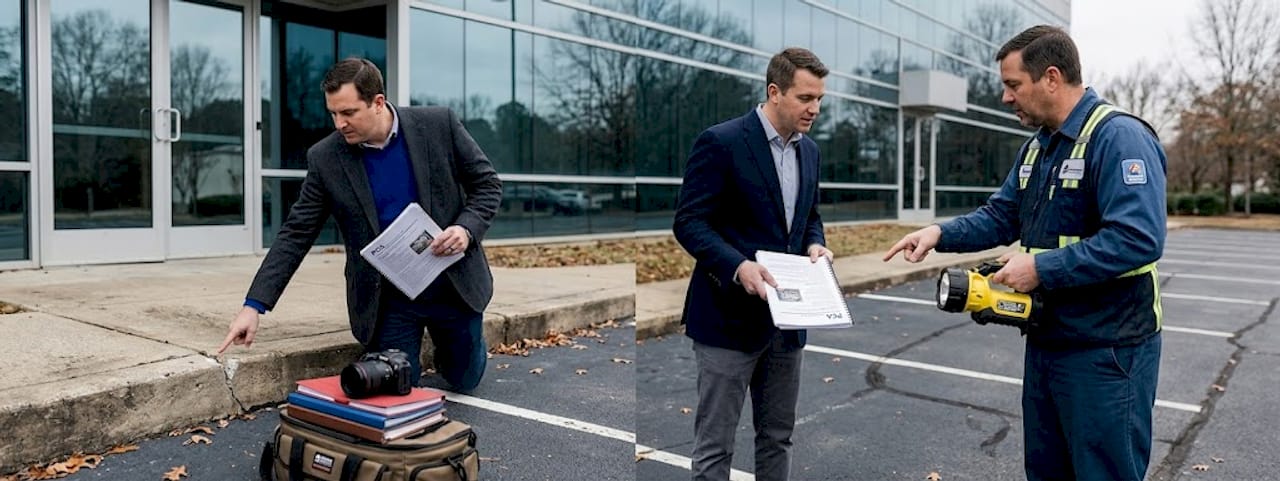
A PCA goes further than a general inspection. Conducted under ASTM E2018 standards, it includes a formal review of available documents, interviews with property personnel, and a site walk that produces a detailed Property Condition Report with cost estimates for both immediate repairs and long-term capital needs.
Investors use PCA reports to negotiate price concessions, satisfy lender requirements, and build realistic capital expenditure budgets. This is the standard for acquisitions, refinancing, and portfolio management.
3. Structural evaluation
When a general inspection reveals foundation cracking, uneven floors, or signs of settlement, a structural engineer needs to be brought in. A structural evaluation assesses load-bearing capacity, identifies the cause of distress, and recommends remediation. For older buildings or those with significant additions, this evaluation can prevent catastrophic post-purchase discoveries.
4. Environmental assessment
Phase I and Phase II Environmental Site Assessments identify recognized environmental conditions on or near the property. Contaminated soil, underground storage tanks, asbestos-containing materials, and lead paint are all potential liabilities that transfer with ownership. Lenders almost always require a Phase I before approving financing on commercial acquisitions.
5. Fire and life safety audit
Commercial inspections require team approaches for systems like fire suppression that fall outside the standard residential inspection scope. A fire and life safety audit reviews sprinkler systems, alarm panels, extinguisher placement, egress compliance, and emergency lighting. Deficiencies here carry both financial and legal consequences.
6. Roofing certification and survey
Roof replacement is one of the largest capital expenses a commercial property owner faces. A dedicated roofing survey goes beyond what a general inspector can assess. It evaluates membrane integrity, drainage performance, penetration sealing, and remaining service life. Some buyers require a roofing certification from a licensed roofing contractor as a condition of purchase.
7. HVAC system evaluation
HVAC failures can cascade through a building, much like a single faulty component triggers a domino effect across interconnected systems. A specialist evaluation covers equipment age, refrigerant compliance, ductwork condition, controls, and maintenance records. For industrial property evaluation, this often includes chillers, cooling towers, and process-specific mechanical systems that general inspectors are not qualified to assess.
Pro Tip: Request maintenance logs for all HVAC units going back at least three years. Gaps in service history are often a stronger warning sign than the equipment’s age.
8. Electrical system inspection
Beyond what a general inspector observes, a licensed electrician or electrical engineer can perform a load analysis, review panel labeling and capacity, check for aluminum wiring in older buildings, and identify code violations that trigger mandatory upgrades. In multi-tenant buildings, metering accuracy and subpanel conditions deserve specific attention.
9. Plumbing and wastewater inspection
For larger commercial properties, a camera inspection of drain lines can reveal root intrusion, pipe collapse, or offset joints that are invisible from above. Properties with grease traps, commercial kitchens, or industrial discharge connections require additional scrutiny. Plumbing deficiencies often go unnoticed behind finished walls until they require emergency repairs.
10. Elevator and vertical transport examination
Elevators are heavily regulated systems with mandatory inspection and certification requirements. Before acquiring a property with elevators, escalators, or lifts, verify current certifications and request the last three inspection reports. Outstanding violations or deferred maintenance on vertical transport systems represent both safety liability and significant capital exposure.
Choosing the right inspection service for your transaction type
Not every transaction requires every inspection type. The right combination depends on your property type, deal structure, and risk tolerance.
| Transaction type | Recommended inspection scope |
|---|---|
| Acquisition (purchase) | PCA, environmental Phase I, specialized as needed |
| Refinancing | PCA or updated property condition report |
| Portfolio review | Phased PCAs prioritized by asset age and condition |
| Pre-listing | General inspection plus roofing and HVAC review |
| Pre-leasing | Code compliance, accessibility, and systems check |
A few additional considerations:
- Budget versus risk: A general inspection costs less than a full PCA, but the cost difference is small compared to the capital exposure a PCA can identify. For acquisitions above $1 million, a full PCA is rarely optional.
- Lender requirements: Most commercial lenders require a PCA conducted by a qualified firm. Confirm requirements before scheduling to avoid duplicate costs.
- Bundled versus phased: Ordering multiple specialized inspections simultaneously saves time during due diligence periods. Phased approaches work better for portfolio reviews where resources are spread across multiple assets.
Comprehensive assessment covers roofing, structural elements, HVAC, electrical, plumbing, fire safety, accessibility, and documentation. Knowing which of those elements require specialist involvement versus general inspection coverage helps you build the right scope from the start.
How to prepare before the inspection day
The quality of your inspection report depends partly on what you bring to the table before the inspector arrives. Disorganized preparation leads to incomplete assessments and, in some cases, costly re-inspections that delay closings.
Gather and organize the following before inspection day:
- As-built drawings and floor plans: These help inspectors understand structural layout and identify deviations or unauthorized modifications.
- Maintenance logs: HVAC, roofing, elevators, and fire suppression systems should all have documented service histories.
- Prior inspection reports: Previous PCAs or inspection reports reveal recurring issues and show whether prior deficiencies were addressed.
- Permits and certificates of occupancy: Outstanding permits or expired certificates signal potential compliance issues.
- Utility bills: Twelve months of utility data can reveal abnormal consumption patterns tied to system inefficiencies.
Digitizing maintenance logs and organizing them in a shared folder allows inspectors to reference records in real time during the site visit, which improves report accuracy and reduces follow-up questions.
Pro Tip: Hold a brief coordination meeting with the property manager and any tenants at least 48 hours before the inspection. Confirm that all mechanical rooms, roof hatches, and electrical panels will be unlocked and accessible.
How to use inspection findings to protect your investment
Receiving a detailed property condition report is only useful if you know how to read it strategically. Reports should clearly communicate limitations, include specialist referrals when needed, and separate urgent deficiencies from long-term capital planning items.
Here is how to work through the findings:
- Separate immediate from deferred: Immediate Repair Costs reflect safety hazards or systems at failure. Deferred maintenance reflects items that will require capital within a defined planning horizon, typically 12 years.
- Quantify the financial exposure: Add up cost-to-cure estimates for all immediate and near-term items. This number becomes your negotiation baseline.
- Request specialist evaluations where flagged: If the report recommends a structural engineer or environmental consultant, act on those referrals before closing. Do not assume the general inspection covered those risks adequately.
- Use the report in price negotiations: PCA reports serve as negotiation tools. Present identified deficiencies and cost estimates to the seller and request either a price reduction or remediation as a closing condition.
- Share with your lender: Most commercial lenders require the PCA as part of underwriting. A well-documented report speeds approval and reduces lender-imposed conditions.
The mindset shift that matters most: stop reading inspection reports as lists of defects and start reading them as financial risk documents. Every line item represents a future capital obligation. The inspection tells you what you are actually buying.
My take on what commercial buyers consistently get wrong
I have seen investors spend months analyzing cap rates, rent rolls, and market comps, then rush the inspection process because they are eager to close. That is exactly backward. The inspection is where you find out whether the deal you modeled actually exists.
The most common mistake I see is buyers assuming that any licensed inspector can handle a commercial property. A standard home inspection simply does not have the scope, cost projections, or specialist coordination that commercial acquisitions require. Hiring the wrong inspector does not save money. It defers risk to the worst possible moment: after closing.
The second mistake is showing up to inspection day without documentation. When mechanical rooms are locked and maintenance records are unavailable, inspectors document what they cannot access. Those gaps in the report create uncertainty for lenders and leave buyers without the cost data they need to negotiate.
The buyers who get the most from their inspection service treat it as a financial due diligence tool, not a formality. They communicate with their inspector before the site visit, ask questions during the process, and use the report actively in negotiations and capital planning. That approach changes outcomes.
— Holly
Get the inspection coverage your investment deserves
When the stakes are this high, the inspection service you choose needs to match the asset’s complexity. At Upchurch Inspection, we conduct commercial property inspections compliant with ASTM E2018-24, covering all major building systems and providing detailed cost projections for buyers, lenders, and boards. Our inspectors exceed state licensing standards and bring the depth that protects investments, not just checks boxes. From general commercial building inspections to full Property Condition Assessments, we support due diligence inspections across the Mid-South and beyond. Contact Upchurch Inspection to schedule your assessment and get the clarity you need before you close.
FAQ
What is a commercial property inspection service?
A commercial property inspection service is a professional evaluation of a commercial building’s physical condition, covering major systems like HVAC, electrical, plumbing, structural components, and roofing. The resulting report documents deficiencies and cost projections to inform buyers, lenders, and investors before a transaction.
How is a commercial inspection different from a home inspection?
A standard home inspection lacks the scope, cost projections, and coordination with specialists required for commercial properties. Commercial inspections follow ASTM E2018-24 standards and often require multiple specialists for systems like fire suppression, elevators, and industrial HVAC.
What does ASTM E2018-24 mean for commercial inspections?
ASTM E2018-24 is the industry benchmark for Property Condition Assessments, defining the scope, documentation requirements, and cost-estimation standards. Lenders and sophisticated buyers use it to verify that an inspection meets minimum professional standards.
Can I use an inspection report to negotiate the purchase price?
Yes. Cost-to-cure estimates in a PCA report give you documented financial justification to request price reductions or seller-funded repairs as a condition of closing. This is one of the most direct financial returns on the inspection investment.
How far in advance should I prepare for a commercial inspection?
Begin organizing documents and coordinating property access at least one week before the scheduled inspection. Confirm that all mechanical rooms, roof hatches, and electrical panels will be accessible to avoid delays and the additional cost of a re-inspection visit.