
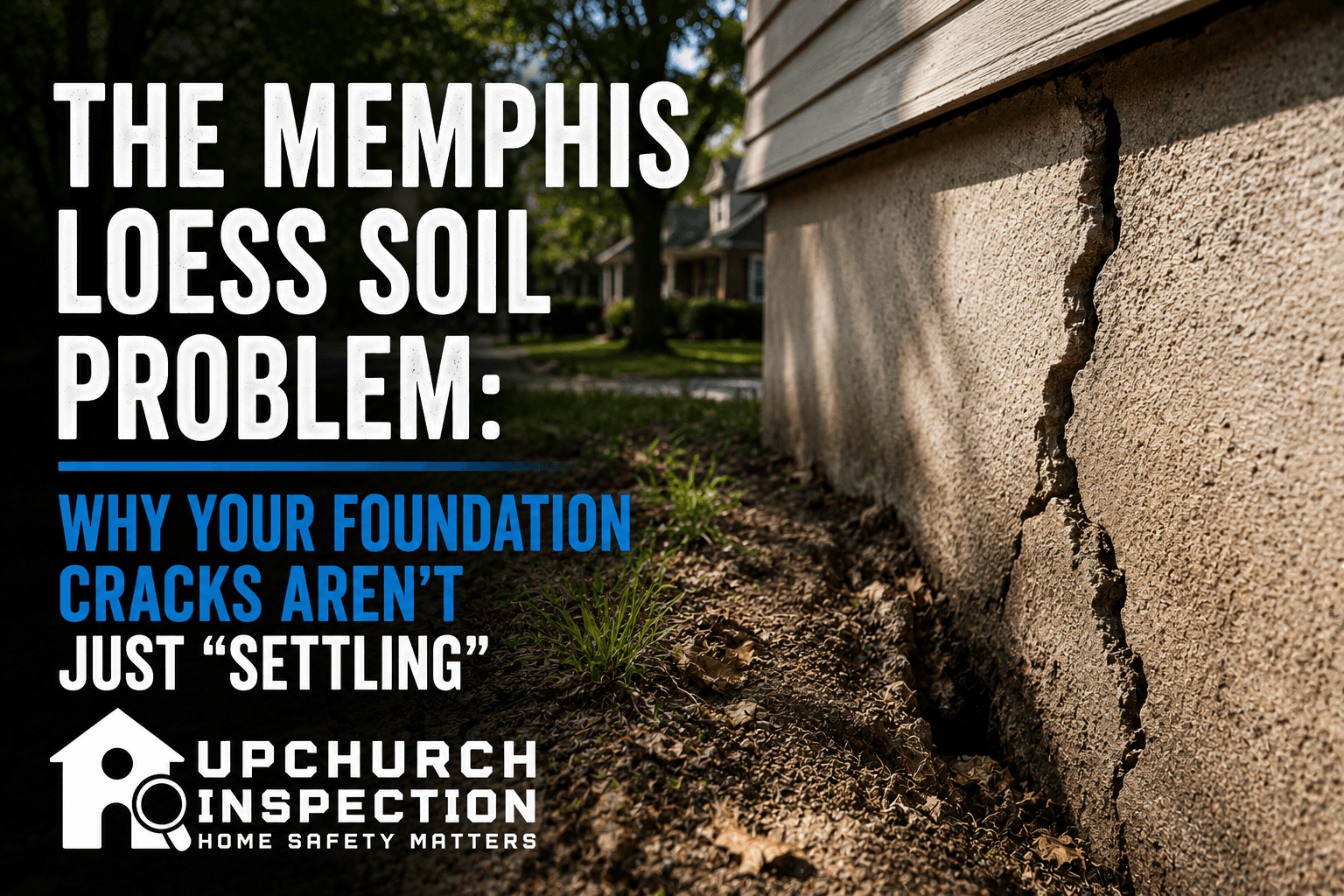
Most homeowners in Memphis are told the same thing when cracks show up: “It’s just settling.”
That explanation might fly in other parts of the country. In Memphis, it’s often wrong.
This city sits on a bluff of wind-blown silt called Loess, and when it fails, it doesn’t fail gently. What looks like harmless cosmetic cracking is frequently the early warning sign of hydro-consolidation, changing pore pressure, and real soil movement beneath the structure—not just age.
If you own or are buying a home anywhere near the Bluff, especially in older neighborhoods like Midtown or East Memphis, this isn’t theory. It’s physics.
Why Memphis Soil Behaves Differently
Loess: Strong When Dry, Unstable When Wet
Loess soil is made of extremely fine, angular particles deposited by wind thousands of years ago. When dry, those particles interlock and behave almost like a solid mass. When wet, that structure collapses.
This isn’t traditional clay expansion. It’s loss of soil strength.
When water infiltrates loess:
- Pore pressure increases
- Soil particles lose friction
- The soil mass compresses suddenly
That process—hydro-consolidation—is why Memphis foundations don’t always fail slowly. Sometimes they move in stages, sometimes all at once.
The Bluff Effect: Why Location Matters More Than Age
Homes built along or near the Memphis Bluff are particularly vulnerable because gravity is already working against them. Once water enters the soil, it doesn’t just soak—it migrates downhill.
Midtown & East Memphis Case Patterns
In neighborhoods like Midtown and East Memphis, we routinely see:
- Stair-step cracking in brick veneer
- Interior wall separation near windows and doors
- Sloping floors that worsen after heavy rain seasons
These aren’t random. They often align with:
- Inadequate surface drainage
- Failing footing support
- Historic foundation designs never meant for today’s moisture loads
“Settling” vs. Active Soil Movement
True Settling
- Occurs shortly after construction
- Stabilizes over time
- Produces hairline cracks that don’t grow
Loess-Driven Movement
- Reactivates during wet seasons
- Produces widening cracks
- Causes differential movement across the structure
If cracks are reopening, widening, or appearing in new locations, that’s not settling. That’s soil behavior.
Water Is the Trigger, Not the Root Cause
Loess doesn’t fail on its own. It fails when water is allowed to accumulate where it shouldn’t.
Common Contributors in Memphis Homes
- Negative grading near the foundation
- Short downspouts dumping water at footings
- Clogged or collapsed perimeter drains
- Driveways or patios directing runoff toward the structure
Once water reaches the bearing soil, pore pressure rises, and load-bearing capacity drops.
Why Cosmetic Repairs Don’t Work Here
We see this constantly: patched cracks, painted walls, fresh caulk—no drainage corrections underneath.
Cosmetic repairs treat symptoms. Memphis soil problems are subsurface failures.
Without addressing:
- Water management
- Soil stability
- Foundation load paths
the cracks return. Often worse.
Inspection Red Flags Specific to Memphis Loess
During inspections in Bluff-adjacent areas, we pay close attention to:
- Foundation displacement relative to grade
- Evidence of past shimming or pier adjustment
- Drainage patterns during wet weather
- Repeated repairs in the same structural locations
These patterns tell a story. And in Memphis, that story usually starts below the footing.
What Buyers Should Understand Before Closing
In cities built on bedrock, foundation movement is often slow and predictable. In Memphis, it’s conditional.
If you’re buying in:
- Midtown
- East Memphis
- Older parts of Shelby County near elevation changes
you need to know whether the soil beneath the home is stable today, not whether it cracked 30 years ago.
That’s the difference between maintenance and liability.
Final Thoughts
Memphis foundations don’t crack because homes are old. They crack because Loess soil fails when moisture control fails.
Understanding that difference changes how you evaluate risk—and how you protect your investment.
Protecting your West Tennessee investment starts with a forensic eye. View our West Tennessee Service Area to see a full list of towns we serve.