
There are a handful of findings that make me stop scrolling when I’m reviewing an inspection report. Termites are one of them. Not because they’re rare—but because in East Tennessee, they’re normal, and normal problems are the ones people ignore the longest.
When our Knoxville inspector sends me a report with WDO photos attached, I already know what the conversation is going to sound like.
“It doesn’t look that bad.”
“We didn’t see anything during the walkthrough.”
“The house feels solid.”
All of that can be true—and the termites can still be there.
If you live in Knoxville long enough, especially anywhere near the river corridor or older tree-lined neighborhoods, termites aren’t a possibility. They’re part of the environment. Same way humidity is. Same way clay soil is. You don’t opt out by hoping.
East Tennessee Is Built for Termites
I don’t mean the houses. I mean the conditions.
East Tennessee gives termites everything they want:
- Warm temperatures
- Long, humid seasons
- Plenty of rainfall
- Wood-framed construction
- Crawlspaces that stay damp
- Soil that holds moisture
You put those together and termites don’t have to hunt. They just wait.
Our Knoxville inspector has told me flat out: if a home in this region hasn’t had termites yet, it’s either newer, recently treated, or hasn’t been checked closely enough.
That’s not alarmism. That’s pattern recognition.
Subterranean Termites Are the Real Issue Here
When people think “termite,” they picture drywood termites like you hear about in Florida or California. That’s not what we’re dealing with in Knoxville.
East Tennessee’s main problem is subterranean termites.
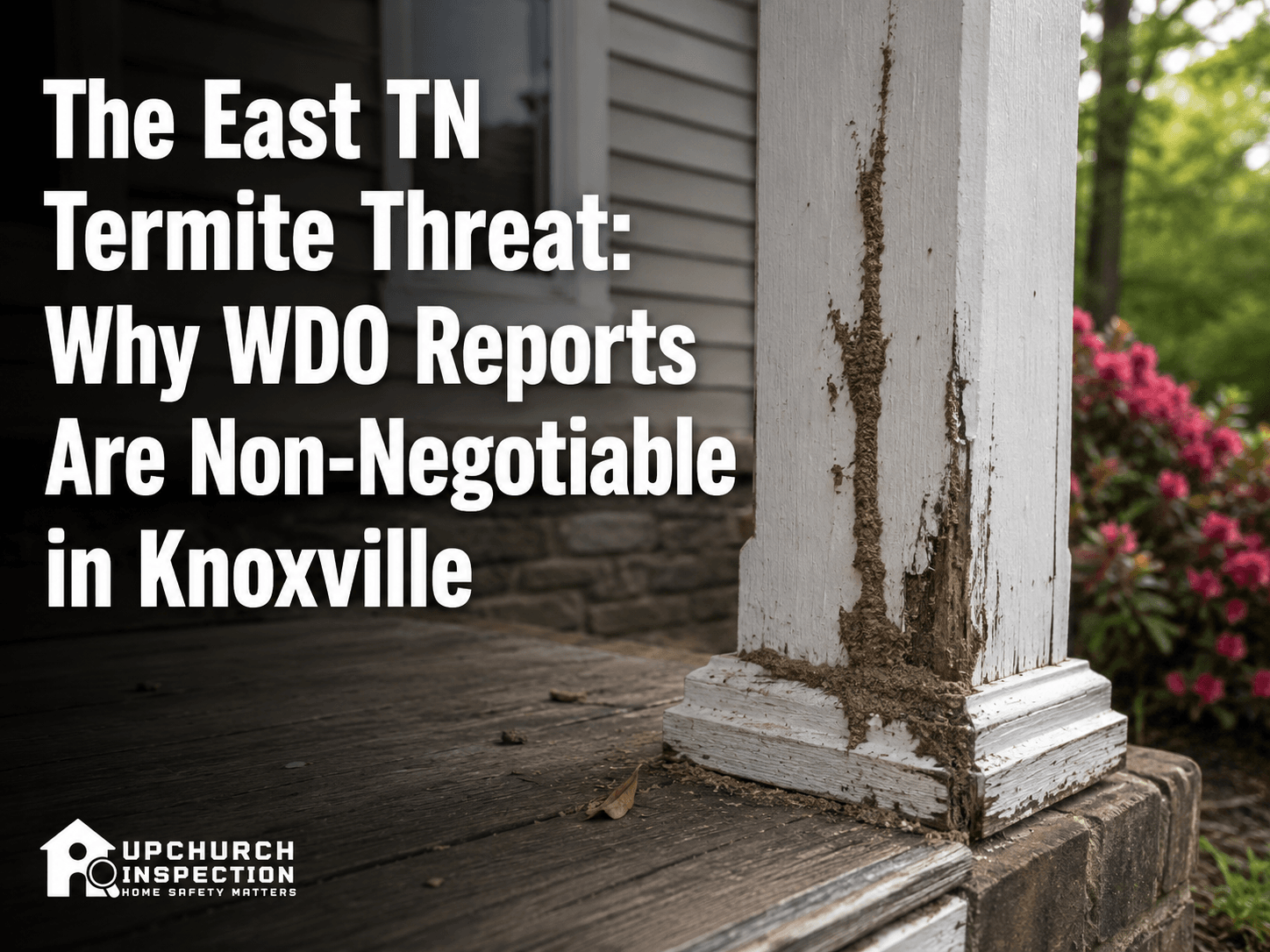
These termites live in the soil. They build mud tubes to travel from the ground into the structure. They don’t need exposed wood. They don’t need daylight. They just need moisture and a path.
Our inspector routinely documents mud tubes:
- Along foundation walls
- Inside crawlspaces
- On basement piers
- Hidden behind insulation
- Running up plumbing penetrations
And here’s the thing that throws people off: the wood can look fine from the outside while it’s being eaten from the inside.
Termites don’t announce themselves with drama. They hollow things out quietly.
“The Floors Feel Solid” Doesn’t Mean Anything
One of the most dangerous assumptions buyers make is equating “solid underfoot” with “no termite damage.”
I’ve reviewed Knoxville reports where:
- Floor joists looked intact at a glance
- Rim boards appeared undisturbed
- Subflooring didn’t flex
And then moisture probes and probing tools told a very different story.
Our inspector has found joists with intact exterior faces and nothing left structurally inside. Tap it, it sounds solid. Push it with a probe, it gives.
That’s not cosmetic damage. That’s structural compromise that just hasn’t failed yet.
Crawlspaces Are Termite Crime Scenes
If you want to know whether termites have been active, crawlspaces don’t lie.
Our Knoxville inspector spends a lot of time under houses because that’s where:
- Mud tubes start
- Moisture lingers
- Wood stays untreated
- Previous damage hides
In East Tennessee crawlspaces, termites love:
- Sill plates
- Rim joists
- Floor joists near exterior walls
- Areas near plumbing leaks
- Wood debris left behind from construction
One report that stuck with me involved a crawlspace that “looked dry” overall—but had one damp corner near a bathroom drain. Termites had found that corner and stayed there like it was a VIP section.
Localized moisture equals localized damage. You don’t need the whole crawlspace wet.
Why Past Treatment Doesn’t Mean You’re Clear
I hear this a lot:
“The house was treated years ago.”
Cool. When?
Termite treatments are not lifetime warranties unless there’s an active bond—and even then, coverage varies. Chemicals break down. Soil conditions change. Additions get built. Landscaping alters moisture patterns.
Our inspector has documented active termites in homes that were treated less than a decade ago because:
- Soil was disturbed
- New porches or decks bridged treated areas
- Drainage changes increased moisture
- Treatments weren’t reapplied
Termites don’t respect paperwork. They respect opportunity.
WDO Reports Aren’t Redundant—They’re Focused
A general home inspection can spot signs of termites. A WDO report is designed to look for them.
That difference matters.
Our Knoxville inspector treats WDO inspections like a different mindset:
- He’s not just observing—he’s searching
- He’s probing wood, not just looking at it
- He’s tracing mud tubes to their origin
- He’s documenting damage patterns, not just presence
I’ve reviewed reports where the home inspection was clean—but the WDO report caught early activity in a crawlspace corner no one would’ve noticed otherwise.
That’s the value.
Repairs Don’t Always Mean Resolution
One of my personal red flags is evidence of past termite repair without documentation of treatment.
I’ve reviewed Knoxville reports showing:
- Sistered joists with no explanation
- Fresh lumber mixed with old framing
- Patch repairs near sill plates
- Structural reinforcement with no records
Sometimes those repairs are proactive. Sometimes they’re reactionary. Without a WDO context, you don’t know which.
Our inspector calls this out because cosmetic repairs don’t stop termites. Treatment does.
Landscaping Can Make Things Worse
Knoxville homes often have lush landscaping, heavy mulch, and dense plantings around foundations. It looks great. Termites love it.
Our inspector frequently notes:
- Mulch piled above siding or brick ledges
- Wood debris left against foundations
- Planters trapping moisture
- Decks tied directly into framing
These conditions don’t cause termites—but they roll out the welcome mat.
Termites don’t need much. Give them shade, moisture, and a concealed entry point, and they’ll do the rest.
Termites Don’t Care About Price Point
I’ve seen termite damage in:
- Small post-war homes
- Historic bungalows
- Mid-century houses
- Brand-new construction
Especially new construction.
Fresh lumber is a buffet. If soil treatments were rushed or disturbed during landscaping, termites move in early.
Our inspector has documented active termite tubes in homes less than two years old. That surprises buyers every time. It shouldn’t.
Why Knoxville Is Especially Vulnerable
East Tennessee’s combination of terrain and moisture makes termite pressure constant. Water moves downhill. Crawlspaces stay damp. Soil stays active.
Drive past landmarks like Neyland Stadium and you’re surrounded by neighborhoods that sit on decades of layered soil disturbance, utility work, and tree growth.
That disturbance creates pathways. Termites exploit them.
The Cost of Missing It
Termite damage isn’t expensive because termites are special. It’s expensive because the damage is structural and hidden.
Miss it early, and repairs are manageable.
Miss it late, and you’re talking about:
- Structural framing replacement
- Floor system reinforcement
- Foundation interface repairs
- Treatment plus reconstruction
I’ve reviewed reports where the WDO inspection saved buyers tens of thousands of dollars by catching activity early. I’ve also seen the opposite—where termites were discovered after closing, and the math got ugly fast.
The Wes Take
In Knoxville, WDO reports aren’t optional extras. They’re part of understanding the house.
Termites are not a moral failing. They don’t mean the house is dirty, neglected, or falling apart. They mean the house exists in East Tennessee.
The difference between a manageable issue and a nightmare is whether someone bothered to look closely before the keys changed hands.
When our Knoxville inspector sends me a report with a clean WDO section, I breathe easier. Not because termites don’t exist—but because we know where we stand.
That’s the whole point of inspections.
Not fear.
Not optimism.
Just clarity—before the wood starts answering questions the hard way.