
Bigger Lots, Different Inspection Challenges
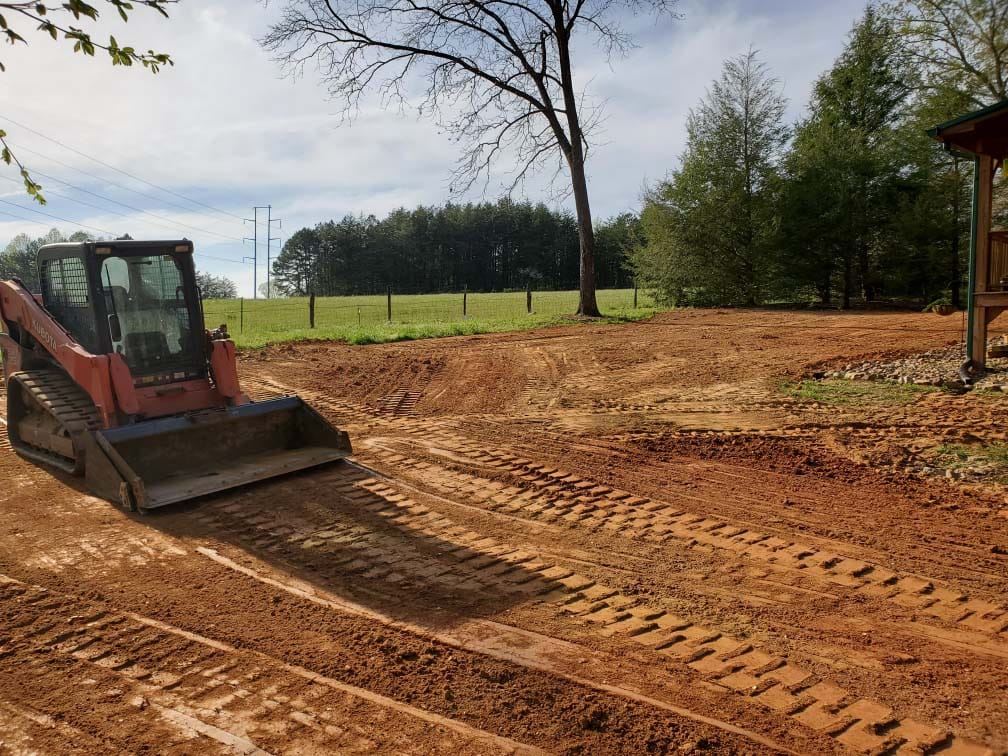
When I review reports from our Centerview, Missouri inspector, homes in and around Clinton tend to follow a different pattern than what we see in tighter subdivisions. Larger lots, longer driveways, and more open land change how water moves across a property—and that directly affects how homes age in this area.
In Clinton, moisture and drainage issues often develop slowly and quietly, especially on properties that feel “rural” even when they’re just outside town limits.
How Water Moves on Open Properties
On larger lots, surface water has more room to travel before it ever reaches a structure. That sounds like a good thing, but in practice it often means drainage issues go unnoticed. Shallow swales fill in over time, culverts clog, and water begins to pool in low areas near foundations without obvious signs from the street.
Our inspector has documented multiple Clinton-area properties where rear yards naturally slope toward the house. During heavy rains, runoff from open land migrates straight to the foundation wall or crawlspace. Over time, that repeated saturation shows up as moisture intrusion, foundation staining, and soft soils along the perimeter.
Crawlspaces and Basements Take the Hit
Many Clinton homes sit over crawlspaces or partial basements. When drainage isn’t properly managed, these areas become the first place moisture problems appear. In recent inspections, our inspector noted standing water, elevated humidity, and wood framing with early signs of decay—all tied back to poor exterior water control.
A common contributor is downspouts that discharge just a few feet from the foundation. On a large lot, it’s easy to overlook extensions because there’s “plenty of space,” but clay-heavy soils in this part of Missouri don’t absorb water quickly. Instead, moisture lingers and builds pressure against foundation walls.
Septic Systems and Site Grading
On properties outside city sewer service, septic systems introduce another variable. Improper grading around drain fields can cause surface water to overwhelm the system, leading to soggy yards and, in some cases, moisture migrating back toward the home.
In Clinton-area inspections, our inspector pays close attention to grading transitions between the home, outbuildings, and open land. Subtle dips and low spots often explain why one side of a house stays damp year-round while the rest appears dry.
What We Focus on During Inspection
Moisture issues on larger rural lots aren’t usually tied to a single defect. They’re the result of how the entire property manages water. During inspections in Clinton and nearby towns like Tightwad and Lowry City, we look at slope direction, soil conditions, drainage paths, and how water behaves during heavy rain events.
Understanding those patterns helps buyers and owners make sense of what they’re seeing—and avoid surprises that only show up after the next big storm.
Related reading