Roof trusses are engineered components designed to carry specific loads in very specific ways. When they are altered, damaged, or compromised, the effects can extend well beyond the immediate area. Because trusses play such a critical role in a home’s structural system, inspectors pay close attention to visible truss conditions during an inspection.
Across homes we inspect throughout the Mid-South—particularly in areas with active remodeling, aging housing stock, or past storm activity—truss damage is one of the more serious structural concerns that can surface.
Why Trusses Are Different From Conventional Framing
Unlike site-built rafters, trusses are engineered as complete systems. Each member, connector plate, and joint is designed to work together to distribute loads efficiently.
Because of this design:
- Trusses should not be cut, drilled, or altered in the field
- Repairs are not interchangeable with conventional framing fixes
- Even small modifications can change load paths
This is why truss concerns often require coordination with a licensed professional engineer.
Common Causes of Truss Damage
During inspections, truss damage is most often associated with one of the following:
- HVAC or plumbing installations cutting truss members
- Electrical or mechanical work routed improperly through trusses
- Past storm damage or roof leaks leading to wood deterioration
- Improper storage loads placed in attic spaces
- Fire or long-term moisture exposure
In areas around Memphis, Little Rock, Jackson (TN), and Cape Girardeau, attic modifications related to renovations are a frequent source of truss damage.
What Inspectors Evaluate Visually
Inspectors perform a visual, non-invasive evaluation of accessible attic areas. When examining trusses, they look for:
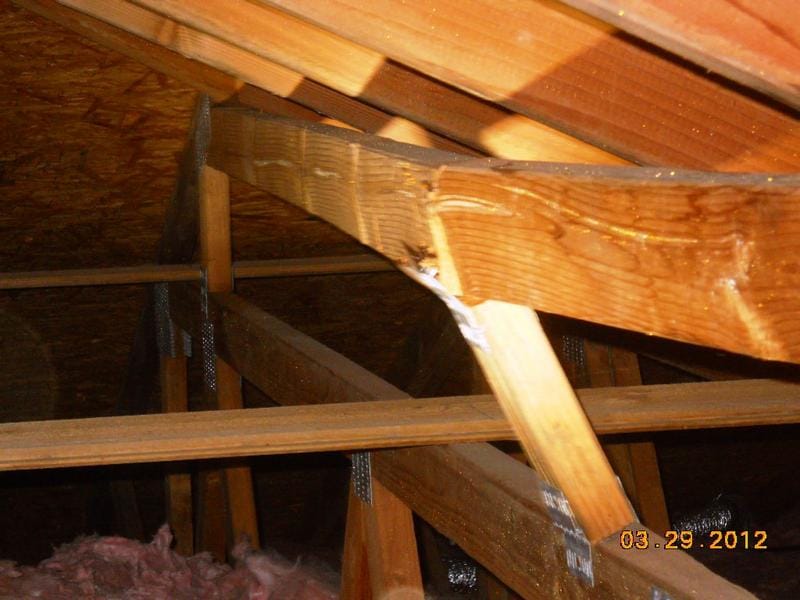
- Cut, notched, or drilled truss members
- Cracked or split wood components
- Missing, loose, or corroded metal connector plates
- Signs of deflection, sagging, or separation
- Field-installed reinforcements that lack documentation
Inspectors document what is visible and accessible but do not dismantle components or perform calculations.
Why Improvised Repairs Are a Red Flag
One of the most common issues inspectors encounter is evidence of past “repairs” made without engineering guidance. These may include:
- Sistered boards added without design approval
- Plywood gussets fastened over damaged areas
- Random bracing or blocking installed as a workaround
While well-intentioned, these repairs may not restore the truss to its intended performance. In some cases, they can introduce new stress points.
How Truss Issues Affect the Rest of the Home
Damaged or altered trusses can contribute to:
- Sagging rooflines
- Interior ceiling cracks
- Doors or windows going out of alignment
- Uneven load transfer to walls and foundations
These secondary indicators often prompt closer inspection of attic framing.
When Engineering Evaluation Is Recommended
Inspectors do not determine whether a truss is structurally adequate or design repairs. When truss damage or alteration is observed, the typical recommendation is evaluation by a licensed professional engineer.
At Upchurch Inspection, the process is clearly defined:
- Inspectors document conditions and collect field data
- Information is provided to an independent engineering firm
- The engineer performs analysis and issues formal conclusions
All structural opinions and repair specifications come directly from the engineer—not the inspector.
Real Estate and Lender Considerations
During real estate transactions, truss damage often triggers lender concerns. Even when a home has performed adequately for years, undocumented truss alterations may require an engineer’s letter before closing.
This is common in homes that have undergone attic conversions, HVAC upgrades, or structural renovations.
Final Thoughts
Truss damage is not something to ignore or casually repair. Because trusses are engineered systems, even minor alterations deserve careful evaluation.
By identifying visible concerns, documenting conditions, and coordinating with licensed engineers when appropriate, inspectors help ensure that truss-related issues are addressed properly—protecting the structure, the transaction, and everyone involved.