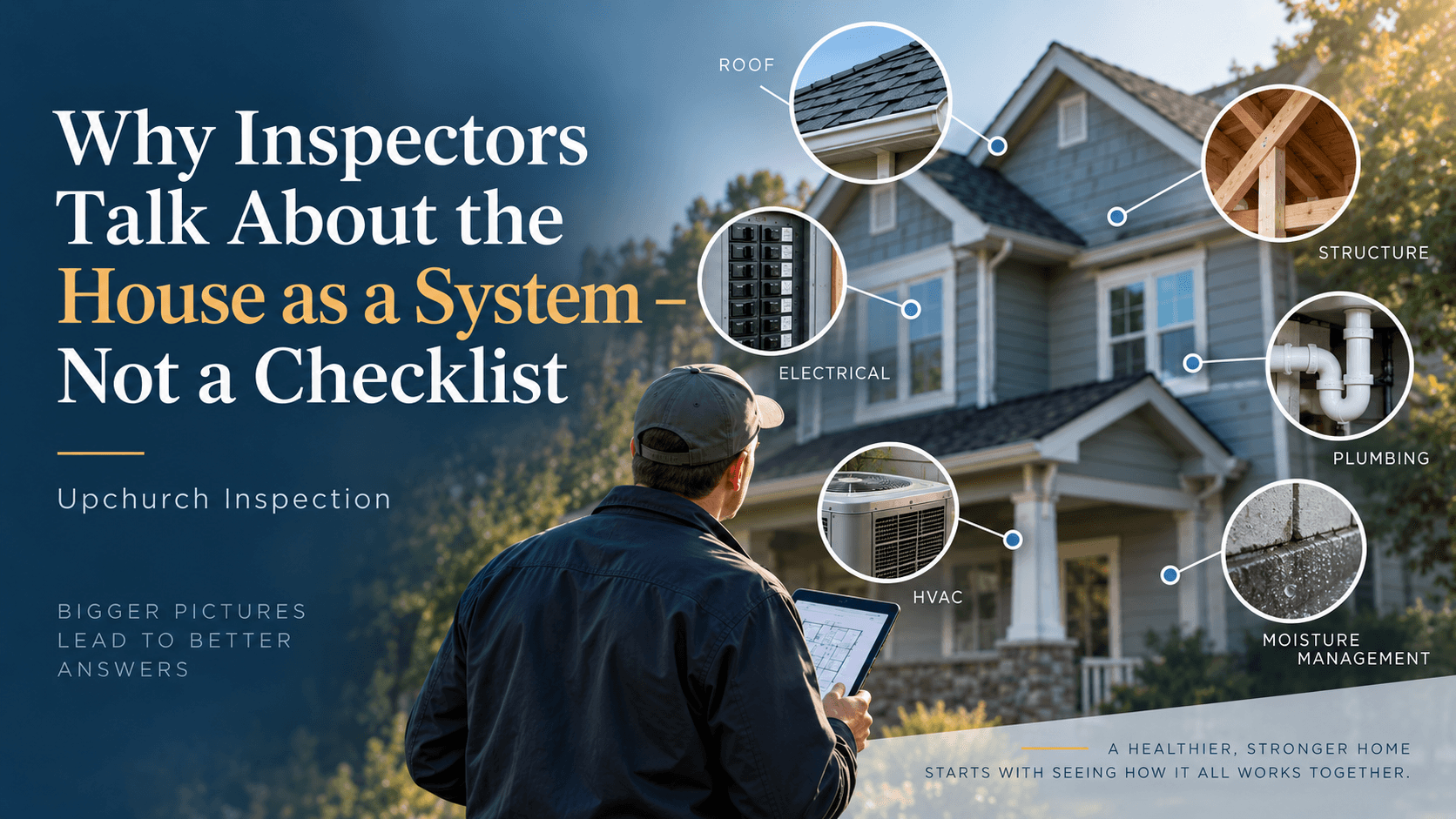
Buyers often expect a home inspection to feel like a long list of individual items: roof, plumbing, electrical, HVAC, foundation. Each part checked, noted, and moved past.
But experienced inspectors don’t actually think that way.
We think in systems, because houses don’t fail one component at a time. They fail when multiple components interact poorly over time. And that interaction is where most expensive, frustrating problems come from.
At Upchurch Inspection, this systems-based thinking is a big part of why our inspections feel different from surface-level, checklist-driven reports.
Houses Don’t Have Isolated Problems
A wet crawl space isn’t just a crawl space issue. It affects framing, insulation, HVAC performance, indoor air quality, and even electrical components over time.
An undersized HVAC system isn’t just a comfort issue. It affects humidity, moisture movement, material durability, and energy costs.
Poor grading isn’t just an exterior concern. It influences foundation behavior, basement moisture, crawl space conditions, and long-term structural stress.
When buyers look at issues in isolation, they underestimate impact. When inspectors look at houses as systems, patterns emerge that explain why problems exist and where they’re likely to show up next.
A Real Example: Moisture Isn’t a Single Defect
We’ve inspected many homes where buyers focused on a single moisture-related comment in the report. A stain. A damp area. Elevated humidity.
But moisture rarely comes from one failure point.
It may start with roof runoff that isn’t directed away from the home. That water changes soil moisture near the foundation. That affects crawl space humidity. That humidity affects framing and HVAC performance. That affects indoor comfort and air quality.
If you only fix the visible symptom, the system stays broken.
Systems thinking prevents that mistake.
Why Checklist Inspections Miss the Bigger Picture
Checklist inspections are good at verifying presence. They’re less effective at explaining interaction.
Yes, the HVAC turns on.
Yes, the roof covers the house.
Yes, the plumbing flows.
Those answers are incomplete.
What matters is how those systems work together under real conditions—seasonal weather, daily use, aging materials, and regional environmental stress.
An inspection that doesn’t connect those dots gives buyers information without understanding.
Systems Thinking Explains Why Some Repairs Don’t “Stick”
Buyers are often frustrated when repairs don’t solve problems permanently.
A leak is fixed, but moisture returns.
Insulation is added, but comfort doesn’t improve.
A drain line is cleared, but backups reoccur.
Those failures usually happen because only one piece of a system was addressed.
Experienced inspectors recognize when an issue isn’t a component problem—it’s a system imbalance.
That recognition changes recommendations from “repair this” to “understand this.”
Why This Matters More in Our Region
In the Mid-South, environmental forces are constant.
Humidity, heavy rainfall, soil movement, and temperature swings interact with homes year-round. Systems are under continuous stress, not occasional stress.
Homes here don’t tolerate fragmented solutions well. Small imbalances compound faster than they do in drier or more stable climates.
That’s why inspectors who understand local systems behavior add far more value than inspectors who simply document conditions.
How We Apply Systems Thinking at Upchurch Inspection
We don’t ignore individual defects—but we always place them in context.
We explain:
- How one issue influences another
- Why certain problems show up together
- Where fixing one thing without addressing others creates repeat failures
- Which improvements actually stabilize the home
That approach helps buyers plan intelligently instead of reacting piecemeal.
Why Buyers Feel More Confident After Systems-Based Inspections
When buyers understand how the house works as a whole, decisions get easier.
They know:
- Which issues are related
- Which repairs should be grouped
- Where to invest first
- What to monitor over time
They stop feeling like they’re chasing random problems and start feeling like they’re managing a structure with logic and predictability.
That shift reduces anxiety and regret.
Houses Don’t Fail Randomly
They fail when systems are misunderstood, ignored, or treated as separate problems.
A checklist tells you what’s there.
A systems approach tells you how it behaves.
At Upchurch Inspection, we don’t just check boxes. We interpret how the house actually lives in this environment—because that’s what determines whether ownership feels manageable or overwhelming.
Understanding the system doesn’t make the house perfect.
It makes the house predictable.
And predictability is what good inspections are really about.