
A sticking door, a sloped floor, or a repaired brick crack can change the way you look at a Jackson house. None of those clues, by itself, tells you whether the foundation needs repair. What matters is the pattern: where the movement appears, what else has shifted, where water is going, and what documentation explains the history.
Before closing, your goal is to get the unanswered questions resolved while you still have time to act. Fresh paint and a reassuring explanation are a start to a conversation. They are not a foundation evaluation.
Why Jackson Buyers Hear So Much About Yazoo Clay
Expansive soils are a real part of the Jackson-area foundation conversation. Research on the engineering properties of Mississippi’s Yazoo Clay documents variability in the formation and its relationship to swelling-related damage. That regional context matters, but it does not identify the soil beneath a particular house.
The presence, depth, and behavior of expansive material can vary. Fill, drainage, foundation design, trees, plumbing leaks, and previous repairs can also affect the picture. A home inspection does not include soil borings or laboratory testing. If a purchase decision depends on the soil conditions or foundation design, a qualified engineer may need to investigate further.
Read Cracks as Part of a Pattern
A single crack should not become an instant diagnosis. Drywall can crack at joints, masonry can crack for several reasons, and a patched surface can hide how an opening looked before repair. Location, displacement, related damage, and changes over time are more useful than a confident label based on width alone.
- Look for similar concerns inside and outside the same part of the house.
- Notice whether cracks cross several materials or accompany separation at trim and openings.
- Ask whether floors, doors, windows, porches, or attached garages show related movement.
- Request dated photographs or previous reports that may show whether a condition has changed.
For example, a door that rubs at one hinge may need an adjustment. Several distorted openings beside exterior masonry separation and a noticeably sloping floor deserve a broader evaluation. Those are examples of how clues fit together, not a diagnosis of any particular Jackson property.
Follow the Water Around the House
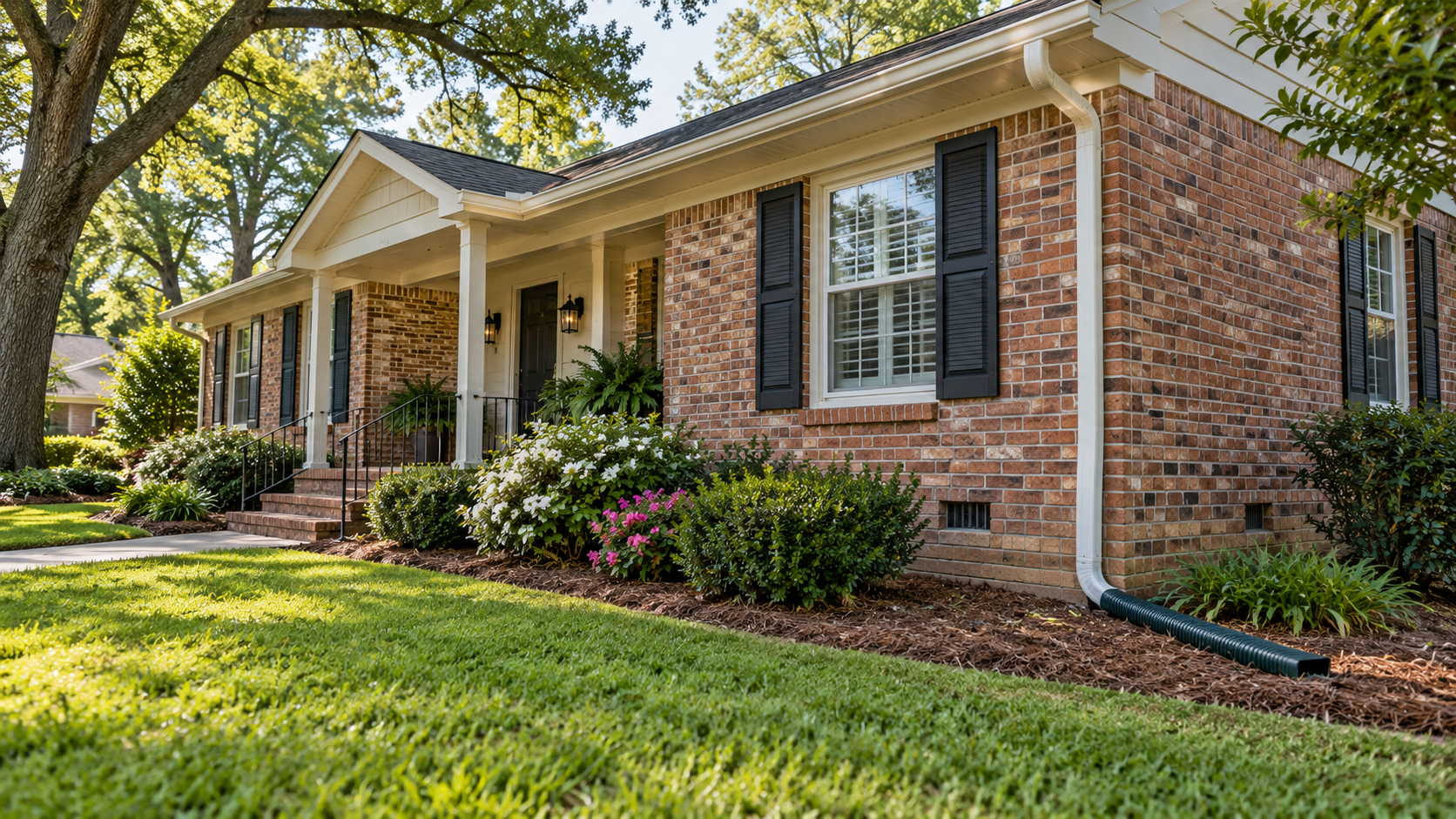
Walk the accessible perimeter and pay attention to what happens after water leaves the roof. A downspout that empties into a low spot beside the foundation is a different condition from one that discharges to a functioning drainage route. A drain inlet is useful only if the system carries water somewhere appropriate.
We look for visible grading concerns, gutter problems, erosion, staining, standing water, and evidence of crawlspace moisture where accessible. Landscaping and hard surfaces can conceal parts of the foundation. Dry conditions on inspection day also cannot prove that an area stays dry during prolonged rain.
Ask the seller where water collects, whether the crawlspace has flooded, and whether drainage work has been performed. Obtain available invoices and descriptions of the work. Drainage improvements may be important, but they should not be presented as a guaranteed cure for existing foundation movement.
A Foundation Repair Needs a Paper Trail
A repaired foundation is not an automatic reason to reject a home. It is a reason to understand the repair. “It has a lifetime warranty” leaves too many questions unanswered.
- Who evaluated the condition, and is the engineer’s report available?
- What work was specified, and which areas were actually repaired?
- Are plans, permits where applicable, completion records, and contractor invoices available?
- Was any post-repair evaluation or monitoring performed?
- What does the warranty cover, who provides it, and what are its transfer requirements?
- Have new cracks, sticking doors, or drainage problems appeared since the work?
A warranty can have exclusions and maintenance conditions. Read the actual document and confirm its status with the provider. The presence of piers or patches does not, by itself, show that all relevant concerns were addressed.
Slab and Crawlspace Homes Raise Different Access Questions
In a slab home, much of the foundation and the plumbing beneath it are concealed. Floor coverings may also limit what can be seen. Visible surface conditions can point to follow-up needs, but an inspection cannot rule out every concealed issue beneath the slab.
In a crawlspace home, access matters. Moisture, debris, low clearances, and stored materials may prevent a complete view. Where safely accessible, supports, framing, visible foundation surfaces, and moisture conditions help explain what is happening above. An inaccessible area should be identified in the report rather than treated as inspected.
Tell us in advance about locked accesses, previous structural work, enclosed additions, or areas the seller says are difficult to reach. If an important area cannot be inspected, decide how it will be evaluated before your deadline.
When to Arrange an Engineer Before Closing
Further evaluation is particularly useful when the inspection identifies significant displacement, multiple related movement clues, questionable support alterations, or repairs without enough documentation to understand them. A structural engineer may evaluate the building; a geotechnical engineer may be needed for questions about soil and slope behavior. The appropriate investigation depends on the concern.
Arrange follow-up early enough to receive a written opinion and, where needed, repair estimates. A contractor’s price answers a different question from an engineer’s assessment of cause and repair requirements. Both may be useful, but one does not automatically replace the other.
Use the Report to Make a Decision
Separate the report into practical next steps: maintenance you can plan, repairs that need pricing, and unanswered structural questions that need evaluation before closing. Ask your agent how those needs fit within your contract deadlines. An inspection finding does not dictate a negotiation outcome.
Upchurch Inspection documents accessible conditions with photographs and explains the limits of the inspection. You can review our sample reports and Central Mississippi service area before scheduling.
For a Jackson home inspection, send the property address, approximate age and size, and your inspection deadline through our contact page. Include any prior foundation reports or repair information. The more clearly we understand the history, the better we can help you identify the questions that still need answers.
Related reading