
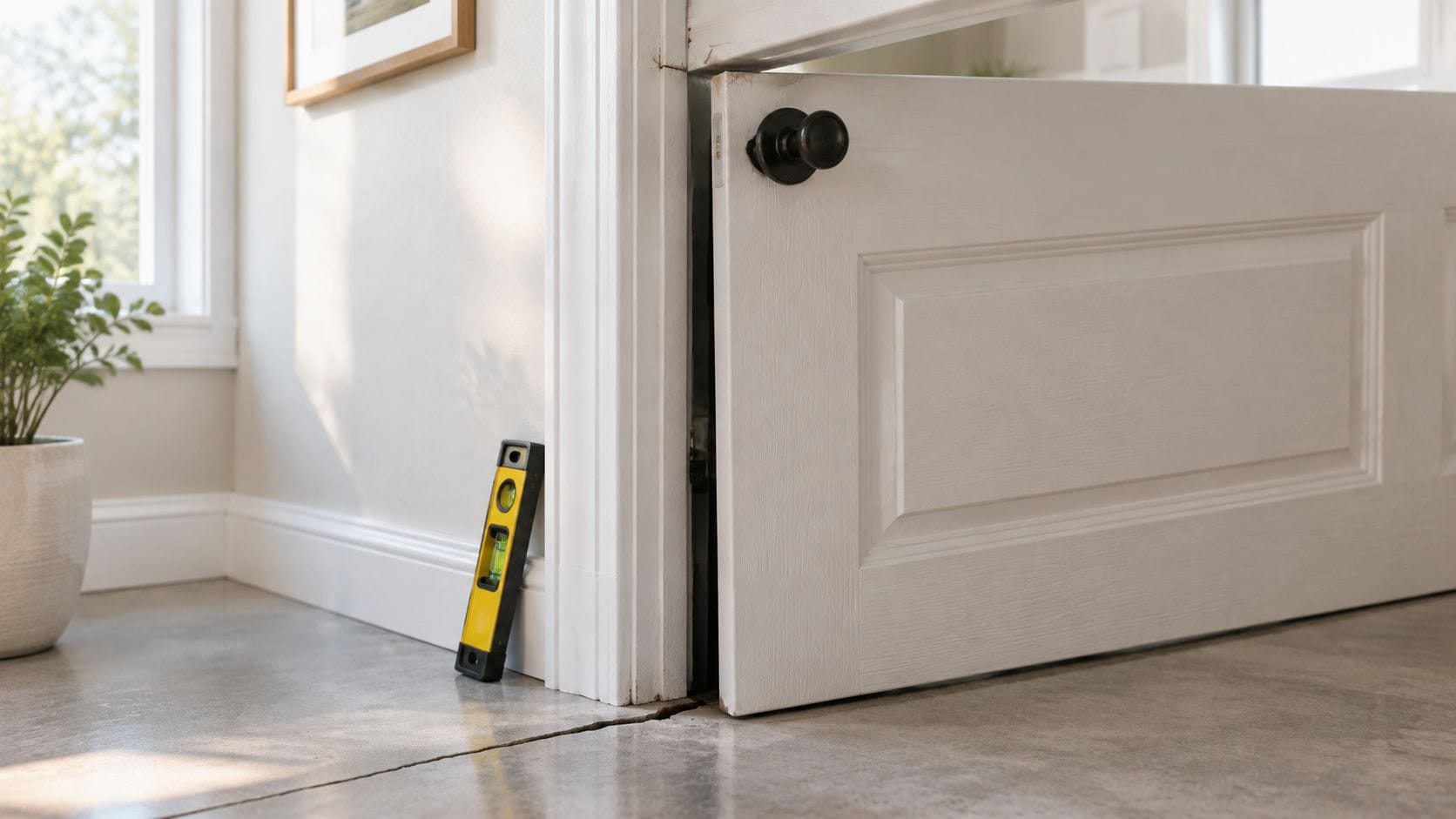
You close the bedroom door, turn the knob, and feel it catch near the top of the frame. Maybe the back door has started rubbing, too, or the latch no longer lines up with the strike plate. In a home around Cape Girardeau, Jackson, Columbia, or anywhere across the Mid-South, that's enough to make a homeowner wonder, “Why are my doors sticking, and is this a foundation problem?”
Sometimes it is. Often, it isn't.
A door can stick because wood has absorbed moisture, a hinge has shifted, paint has built up along the edge, or weatherstripping is dragging. Those causes usually affect one opening and change with indoor humidity or outdoor weather. Foundation movement becomes more concerning when the resistance stays consistent, worsens, affects several doors, or appears alongside cracks, uneven floors, trim gaps, or windows that no longer operate normally.
The useful question isn't whether a sticking door is automatically serious. It's whether the pattern fits seasonal wood movement, a maintenance issue, or structural racking. The distinction matters for homeowners, buyers, sellers, and property managers because trimming a door may solve the immediate annoyance while hiding a change in the house.
Table of Contents
- Introduction Why Sticking Doors Get Your Attention
- What Makes Doors Stick Beyond Foundation Issues
- How Foundation Movement Actually Racks a Door Frame
- A Simple Diagnostic Checklist You Can Do Safely
- Safe DIY Checks and Temporary Fixes That Help
- Signs the Problem Is More Serious and Needs a Pro
- Next Steps for Mid-South Homeowners and When to Schedule an Inspection
Introduction Why Sticking Doors Get Your Attention
A sticking door usually announces itself at the worst possible time. You're carrying laundry, trying to get a child into a bedroom, or coming in through the back door with groceries, and the door suddenly needs a shoulder instead of a hand. The first reaction is often frustration. The second is concern that the foundation has settled.
That concern isn't unreasonable. Even small foundation settlement can rack a door frame out of square, and inspectors commonly pay attention when floor slope reaches about 1 inch over 4 feet. That field threshold is a reason to investigate, not a diagnosis by itself, as explained in this foundation settlement guidance on sticking doors and windows.
In inspection work, the surrounding pattern tells more than the door alone. A single interior door that drags during a humid Missouri summer may have a simple explanation. Several doors in different parts of the house that bind year-round deserve a wider look, especially if the problem is getting worse.
Practical rule: A sticking door is a clue. The timing, location, and companion symptoms tell you how much weight to give it.
Homes in Southeast Missouri and Mid-Missouri can have several conditions that complicate the picture. A crawlspace may have moisture or settlement concerns, a basement may show masonry movement, and clay-heavy soil may respond to changing moisture conditions. Drainage around downspouts can also influence how much water reaches the soil near the foundation. None of those observations proves a structural defect, but each can help explain why a frame has changed.
The safest approach starts with the simple causes and moves outward. Check the door, hinges, finish, and humidity first. Then look across the house for related movement. If the pattern points beyond routine maintenance, an inspector can document what's visible and help determine whether a foundation specialist or structural engineer should evaluate the structure.
What Makes Doors Stick Beyond Foundation Issues
A door is a wood-and-hardware assembly sitting inside a framed opening. Several ordinary changes can make that assembly tighter without any foundation movement.
Humidity is the common starting point. Wood absorbs and releases moisture, much like a sponge. In damp conditions, a wood door can swell against the jamb. When the air dries, it may shrink enough to operate normally again. Guidance on common non-structural signs around a home describes moisture-driven movement as a frequent reason for sticking and recommends checking humidity, hinges, weatherstripping, and paint before assuming foundation failure.
Hardware can create the same symptom. A hinge screw may have loosened, allowing the door to sag slightly. The jamb may have shifted at one fastener. A thick layer of paint along the edge can reduce clearance, and weatherstripping can create drag around an exterior door. These problems often stay limited to one opening and may be visible when you inspect the contact area.
Compare the pattern, not just the symptom
| Clue | More consistent with humidity or hardware | More consistent with foundation movement |
|---|---|---|
| Number of openings | One door, especially an exterior or wood door | Several doors or windows in different areas |
| Timing | Changes with damp or dry weather | Stays difficult across seasons |
| Contact point | A broad rub, hinge-side sag, paint buildup, or weatherstrip drag | Binding at a corner, uneven reveal, or a frame that appears twisted |
| Other evidence | Loose screws, swelling, or finish buildup | Cracks, trim gaps, sloping floors, or doors that no longer latch |
| Response to maintenance | Improves after hinge adjustment or moisture control | Returns, worsens, or remains unchanged |
A door that sticks only during a humid season and eases when conditions change points more toward moisture-driven movement than a structural change. Independent building guidance also warns that weather-linked sticking can mimic settlement, while resistance that remains constant year-round is more suggestive of a persistent alignment problem. You can review that distinction in this discussion of dry soil and building problems.
The trade-off is straightforward. Correcting a hinge or controlling indoor moisture can address the cause when the issue is local. Jumping straight to foundation repair can lead you away from the actual defect. On the other hand, sanding or trimming a door before checking the rest of the house can remove useful evidence if the opening is being distorted.
How Foundation Movement Actually Racks a Door Frame
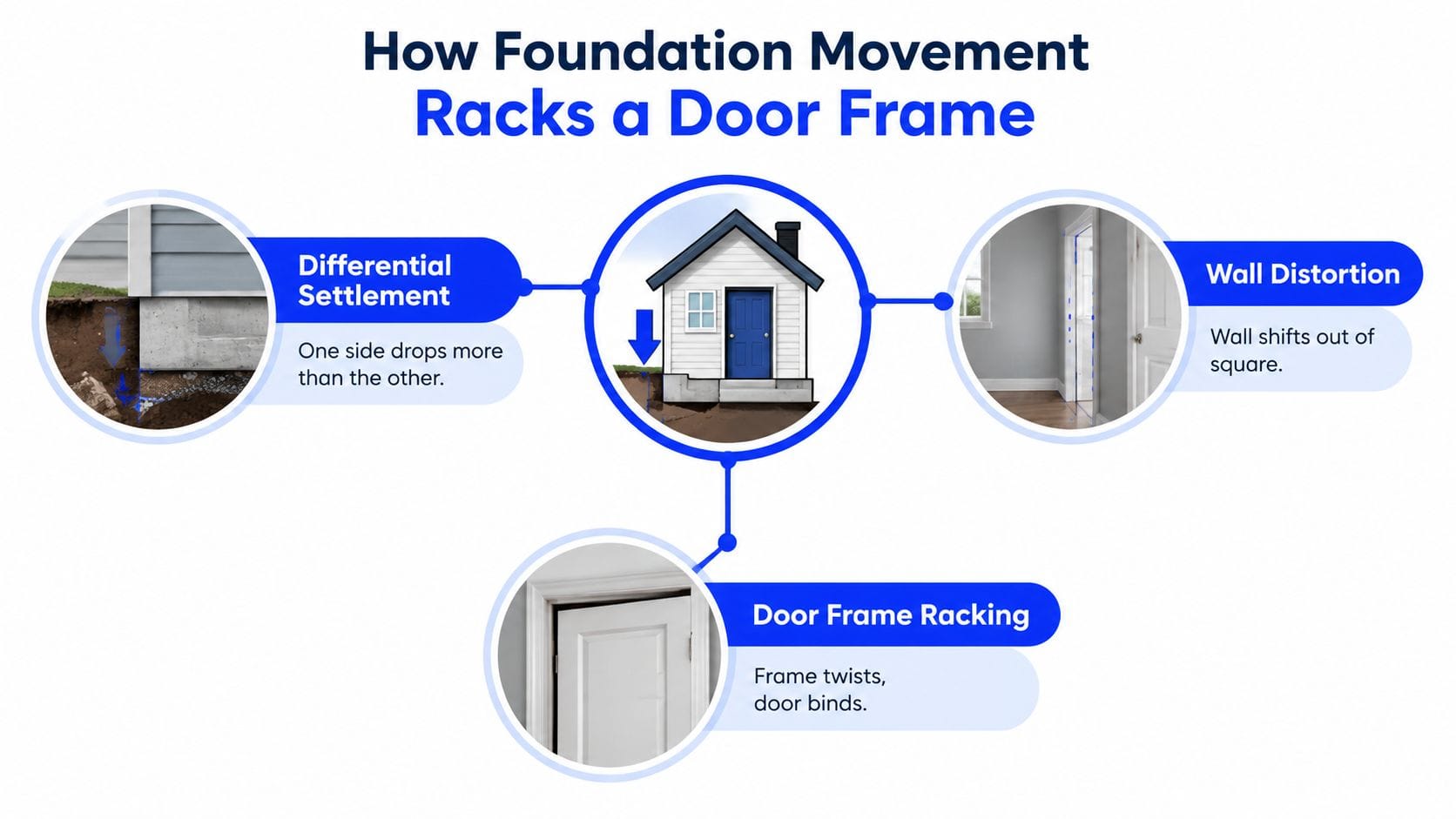
Foundation-related sticking usually involves differential settlement, meaning one portion of the foundation drops more than another. The wall above that area follows the movement. Because the framing was built around a square or rectangular opening, uneven support can distort the opening so the door no longer fits the geometry it had when installed.
The effect is easier to understand at the frame than at the slab. If one side of the foundation moves down, the wall can rack. The jambs may no longer remain parallel, the head of the opening may slope, and the door can bind against one corner instead of making even contact around the perimeter. This explanation of sticking doors from differential settlement describes the practical signs, including forceful closing, latch-side binding, and uneven gaps.
What the door may show
Look closely at how the door contacts the frame:
- Latch-side top corner: The door may bind near the upper corner on the latch side.
- Uneven reveal: The gap between the door and jamb may be wider at one end and tighter at the other.
- Difficult closure: You may need to push or lift the door to make the latch engage.
- Persistent resistance: The problem may remain even when weather conditions change.
- Several affected openings: Doors or windows in separate parts of the home may show related alignment problems.
One sticking door can still come from a hinge or humidity. Multiple doors in different areas carry more weight because one local hardware problem can't easily explain a house-wide pattern. A door that sticks regardless of weather is also more concerning than one that follows a predictable seasonal cycle.
The floor matters because it can provide a broader reference than the opening itself. A practical field threshold used by inspectors is about 1 inch of floor slope over 4 feet, and that warrants attention, especially when it appears with other movement signs. You can learn more about the related process in this guide to foundation settlement.
A slab crack deserves context rather than an automatic conclusion. Its location, orientation, surrounding finishes, and relationship to other symptoms matter, so homeowners may find this resource on slab crack diagnosis for homeowners useful when they're documenting what they see. A crack and a sticking door together don't establish a diagnosis, but they do justify looking beyond the door hardware.
A Simple Diagnostic Checklist You Can Do Safely
Start with the opening itself. Don't force the door, remove trim, or crawl under a house just to investigate a sticking symptom. A safe first review can tell you whether the issue looks local or whether it belongs on a house-level maintenance list.
Begin with timing and location
Write down when you first noticed the problem and whether it changes with weather. A door that tightens during humid conditions and relaxes during drier periods fits a different pattern from one that has resisted closing continuously. Also record whether the problem affects one door, several doors, or nearby windows.
Then operate the door slowly. Look for the first contact point. Is the edge rubbing along a broad section, or does one corner catch? Does the latch miss the strike plate because the door has dropped, or because the strike plate is loose? Those details help separate hardware alignment from a distorted opening.
Check simple maintenance items
Inspect the hinges and screws without removing the door. Tighten loose screws carefully, and look for a hinge leaf that has pulled away from the jamb. Check the door edge and jamb for paint buildup, swollen wood, or damaged weatherstripping. Indoor humidity, ventilation, and recent painting can also help explain a change that appeared without other movement signs.
After those checks, step back and inspect nearby surfaces. Look for new drywall cracks, gaps where trim meets the wall, separation at baseboards, windows that have also become difficult to open, and floors that feel or appear uneven. In a basement or crawlspace home, note visible moisture, drainage concerns, or signs that the foundation area is not staying dry. Don't enter an unsafe crawlspace or disturb structural components.
| Clue You Observe | More Likely Humidity or Hardware | More Likely Foundation Related |
|---|---|---|
| One door changes with weather | Yes | Less likely |
| Loose hinge or strike plate | Yes | Less likely |
| Several doors stick in separate rooms | Less likely | More likely |
| Door remains difficult year-round | Less likely | More likely |
| Nearby cracks or trim gaps | Possible, but needs context | More concerning |
| Floor slope or unevenness | Less likely as a door-only issue | More concerning |
This comparison is a triage tool, not a substitute for diagnosis. A practical guide on how to fix a sticking door can help with routine hinge, latch, and clearance checks, but a successful adjustment doesn't prove the house is free of movement.
Take photographs from the same angle when possible. Record which doors stick, where they bind, whether the latch engages, and what the weather has been like. That record gives an inspector a usable timeline instead of relying on memory.
For additional context on documenting small warning signs, see small clues that can reveal structural movement in a home. The goal is not to make a homeowner perform a structural evaluation. It's to preserve clues and avoid guessing.
Safe DIY Checks and Temporary Fixes That Help
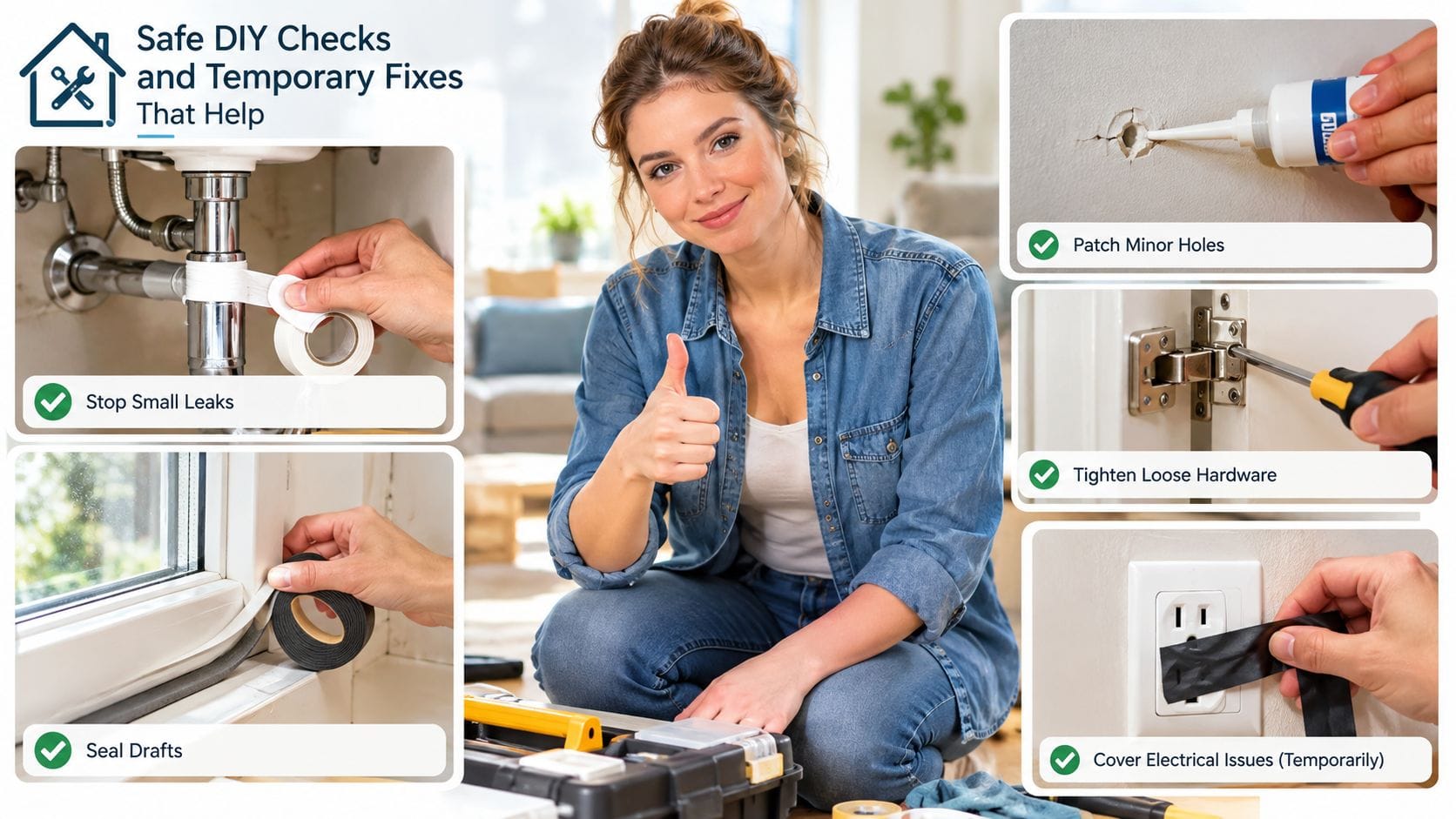
Small maintenance steps make sense when the evidence points to a local door problem. Start by tightening hinge screws and checking whether the jamb moves when the door closes. If the strike plate is loose or visibly misaligned, secure it without enlarging the opening aggressively. A loose hinge can let a door sag, and correcting that may restore the latch.
Look at the contact surface before sanding or trimming anything. Paint buildup, compressed weatherstripping, or a swollen edge may be obvious. For an exterior door, make sure the seal isn't folded, displaced, or rubbing harder than it should.
Manage moisture without overcorrecting
Indoor ventilation and dehumidification can help when the door's behavior follows damp weather. Keep notes while conditions change, rather than assuming that a temporary improvement proves the foundation is fine. A wood door may respond to moisture while a separate structural issue remains elsewhere in the house.
Outside, inspect the drainage pattern from ground level. In clay-heavy areas, changing moisture conditions can contribute to movement around slabs and foundations. Look for downspouts releasing water close to the house, soil that directs runoff toward the foundation, or persistent wet areas beside the wall. Correcting drainage is sensible maintenance, but it shouldn't involve digging against the foundation or changing the grade without understanding where water will go.
Don't erase the evidence: Planing or aggressively trimming a door may make it close, but it can also hide a symptom while the frame continues to move.
A temporary easing is reasonable when you need the door to function safely, especially if you've already documented the rubbing pattern. It isn't a structural repair. If the door keeps worsening, stops latching, or joins a group of affected openings, pause the cosmetic work and arrange an evaluation.
Homeowners can observe, photograph, tighten accessible hardware, improve ventilation, and review drainage. They shouldn't force a badly binding door, remove structural materials, excavate around footings, or assume that a new gap has a simple explanation. When the pattern remains unclear, an inspector can help sort maintenance concerns from conditions that require a specialist.
Signs the Problem Is More Serious and Needs a Pro
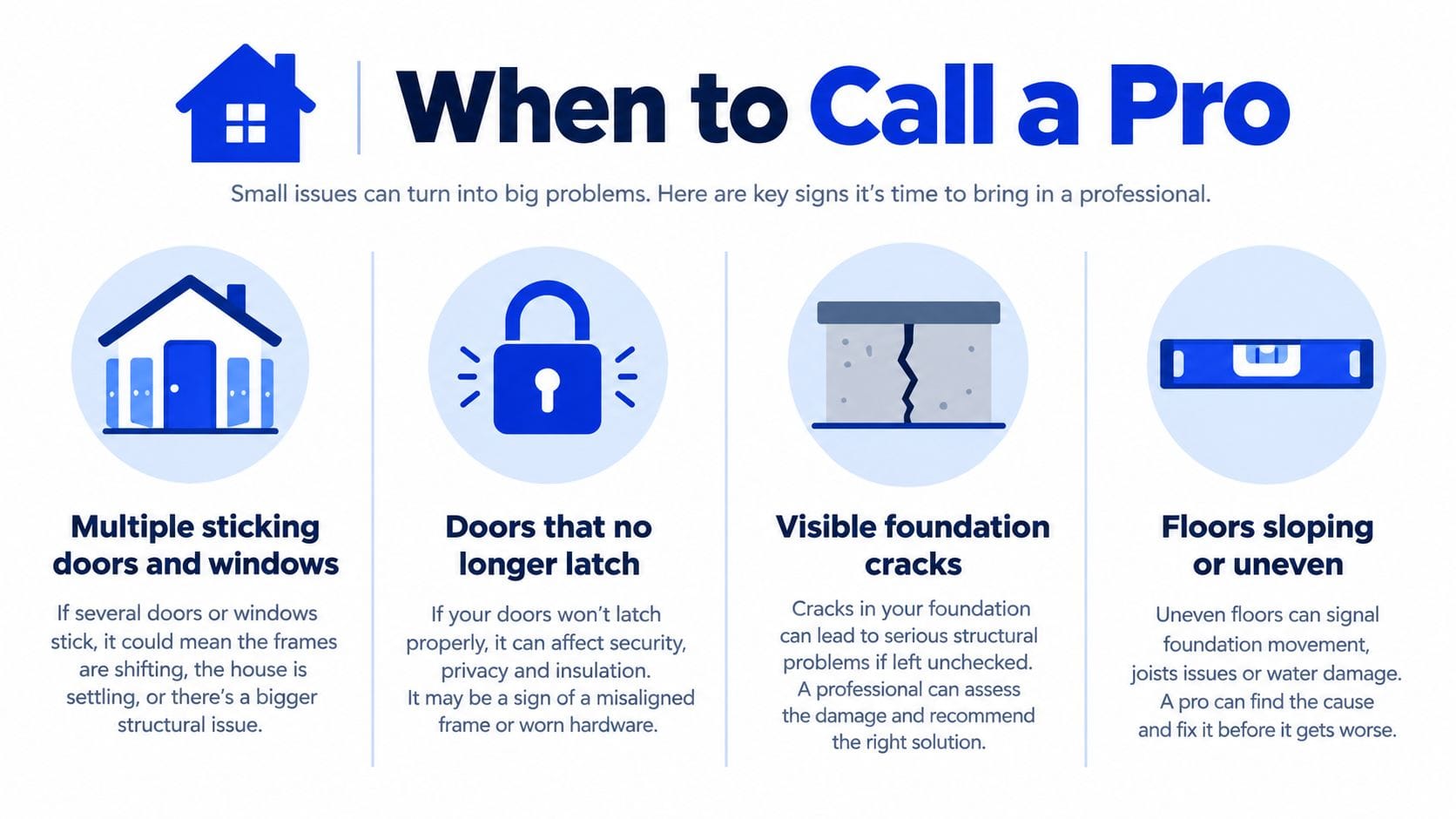
The strongest concern comes from combinations, not from one stubborn door. A door that sticks after a humid spell may be routine. A door that sticks year-round while a nearby window binds, drywall cracks appear, and trim separates deserves professional attention.
Watch for a changing pattern
Progression matters. Note whether the door now catches more severely, whether the latch has stopped engaging, or whether another opening has developed the same problem. A worsening pattern can indicate that the opening is continuing to change, although only an inspection or structural evaluation can determine the cause.
Other signs that raise the priority include:
- Multiple doors or windows: Separate openings that become difficult to operate suggest more than one loose hinge.
- Latch failure: A door that no longer latches can affect security and may indicate a meaningful alignment change.
- Diagonal cracking: Cracks near door or window corners deserve context, especially when they appear with other movement signs.
- Uneven floors: Noticeable slope or changes in floor level can support the need for broader evaluation.
- Trim and wall gaps: Separation at baseboards, casing, ceilings, or wall joints may show that finishes are moving relative to one another.
- Drainage concerns: Standing moisture or poor discharge near a foundation can help explain why movement deserves closer review.
This doesn't mean the home is in immediate danger. Foundation movement can be old, minor, seasonal, or stable. The important question is whether the symptoms form a consistent pattern and whether that pattern is changing.

Match the professional to the question
A home inspector can document visible conditions across the property, compare openings, review drainage, and identify signs that warrant referral. A foundation specialist may evaluate settlement-related conditions and repair options. A structural engineer is the right escalation when the concern involves structural performance, movement documentation, or engineering recommendations.
Basements and crawlspaces deserve particular care because the visible door symptom may be far from the area where the change began. In homes around Poplar Bluff, Farmington, Perryville, Jefferson City, or Sedalia, the inspection still needs to focus on the individual property rather than assume every sticking door has the same cause. Local soil, drainage, foundation type, age, and maintenance history all matter.
If several symptoms appeared together or the pattern is worsening, don't cover the evidence with repeated trimming and repainting. Document it, maintain safe drainage, and schedule an evaluation that can examine the whole system.
Next Steps for Mid-South Homeowners and When to Schedule an Inspection
Start a simple log. List each affected door, the location where it binds, whether it latches, and whether the behavior changes with weather. Add photographs of cracks, trim gaps, floor transitions, and drainage conditions. This information helps distinguish a seasonal nuisance from a persistent house-level pattern.
For a single door with a clear hinge, paint, weatherstripping, or humidity issue, routine maintenance may be appropriate. For several openings, year-round resistance, worsening alignment, or companion cracks and floor changes, schedule a home inspection or foundation-focused evaluation rather than continuing to trim the symptom.
An inspection can clarify whether the concern appears cosmetic, maintenance-related, moisture-related, or consistent with movement. In some situations, thermal imaging or other specialized inspection methods may add context, but those tools don't replace visual evaluation or engineering judgment. When the findings point beyond routine inspection, an engineer's foundation evaluation can provide a more specific assessment of foundation condition and performance.
That approach works for a buyer deciding whether to investigate before closing, a seller trying to document a known issue, or a property manager tracking changes across a building. The goal is a clear priority, not a frightening label. In Memphis, West Tennessee, Arkansas, Mississippi, and Southeast Missouri, good drainage, sensible moisture control, careful documentation, and timely professional input are practical ways to reduce uncertainty.
If a door is sticking in your home, Upchurch Inspection can evaluate the surrounding visible conditions and help determine whether the finding looks like routine maintenance or warrants a foundation specialist or engineer. Visit Upchurch Inspection to schedule an inspection and get clear documentation for your next decision.