TL;DR:
- Choosing an inspection service with verified certifications, experience, and strong communication ensures thorough evaluations and reduces costly post-sale surprises. A detailed, photo-rich report created during ample on-site time and supported by ancillary tests like sewer scopes and radon checks provides essential insights for informed decision-making. Prioritizing prompt, clear communication and scrutinizing red flags helps buyers select inspectors who will accurately assess their potential new home.
A property inspection service is a professional evaluation of a home’s physical condition, covering structural components, electrical systems, plumbing, HVAC, and more. Choosing the right inspector before you close on a property is one of the most consequential decisions you will make as a buyer. The wrong choice can leave serious defects undiscovered, costing you thousands in repairs after the purchase. This guide to choosing inspection services walks you through every criterion that matters: credentials, experience, report quality, ancillary services, and the red flags that signal an inspector is not worth your money.
What credentials and qualifications should you look for in inspection services?
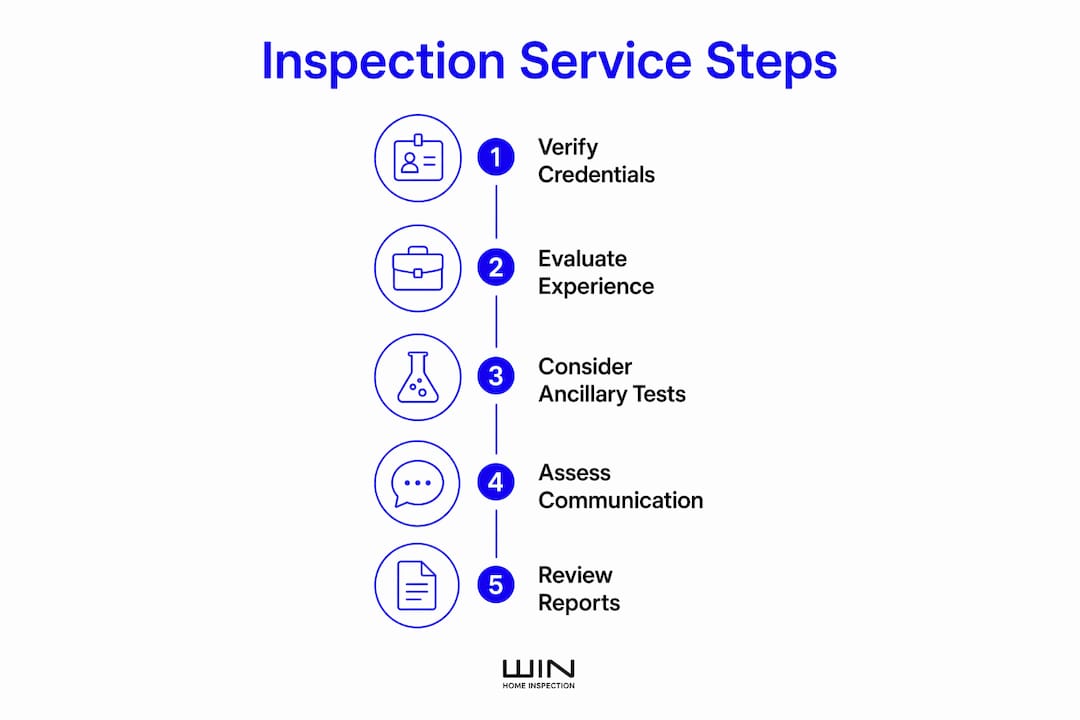
Credentials are the first filter you should apply when evaluating any inspection company. Two certifications define the industry standard in the United States: ASHI (American Society of Home Inspectors) and InterNACHI (International Association of Certified Home Inspectors). ASHI certification requires completing 250 paid inspections and passing a national exam, which means every ASHI-certified inspector has verified field experience before earning the designation. InterNACHI sets its own rigorous continuing education requirements. Either credential signals that the inspector has met a recognized professional standard, not just completed a weekend course.
State licensure adds another layer of accountability. About 24 U.S. states mandate specific licensure for home inspectors as of 2026, meaning inspectors in those states must meet minimum training and testing requirements set by law. If you are buying in a licensed state, verify that your inspector holds a current, active license before booking.
Insurance is non-negotiable. Any reputable inspector carries two types of coverage:
- Errors & Omissions (E&O) insurance: Covers the inspector if a defect is missed and you suffer financial harm as a result.
- General liability insurance: Covers property damage that occurs during the inspection itself.
Always request certificates of insurance directly from the inspector. An inspector who hesitates to provide proof of coverage is a serious warning sign.
Pro Tip: Ask for the inspector’s ASHI or InterNACHI membership number and verify it directly on the certification body’s website. Membership can lapse, and an expired credential offers no real protection.
How to evaluate experience, expertise, and sample inspection reports
Credentials confirm minimum competency. Experience and report quality tell you whether an inspector is genuinely thorough. The most reliable way to assess both is to request a sample report before you commit.
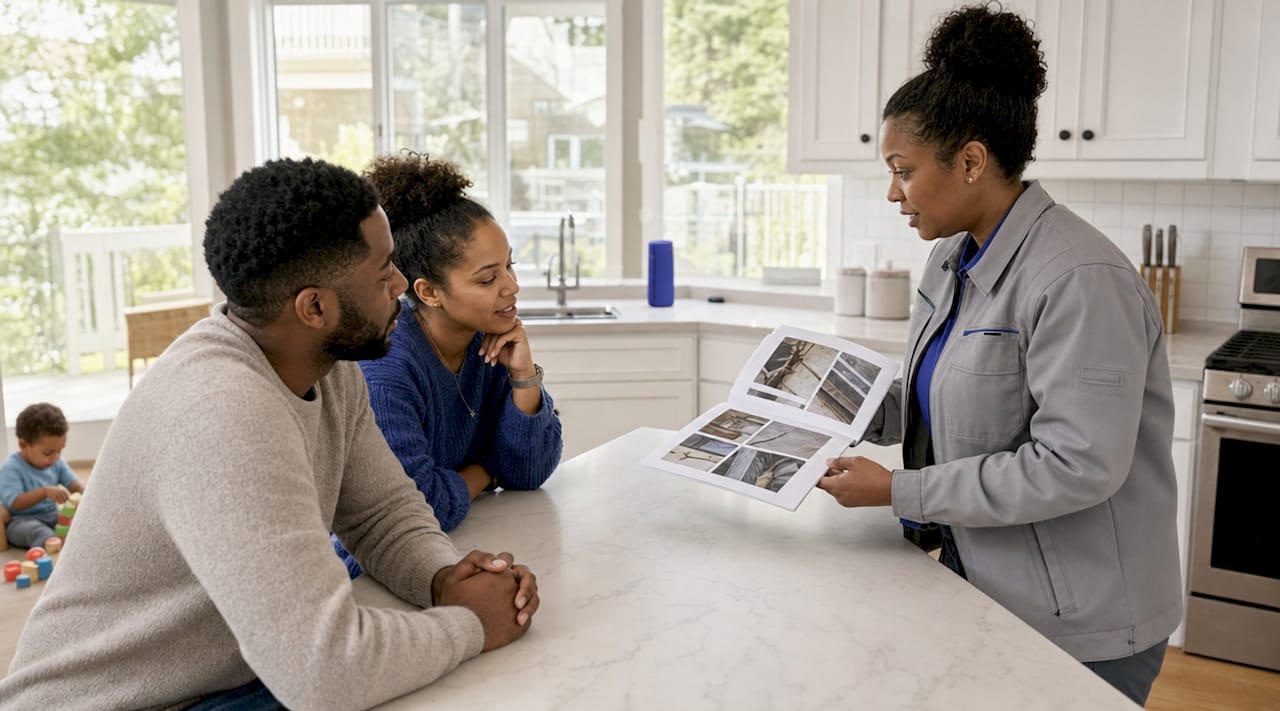
A high-quality inspection report includes dense photo documentation, specific defect descriptions (not vague notes like “recommend further evaluation”), and prioritized recommendations that distinguish safety hazards from cosmetic issues. A thin report with generic language suggests the inspector is working from a checklist rather than applying real diagnostic judgment.
Time on site is the clearest proxy for thoroughness. Inspections for 2,000+ sq ft homes should take 2.5 to 4 hours. An inspection completed in under 90 minutes on a standard home is almost certainly incomplete. This matters because a rushed inspector will miss deferred maintenance issues that compound over time, the kind of problems that turn a $500 repair into a $15,000 replacement.
| Quality indicator | Strong signal | Weak signal |
|---|---|---|
| Time on site | 2.5 to 4 hours for average home | Under 90 minutes |
| Report photo density | Multiple photos per defect | Few or no photos |
| Defect descriptions | Specific, prioritized, actionable | Vague, generic language |
| Inspector availability | Welcomes buyer attendance | Discourages buyer presence |
| Sample report provided | Readily available on request | Refused or unavailable |
Inspectors who welcome buyer attendance during the inspection are demonstrating confidence in their process. Walking the property with your inspector in real time gives you context that no written report can fully replicate.
Pro Tip: Ask the inspector how many inspections they have personally completed, not how many their company has done. A firm with ten inspectors may have impressive aggregate numbers, but the individual assigned to your property may have limited solo experience.
What inspection services and ancillary tests should you consider?
A standard home inspection covers the visible and accessible components of the property: roof, foundation, electrical panel, plumbing fixtures, HVAC systems, attic, and crawl space. That scope is a solid baseline, but it does not cover everything that can generate a costly surprise after closing.
Ancillary services fill those gaps. The most valuable ones to consider include:
- Sewer scope: A camera inspection of the main sewer line. Sewer scoping is highly recommended for most buyers, particularly in older homes or properties with mature trees near the foundation. A collapsed or root-infiltrated sewer line can cost $5,000 to $20,000 to repair, and a standard inspection will never catch it.
- Radon testing: Radon is a colorless, odorless gas that is the second-leading cause of lung cancer in the U.S. Testing is especially advisable in the Midwest and Mid-South regions, where elevated levels are more common.
- Termite and WDO (Wood-Destroying Organism) inspection: Required by most lenders in the South. Even where not required, it is worth adding in any region with active termite populations.
- Mold sampling: Mold sampling is warranted when visible signs appear, such as staining, musty odors, or evidence of past water intrusion. Ordering it on every property without cause adds cost without proportional value.
- Thermal imaging: Identifies moisture intrusion and insulation gaps invisible to the naked eye. Particularly useful in older homes or after recent renovations.
The table below shows typical cost ranges and when each service makes the most sense.
| Service | Typical cost | When to add it |
|---|---|---|
| Standard inspection | $350 to $700 | Every purchase |
| Sewer scope | $100 to $300 | Homes over 20 years old, trees near foundation |
| Radon test | $100 to $200 | Midwest, Mid-South, basement homes |
| Termite/WDO | $75 to $150 | Southern states, wooded lots |
| Mold sampling | $200 to $300 | Visible signs of moisture or mold |
| Thermal imaging | $150 to $300 | Older homes, post-renovation properties |
Base inspections cost $350 to $700 for a standard single-family home, with ancillary services adding $100 to $300 each. Bundling multiple services with a single provider often reduces total cost and simplifies scheduling. Ask whether the company offers all-inclusive pricing rather than a low base fee with add-on charges, since a flat comprehensive fee typically produces better cost predictability and higher buyer satisfaction.
How to assess scheduling, communication, and reporting quality
How an inspection company handles your first phone call or email tells you a great deal about how they will handle your report. Prompt, detailed answers at booking correlate directly with thorough, clear inspection reports. An inspector who takes two days to return a basic inquiry or gives vague answers about their process is showing you their standard of care before you have even signed a contract.
On scheduling, the industry benchmark for quality providers is clear. Best-in-class companies schedule inspections within 24 to 48 hours of booking and deliver photo-documented reports within 24 hours after the inspection is complete. That turnaround matters because most buyers are working within a 3 to 7 day inspection window, and a delayed report compresses your time to negotiate repairs or walk away from the deal.
Look for these communication standards when vetting providers:
- Answers your initial inquiry within a few hours, not days.
- Provides a clear written scope of what the inspection covers and what it does not.
- Confirms the inspector’s name, credentials, and insurance before the appointment.
- Offers a debrief call or walkthrough after the report is delivered to answer your questions.
That last point matters more than most buyers realize. A report that identifies 40 items can feel overwhelming without context. An inspector who walks you through the findings, explains which issues are urgent versus cosmetic, and answers your follow-up questions is delivering a service that protects your negotiating position.
Pro Tip: Call the company rather than just emailing. The quality of that conversation, how clearly they explain their process, how quickly they answer, and whether they ask about your specific property, is one of the best predictors of inspection quality you will find.
Common mistakes and red flags to avoid when choosing inspection services
Buyers frequently choose inspectors under time pressure rather than vetting credentials and quality thoroughly. That shortcut is understandable but costly. Here are the most common mistakes to avoid:
- Choosing on price alone. An inspector charging $450 who spends 3.5 hours on site and delivers a detailed report is a better investment than a $700 inspector who spends 90 minutes and produces a thin summary. Price does not equal quality in this industry.
- Accepting inspectors who refuse to provide proof of insurance or a sample report. Both requests are standard. Refusal signals either a lack of coverage or a lack of confidence in the work product.
- Relying solely on your real estate agent’s referral. Agents have legitimate relationships with inspectors, but their incentive is to close the transaction. Verify any referral independently by checking Google, Yelp, and BBB reviews. Credible providers carry at least 50 Google reviews with a 4.7 or higher average rating.
- Ignoring thin or negative online reviews. A pattern of complaints about missed defects or poor communication is not a coincidence. It is a track record.
- Skipping the questions about ancillary services. Some buyers assume the standard inspection covers everything. It does not. Ask specifically what is and is not included before you book. You can also review common inspection myths that trip up buyers and sellers to sharpen your expectations before the appointment.
Key takeaways
Choosing the right inspection service requires verifying credentials, evaluating report quality and time on site, and treating communication responsiveness as a direct indicator of inspector thoroughness.
| Point | Details |
|---|---|
| Verify credentials first | Confirm ASHI or InterNACHI certification, state licensure, and current insurance certificates before booking. |
| Use time on site as a quality signal | Expect 2.5 to 4 hours for a standard home; anything under 90 minutes signals an incomplete inspection. |
| Request a sample report | Assess photo density, defect specificity, and recommendation clarity before committing to any inspector. |
| Add ancillary services strategically | Sewer scopes and radon tests add significant value; mold sampling is warranted only when red flags are present. |
| Treat communication as a quality predictor | How quickly and clearly an inspector responds to your first inquiry reflects how thorough their report will be. |
What I have learned about choosing inspectors after years in the field
After working alongside inspectors across the Mid-South for years, the single most consistent predictor of a bad inspection experience is not price. It is the buyer’s willingness to ask hard questions before booking.
Most buyers ask two things: how much does it cost, and when can you come? The buyers who get the most value ask a third question: can I see a sample report? That one request separates the thorough inspectors from the ones who are just filling out a form. A confident inspector hands over a sample report immediately and walks you through it. An inspector who hedges, says they do not have one available, or sends you a generic template is telling you something important.
The other thing I have seen consistently is that buyers underestimate how much the inspection report shapes their negotiating position. A detailed, photo-rich report with prioritized findings gives your real estate attorney and your agent real leverage. A vague, two-page checklist gives you almost nothing to work with. The inspection is not just due diligence. It is the foundation of your negotiation strategy.
If you want to know what questions actually separate good inspectors from mediocre ones, the list of questions clients rarely ask is worth reading before you make any calls.
— Holly
How Upchurch Inspection helps buyers make confident property decisions
Upchurch Inspection serves residential and commercial buyers across the Mid-South with inspections that go well beyond a basic checklist. Every inspection is performed by seasoned inspectors whose qualifications exceed state standards, and every report is photo-documented with specific, prioritized findings covering plumbing, electrical, structural components, and HVAC systems. Scheduling is fast, communication is direct, and reports are delivered within 24 hours. If you are weighing which specialized services your property needs, the guide to choosing specialized inspections for your home walks through exactly when each service adds real value. Contact Upchurch Inspection before your inspection window closes to protect your investment with a thorough, credible evaluation.
FAQ
What certifications should a home inspector have?
Look for ASHI or InterNACHI certification, both of which require verified field experience and passing a national exam. In states with mandatory licensure, confirm the inspector holds a current state license as well.
How long should a home inspection take?
A thorough inspection of a 2,000+ square foot home takes 2.5 to 4 hours. An inspection completed in under 90 minutes is a strong indicator of incomplete work.
Do I need ancillary services like a sewer scope or radon test?
A sewer scope is advisable for most buyers, especially in older homes or properties with large trees near the foundation, given the high cost of hidden-line failures. Radon testing is recommended in regions with elevated risk, and mold sampling is warranted only when visible signs of moisture or mold are present.
How do I verify an inspector’s credentials and insurance?
Request the inspector’s certification number and verify it directly on the ASHI or InterNACHI website. Ask for a certificate of insurance showing both Errors & Omissions and general liability coverage before the appointment.
Should I attend the inspection in person?
Attending the inspection gives you real-time context that no written report can fully replace. A confident, thorough inspector will welcome your presence and explain findings as they work through the property.