TL;DR:
- Regular school campus inspections are vital risk management tools that extend beyond compliance to ensure student safety and facility longevity. Proper preparation, categorization, thorough documentation, and integration of inspection findings into strategic planning are essential for effective facility management. Cultivating a proactive safety culture through continuous training, surprise audits, stakeholder involvement, and dynamic scope adjustments helps schools prevent emergencies and maintain safe learning environments.
A school campus inspection is one of the most consequential responsibilities you carry as a school administrator or safety officer. Yet it is routinely treated as a checklist exercise rather than what it actually is: a systematic risk management process that directly affects whether students are safe every single day they walk through your doors. Regulatory compliance matters, but the real stakes are far higher. This guide walks you through inspection types, planning protocols, documentation standards, and how to turn findings into long-term facility strategy.
Table of Contents
- Key Takeaways
- School campus inspection types and scope
- Preparing and planning for an effective inspection
- Conducting the inspection: focus areas and documentation
- Using inspection results for facility management
- Building a proactive safety culture
- My perspective on what schools get wrong
- How Upchurch Inspection supports your school inspection needs
- FAQ
Key Takeaways
| Point | Details |
|---|---|
| Inspections go beyond compliance | A thorough school property assessment uncovers structural, environmental, and safety risks that routine maintenance misses. |
| Plan before you inspect | Desktop research into building history and prior defect reports dramatically improves the accuracy of on-site inspections. |
| Document with precision | Effective reports include condition grades, priority ratings, and photographic evidence to guide repair decisions. |
| Connect findings to strategy | Inspection data should feed directly into master facility plans and budget cycles, not sit in a filing cabinet. |
| Build a safety culture | Proactive inspections and stakeholder involvement create schools that are genuinely safer, not just technically compliant. |
School campus inspection types and scope
Most school administrators think about inspections in one dimension: the annual walkthrough. In practice, a complete educational facility review involves several distinct inspection categories, each targeting a different layer of campus risk. Conflating them is where gaps appear.
The major categories you need to account for include:
- Structural condition surveys covering building integrity, foundations, roofing, and load-bearing systems
- Health and sanitation inspections addressing restroom adequacy, ventilation, drinking water quality, and food service areas
- Fire and life safety inspections reviewing extinguisher dates, suppression systems, exit signage, and alarm functionality
- Environmental compliance assessments testing for asbestos, lead paint, mold, and chemical storage conditions in labs
- Playground and athletic facility reviews checking equipment anchoring, surface impact ratings, and fence integrity
- Regulatory compliance audits verifying documentation, accessibility standards, and adherence to codes like NRS 444.335 and NAC 444.568
The distinction between inspection types matters operationally. Routine inspections are scheduled, predictable, and serve ongoing maintenance. Surprise audits test real-world conditions without preparation bias. Detailed condition surveys, which should be commissioned at least every five years, are the deepest layer and involve specialized professionals who assess building systems comprehensively.
Regulatory baselines require at least biannual safety checks across classrooms, labs, hallways, playgrounds, and utility areas. That is a floor, not a ceiling. High-enrollment campuses, aging buildings, and facilities with known defect histories should be inspected more frequently.
Pro Tip: When categorizing your inspections, treat each type as a separate scope with its own checklist, qualified inspector, and report. Merging them into one walkthrough almost always means something critical gets missed.
Preparing and planning for an effective inspection
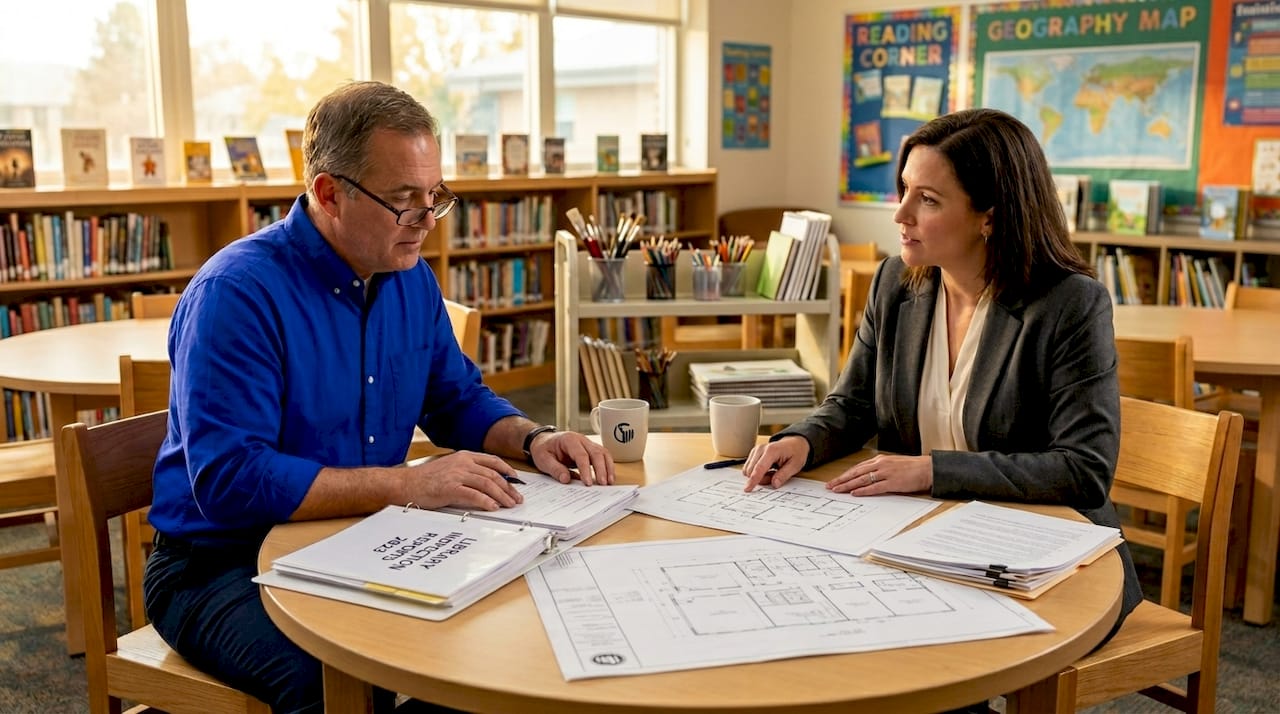
The quality of a school campus inspection is largely determined before anyone sets foot on the property. Preparation separates inspections that generate real insight from those that produce vague reports collecting dust.
Here is the preparation sequence that consistently produces the most complete results:
- Conduct desktop research first. Pull building usage logs, maintenance records, prior inspection reports, and any known defect histories. Building history research gives inspectors a head start on where to focus attention on site, which improves both accuracy and efficiency.
- Identify hazardous material risk early. If your campus has buildings constructed before the 1980s, assume asbestos-containing materials may be present until proven otherwise. Early professional involvement in structural or hazardous material investigations avoids compliance failures and protects workers during the survey itself.
- Schedule with minimal operational disruption. Inspection scheduling should account for class schedules, exam periods, and after-school programs. Evening or weekend windows work well for intrusive structural assessments, while routine walkthroughs can happen during low-traffic hours.
- Communicate the plan to all stakeholders. Teachers, custodial staff, and facilities managers all need to know when inspectors will be on site and what access is required. Poor stakeholder communication leads to locked rooms, unavailable records, and incomplete data collection.
- Define the scope in writing before arrival. Structural surveys sometimes require intrusive access, temporary disruption, or removal of finishes to inspect concealed systems. Scope agreements prevent disputes and coverage gaps once work begins.
Involving your facilities manager and legal counsel in pre-inspection planning is not overcautious. It is how you stay ahead of liability before findings become public record.
Pro Tip: Create a pre-inspection package for the inspector that includes floor plans, previous reports, known problem areas, and any outstanding maintenance tickets. Inspectors who arrive informed produce significantly more thorough reports.
Conducting the inspection: focus areas and documentation
Knowing how to inspect school grounds goes beyond physical presence on campus. It requires a structured approach to identifying defects, distinguishing surface-level issues from systemic problems, and creating documentation that holds up under regulatory scrutiny.
Key inspection focus areas
| Area | Primary Concerns | Inspection Method |
|---|---|---|
| Structural systems | Foundation cracks, roof integrity, load-bearing walls | Visual survey, intrusive testing if needed |
| Fire safety | Extinguisher dates, alarm function, exit clarity | Physical testing, documentation review |
| Sanitation and plumbing | Restroom adequacy, water quality, and drainage | Visual inspection, water sampling |
| Accessibility | ADA compliance, ramp gradients, door widths | Measurement and documentation |
| Playground equipment | Anchoring, surface impact absorption, sharp edges | Physical testing, equipment age records |
| Electrical and HVAC | Panel condition, wiring age, and ventilation adequacy | Visual survey, professional assessment |
An audit of a government school found that only 4 of 13 building blocks were structurally sound, with fire-safety gaps, including outdated extinguishers, and sanitation deficiencies. This is not an outlier. It is what deferred inspections look like in practice.
Common pitfalls in the inspection process include overlooking concealed defects behind finished walls, failing to scrutinize high-risk areas such as rooftop mechanical units and underground utilities, and relying solely on visual inspection when specialized engineering assessments are warranted. A visual inspection can identify surface deterioration. It cannot confirm whether a roof deck is structurally compromised without probe testing.
For documentation, condition grades, priority ratings, and photographic evidence are non-negotiable elements of any credible report. Reports must be accurate, impartial, and free of ambiguous language. Priority ratings should classify findings by urgency: immediate action required, required within 12 months, planned within 3 years, and long-term monitoring.
You can also explore life-safety exposures in educational settings to take a closer look at the operational risks that general inspections typically miss.
Using inspection results for facility management
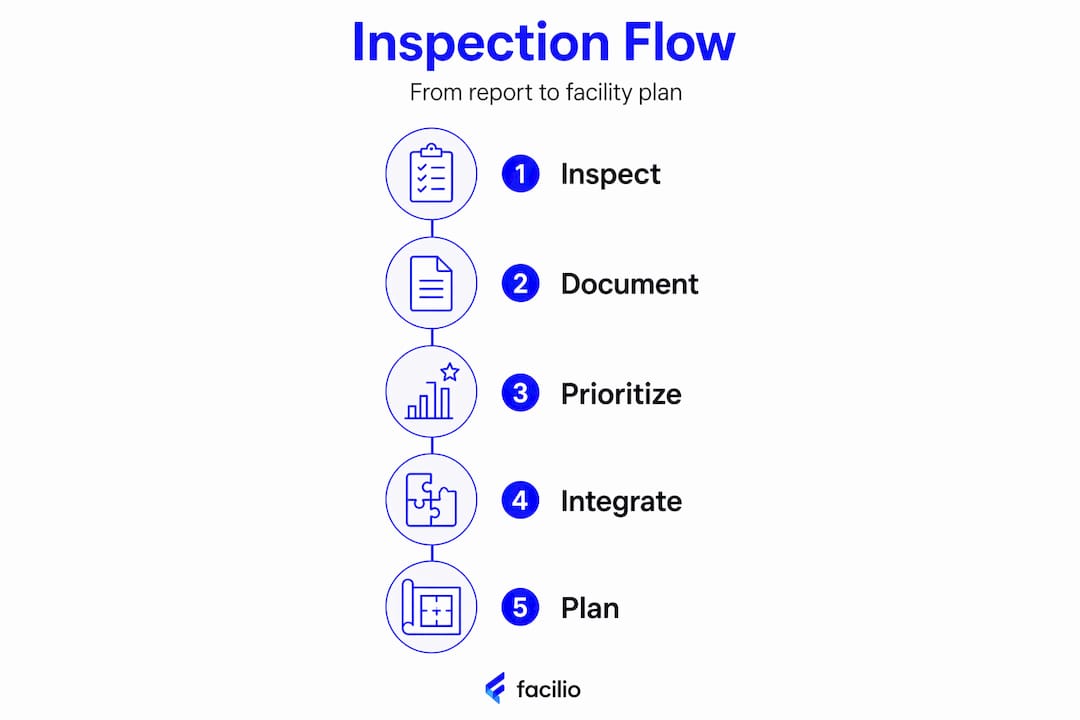
An inspection report is only as useful as what you do with it. Too many schools treat the report as a deliverable rather than a starting point. The most effective administrators use inspection findings as direct inputs into facility planning and budget decisions.
| Finding Priority | Recommended Response | Funding Consideration |
|---|---|---|
| Immediate safety risk | Address within 30 days | Emergency maintenance reserve |
| High-priority defect | Schedule within the current fiscal year | Deferred maintenance budget |
| Medium priority item | Include in the next planning cycle | Capital improvement plan |
| Low priority or monitoring | Log and reassess at the next inspection | Routine operations budget |
| Regulatory non-compliance | Correct before the legal deadline | Compliance-designated funds |
Condition surveys are multi-dimensional, blending physical inspection data with historical records and regulatory compliance assessments. That blend is what makes them useful for master facility planning. A single finding about deteriorating roof insulation, for example, relates to energy-efficiency costs, HVAC performance, and indoor air quality. Treating it as an isolated repair underestimates the full impact.
Successful inspection programs integrate inspection outcomes with master facility plans and funding strategies for long-term operational success. Districts have used financing mechanisms like GO bonds to address large-scale deficiencies identified through condition surveys. The critical step is connecting the inspection data to the budget cycle before decisions are made, not after.
Regulatory documentation requirements add another layer. Proof of inspection, corrective action timelines, and sign-off records must be maintained in accessible formats. Gaps in documentation are treated the same as gaps in compliance during audits.
Building a proactive safety culture
Compliance-driven inspections are reactive by nature. Safety culture inspections are proactive. The difference shows up not in the report itself but in what happens on campus every day between formal reviews.
Building that culture requires deliberate effort at multiple levels:
- Train your inspection team annually. Staff responsible for monitoring campus conditions between formal inspections need to know what early warning signs look like. A small crack in a gymnasium wall and a discolored ceiling tile in a lab are not cosmetic issues. They are data points.
- Run surprise internal walkthroughs. Scheduled inspections can produce compliance-ready conditions that do not reflect actual daily operations. Unannounced internal checks reveal the real state of your campus.
- Use technology for consistency. Digital inspection platforms with photo upload, geolocation tagging, and timestamping reduce human error and create auditable records that hold up under scrutiny.
- Involve parents and community stakeholders. Transparency about inspection findings and improvement timelines builds trust. It also creates external accountability that keeps remediation on schedule.
- Revisit your inspection scope annually. Risks evolve. A new chemistry lab installation, a playground expansion, or a building renovation changes the inspection priorities for that cycle. Static checklists miss dynamic risk.
The campus inspection guide for college administrators offers additional frameworks for institutions that manage complex, multi-building campuses where safety culture gaps tend to be most consequential.
My perspective on what schools get wrong
I’ve reviewed dozens of school property assessments, and the pattern is consistent. The weakest inspections are not the ones conducted by unqualified people. They are the ones conducted without adequate preparation by otherwise capable teams.
Schools underestimate how much the quality of the pre-inspection phase determines the value of the final report. When building history is not reviewed, inspectors spend time on-site discovering context they should have arrived with. When stakeholders are not briefed, access is restricted and findings are incomplete. These communication failures are the most common source of costly oversights.
The hidden costs of ignored minor defects are also consistently underestimated. A minor drainage issue that costs a few hundred dollars to address today becomes a foundation problem that costs tens of thousands in three years. The domino effect of deferred maintenance in institutional buildings is real and well-documented. I’ve seen schools where repairing a roof parapet that had failed years earlier would have prevented interior damage that required classroom reconstruction.
My strongest recommendation is this: treat inspection results as strategic intelligence, not administrative paperwork. The schools that build inspection findings into their annual planning calendar, assign ownership for every remediation item, and schedule follow-up verification checks are the ones that avoid the emergency situations that dominate the news cycle.
Safety culture does not come from a report. It comes from what you do with one.
— Holly
How Upchurch Inspection supports your school inspection needs
When a school campus inspection reveals structural concerns, fire safety deficiencies, or environmental hazards, the next step requires more than a general contractor. It requires qualified inspection professionals who understand how to assess complex facility systems and produce reports that administrators, boards, and regulators can act on with confidence.
Upchurch Inspection delivers exactly that. Our commercial inspection services include structural evaluations, electrical and plumbing assessments, and compliance-focused reviews designed for educational facilities. Every report we produce includes condition grades, photographic documentation, and prioritized recommendations so your team knows exactly what to address first and why.
For schools working through the inspection process for the first time or seeking a second opinion on existing findings, our commercial property inspection guide outlines what a professional-grade assessment covers and how to interpret results. We serve school administrators, safety officers, and facilities teams across the Mid-South who need inspections done right the first time.
FAQ
How often should a school campus inspection be conducted?
Regulatory requirements mandate safety and maintenance inspections at least twice annually for classrooms, labs, playgrounds, and utility areas. Comprehensive condition surveys should be commissioned every five years, or sooner if safety concerns arise.
What does a complete school property assessment include?
A complete school property assessment covers structural systems, fire safety, sanitation, environmental hazards, playground equipment, electrical systems, HVAC, and ADA accessibility. Documentation should include condition grades, priority ratings, and photographic evidence.
When should a school bring in a specialized inspector?
Bring in a specialist any time structural defects, hazardous materials such as asbestos, or complex systems such as fire suppression are involved. Visual inspections by generalists are not sufficient for these risk categories.
How do inspection results connect to school facility planning?
Inspection findings should feed directly into master facility plans and budget cycles, with findings classified by urgency and assigned to specific funding mechanisms. Integrating inspection data with financing options ensures remediation happens on schedule rather than being deferred indefinitely.
What are the most commonly overlooked areas during school inspections?
Concealed structural defects, rooftop mechanical systems, underground utilities, and lab chemical storage areas are frequently missed in standard walkthroughs. These areas require targeted attention and, in some cases, specialized assessments beyond standard visual review.