TL;DR:
- A thorough church property inspection is crucial for assessing structural, mechanical, electrical, and life safety systems beyond a simple visual walkthrough.
- Findings from inspections inform budgeting, negotiations, and long-term maintenance to ensure congregation safety and mitigate liability risks.
A church property inspection is not a formality. It is one of the most consequential decisions a board of trustees or church administrator can make before acquiring, renovating, or maintaining a religious facility. Church buildings carry unique structural histories, aging mechanical systems, and life-safety obligations that a standard walkthrough will never reveal. The stakes are high: a missed structural defect or a non-compliant egress path is not just a budget problem. It is a liability and a safety risk to your congregation. This guide breaks down exactly what a thorough inspection covers, when you need specialty assessments, and how to turn findings into a real financial plan.
Table of Contents
- Key takeaways
- What a church property inspection actually covers
- Specialty inspections: what goes beyond the standard report
- Turning inspection findings into a financial plan
- Life safety and code compliance in church inspections
- My take on what trustees consistently get wrong
- Get a church inspection built for trustees
- FAQ
Key takeaways
| Point | Details |
|---|---|
| Inspections go beyond visual checks | A proper church building assessment covers the structural, mechanical, electrical, and life-safety systems in full. |
| Specialty reports serve distinct purposes | Property condition assessments and environmental site assessments address different risk categories and are not interchangeable. |
| Findings drive budgeting | Inspection data on system age and deferred maintenance directly informs capital reserve planning for trustees. |
| Code compliance is non-negotiable | NFPA 101 sets specific egress, signage, and fire-barrier requirements for assembly occupancies such as churches. |
| Inspector credentials matter | Qualified inspectors hold certifications such as CCPIA or ICC B2, and forensic work may require a PE license. |
What a church property inspection actually covers
Most trustees assume an inspection means someone walks through the building and flags obvious problems. The reality is far more technical, and the gap between a cursory walkthrough and a proper religious facility inspection can cost a congregation hundreds of thousands of dollars in surprises.
A thorough church building assessment examines the following systems:
- Structural components: Foundation integrity, load-bearing walls, roof framing, and any visible signs of settlement or water intrusion. Older sanctuaries with vaulted ceilings and long-span roof systems carry specific structural risks that standard residential inspectors are not trained to evaluate.
- Mechanical systems: HVAC condition, age, and performance across all zones. Church HVAC systems are often undersized, overworked, or inconsistently maintained. Deferred plumbing problems in churches frequently signal broader system failures that affect operations and costs.
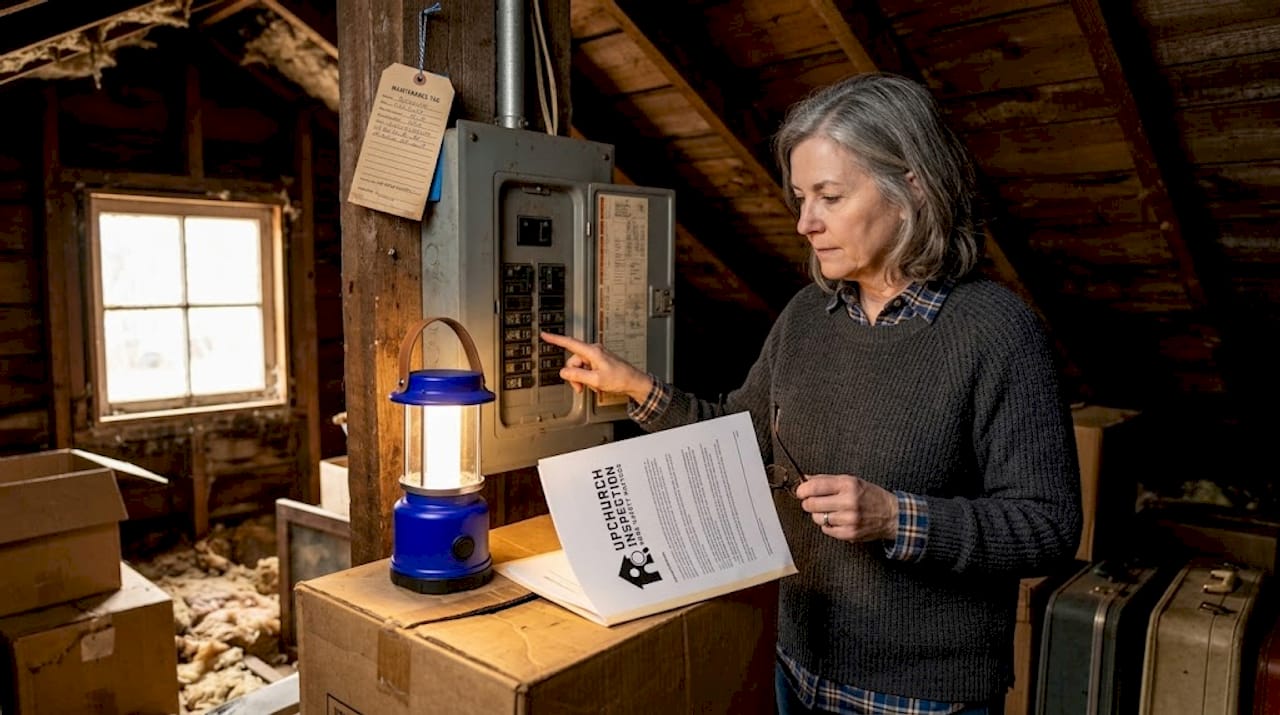
- Electrical systems: Service panel capacity, wiring condition, grounding, and emergency lighting circuits. Many older church buildings were wired decades ago and have never been updated to meet current load demands.
- Life safety systems: Fire alarm panels, sprinkler coverage, exit signage, and fire barriers. These are not optional. They are code-mandated for assembly occupancies.
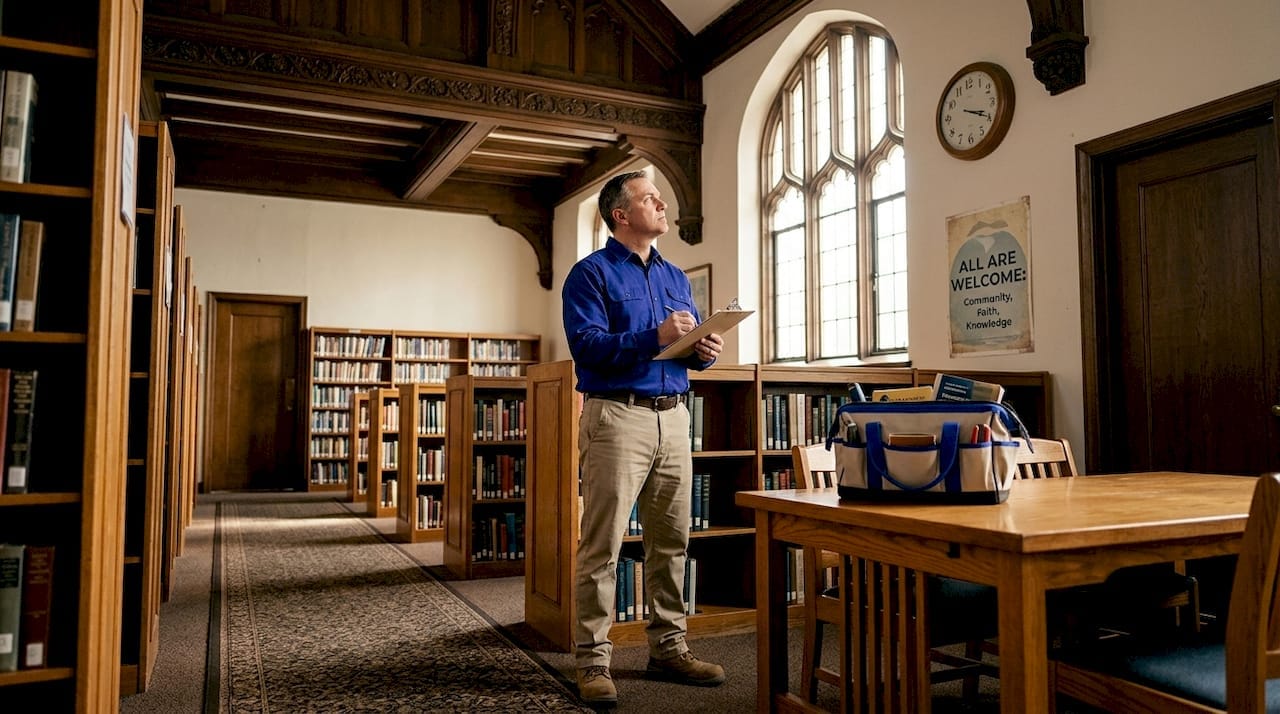
Qualified commercial inspectors hold certifications such as CCPIA or ICC B2, with PE licenses required for forensic engineering work. This matters because a church campus with a fellowship hall, gymnasium, and school wing is not a single-use building. Church campuses have unique inspection profiles due to multiple building types and uses, which require a tailored inspection scope. A generalist inspector working from a residential checklist will miss critical issues in a multi-building religious complex.
Pro Tip: Ask any prospective inspector for their specific experience with assembly occupancies or institutional buildings. If they cannot name a relevant certification or past project, keep looking.
Specialty inspections: what goes beyond the standard report
A general property evaluation for churches is a strong starting point. But depending on the building’s age, its transaction context, and local environmental conditions, you may need additional assessments to address risks that a standard inspection does not cover.
Here is how the main report types differ:
- Property Condition Assessment (PCA): Conducted under ASTM E2018 standards, a PCA evaluates the physical condition of a building’s major systems and components. It produces a cost table of immediate repairs and capital expenditures projected over a defined period. This is the report lenders and buyers rely on for commercial transactions.
- Phase I Environmental Site Assessment (ESA): Governed by ASTM E1527, this report investigates recognized environmental conditions such as underground storage tanks, historical industrial use, or soil contamination. It does not evaluate the building condition. A church buying property near a former gas station or dry cleaner should treat this as mandatory.
- Specialty reports: Mold assessments, asbestos surveys, and lead paint inspections are not covered by either a PCA or a Phase I ESA. Older church buildings constructed before 1980 are likely candidates for asbestos-containing materials in floor tiles, pipe insulation, and roofing. These require separate, licensed environmental consultants.
The practical question for trustees is this: which reports does your situation require? A congregation buying a 1960s building in a mixed-use neighborhood may need all three. A church renewing its insurance on a recently constructed campus may only need a current PCA. The scope of your inspection should match the financial risk and complexity of your specific property.
Turning inspection findings into a financial plan
An inspection report is only as useful as the decisions it drives. Too often, trustees receive a detailed findings document and file it away without translating it into a capital reserve strategy. That is a missed opportunity with real financial consequences.
Here is how to move from inspection data to a working budget:
- Categorize findings by urgency. Separate immediate safety deficiencies from deferred maintenance items and long-term capital replacements. A leaking roof drain is not in the same category as a 22-year-old HVAC unit with five years of service life remaining.
- Assign costs and timelines. Use the inspector’s cost estimates as a baseline. For items without estimates, get contractor quotes within 60 days of receiving the report. Attach a projected year to every line item.
- Build a capital reserve fund. Inspection findings inform trustees for better budgeting and long-term ownership planning. A church with a 15-year-old roof, aging electrical panels, and an outdated plumbing system should be setting aside reserves annually rather than waiting for a crisis.
- Use findings in transaction negotiations. If you are purchasing a property, the inspection report is leverage. Documented deferred maintenance and system deficiencies support price adjustments or seller-funded repairs before closing.
- Schedule follow-up inspections. A facility condition assessment for churches should not be a one-time event. Plan for re-inspection every 3 to 5 years or after any major renovation or weather event.
Pro Tip: If your board is resistant to the cost of a full PCA, frame it this way: the fee for a thorough inspection is typically less than 0.5% of the purchase price, and it can identify repair needs worth 10 to 20 times that amount.
A real-world example makes this concrete. A mid-size congregation in the Mid-South purchased a 40-year-old facility without a formal PCA. Within 18 months, they faced a $180,000 HVAC replacement, a $60,000 roof repair, and a plumbing overhaul that could have been flagged and negotiated before closing. The inspection fee they skipped was $3,500.
Life safety and code compliance in church inspections
Code compliance is where church property inspections intersect directly with congregant safety. NFPA 101, the Life Safety Code, sets the baseline requirements for assembly occupancies, and churches fall squarely in that category.
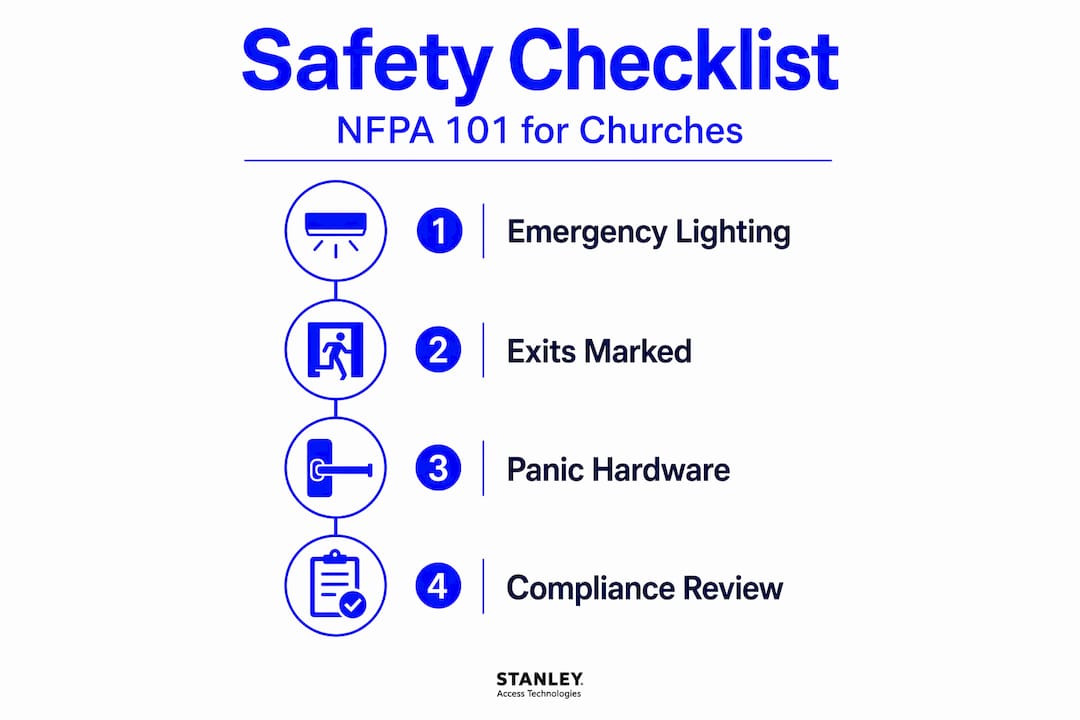
A life safety inspection evaluates the full building egress and related systems based on NFPA 101 requirements, not just individual fire systems. That distinction matters. A fire alarm inspection confirms the alarm works. A life safety inspection confirms the entire path from any seat in the sanctuary to a safe exterior location meets code, including door hardware, corridor widths, exit signage, and fire barriers.
| Life safety element | NFPA 101 requirement |
|---|---|
| Emergency lighting | 90-minute battery backup, activates on power loss |
| Exit signage | Illuminated, visible from all points along the egress path |
| Panic hardware | Required on doors serving occupant loads of 100 or more |
| Fire barriers | Rated assemblies separating occupancies and hazardous areas |
| Sprinkler coverage | Required in new construction; retrofit rules vary by jurisdiction |
“Life safety inspections for churches are more comprehensive than system-only checks, including full evaluation of egress pathways and fire/smoke barriers per occupancy-specific codes.” — NFPA 101 Life Safety Code, via Up To Code
Emergency lighting with 90-minute battery backup and proper panic hardware for high occupant loads are specific, verifiable requirements. They are also among the most commonly cited deficiencies in older church facilities.
Understanding the difference between an Authority Having Jurisdiction (AHJ) inspection and a private life safety consultant is also worth your attention. AHJ inspections are conducted by local fire marshals or building officials, often on a scheduled or complaint-driven basis. Private life safety consultants often serve before AHJ inspections or when violations require formal correction plans. If your church has received a violation notice or is preparing for a certificate of occupancy review, a private consultant can document deficiencies and map out a remediation path before the official inspection.
My take on what trustees consistently get wrong
I’ve seen the same pattern repeat itself across dozens of church property engagements. Trustees approve a purchase, allocate a modest budget for a “basic inspection,” and then spend the next three years managing the fallout from systems that were already failing when they signed the contract.
In my experience, the most dangerous assumption a church board can make is that a visual inspection by a well-meaning volunteer or a residential home inspector is adequate for a commercial religious facility. It is not. The building systems in a church, particularly the HVAC, electrical, and life safety systems, operate under commercial loads and commercial code requirements. A residential inspector is simply not equipped to evaluate them at that level.
What I’ve learned is that the inspectors who best serve churches are those who understand both the building’s physical complexity and the fiduciary responsibility of the people making decisions. When considering aging church buildings with unique preservation concerns, the inspection scope must be deliberately expanded. You are not just buying a building. You are assuming responsibility for every person who walks through those doors.
The churches that handle property transitions well are the ones that treat inspection findings as a management tool rather than a checklist to satisfy a lender. They use the data to plan, negotiate, and protect their congregation. That is the standard every board should hold.
— Holly
Get a church inspection built for trustees
When your board is evaluating a property purchase, planning a major renovation, or simply trying to understand what your current facility will cost to maintain over the next decade, a professional inspection from Upchurch Inspection gives you the data to make that call with confidence.
Upchurch Inspection specializes in church and non-profit facility inspections across the Mid-South, with inspectors whose qualifications exceed state standards and whose reports go well beyond a basic checklist. Whether you need a full Property Condition Assessment, a life safety review, or a campus-wide evaluation for your board, we deliver findings in clear, organized reports that translate directly into decisions. Trustees and administrators rely on Upchurch Inspection because our reports don’t just describe what we found. They tell you what it means for your budget, your timeline, and your congregation’s safety.
FAQ
What does a church property inspection include?
A church property inspection covers structural components, mechanical systems, electrical wiring and panels, plumbing, and life safety systems, including fire alarms, exit signage, and egress paths. The scope expands based on building age, size, and transaction context.
How is a PCA different from a standard inspection?
A Property Condition Assessment follows ASTM E2018 standards and produces a detailed cost table of immediate repairs and projected capital expenditures. A standard inspection is less formal and typically does not include cost projections or the same level of system documentation.
Does NFPA 101 apply to churches?
Yes. Churches are classified as assembly occupancies under NFPA 101, which sets requirements for emergency lighting, exit signage, panic hardware, fire barriers, and egress path dimensions. Non-compliance can result in violations, fines, or occupancy restrictions.
When should a church get a Phase I Environmental Site Assessment?
A Phase I ESA is recommended when purchasing property with an unknown use history, proximity to industrial sites, or any indication of underground storage tanks or chemical use. It addresses contamination risks that a standard building inspection does not evaluate.
How often should a church conduct a facility condition assessment?
Most property professionals recommend a full facility condition assessment every three to five years, with additional inspections following major renovations, storm events, or significant system failures.