TL;DR:
- Effective campus inspections go beyond surface checks by identifying hazards early and supporting safety improvements through structured, risk-based approaches. Digital tools enhance inspection accuracy, efficiency, and follow-up, while leadership involvement ensures that findings lead to tangible safety enhancements. Integrating inspections into broader security and maintenance strategies optimizes resource use and reduces institutional risk.
A campus inspection is not a box-checking exercise. Too many administrators treat it as one, scheduling walkthroughs that skim surfaces and generate paperwork without producing any real improvement in safety or compliance. The gap between a cursory walkthrough and a genuinely rigorous campus safety evaluation can mean the difference between catching a hazard before it causes harm and responding to an incident after the fact. This guide gives college administrators and facilities managers a practical framework for planning, executing, and following up on inspections that actually protect people and institutions.
Table of Contents
- Key takeaways
- What a campus inspection actually covers
- Leveraging digital tools for better results
- Best practices for conducting effective campus inspections
- Aligning inspections with institutional safety strategy
- My take on where campus inspections fall short
- How Upchurch Inspection supports campus safety goals
- FAQ
Key takeaways
| Point | Details |
|---|---|
| Inspections are prevention tools | A well-structured campus inspection identifies hazards before they escalate into incidents or liability. |
| Technology multiplies efficiency | Digital platforms reduce inspection time by up to 45% while capturing significantly more detail than paper methods. |
| Documentation is legal protection | Signed, timestamped photo records from residential inspections are the only reliable defense in damage disputes. |
| Integration prevents silos | Linking inspection data to security systems, policies, and operations prevents fragmented and ineffective safety strategies. |
| Culture determines outcomes | Inspections succeed when framed as improvement tools rather than enforcement exercises across all departments. |
What a campus inspection actually covers
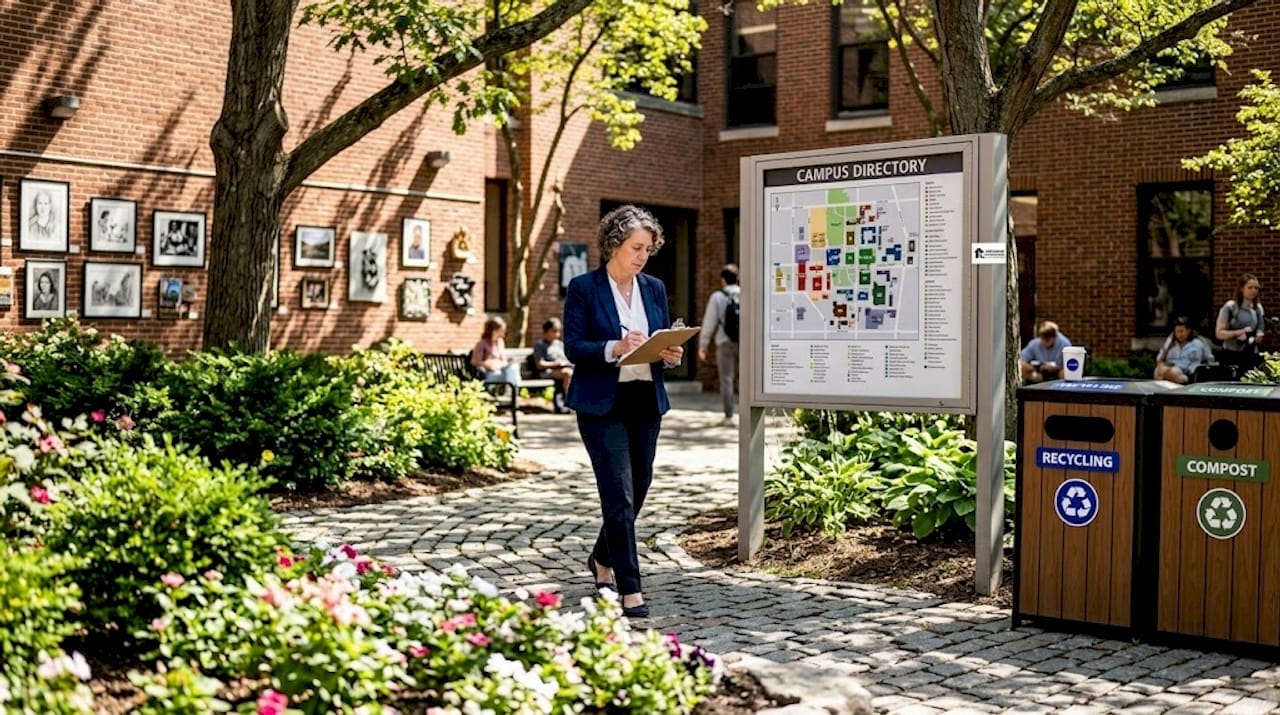
Most facilities managers have a mental image of a campus inspection as someone walking a building with a clipboard. The reality of a thorough university facility assessment is considerably more structured and spans multiple systems across every type of space on campus.
Standard inspection categories include the following:
- Fire safety: Extinguisher placement and charge status, sprinkler system condition, exit sign functionality, door hardware, and clear egress paths
- Structural integrity: Foundation cracks, roof drainage, facade conditions, floor loading, and stairway stability
- Accessibility: Ramp grades, door clearances, elevator compliance, accessible signage, and pathway conditions
- Electrical systems: Panel labeling, breaker conditions, outlet grounding, lighting functionality, and compliance with applicable codes
- Environmental hazards: Mold presence, asbestos-containing materials, lead paint in older buildings, chemical storage, and air quality indicators
- Physical security: Door locking hardware, camera placement, access control at entry points, and window integrity
The importance of accessibility inspections deserves specific attention. Residential tours by student disability advocates identified over 70 accessibility barriers across 11 buildings. That number came from advocates walking their own campus with fresh eyes, not from formal compliance reports. It illustrates how much a paper-compliant building can still fail the people inside it.
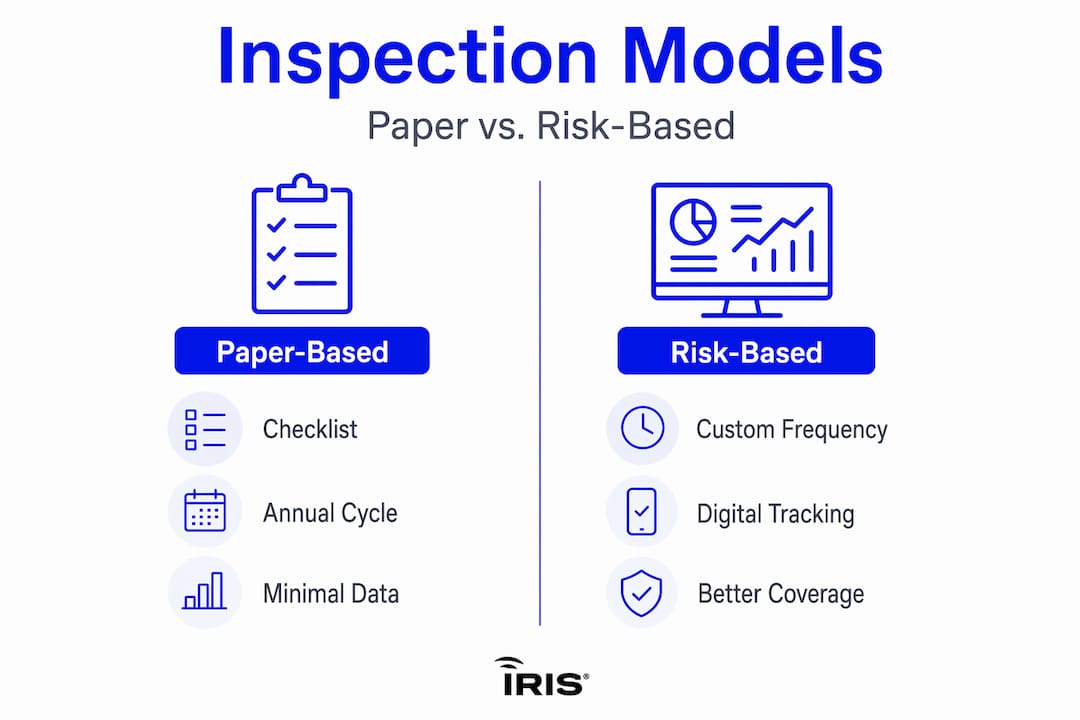
Inspection frequency should follow a risk-based model rather than a single annual schedule. High-traffic areas such as dining halls, common spaces, and main building entrances warrant weekly or even daily checks of specific conditions. Monthly inspections cover HVAC filter status, fire system components, and lighting. Quarterly reviews examine structural conditions, roof drainage, and electrical panels. Annual inspections should be comprehensive and cross-departmental.
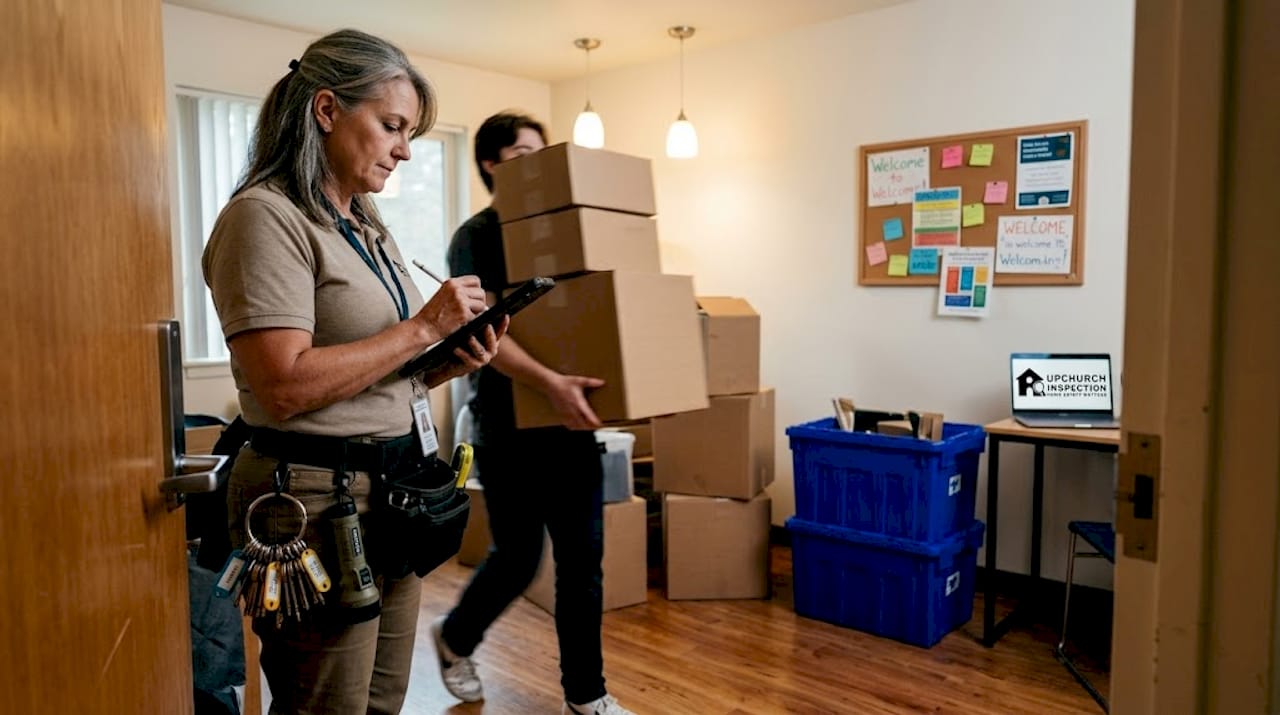
For residential facilities specifically, move-in and move-out inspections function as legally binding records. Without signed, timestamped photo documentation, universities regularly lose damage disputes and absorb costs that should be recoverable.
Comparison: paper-based vs. risk-based inspection models
| Inspection Model | Coverage | Documentation | Frequency Logic | Follow-Through |
|---|---|---|---|---|
| Paper-based annual | Often incomplete | Manual, inconsistent | Calendar-driven | Frequently delayed |
| Risk-based digital | Systematic, zone-based | Automated, timestamped | Hazard-driven | Tracked to closure |
Leveraging digital tools for better results
The difference between a facilities team that manages risk effectively and one that constantly reacts to problems often comes down to whether it has modernized its inspection process. Digital tools change what is possible without requiring additional staff.
Mobile inspection platforms complete inspections 5% faster and capture three times more detail than manual methods. Zone-based protocols built into these platforms assign specific areas to specific inspectors, eliminating the coverage gaps that plague unstructured walkthroughs. When an inspector photographs a damaged handrail or a blocked emergency exit, that image is time-stamped, geotagged, and immediately visible to the facilities director.
The operational benefits are substantial:
- Automated work order generation pushes repair requests to maintenance queues without manual data entry
- AI-driven risk scoring helps prioritize which findings require same-day attention versus scheduled maintenance
- Audit trails provide documentation for accreditation reviews, insurance claims, and regulatory inspections
- Real-time dashboards give leadership visibility into open hazards across all campus buildings simultaneously
Digital inspection tools have been shown to speed inspections by 45% while substantially improving coverage. That time savings compounds across a semester, freeing facilities staff for corrective work rather than documentation.
Pro Tip: When evaluating digital inspection platforms, prioritize those that allow offline data capture. Cell service is unreliable in mechanical rooms, basements, and large athletic facilities. An app that requires connectivity will create gaps in your inspection record at exactly the locations where you need coverage most.
Some institutions have adopted inspection management solutions that integrate work orders, compliance tracking, and maintenance scheduling into a single workflow. This removes the handoff friction between identifying a problem and getting it fixed.
Best practices for conducting effective campus inspections
A well-designed campus safety checklist is only as useful as the person using it. Training, protocol, and follow-through determine whether inspections actually reduce risk or simply generate paperwork.
Follow these practices to build a genuinely effective inspection program:
Train inspectors beyond item recognition. Inspectors should understand root causes, not just surface symptoms. A discolored ceiling tile is a finding. Knowing whether it indicates an active leak, a resolved leak, or a condensation issue from an improperly balanced HVAC system requires training that goes beyond what any checklist provides.
Frame inspections as improvement, not enforcement. Safety committee members should be trained to identify root causes and suggest practical solutions. When facilities staff view inspections as punitive exercises, they report fewer findings. When they see them as improvement tools, reporting increases and risk decreases.
Use standardized templates across all buildings and campuses. Consistency is what makes inspection data comparable over time. A facilities manager cannot identify a deteriorating trend in fire safety compliance across buildings unless the data was collected the same way each time.
Document everything with photos, timestamps, and signatures. This applies especially to residential turnover. Signed timestamped records are the only defensible evidence when a damage dispute reaches a formal review.
Assign interim controls for findings that cannot be fixed immediately. Not every identified hazard can be corrected the same day. Tagging, barricading, temporarily restricting access, and assigning clear ownership are interim controls that manage risk between identification and repair. Every open finding should have a named owner and a due date.
Include cross-departmental stakeholders. Risk management, student affairs, environmental health and safety, and residential life all see the campus differently. A facilities-only inspection will miss behavioral and operational hazards that other departments recognize immediately.
Pro Tip: Schedule at least one inspection per semester at an unexpected time. Predictable inspections reveal what staff prepare for, not what conditions actually look like day-to-day. A Thursday morning walkthrough after two weeks of notice will look very different from a Tuesday afternoon walkthrough with no notice.
Aligning inspections with the institutional safety strategy
A campus inspection program that operates in isolation from broader safety systems will eventually hit a ceiling in what it can accomplish. The most effective programs treat physical inspections as one layer in a larger, integrated safety strategy.
Fragmented security systems that were procured without a comprehensive assessment create operational silos, waste budget, and leave critical gaps in coverage. Institutions that start with a thorough security assessment create unified strategies that align technology, physical measures, and policy into a coherent whole.
Effective integration means connecting your inspection program to:
- Access control and monitoring systems so that hardware deficiencies identified in inspections trigger immediate security reviews
- Emergency response plans so that facilities vulnerabilities inform the protocols responders use
- Capital planning processes so that recurring findings in aging buildings generate budget requests rather than repeated open work orders
Physical design also matters. Effective campus safety measures include defined entry points, access control, and monitoring of key areas. An inspection program should evaluate whether the physical environment supports or undermines these objectives, not just whether equipment is in working order.
“Campus safety is a leadership responsibility, requiring collaboration across design, operations, and security for meaningful risk reduction.” — Spaces4Learning
Security standards continue to evolve at the policy level as well. Updated PASS 7th Edition guidelines now require all classrooms to have inside-lockable doors that can be secured quickly without keys. What was previously a Tier 2 recommendation has been elevated to a Tier 1 requirement. Your campus safety checklist should reflect current standards, not the version your team adopted several years ago.
Leadership plays a non-negotiable role in all of this. Inspection programs stall when senior administrators treat them as a facilities department concern rather than an institutional priority. When a provost or vice president reviews open inspection findings in a quarterly meeting, the signal to staff is unmistakable. The preventive approach to campus safety consistently outperforms reactive incident management when leadership actively supports it.
My take on where campus inspections fall short
I’ve reviewed enough campus inspection reports to know what the common failure looks like. The findings are documented. The photos are attached. The report is filed. And then, six months later, half the same findings reappear in the next report because no one tracked them to closure.
The technology exists to fix this. The risk-based frameworks exist. What too many institutions still lack is a genuine commitment from leadership to treat inspection data as a management tool rather than a compliance artifact. In my experience, the facilities teams that make the most progress are the ones where an administrator above the facilities director actually looks at inspection dashboards and asks hard questions about open findings.
The other gap I see consistently is the disconnect between formal compliance and real conditions. Accessibility is the clearest example. A building can pass every line item on a state inspection form and still present daily barriers to students with mobility limitations. Formal school property inspection programs catch what inspectors are trained to look for. They miss what they were never taught to see.
The institutions that close that gap are the ones that supplement their internal inspection programs with outside expertise. Not because their teams are inadequate, but because an external inspector walks your campus the way a first-time visitor does. They have no blind spots built up from years of seeing the same conditions.
— Holly
How Upchurch Inspection supports campus safety goals
Internal inspection programs are necessary, but they benefit substantially from third-party validation. Upchurch Inspection provides commercial and campus inspection services specifically designed to go beyond surface-level walkthroughs. We evaluate structural components, electrical systems, plumbing, HVAC conditions, and moisture indicators with the depth that educational facilities require.
For administrators in Tennessee, Arkansas, Mississippi, and Southeast Missouri seeking objective assessments to support compliance efforts, capital planning, or due diligence on existing buildings, our team delivers detailed reports that tell you exactly what you are working with. Explore our campus property inspection services to see how we can support your institution’s safety and facilities management goals.
FAQ
What is included in a campus inspection?
A thorough campus inspection covers fire safety systems, structural integrity, electrical and HVAC components, accessibility compliance, environmental hazards, and physical security conditions. Residential facilities also require move-in and move-out documentation with timestamped photo records.
How often should campus buildings be inspected?
Inspection frequency should follow a risk-based schedule. High-traffic areas may require daily or weekly checks, while structural and electrical systems are typically reviewed monthly or quarterly. A comprehensive annual inspection should cover every building on campus.
What digital tools improve campus inspection programs?
Mobile inspection platforms with zone-based protocols reduce inspection time by up to 45% while capturing three times more detail than paper methods. These platforms automate work orders, maintain audit trails, and provide real-time dashboards for facilities leadership.
Why do campus inspections miss accessibility barriers?
Formal inspection checklists verify code compliance, not lived experience. Research shows that student-led accessibility tours revealed over 70 barriers in 11 buildings that formal reports had not captured. Supplementing technical inspections with user-experience feedback closes this gap.
How does a campus inspection connect to broader security strategy?
Physical inspections should integrate with access control systems, emergency response plans, and capital planning. Purchasing security technology without a comprehensive security assessment first leads to fragmented systems that waste resources and leave coverage gaps.