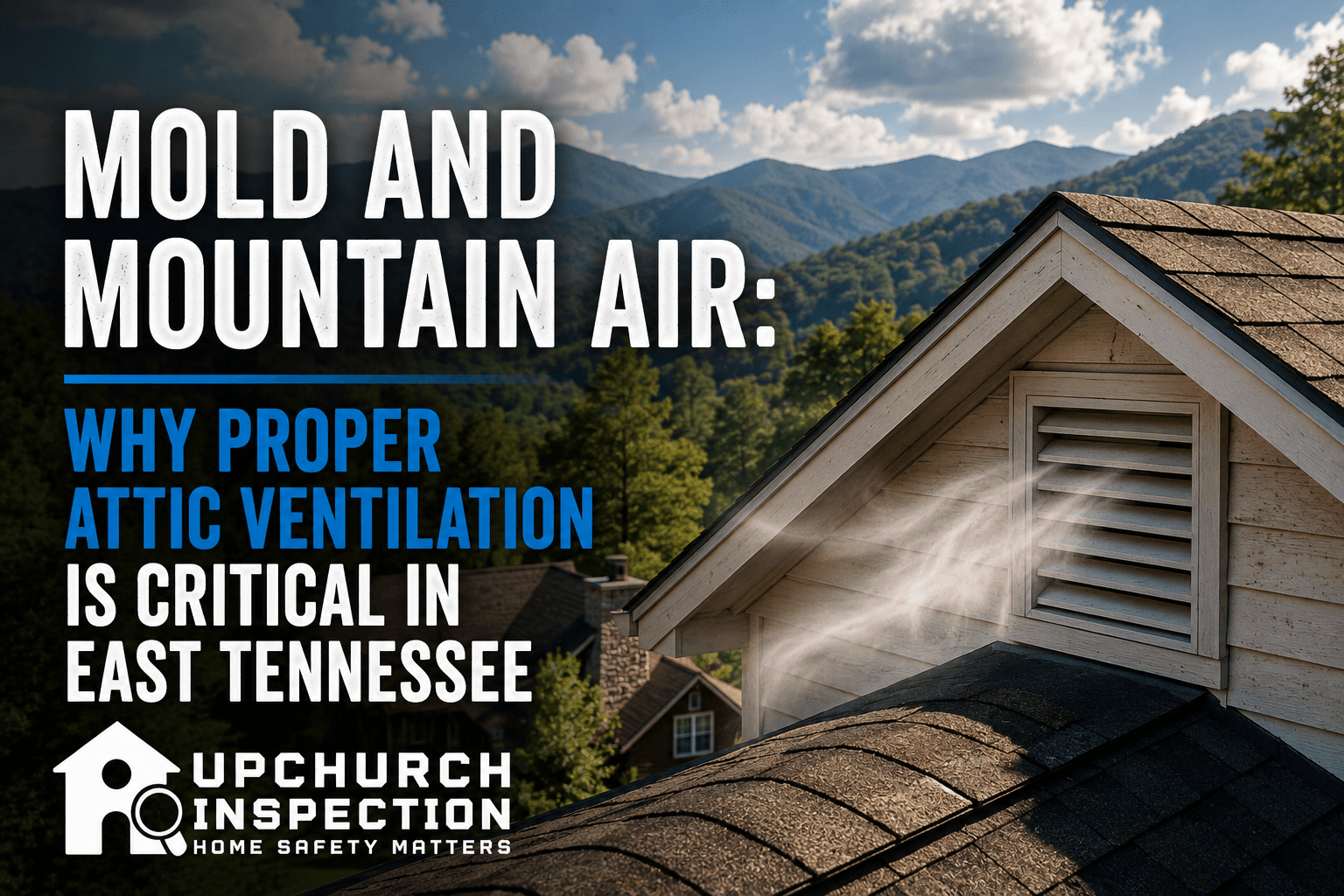
When I review inspection reports from our East Tennessee inspector, attic conditions are one of the most consistent problem areas. Knoxville’s geography creates a unique moisture environment — humid air settles in valleys, rises through homes, and concentrates in attics if the ventilation system isn’t doing its job.
Many of the mold-related issues we see don’t start in basements or crawlspaces. They start overhead.
How Mountain Terrain Traps Moisture
East Tennessee’s hills and valleys create temperature and pressure differences that affect how air moves through a house. Warm, moist air naturally rises. In Knoxville homes, that air often migrates upward and gets trapped in the attic.
When I review reports from this region, elevated attic humidity shows up even in homes with newer roofing systems. The problem isn’t always the roof — it’s airflow.
Understanding the Stack Effect in Knoxville Homes
The stack effect plays a major role in attic moisture issues here. As warm air rises through the structure, it pulls moisture from kitchens, bathrooms, and living spaces into the attic.
Our inspector documents signs of this regularly, including:
- Condensation on roof decking
- Dark staining or early fungal growth
- Rusted fasteners and metal connectors
- Insulation disturbed by air movement
Without proper ventilation and air sealing, that moisture has nowhere to go.
Why Attic Ventilation Fails in East Tennessee
Many attics technically have vents, but the system doesn’t function as intended. When I review Knoxville-area reports, the same issues appear repeatedly.
Common findings include:
- Blocked or missing baffle systems
- Intake vents that don’t provide sufficient airflow
- Exhaust vents that short-circuit instead of drawing air across the attic
- Insulation covering soffit openings
A vented attic only works if air can move freely from intake to exhaust.
Mold Doesn’t Require Leaks
One misconception I see often is the belief that attic mold means there’s a roof leak. In many East Tennessee reports, no active leaks are found at all.
Instead, moisture accumulates gradually through humid air movement and poor ventilation. Over time, that creates the conditions mold needs to grow, even in structurally sound attics.
Why Attic Evaluations Matter in Knoxville
Attic issues rarely stay isolated. The reports I review frequently connect attic moisture problems to reduced insulation performance, indoor air quality concerns, and premature roof deterioration.
That’s why our inspections in East Tennessee prioritize attic ventilation and airflow. In a mountain environment like Knoxville, understanding how air moves through a home is critical — and the attic tells the story first.