
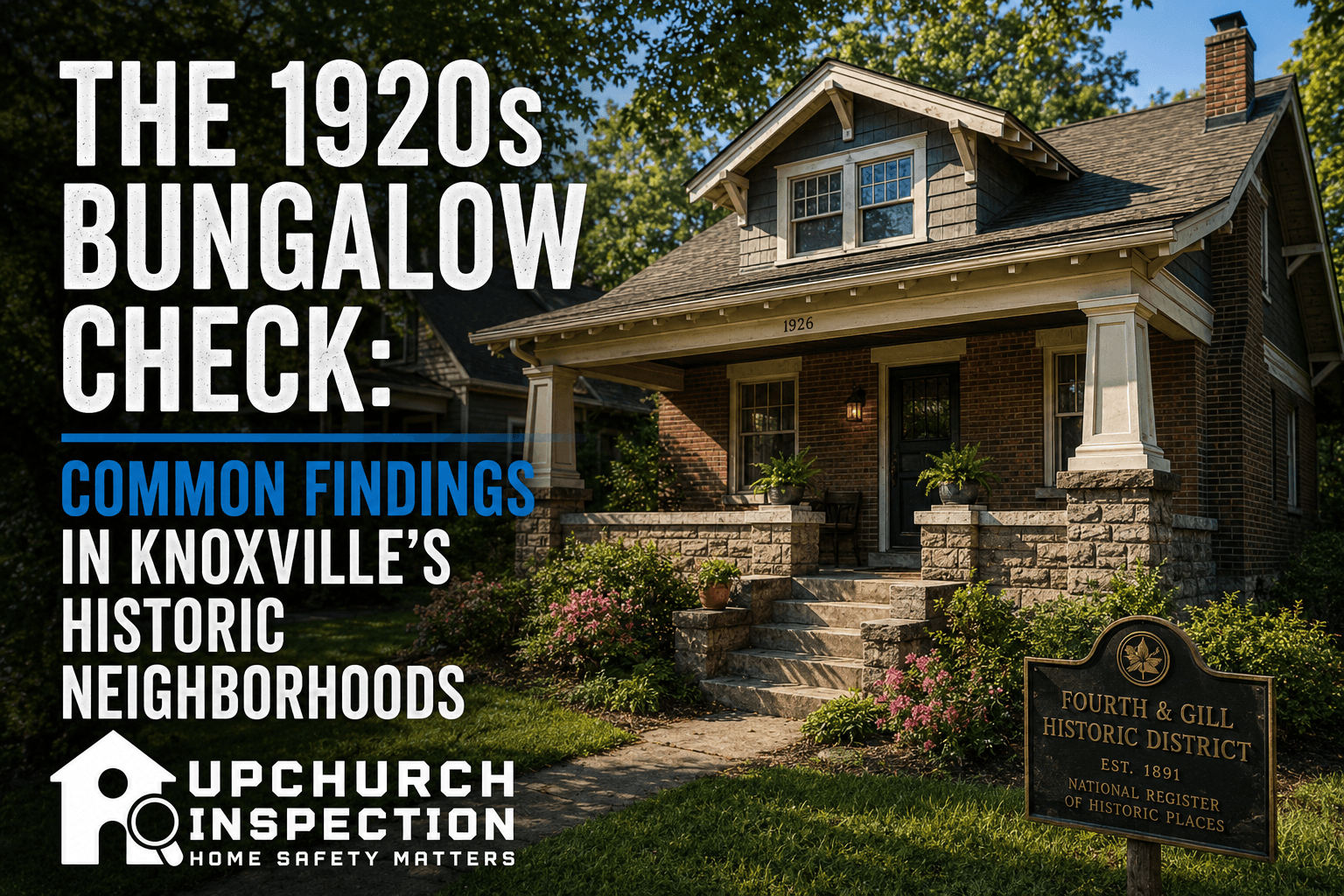
When I review inspection reports from Knoxville’s older neighborhoods, the homes often have a lot of character — and a lot of hidden history. Areas like Fourth & Gill and Old North Knoxville are filled with houses built in the early 1900s, and those homes require a very different inspection mindset.
Our East Tennessee inspector approaches these properties like a detective, because what matters most is often what’s been altered, patched, or concealed over the last hundred years.
Why Age Changes Everything
Homes from the 1920s weren’t built to modern standards, but many have been updated repeatedly. When I review reports from this era of construction, the biggest risks usually come from those updates, not the original materials.
Common findings include:
- Legacy electrical systems partially replaced but not fully removed
- Structural modifications made without clear documentation
- Masonry repairs layered over earlier movement
- Framing altered to accommodate modern layouts
Each change leaves clues.
Electrical Systems That Tell a Story
One of the most frequent items our Knoxville inspector documents in older bungalows is outdated electrical infrastructure. Knob-and-tube wiring, or remnants of it, still appears in many homes — sometimes abandoned, sometimes still active.
Reports often note:
- Mixed wiring types within the same system
- Splices made outside of junction boxes
- Electrical upgrades that didn’t include full system evaluation
These conditions don’t always present immediate failure, but they matter for safety and insurability.
Masonry and Foundation “Adjustments”
Historic Knoxville homes often sit on masonry foundations that have moved over time. When I review these reports, I’m looking closely at how that movement was addressed.
Our inspector commonly documents:
- Shimming at support posts
- Repointed masonry hiding older cracks
- Sloped floors that suggest long-term settlement
- Interior plaster or drywall repairs aligned with structural changes
These aren’t deal-breakers by default, but they require context.
The Importance of Reading the Patterns
In older neighborhoods, isolated defects don’t tell the whole story. Patterns do. Our East Tennessee inspector focuses on whether issues appear consistent and stable or if they suggest ongoing movement.
The reports I review emphasize correlation:
- Exterior cracking matching interior finishes
- Floor slope aligning with foundation conditions
- Repairs that appear cosmetic versus structural
This approach helps buyers understand risk, not just condition.
Why Historic Homes Demand a Different Inspection
Buying a 1920s bungalow in Knoxville means accepting that the home has lived many lives. The goal of the inspection isn’t to judge it by modern standards, but to understand how it has aged.
That’s why our inspections in historic neighborhoods focus on investigation, not assumptions. In Fourth & Gill and Old North Knoxville, the details matter — and history always leaves a trace.