In commercial properties, mechanical systems aren’t just line items — they’re business-critical infrastructure.
When a large RTU or boiler fails, tenants don’t complain.
They shut down.
This is where a true forensic mechanical inspection separates itself from “it turns on” evaluations.
We’re looking at life-cycle reality, not momentary operation.
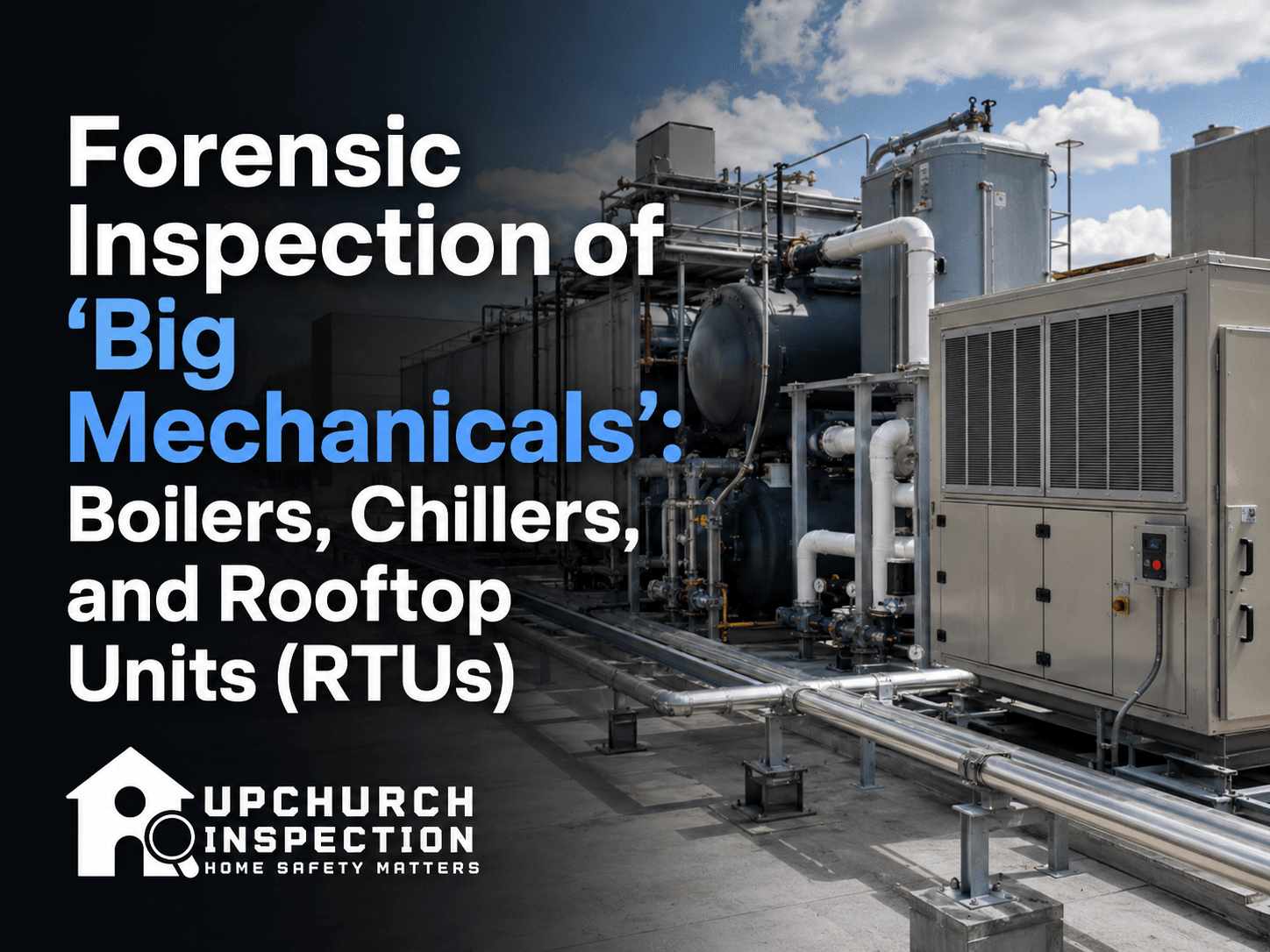
On large rooftop units, some of the most expensive failures are also the easiest to miss. Heat exchanger cracks in high-BTU RTUs often won’t trip safeties immediately, but they quietly reduce efficiency and create combustion risks. Compressor stage cycling tells a story — short cycling, unequal staging, or abnormal amperage draw often signals refrigerant issues or control failures long before breakdown.
With boilers, internal conditions matter more than nameplates. Scaling inside boiler tubes reduces heat transfer, drives fuel consumption up, and shortens equipment life. We assess water treatment history, combustion efficiency, and whether the boiler is actually sized correctly for the building’s load profile.
BTU capacity isn’t just a spec — it has to align with real-world demand.
In heavy-use corridors like the Jackson Industrial Corridor and the Knoxville Logistics Hubs, mechanical abuse is common. Extended run times, partial occupancy, and deferred service schedules quietly eat away at system longevity.
A forensic mechanical inspection doesn’t promise miracles.
It tells you how much useful life is actually left — and what ignoring it will cost.