
There are inspection reports I read quickly, and then there are the ones where I lean back, crack my knuckles, and slow down on purpose.
Oak Ridge is always the second kind.
When our Knoxville inspector sends me a report from Oak Ridge, I already know the house is going to be… different. Not bad. Not mysterious. Just very intentionally built for a moment in history that had nothing to do with granite countertops or open-concept living.
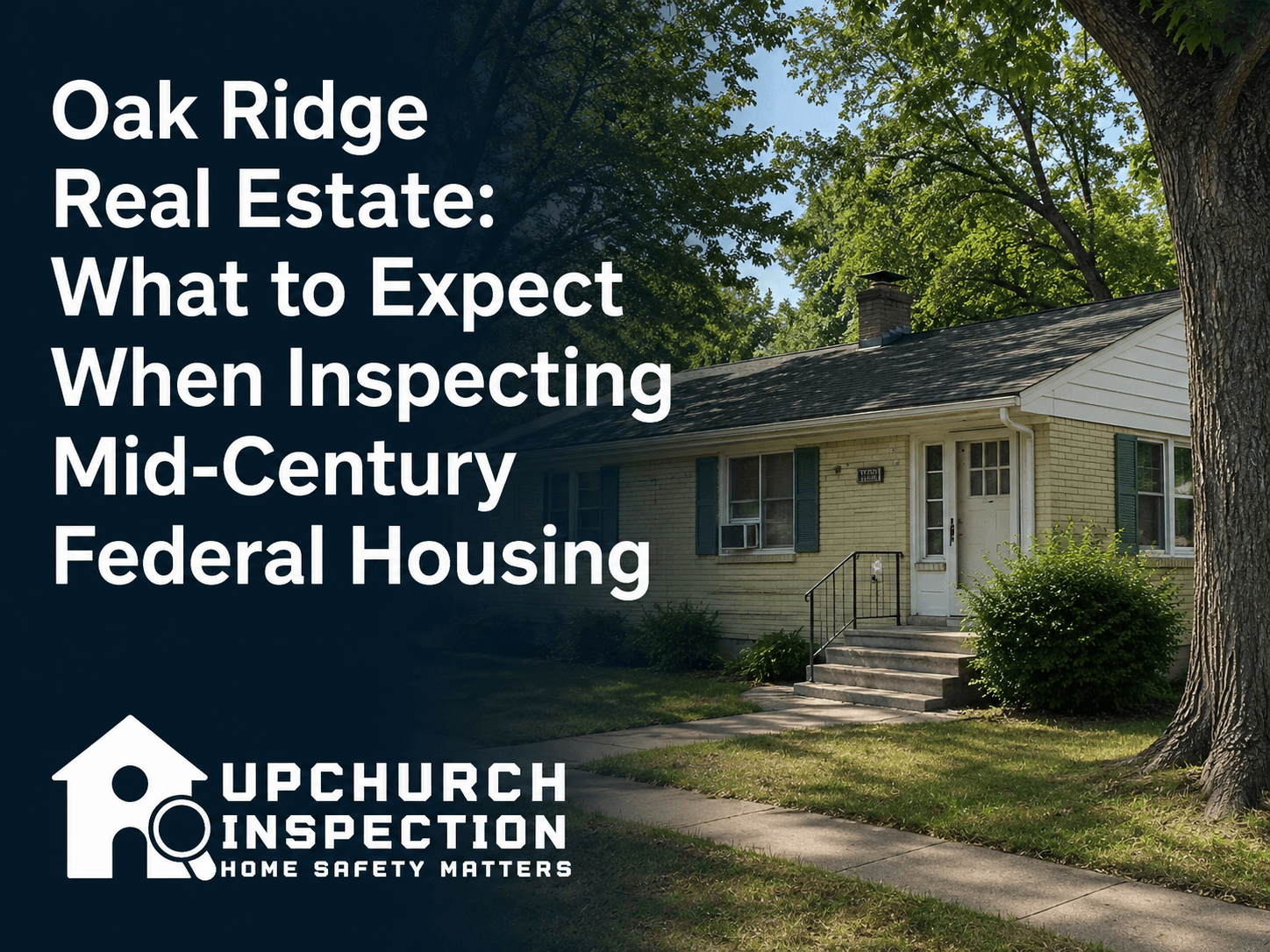
Oak Ridge wasn’t built like a normal town. It was engineered—fast, functional, and federal—during World War II. And that DNA still shows up in the houses today, even the ones that have been remodeled three times since.
If you don’t understand that going in, it’s easy to misread what you’re seeing during an inspection.
Oak Ridge Houses Weren’t Meant to Be Forever Homes
This is the first mindset shift people need.
A lot of Oak Ridge housing—especially the original mid-century stock—was built as temporary worker housing for the Manhattan Project. Speed mattered. Efficiency mattered. Longevity… not so much.
And yet here we are, 70–80 years later, still inspecting them.
That doesn’t mean they’re junk. It means you have to judge them by the rules they were built under, not modern expectations.
I’ve reviewed Oak Ridge reports where buyers panicked over things that were completely normal for these houses—and missed things that actually mattered.
Context is everything here.
You Can Feel the Federal Design Philosophy
Oak Ridge homes tend to share certain traits, even across different neighborhoods:
- Modest footprints
- Simple rooflines
- Minimal structural ornamentation
- Standardized layouts
- Efficient use of materials
Our Knoxville inspector has joked more than once that these houses feel like they were “designed by engineers, not decorators.” That’s not a criticism. It’s an observation.
They were built to be:
- Fast to construct
- Easy to heat
- Easy to replicate
That simplicity is why many of them are still standing—but it also explains some of the quirks.
Foundations: Practical, But Not Forgiving
Most mid-century Oak Ridge homes sit on slabs or shallow crawlspaces. Basements exist, but they’re less common than in older Knoxville neighborhoods.
Here’s what our inspector sees repeatedly:
- Slab edges with minimal insulation
- Crawlspaces with limited clearance
- Foundations poured without modern moisture barriers
- Footings sized for original loads, not later additions
These foundations usually aren’t failing dramatically. They’re doing exactly what they were designed to do. The issue is what changed above them.
I’ve reviewed reports where additions doubled the square footage of the home—but the foundation was never designed for that load. The house didn’t crack in half. It just settled… unevenly… over decades.
That kind of movement doesn’t scream at you. It whispers.
Plumbing: Government-Issued Meets DIY
Plumbing in Oak Ridge homes is often a timeline.
Original supply lines were commonly galvanized steel. Drains were cast iron. Over time, copper got added. Then PVC. Sometimes all in the same house.
Our inspector frequently documents:
- Galvanized pipes still feeding sections of the house
- Reduced water pressure that “everyone just lives with”
- Mixed materials joined without proper transition fittings
- Old drain lines that are thinning from the inside
One Oak Ridge report I remember clearly showed perfectly good water pressure at the kitchen sink—and a pathetic trickle upstairs. Same house. Same system. Different pipe condition.
That’s not bad luck. That’s aging infrastructure.
Electrical Systems: Adequate for 1950, Questionable for 2025
This is where Oak Ridge inspections get interesting.
Original electrical systems in these homes were designed for:
- A few lights
- A refrigerator
- Maybe a radio
Not:
- EV chargers
- Multiple computers
- Heat pumps
- Modern kitchens
Our Knoxville inspector has opened a lot of panels in Oak Ridge that technically work—but are doing so at the edge of their comfort zone.
Common findings include:
- Older panels that are undersized by today’s standards
- Branch circuits shared in ways that no longer make sense
- Partial rewiring where old conductors still carry load
- Grounding that meets old rules, not modern ones
I’ve seen reports where the panel was upgraded, but the branch wiring wasn’t. That’s like putting new tires on a car with worn suspension. It helps—but it doesn’t fix everything.
Insulation: Built for Speed, Not Comfort
Federal housing didn’t waste materials on insulation. And in Oak Ridge, that shows.
Our inspector routinely notes:
- Little to no wall insulation
- Attics insulated unevenly or insufficiently
- Thermal bridging through framing
- Cold floors in winter, warm floors in summer
One homeowner complained about high utility bills and assumed the HVAC was the problem. It wasn’t. The house just leaks energy the way it always has.
You can improve these homes dramatically—but only if you understand where the losses are happening. Guessing usually leads to disappointment.
Windows and Doors: Original or “Replaced”
Many Oak Ridge homes still have original window openings, even if the windows themselves have been replaced.
That matters.
Our inspector has documented:
- Replacement windows installed without proper flashing
- Drafts tied to original framing gaps
- Water intrusion at sill plates
- Rot hidden behind trim
The house might have “new windows,” but the opening was never designed for modern assemblies. That mismatch shows up years later as moisture damage—not immediately.
HVAC Retrofits Tell a Story
Most Oak Ridge homes were not originally built with central HVAC. Systems were added later, often in phases.
That creates issues like:
- Ductwork squeezed into undersized spaces
- Poor airflow balance
- Inadequate returns
- Equipment sized for square footage, not envelope performance
Our inspector has sent me reports where the HVAC unit was technically new—but struggling because the house itself hadn’t been upgraded to support it.
Again, not a defect. A mismatch.
Crawlspaces: Small, Tight, Honest
Oak Ridge crawlspaces tend to be tight. Low clearance. Minimal access. No frills.
And they’re incredibly revealing.
Our inspector spends extra time in these crawlspaces because that’s where:
- Old plumbing shows its age
- Electrical modifications become obvious
- Moisture issues first appear
- Structural changes leave clues
One Oak Ridge report showed a former coal chute that had been sealed and forgotten. Moisture was still finding its way in through that old path decades later.
The house remembered. The owner didn’t.
Additions Are Where Things Go Sideways
If there’s one consistent risk factor in Oak Ridge homes, it’s additions.
Sunrooms. Extra bedrooms. Expanded kitchens. Converted garages.
Our inspector frequently finds:
- Additions with different foundation types
- Rooflines tied together awkwardly
- Drainage redirected unintentionally
- Systems extended beyond original design
I’ve reviewed reports where the original house was rock solid—but the addition was settling, leaking, or poorly supported.
That doesn’t make the house bad. It means the addition deserves scrutiny.
Oak Ridge Isn’t Random — It’s Purpose-Built
Driving through Oak Ridge near historic sites like the Y-12 National Security Complex, you can feel that this town was engineered with intent.
That same intent exists in the housing.
You’re not inspecting a “typical” mid-century home. You’re inspecting a piece of federal history that’s been adapted for civilian life.
Treat it like that, and the findings make sense.
Why Buyers Get Tripped Up Here
Oak Ridge homes often:
- Look simple
- Feel sturdy
- Test fine functionally
And yet inspection reports can be long.
That disconnect confuses buyers.
The goal of inspecting these homes isn’t to judge them by modern luxury standards. It’s to understand:
- What was original
- What was modified
- What’s aging predictably
- What’s at risk
Once you frame it that way, the report stops feeling alarming and starts feeling useful.
The Wes Take
I like Oak Ridge houses. I respect them.
They were built under pressure, for a purpose, and they’ve outlived expectations. But they don’t respond well to assumptions.
When I review reports from our Knoxville inspector, the best Oak Ridge inspections don’t nitpick. They explain the logic of the house.
If you understand why it was built the way it was, you can make smart decisions about upgrades, maintenance, and expectations.
If you don’t, you’ll spend money fixing the wrong things.
Oak Ridge homes don’t ask for perfection.
They ask for understanding.