
A City With a Wide Range of Housing Ages
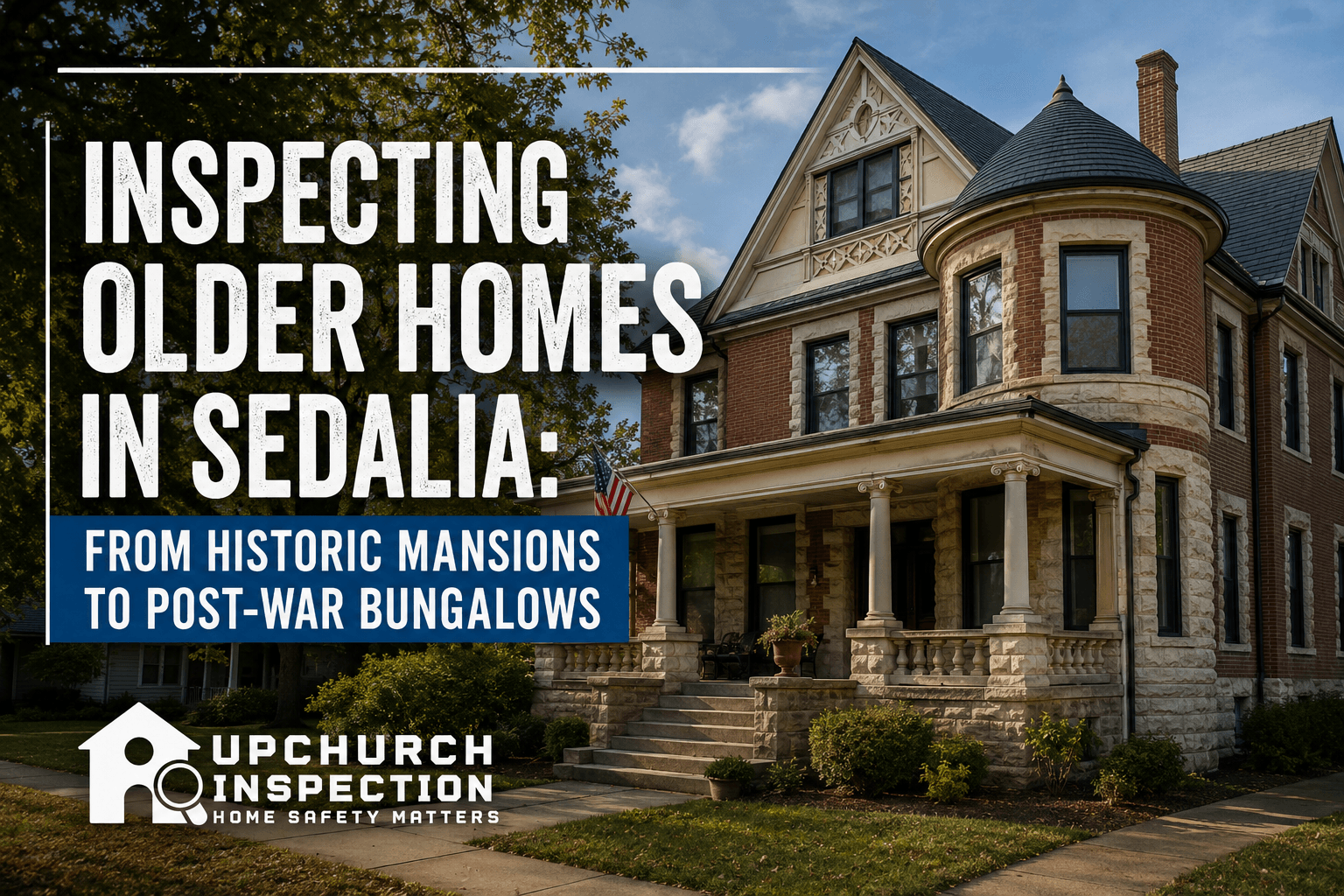
When I review reports from our Centerview, Missouri inspector, Sedalia always stands out for one reason: the sheer variety of housing styles and construction eras packed into a relatively small area. In Sedalia, it’s not unusual to inspect a late-1800s Victorian one day and a modest post–World War II bungalow the next.
That range makes inspections here especially nuanced. The problems we find are rarely random—they’re tied closely to when and how the home was built.
Historic Homes: Solid Bones, Aging Systems
Sedalia’s older neighborhoods include large historic homes built with full-dimension lumber, plaster walls, and stone or brick foundations. Structurally, many of these houses have held up well. Where issues tend to appear is in the systems that have been layered in over time.
Our inspector frequently finds outdated electrical components in these homes, including remnants of knob-and-tube wiring or early cloth-insulated conductors that were never fully removed during upgrades. Plumbing is another common concern. Galvanized supply lines and cast-iron drains are still present in many older Sedalia properties, often nearing the end of their functional life.
Foundation-wise, stacked stone and early brick foundations are common. These systems can perform well, but only if water is managed properly. Mortar deterioration, minor bowing, and moisture intrusion show up regularly when exterior drainage hasn’t been maintained.
The Post-War Boom and Its Own Set of Issues
Sedalia saw significant residential growth after World War II, and many neighborhoods are filled with 1940s–1960s bungalows and ranch homes. These houses are usually simpler in design but come with their own predictable inspection findings.
Shallow foundations and crawlspaces are common, and many lack modern vapor barriers or proper ventilation. In several Sedalia inspections, our inspector noted moisture-stained framing and elevated humidity levels in crawlspaces—conditions that quietly contribute to wood decay and mold growth over time.
Electrical panels from mid-century construction also raise flags. While some have been upgraded, others still rely on outdated breaker designs or undersized service that no longer matches modern electrical demand.
Sedalia’s Soil and Moisture Patterns
Sedalia’s soil conditions play a role in both historic and mid-century homes. Clay-heavy soils combined with seasonal moisture swings can lead to gradual settlement, especially where downspouts discharge close to the foundation or grading slopes inward.
We often see minor foundation movement telegraphed through interior cracking, sloped floors, or sticking doors—similar symptoms across very different house styles, driven by the same underlying soil behavior.
What Makes These Inspections Different
Inspecting older homes isn’t about condemning age—it’s about understanding it. In Sedalia, knowing when a house was built provides critical context for what we expect to find and what truly matters from a safety and longevity standpoint.
When I review Sedalia inspection reports, the strongest ones connect construction era, materials, and local conditions into a clear picture. That approach helps buyers understand whether they’re looking at normal aging, deferred maintenance, or issues that deserve closer attention before moving forward.