
Homeowners insurance and a home warranty are not two versions of the same protection. Insurance covers sudden, accidental damage to your structure and belongings, and your mortgage lender will require it. A home warranty is a service contract that pays toward repair or replacement of aging systems and appliances, and no lender or law requires it. If you’re weighing home warranty vs insurance, the short answer is that most homeowners need insurance and only some benefit from adding a warranty on top of it.
TL;DR:
- Homeowners insurance triggers payouts for sudden, accidental damage, while home warranties cover wear-and-tear failures of appliances and systems.
- Insurance typically excludes flood and earthquake damage, requiring separate endorsements, whereas warranties generally exclude pre-existing conditions and neglect.
- Insurance premiums vary by state and coverage, but warranties cost between a few hundred and over a thousand dollars annually, plus service fees per claim.
- Buy a home warranty if your home has aging systems, but skip it if your appliances are new or you maintain a sufficient repair reserve.
- An inspection before purchasing coverage can document system conditions and prevent claim denials based on pre-existing issues.
Table of Contents
- What Does Homeowners Insurance Actually Cover?
- How Does a Home Warranty Work as a Service Contract?
- Home Warranty vs Insurance: A Side-by-Side Comparison
- What Do Homeowners Insurance and Home Warranties Cost?
- Do You Really Need a Home Warranty, Too?
- How Do You Choose a Plan or Review Your Policy?
- What Inspections Reveal Before You Buy Coverage
- A Field Perspective on Buyer Mistakes
- Get an Inspection Before You Decide on Coverage
- Sources
What Does Homeowners Insurance Actually Cover?
Homeowners insurance is built around four main coverages: dwelling (the structure itself), other structures (detached garages, fences, sheds), personal property (your belongings), and liability (protection if someone is injured on your property). Most policies also include additional living expenses, which pay for a hotel or rental if a covered loss makes your home unlivable. The NAIC’s homeowners insurance guidance breaks these categories down clearly, and it’s worth reading before you sign anything.
Coverage triggers on sudden, accidental events, fire, wind, hail, theft, a burst pipe, a falling tree. It generally excludes flood, earthquake, and anything tied to gradual wear and tear, which is exactly the gap a home warranty tries to fill.
When you’re reviewing a quote or an existing policy, check these details:
- Deductible amount and whether it’s a flat dollar figure or a percentage of your dwelling coverage.
- Sublimits on categories like jewelry, electronics, or water backup, which often cap far below your overall personal property limit.
- Whether you have replacement cost or actual cash value coverage on the structure and contents.
- Endorsements you may need separately, such as flood, sewer backup, or scheduled personal property.
Pro Tip: Pull your declarations page and compare your dwelling coverage limit against current local rebuild costs, not your purchase price. In parts of Tennessee and Arkansas where labor and material costs have climbed, an outdated dwelling limit can leave you underinsured by tens of thousands of dollars after a major loss.
How Does a Home Warranty Work as a Service Contract?
A home warranty is not insurance at all. The FTC classifies home warranties as service contracts, a separate category of consumer product with its own rules, exclusions, and complaint patterns. That’s different from a builder’s new-construction warranty, which covers workmanship defects for a set period after closing, and different again from a manufacturer’s warranty on a single appliance.
A typical home warranty covers systems and appliances that break down from normal use: HVAC units, water heaters, electrical panels, plumbing, and kitchen appliances like ovens, dishwashers, and refrigerators. Pools, well pumps, and septic systems are usually optional add-ons at extra cost.
Here’s where the fine print matters:
- You pay a service fee (often $75 to $125) every time a technician is dispatched, regardless of outcome.
- Coverage caps limit what the company pays per item, sometimes far below actual replacement cost.
- Pre-existing conditions are commonly excluded, and the provider decides what counts as pre-existing.
- You typically can’t choose your own contractor; the warranty company assigns a vendor from its network.
Pro Tip: Ask any warranty provider directly how they define a pre-existing condition and who makes that determination. If the answer is vague, that’s a signal the claims process will be, too.
Home Warranty vs Insurance: A Side-by-Side Comparison
The clearest way to see the warranty vs insurance comparison is to line up what triggers a payout, what’s excluded, who regulates the product, and what it typically costs.
| Factor | Homeowners Insurance | Home Warranty |
|---|---|---|
| What triggers coverage | Sudden, accidental peril (fire, wind, theft, burst pipe) | Mechanical breakdown from normal wear and tear |
| Covered examples | Roof damage from a storm, house fire, water damage from a burst pipe | Failed HVAC compressor, dead water heater, broken dishwasher |
| Typical exclusions | Flood, earthquake, wear and tear, neglect | Pre-existing conditions, code violations, improper maintenance |
| Who regulates it | State insurance departments, guided by NAIC model laws | Varies by state; often governed as a service contract, not insurance |
| Best for | Mortgage-required protection against catastrophic loss | Budgeting for aging-system repairs outside insurance’s scope |
State oversight differs sharply between the two products. Insurance falls under your state insurance department. Home warranties fall under a patchwork of state rules, and some states, as Tennessee’s consumer guide on home service contracts explains, don’t regulate them with the same consumer protections that apply to insurance.
What Do Homeowners Insurance and Home Warranties Cost?
Homeowners insurance premiums vary widely by state, home age, and coverage limits, but most owners pay an annual premium plus a per-claim deductible that can vary significantly depending on the policy. Home warranty plans typically run from a few hundred dollars a year at the low end to over $1,000 annually for broader coverage with add-ons like pool or septic protection.
On top of the annual premium, warranties add a service fee every time you file a claim:
- Service call fees may run within a typical range per visit, win or lose.
- Per-item coverage caps mean a warranty might pay $1,500 toward a new HVAC unit that actually costs $6,000 to replace.
- Older systems near the end of their expected service life often hit those caps fastest, shrinking the warranty’s real value just when you need it most.
Do You Really Need a Home Warranty, Too?
A warranty tends to pay off in a narrow set of situations, and skipping it makes sense in others. Here’s how to sort your own case:
- Buy one if: you just closed on an older home with aging systems, you don’t have much set aside for emergency repairs, or you inherited unknown maintenance history in a first-year move-in.
- Skip one if: your HVAC, water heater, and major appliances are newer, you keep a solid repair reserve, or the plan’s exclusions leave out the exact systems you’re worried about.
- Never assume it replaces insurance. Lenders require homeowners insurance to protect their collateral interest in the property, and a warranty does nothing to satisfy that requirement, so canceling insurance in favor of a warranty isn’t an option your mortgage will allow.
For many buyers, Forbes’ comparison of the two products lands on a similar conclusion: insurance is the non-negotiable purchase, and a warranty is a budgeting tool you layer on top when your specific risk profile calls for it.
How Do You Choose a Plan or Review Your Policy?
Whether you’re comparing warranty providers or auditing your own insurance policy, work through the same kind of checklist before you commit.
For a home warranty, ask about:
- Coverage caps per item and per year, and whether they realistically cover replacement cost.
- Exact exclusions, especially anything labeled “pre-existing” or “improper maintenance.”
- The service fee amount and whether it changes based on the technician dispatched.
- Whether you can appeal a denied claim or whether disputes go straight to arbitration.
For homeowners insurance, ask about:
- Whether you have replacement cost or actual cash value coverage, since the difference can mean thousands of dollars after a loss.
- Sublimits on high-value categories and whether you need a separate endorsement.
- Liability limits, especially if you have a pool, trampoline, or dog breed some insurers flag.
Pro Tip: Search for the warranty company’s name alongside terms like “complaint” or “denied claim” before signing. A pattern of repeated denials for the same type of system is a red flag no glossy brochure will show you. Watch, too, for aggressive telemarketing tactics and vague, opaque contract language, both of which the FTC specifically warns consumers about.
What Inspections Reveal Before You Buy Coverage
An inspection gives you something a sales brochure never will: documented, dated evidence of a system’s actual condition. That matters because most warranty denials come down to one word, “pre-existing,” and a report generated the week you bought the home is hard evidence against a provider trying to deny a claim on that basis.
Across residential inspections in Tennessee, Arkansas, Mississippi, and Missouri, we regularly document conditions that predict near-term failure long before the system actually quits: corroded plumbing joints, aging HVAC capacitors nearing the end of their service life, and patch repairs on roofs that signal a bigger problem underneath. These patterns show up often enough in aging systems and outdated appliances that they’re worth flagging before you buy any coverage, not after.
If you’re weighing a warranty, a few targeted inspections are worth the cost before you sign:
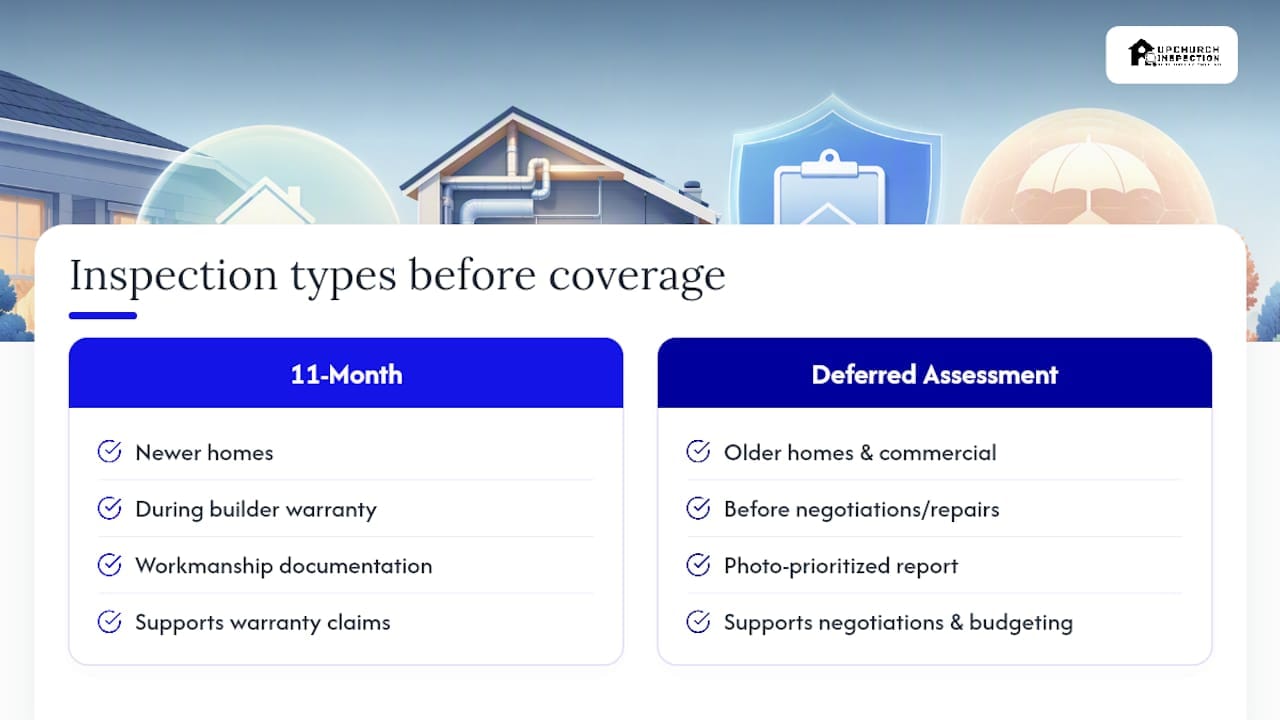
- An 11-month warranty inspection to catch builder-warranty issues before that window closes.
- A sewer scope to check for root intrusion or pipe damage a warranty likely won’t cover once discovered.
- An HVAC diagnostic to gauge remaining service life before you bet on a warranty cap that won’t cover full replacement.
A Field Perspective on Buyer Mistakes
The most common mistake I see is a buyer purchasing a warranty hoping it will cover a problem they already noticed during the walkthrough. It won’t. Warranty companies exist to manage risk, and a documented pre-existing condition is the first thing they’ll point to when denying a claim.
The second mistake is skipping the 11-month warranty inspection on a newer home, which leaves workmanship issues undocumented right before the builder’s warranty window closes. My honest advice: budget for capital repairs on aging systems rather than betting entirely on warranty caps, and call an inspector before you sign a service contract, not after something breaks.
— Holly
Get an Inspection Before You Decide on Coverage
Upchurch Inspection gives buyers something a warranty brochure can’t: an independent, documented record of exactly what condition your systems are in before you commit to any coverage decision. Our residential and commercial inspections cover HVAC, plumbing, electrical, roofing, and structural systems, and we flag the deferred maintenance and near-end-of-life components that most often drive warranty claim denials down the road.
If you’re buying a newer home, our 11-month warranty inspection documents workmanship issues while your builder’s warranty is still active. If you’re evaluating an older property or a commercial asset, our deferred maintenance assessment gives you photographed, prioritized findings you can use in negotiations or repair budgeting. Schedule an inspection with Upchurch Inspection before you sign your next warranty or insurance decision.
This article is general information, not a substitute for advice from a qualified financial advisor. Consult a qualified financial professional about your own circumstances before acting on anything here.