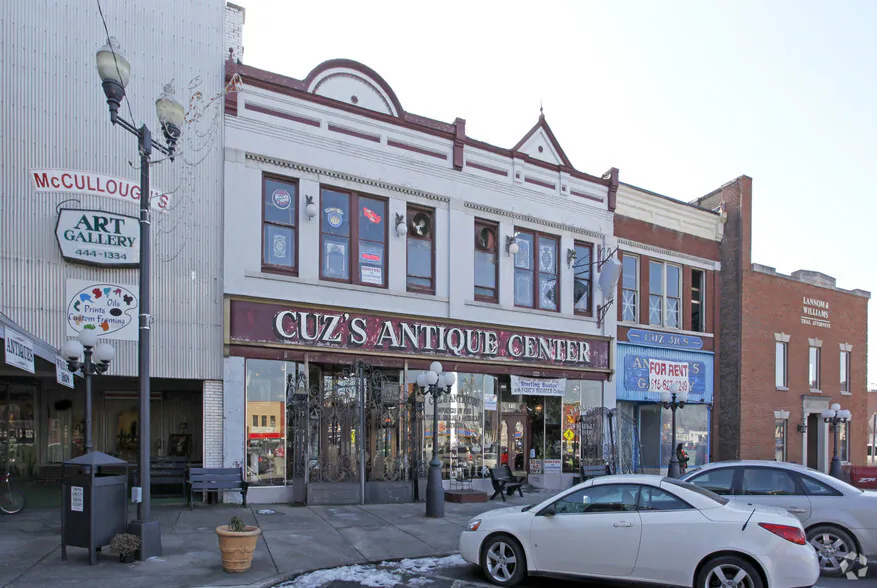
Downtown Lebanon looks great right now. Fresh paint. New signage. Restaurants, offices, boutiques moving into old storefronts around the Public Square. From the sidewalk, it feels like a comeback story — and in a lot of ways, it is.
But here’s the part I have to be the bad guy about: historic commercial buildings don’t magically become modern just because the tenant mix improves. When I inspect properties around the Lebanon Square, I’m not impressed by exposed brick and pendant lights. I’m looking at what’s behind them — and that’s where a lot of new business owners get blindsided.
Revitalization makes buildings prettier. It does not make them younger.
Historic Commercial Buildings Fail Differently
Most of the buildings around the Public Square weren’t designed as independent units. They were built as continuous blocks, sharing walls, framing, rooflines, and utilities. Over the decades, those systems were modified, divided, and re-divided — often without a master plan.
So when someone buys a single storefront, they’re rarely buying a fully independent structure. They’re buying into a shared organism, whether they realize it or not.
Shared Firewalls That Aren’t Really Firewalls
This is one of my biggest concerns in downtown commercial inspections. Many of the original firewalls between buildings have been compromised repeatedly over the last 80–100 years.
I routinely find:
- Old openings that were never properly sealed
- Mechanical and electrical penetrations without fire stopping
- Drop ceilings that bypass rated walls entirely
From a liability standpoint, that matters. A fire that starts next door doesn’t politely stop at your lease line if the wall between you isn’t doing its job anymore.
Joist Pockets and Embedded Framing
Historic masonry buildings around the square often rely on wood joists embedded directly into brick walls. Those joist pockets are moisture magnets. Over time, masonry absorbs water, transfers it inward, and the embedded wood pays the price.
During inspections, I’m looking for:
- Sagging floors near exterior walls
- Staining or decay at joist ends
- Evidence of past sistering or reinforcement
The scary part is that this kind of deterioration happens slowly and invisibly — until it doesn’t.
Roof Systems That Span Multiple Owners
Here’s another uncomfortable truth: many downtown roofs don’t align with ownership boundaries. One roof section can serve multiple storefronts, even when the deeds are separate.
Common problems I see:
- Patchwork repairs done by different owners
- Roof drains shared across multiple units
- Ponding water with no clear responsibility
When something fails, the argument about who pays can take longer than the repair itself — and your business sits underneath the problem the whole time.
Mechanical Systems Added Long After the Building Was Built
These buildings were never designed for modern HVAC loads. Systems were added later, often wherever there was space, not where it made the most sense structurally.
That leads to:
- Rooftop units sitting on framing never designed for the weight
- Ductwork cutting through structural members
- Condensate lines dumping where they shouldn’t
I’m not just checking whether the unit turns on. I’m asking whether the building was ever meant to carry it.
Electrical: Layer on Layer on Layer
Electrical systems in historic commercial buildings are almost always layered. Original wiring. Then mid-century upgrades. Then modern panels feeding a mix of old and new infrastructure.
I regularly document:
- Abandoned wiring still energized
- Overfilled conduits
- Grounding systems that evolved instead of being redesigned
Panels can look clean while the system feeding them is barely holding together.
Rising Damp Is Real Here
Older masonry buildings don’t have modern moisture breaks. Water wicks upward through brick and mortar via rising damp, especially in buildings that sit directly on grade or shallow foundations.
You’ll see it as:
- Peeling paint at lower wall sections
- Efflorescence behind finished walls
- Musty odors that never quite go away
Covering it with drywall doesn’t fix it. It just hides it until damage spreads.
Renovations Can Make Things Worse
Here’s where revitalization bites people. Modern finishes often trap moisture and restrict airflow in buildings that were designed to breathe. Spray foam, vinyl wall coverings, and sealed floors change moisture behavior dramatically.
I’ve seen renovations accelerate:
- Brick deterioration
- Wood decay
- Interior air quality issues
The building didn’t change — the way it was allowed to dry did.
Why Small Business Owners Get Hit the Hardest
Large investors budget for surprises. Small business owners usually don’t. When you’re opening a restaurant, salon, or retail space, unexpected building repairs can crush your cash flow before you ever turn a profit.
That’s why inspections here have to be blunt. You’re not just buying charm. You’re buying history — including every shortcut taken along the way.
What I’m Actually Trying to Protect
When I inspect a downtown Lebanon property, I’m not trying to scare people away. I’m trying to make sure new owners understand what they’re responsible for before they sign anything.
Because once you own it, the romance fades fast and the invoices don’t.
For buyers and business owners evaluating historic commercial properties throughout Middle Tennessee, inspections need to go deeper than finishes and floor plans.
https://upchurchinspection.com/our-service-areas/home-inspections-in-middle-tennessee/
Downtown revitalization is a good thing.
Just don’t confuse “revived” with “rebuilt.”