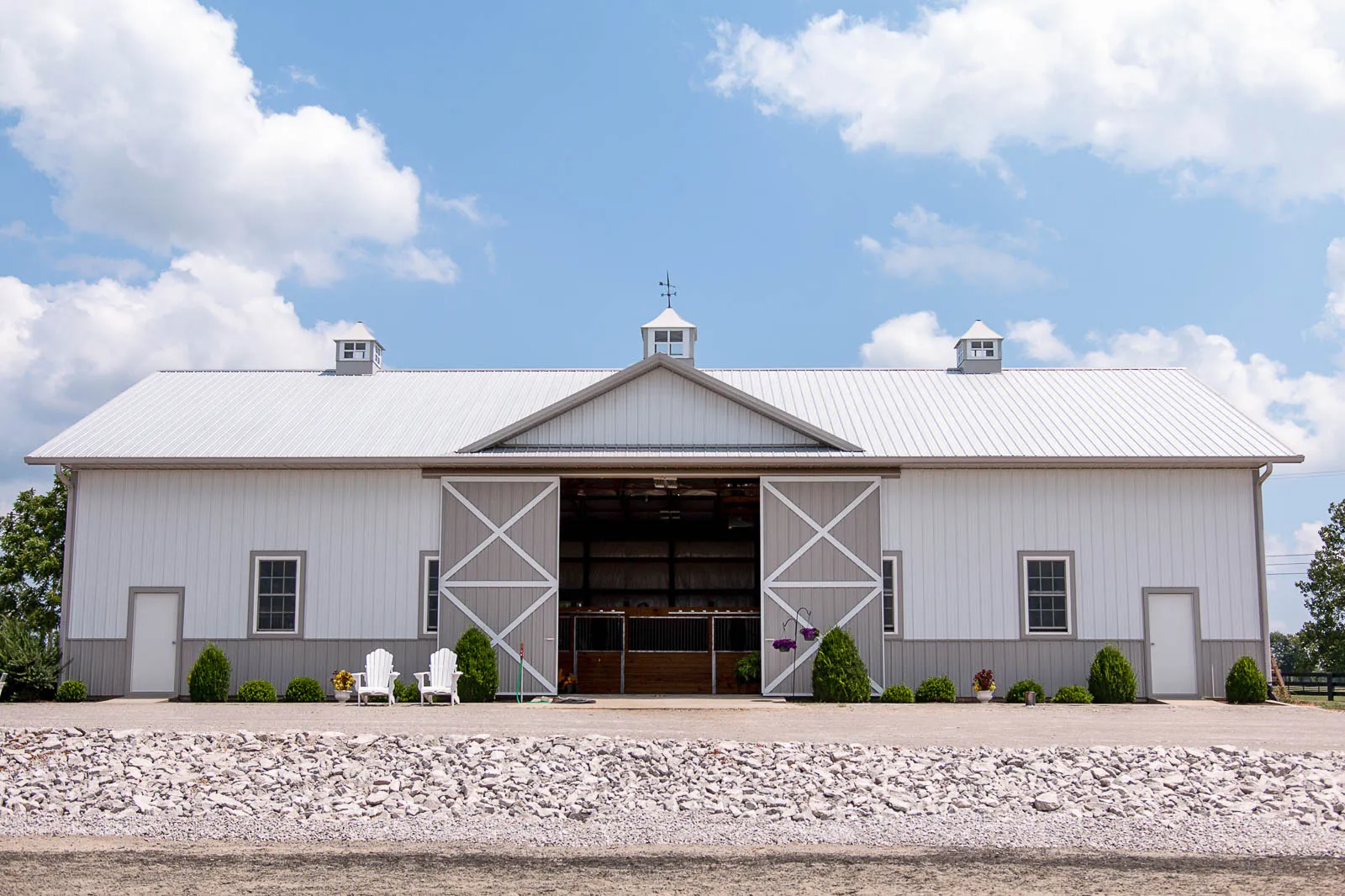
Rural properties in Central Kentucky aren’t just houses with more land. They’re working systems. When a property includes barns, paddocks, outbuildings, and long utility runs, the inspection has to expand beyond the dwelling itself. On horse farms across LaRue and Nelson Counties, failures rarely come from one dramatic defect. They come from small oversights multiplied across acres.
If you miss how water moves across the land, how electricity reaches outbuildings, or how moisture behaves inside a barn, you miss the real risks.
The House Is Only Part of the Equation
Traditional residential inspections focus on a single structure. Horse properties don’t work that way. The integrity of the home is tied directly to the condition and layout of the surrounding improvements. Drainage that starts at the top of a pasture can end at the foundation. Electrical shortcuts in a barn can create fire risks that threaten everything on the property.
That’s why inspections on these properties start wide and work inward.
Grading and Runoff Control Across Paddocks
Kentucky soil handles water differently depending on slope, vegetation, and compaction. On horse farms, repeated hoof traffic compacts soil aggressively, reducing infiltration and increasing runoff velocity. When paddocks aren’t properly graded, water doesn’t soak in — it moves.
During inspections, I’m tracking:
- Slope direction relative to barns and the house
- Erosion channels forming along fence lines
- Evidence of sediment migration toward foundations or drainage swales
Improper runoff management doesn’t just create muddy conditions. It undermines fence posts, washes out access paths, and introduces persistent moisture against structural elements.
Barn Foundations and Moisture Exposure
Barns are rarely built to residential standards, and that’s not inherently a problem. It becomes a problem when moisture management is ignored. Many older barns sit on shallow footings or perimeter block foundations with no vapor control.
I look closely for:
- Base-of-post rot where columns meet the ground
- Moisture staining on lower framing members
- Insect activity concentrated near damp zones
These issues compromise load paths over time. In barns, structural deterioration often goes unnoticed until roof lines sag or doors stop closing properly.
Copper-Clad Wiring in Older Barns
Electrical systems in older barns deserve special scrutiny. Many properties still rely on copper-clad aluminum wiring or mixed wiring methods that were acceptable decades ago but pose elevated risk today.
In barn environments, wiring is exposed to:
- High humidity
- Ammonia off-gassing from animal waste
- Physical damage from equipment and animals
Loose connections and oxidized conductors increase heat at termination points. Combined with dry hay storage, this creates a serious fire hazard that most buyers underestimate.
Service Drops and Power Distribution
Rural electrical service is often extended incrementally. A house gets power. Later, a barn is added. Later still, a workshop or run-in shed gets tied in. Over time, these additions stack onto systems that were never designed for the combined load.
During inspections, I’m verifying:
- Proper grounding and bonding at outbuildings
- Subpanel configuration and feeder sizing
- Evidence of shared neutrals or improper disconnects
These issues affect safety, insurability, and the ability to upgrade systems in the future.
Barn-Stall Moisture and Hidden Rot
Barn interiors create their own microclimate. Warm animals, high humidity, and limited airflow lead to condensation on framing and fasteners. Over time, that moisture feeds fungal growth and wood decay.
I pay close attention to:
- Roof framing above stall areas
- Wall bases where bedding accumulates
- Fastener corrosion patterns
This kind of deterioration doesn’t announce itself until structural capacity has already been reduced.
Roofing and Ventilation on Agricultural Structures
Barn roofs are often large, simple planes — and deceptively complex. Ventilation details matter more here than on residential roofs because interior moisture loads are higher.
Common problems include:
- Ridge vents blocked by insulation or debris
- Inadequate intake ventilation
- Metal roofing without condensation control
Without proper ventilation, moisture condenses on the underside of roofing materials and rains back down onto framing and contents.
Water Supply and Freeze Protection
Rural water systems vary widely. Some properties rely on wells. Others use rural water with long buried service lines. Freeze protection is often inconsistent, especially in outbuildings.
During inspections, I’m assessing:
- Insulation and burial depth of supply lines
- Evidence of past freeze damage
- Hose bib and hydrant installation methods
Water failures in winter don’t just interrupt use — they can flood structures and compromise foundations.
Septic and Waste Considerations
Horse properties place different demands on septic systems, particularly when additional outbuildings include bathrooms or wash areas. Improvised additions can overload systems not designed for the increased flow.
Surface indications of septic stress include:
- Persistent wet areas downslope of the house
- Odors near drainfield zones
- Vegetation patterns that suggest nutrient saturation
These conditions require careful documentation before purchase.
Access Roads and Long-Term Maintenance
Driveways and access roads are infrastructure, not amenities. Poor base preparation leads to rutting, ponding, and erosion that worsen with heavy equipment use.
I’m evaluating:
- Base material consistency
- Drainage along road edges
- Culvert condition and placement
Neglected access routes become ongoing maintenance liabilities that buyers often don’t budget for.
Why Horse Properties Require a Broader Inspection Scope
Inspecting rural properties in Central Kentucky isn’t about checking more boxes. It’s about understanding how land, structures, utilities, and moisture interact over time. Problems don’t stay isolated. They cascade.
For buyers evaluating horse farms and rural acreage throughout Central Kentucky, inspections need to address the full operating environment — not just the house.
https://upchurchinspection.com/our-service-areas/home-inspections-in-central-kentucky/
On a Kentucky horse farm, integrity isn’t just built into the home. It’s built into everything that surrounds it.