When you buy commercial property, you’re not just buying walls and roofs.
You’re buying the dirt underneath them — and its past.
A Phase I Environmental Site Assessment (ESA) exists to answer one question:
Are there environmental risks tied to prior use that could become your liability?
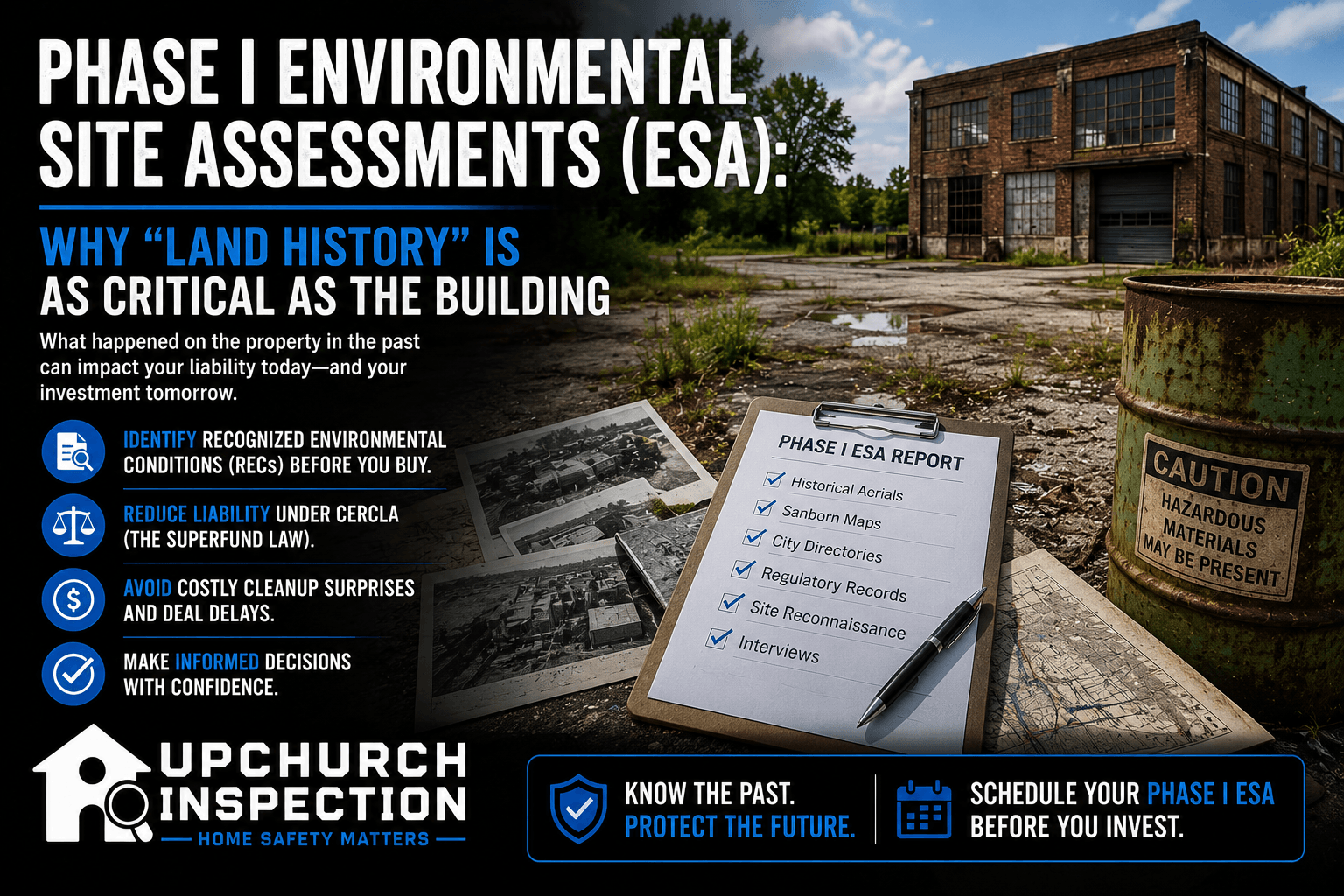
We start with historical research — aerials, Sanborn maps, city directories, and regulatory databases — to identify past uses like gas stations, dry cleaners, manufacturing, or waste handling. These uses often leave behind contamination that isn’t visible from the surface.
The goal is to identify Recognized Environmental Conditions (RECs). A REC doesn’t mean contamination is confirmed — it means there’s enough evidence to warrant concern.
This is where field experience matters. Old vent pipes, abandoned fill lines, patched slab penetrations, or unexplained staining often tell a story paperwork doesn’t. A trained forensic eye catches those clues during the site walk — others walk right past them.
If RECs are identified, the process may move to a Phase II ESA, which involves soil, groundwater, or vapor sampling. That step is targeted — not automatic — and it’s what confirms whether remediation is actually needed.
In Memphis industrial zones and legacy corridors moving north toward St. Louis, redevelopment has layered new construction over decades of industrial use. That history doesn’t disappear just because the building looks clean.
A Phase I ESA isn’t a formality.
It’s how you avoid inheriting a seven-figure cleanup tied to someone else’s past decisions.