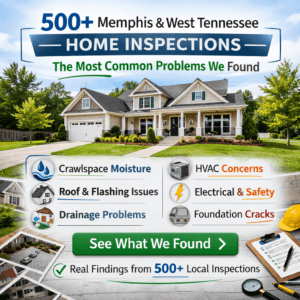

You've found a home that checks all the boxes: great location, perfect layout, and beautiful finishes. But what lies beneath the surface? A professional home inspection is your single best tool for uncovering the hidden truths about a property's health and safety before you commit. This process can feel overwhelming, with inspectors examining dozens of components you may have never considered.
This definitive checklist simplifies the process, breaking down exactly what to look for during a home inspection. We'll guide you through the 10 most critical areas, from the foundation holding it all up to the roof protecting it from the elements.
By understanding these key points, you can actively participate in your inspection, ask intelligent questions, and make a truly informed decision. This guide will empower you to identify minor issues that are simple fixes, recognize major red flags that could be deal-breakers, and know when specialized tests are necessary. We provide the specific, actionable insights you need to turn potential anxieties into confident ownership, ensuring your dream home doesn't become a financial nightmare. Let's get started.
1. Roof Condition and Structure
A home's roof is its primary shield against the elements, and its failure can lead to catastrophic and expensive damage. Given that a full roof replacement can cost anywhere from $15,000 to over $30,000, a thorough assessment is a non-negotiable part of what to look for during a home inspection. An inspector will evaluate the roof's overall condition, estimate its remaining lifespan, and identify immediate repair needs.
What the Inspector Checks
The inspection goes beyond a simple glance from the ground. Your inspector will examine:
- Shingle/Material Condition: Looking for cracked, curling, or missing shingles, which are common signs of aging and wear.
- Flashing and Seals: Checking the integrity of flashing around chimneys, vents, and skylights where leaks often originate.
- Gutters and Drainage: Ensuring gutters are securely attached and clear of debris to prevent water from backing up under the roofline.
- Attic Inspection: From inside, the inspector will look for signs of water stains, rot, or daylight coming through the roof deck, indicating active or past leaks.
Identifying a 15-year-old asphalt shingle roof, for example, allows a buyer to proactively budget for a replacement within the next 5-10 years. A primary goal of a home inspection is to identify major issues; learning about the critical signs you need a new roof can help you better assess the severity of any problems your inspector uncovers. Catching these problems before closing protects you from major post-purchase headaches.
2. Foundation and Structural Integrity
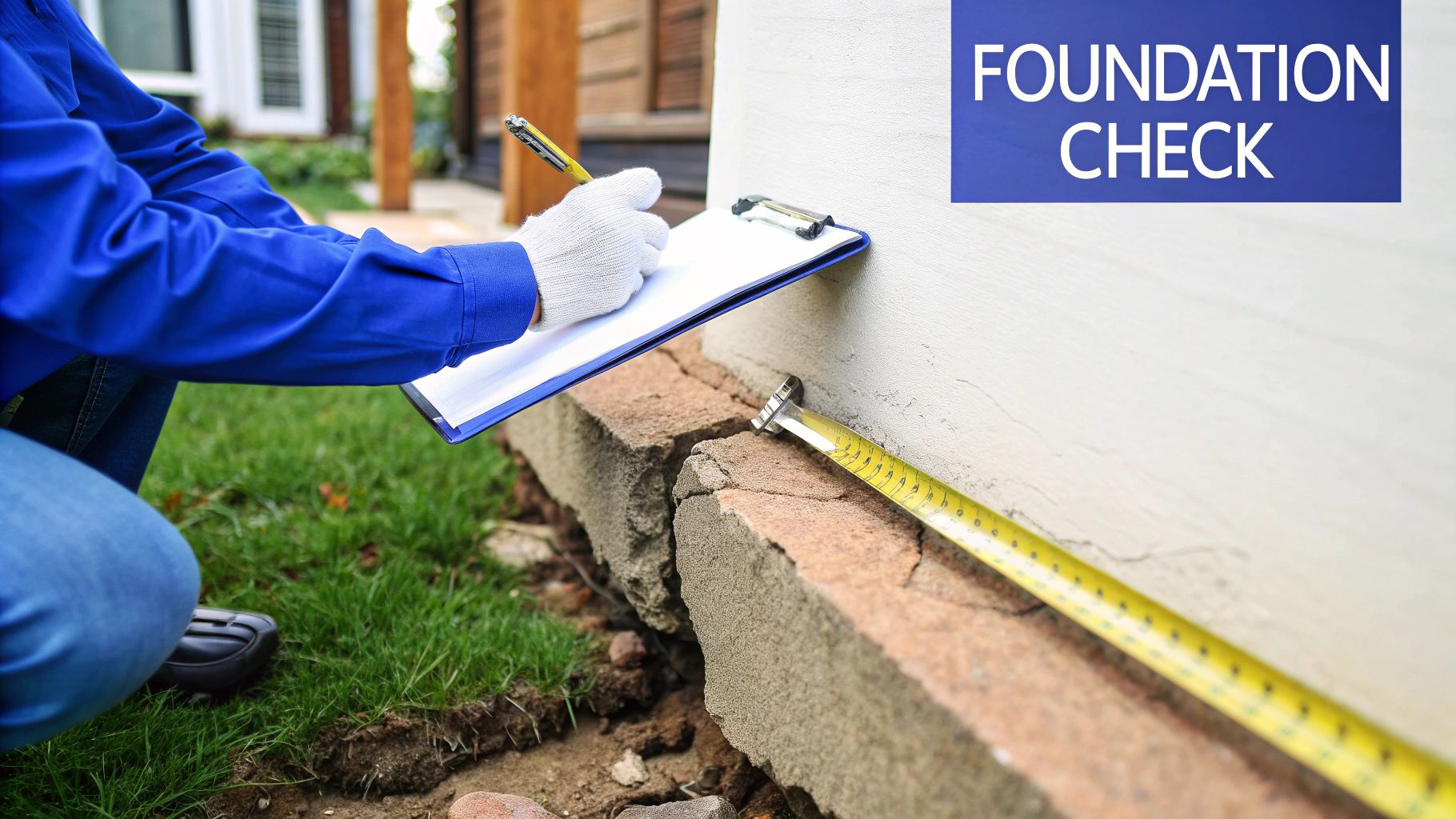
The foundation is the literal bedrock of a home, and its integrity is paramount to the safety and stability of the entire structure. Issues with the foundation can be among the most complex and expensive to remedy, with repair costs easily ranging from $10,000 to over $100,000. For this reason, a meticulous foundation assessment is a critical part of what to look for during a home inspection, as it can reveal problems that compromise the home’s long-term viability.
What the Inspector Checks
An inspector evaluates the foundation from both the exterior and interior (basement or crawlspace) to get a complete picture. Their examination will include:
- Cracks and Fissures: Identifying the type, size, and direction of cracks. For example, horizontal cracks often indicate severe hydrostatic pressure and may require immediate, significant repair, while minor vertical cracks might be due to normal settling.
- Bowing or Bulging Walls: Looking for inward curvature in basement or crawlspace walls, a serious red flag indicating external soil pressure is compromising the wall's strength.
- Moisture Intrusion: Searching for water stains, efflorescence (a white, chalky deposit), mold, or active leaks in the basement or crawlspace, which can signal drainage problems and lead to foundation decay.
- Evidence of Movement: Checking for sticking doors and windows or sloping floors throughout the house, as these are often secondary symptoms of underlying foundation settlement or shifting.
Discovering significant foundation issues before you buy provides crucial leverage for negotiation or the option to walk away from a potentially catastrophic investment. If major concerns are noted, it's wise to consult a structural engineer for a more in-depth analysis.
3. Electrical System and Safety
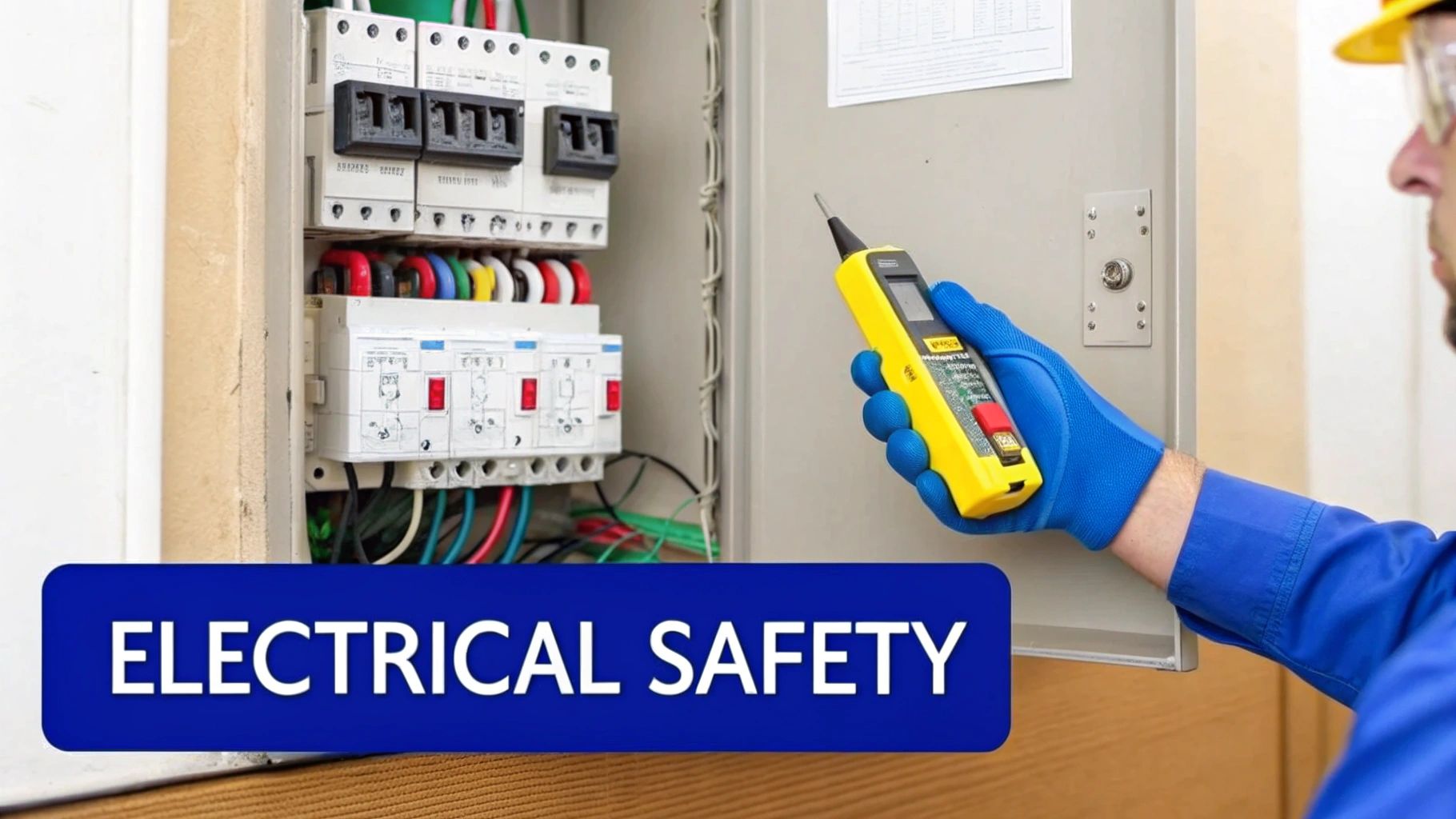
A home's electrical system is its central nervous system, and outdated or faulty components are not just inconvenient, they are significant fire and safety hazards. Evaluating this system is a critical part of what to look for during a home inspection, as issues can range from minor repairs to a complete and costly rewiring project. An inspector will assess the system's capacity, safety features, and overall condition to identify potential dangers.
What the Inspector Checks
The electrical inspection is a comprehensive safety check. Your inspector will examine:
- Main Electrical Panel: Checking the panel's brand (some, like Federal Pacific and Zinsco, are known fire risks), its amperage rating (modern homes need 100-200 amps), and looking for signs of overheating or improper wiring.
- Wiring Type: Identifying the presence of obsolete wiring like knob-and-tube or aluminum branch wiring, which may require replacement. Any identified faulty wiring will likely need professional electrical wiring repair services to ensure safety and compliance.
- Outlets and Switches: Testing for proper operation, correct polarity, and the presence of ground-fault circuit interrupter (GFCI) protection in required areas like kitchens, bathrooms, and garages.
- Safety Features: Looking for active smoke detectors and ensuring the system is properly grounded to prevent electrical shock.
Discovering a 60-amp service in a home intended for a modern family, for example, signals that the system is insufficient and will likely require a service upgrade costing thousands. Understanding the most common electrical problems an inspection uncovers can prepare you for these potential findings and their implications.
4. Plumbing System and Water Quality
A home's plumbing is an intricate network that affects daily life, and its failure can lead to significant water damage and costly repairs. With fixes ranging from minor leaks to a full pipe replacement that can exceed $25,000, a comprehensive evaluation is a crucial part of what to look for during a home inspection. An inspector will assess the water supply lines, drainage systems, fixtures, and water heater to identify potential issues and give you a clear picture of the system's health.
What the Inspector Checks
The inspection covers the entire plumbing system, from where water enters the home to where it exits. Your inspector will examine:
- Supply Lines and Materials: Checking for active leaks and identifying the type of pipes used. The presence of outdated materials like polybutylene tubing, which is prone to failure, is a major red flag.
- Water Pressure and Fixtures: Testing water pressure (typically 40-80 PSI is ideal) and ensuring all faucets, toilets, and showers function correctly with adequate hot water flow and proper drainage.
- Water Heater: Assessing the age, condition, and installation of the water heater, looking for signs of corrosion or leakage, and noting if it's nearing the end of its typical 10-15 year lifespan.
- Drainage and Venting: Verifying that drains flow freely and the system is properly vented to prevent sewer gas from entering the home.
Discovering a 12-year-old water heater allows a buyer to budget for a replacement before it fails unexpectedly. A primary goal of a home inspection is to uncover these hidden risks. If you have concerns about taste, odor, or safety, you should also understand the importance of professional water quality testing to ensure the water is safe for your family. Identifying these plumbing problems before closing can save you from major unforeseen expenses.
5. HVAC System Performance and Maintenance
A home’s heating, ventilation, and air conditioning (HVAC) system is essential for comfort and air quality. A complete system failure can be a major unexpected expense, with replacement costs often ranging from $5,000 to $15,000 or more. A detailed evaluation of the HVAC system is a crucial part of what to look for during a home inspection, as it helps you understand the system's current health, efficiency, and anticipated lifespan. This assessment prevents you from inheriting a costly problem right after moving in.
What the Inspector Checks
An inspector will test the system’s core functions and look for signs of age or neglect. This involves more than just turning on the thermostat. The inspection includes:
- System Operation: Verifying that both the heating and cooling cycles function properly by running the system and measuring air temperature at the vents.
- Age and Condition: Identifying the age of the furnace and air conditioning units, which often have different lifespans, and looking for signs of rust or corrosion.
- Filter and Ductwork: Checking the condition of the air filter and visible ductwork for signs of poor airflow, damage, or potential contaminants.
- Refrigerant Type: Noting the type of refrigerant used in the AC unit. An older system using R-22, which is being phased out, will be significantly more expensive to repair or recharge.
Discovering a 20-year-old furnace, for example, allows you to budget for a replacement within the next few years. Likewise, identifying an outdated refrigerant means a simple repair could turn into a full system replacement. Asking for maintenance records can provide further insight into how well the system has been cared for and help you anticipate future needs.
6. Water Damage and Moisture Issues
Uncontrolled moisture is one of the most destructive forces a home can face, leading to rot, structural decay, and potential health hazards. With remediation costs for water damage ranging from a few thousand dollars to well over $25,000, a comprehensive evaluation for moisture intrusion is a crucial part of what to look for during a home inspection. An inspector is trained to spot the subtle, and not-so-subtle, signs of past or present water problems.
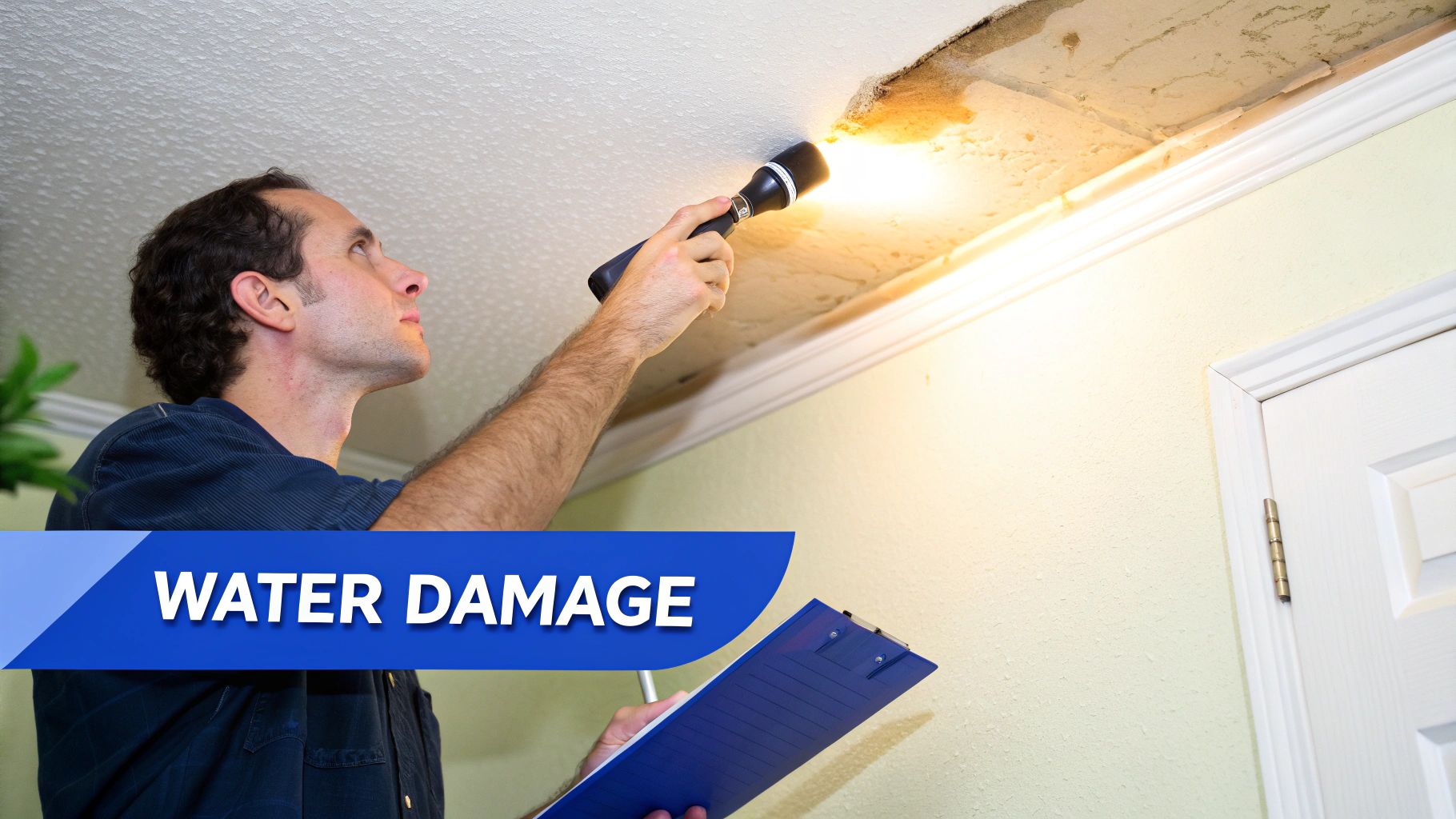
What the Inspector Checks
Your inspector will use their experience and specialized tools, like a moisture meter, to hunt for evidence of water issues. They will examine:
- Telltale Stains and Discoloration: Looking for yellow or brown stains on ceilings and walls, which often point to roof or plumbing leaks.
- Structural Integrity: Checking for soft or rotting wood around windows, under sinks, in basements, and in crawlspaces.
- Musty Odors and Mold: Identifying musty smells that often indicate hidden moisture or mold growth, particularly in damp areas like basements.
- Foundation and Basement Signs: Looking for efflorescence (a white, chalky powder) on foundation walls, which signals water wicking through the concrete.
Finding soft wood flooring beneath a toilet, for instance, could indicate a long-term leak from a failed wax ring. Distinguishing between an old, repaired leak and an active one is key. Understanding the common mold and moisture issues your inspector might find can help you grasp the potential severity and decide if further evaluation, like mold testing, is necessary.
7. Attic Ventilation and Insulation
The attic is a critical buffer zone between your living space and the outside elements, and its performance directly impacts energy bills, roof longevity, and indoor air quality. Inadequate ventilation and insulation can lead to moisture buildup, mold growth, and extreme energy loss. A proper assessment is a key part of what to look for during a home inspection, as correcting these issues can be a significant undertaking. An inspector evaluates both systems to ensure they work together effectively for the home's climate.
What the Inspector Checks
Your inspector will enter the attic to get a firsthand look at these crucial components, paying close attention to:
- Insulation Type and Depth: Identifying the material (e.g., fiberglass batts, blown-in cellulose) and measuring its depth to estimate the R-value. Finding R-19 insulation in a climate that requires R-49, for example, signals significant potential for high utility bills.
- Ventilation Adequacy: Checking for a balanced system of intake (soffit vents) and exhaust (ridge, gable, or roof vents). Blocked soffit vents are a common finding that can trap hot, moist air, leading to roof deck rot.
- Signs of Moisture: Looking for condensation, water stains on the underside of the roof sheathing, or signs of mold, which often point directly to ventilation problems.
- Pest Intrusion: Searching for evidence of animal entry, such as droppings, nests, or damaged insulation, which can compromise both insulation effectiveness and air quality.
A well-functioning attic should feel similar in temperature to the outdoors, a sign that air is circulating properly. Understanding the condition of your attic's ventilation and insulation allows you to anticipate future energy costs and address hidden moisture issues before they cause widespread damage.
8. Exterior Structure and Weatherproofing
A home's exterior is the second line of defense after the roof, protecting the internal structure from moisture, pests, and the elements. Problems with the exterior envelope, such as failing siding or poor seals, can allow water intrusion that leads to rot, mold, and costly interior damage. Evaluating the overall integrity of the exterior is a crucial part of what to look for during a home inspection, as it can reveal both minor maintenance needs and major systemic failures.
What the Inspector Checks
An inspector will meticulously walk the property's perimeter to assess every component of the exterior structure and its ability to keep the weather out. This includes:
- Siding and Trim Condition: Looking for cracked, warped, or rotted siding, missing sections, and signs of insect damage. The material type (vinyl, brick, wood) will also be noted, along with its general condition.
- Caulking and Seals: Examining the seals around all windows, doors, and utility penetrations. Missing or cracked caulk is a common, inexpensive fix that prevents significant water damage.
- Doors and Windows: Checking for proper installation, signs of wood rot on frames, and functional operation. They will also inspect the integrity of window glazing and screens.
- Grading and Drainage: Assessing the slope of the land immediately surrounding the foundation. Proper grading ensures that water flows away from the house, preventing foundation issues and basement moisture.
Discovering a few sections of rotted wood siding might signal a necessary replacement costing thousands, whereas finding missing caulk around a window is a simple DIY fix. A thorough exterior inspection helps you understand the home’s maintenance needs and protects you from the hidden costs of water damage.
9. Appliances and Systems Age/Condition
While not always a primary focus of a structural home inspection, the condition of major appliances and systems is a critical piece of what to look for during a home inspection. Replacing a refrigerator, water heater, or garage door opener can add thousands to your post-move-in expenses. A thorough inspector will assess these components for functionality, safety, and approximate age to help you anticipate future costs and negotiate accordingly.
What the Inspector Checks
An inspector will typically run appliances through a basic cycle and check for immediate operational issues. They will examine:
- Major Appliances: Testing the function of the dishwasher, oven, range, microwave, and garbage disposal. The inspector will note the brand and, if possible, find the data plate to determine the manufacturing date.
- Water Heater: Identifying the age, checking for signs of leaks or corrosion, and ensuring it’s properly installed and vented. A 15-year-old water heater is a major red flag as it is well past its typical 8-12 year lifespan.
- Garage Door Opener: Testing the auto-reverse safety feature, a critical function that prevents accidental injury or damage.
- Other Systems: This can include central vacuum systems, sump pumps, and any other built-in mechanicals conveyed with the sale.
Knowing that the home's included appliances are all over 10 years old gives you the foresight to budget for replacements or purchase a home warranty for peace of mind. Requesting manuals and warranty documents from the seller for any newer appliances can also save you significant future hassle.
10. Fire Safety and Hazardous Materials
Beyond the structural and mechanical systems, a home must be a safe environment, free from immediate fire risks and hazardous materials. Identifying these potential dangers is a critical aspect of what to look for during a home inspection, as remediation for issues like asbestos or lead can be complex and costly. An inspector’s evaluation of these elements provides peace of mind and protects your family’s health from hidden threats.
What the Inspector Checks
An inspector will assess both active safety systems and look for signs of potentially dangerous legacy building materials. Their evaluation typically includes:
- Life Safety Devices: Verifying the presence and functionality of smoke detectors and carbon monoxide (CO) detectors in required locations, such as bedrooms and common areas.
- Potential Asbestos-Containing Materials (ACMs): Identifying materials commonly known to contain asbestos, like certain types of insulation (vermiculite), siding, pipe wrap, and floor tiles.
- Signs of Lead-Based Paint: For homes built before 1978, the inspector will note the presence of deteriorating paint (peeling, chipping) that could pose a lead hazard.
- Evidence of Other Hazards: Looking for signs that may warrant further testing, such as evidence of past oil spills, buried tanks, or unusual odors indicating chemical presence.
Discovering potential asbestos insulation in an attic, for example, doesn't automatically kill a deal. However, it alerts you to the need for professional testing and a remediation plan, which can cost thousands of dollars. Federal law requires sellers to provide a lead paint disclosure for pre-1978 homes, giving buyers the information needed to make safe and informed decisions.
10-Point Home Inspection Comparison
| Inspection Area | Implementation Complexity | Resource Requirements | Expected Outcomes | Ideal Use Cases | Key Advantages |
|---|---|---|---|---|---|
| Roof Condition and Structure | Medium–High — roof access, possible drone/ladder work | Visual inspection, attic access, roofing specialist if suspected major issues | Identifies leaks, shingle/flashings defects, remaining lifespan and repair needs | Older roofs, visible shingle damage, pre-purchase inspections | Prevents water damage, enables repair budgeting and negotiation |
| Foundation and Structural Integrity | High — may require structural evaluation and measurements | Visual crack mapping, moisture checks, structural engineer for severity | Detects settlement, serious cracks, water intrusion and need for remediation | Homes with cracks, uneven floors, or known settling | Prevents catastrophic failure, informs major repair planning |
| Electrical System and Safety | Medium–High — safety procedures limit invasive testing | Outlet/panel checks, circuit testing, electrician for panel cover or upgrades | Reveals fire hazards, obsolete panels, grounding and GFCI/AFCI issues | Older homes, known panel brands (Federal Pacific), remodeling | Improves occupant safety and code compliance; prevents fire risk |
| Plumbing System and Water Quality | Medium — visible and some functional tests; hidden piping limits scope | Fixture tests, water pressure test, plumber or camera inspection, lab water testing if needed | Finds leaks, pipe materials, water heater condition, drainage problems | Homes with polybutylene/lead pipes, unexplained stains or low pressure | Prevents water damage, schedules replacements, ensures water safety |
| HVAC System Performance and Maintenance | Medium — functional checks but limited without full run-time tests | System startup, airflow checks, maintenance records, HVAC tech for diagnostics | Determines remaining life, efficiency issues, refrigerant concerns | Aging systems, high utility bills, seasonal performance problems | Ensures comfort, informs replacement budgeting, impacts energy costs |
| Water Damage and Moisture Issues | Medium–High — may require moisture meters and lab testing | Moisture meter readings, visual inspection, mold testing and remediation estimates | Differentiates active vs historical leaks, detects mold and rot | Musty odors, stains, recent leaks, basements/crawlspaces | Protects health, prevents structural deterioration, clarifies repairs |
| Attic Ventilation and Insulation | Low–Medium — attic access needed, measurements can be approximate | Attic inspection, insulation depth/R-value check, possible blower door or energy audit | Assesses ventilation adequacy, insulation sufficiency, signs of moisture or pests | High energy bills, ice dams, older or unknown insulation | Improves energy efficiency, reduces ice dams and moisture risk |
| Exterior Structure and Weatherproofing | Low–Medium — perimeter walk and targeted inspections | Exterior walkaround, window/door operation, grading assessment, caulk checks | Identifies rot, failed seals, poor drainage and localized defects | Visible gaps, peeling paint, recent storms or poor maintenance | Often inexpensive fixes that prevent interior water intrusion |
| Appliances and Systems Age/Condition | Low — simple functional checks and age documentation | Operability tests, model/serial verification, warranty/document review | Estimates remaining useful life and immediate functional issues | Homes including appliances in sale or with older units | Helps budget replacements and assess value add of upgrades |
| Fire Safety and Hazardous Materials | Medium–High — definitive ID may require lab testing | Detector checks, visual asbestos/lead signs, lab tests for asbestos/lead/mold, radon testing | Identifies immediate safety gaps and health hazards requiring remediation or disclosure | Pre-1978 homes, suspected mold/asbestos, safety equipment missing | Protects occupant health, ensures legal disclosures, prioritizes remediation |
From Checklist to Confidence: Your Next Steps with Upchurch Inspection
Navigating a home inspection can feel overwhelming, but armed with the right knowledge, it becomes one of the most powerful tools in your real estate toolkit. By understanding what to look for during a home inspection, you transform a potentially stressful event into a strategic advantage. You are no longer just walking through a house; you are actively evaluating the core components that make it a safe, sound, and valuable investment.
This guide has walked you through the critical checkpoints, from the roof's shingles down to the foundation's integrity, and every vital system in between. The goal is not to become an expert overnight, but to become an informed and engaged participant in the process. Knowing which questions to ask, what constitutes a minor fix versus a major red flag, and when to call in specialized experts for issues like mold or radon is crucial.
Key Takeaways for Your Inspection Journey
Remember these core principles as you move forward:
- Major Systems Are Priority: Focus your attention on the "big five" – roof, foundation, electrical, plumbing, and HVAC. Issues in these areas often carry the highest price tags and the biggest safety implications.
- Water Is the Enemy: From subtle moisture stains in the attic to poor grading on the exterior, water intrusion is a primary cause of significant, long-term damage. Always investigate signs of water damage thoroughly.
- Context Matters: A 15-year-old HVAC system isn't necessarily a dealbreaker, but it is an upcoming expense you must budget for. Understanding the age and expected lifespan of major components provides crucial financial context for your purchase.
- Local Knowledge is Essential: In West Tennessee, factors like humid summers and clay-rich soil present unique challenges. An inspector familiar with these local conditions, like those at Upchurch Inspection, can identify potential issues that a generalist might overlook.
Ultimately, a home inspection is more than just a list of defects; it is a comprehensive education about your potential new home. It equips you with the leverage to negotiate repairs, the foresight to budget for future maintenance, and the peace of mind that you are making a well-informed decision. This knowledge empowers you to move beyond the aesthetics and truly understand the health and safety of the property. You are not just buying a house; you are investing in your future, and a thorough inspection is the cornerstone of that investment.
Ready to turn your checklist into clarity and confidence? The certified professionals at Upchurch Inspection specialize in providing detailed, easy-to-understand reports for buyers and sellers across Memphis and West Tennessee, ensuring you know exactly what you’re investing in. Schedule your comprehensive home inspection today by visiting Upchurch Inspection and take the definitive next step in your property journey.