
Stairs are one of those things people trust without thinking about — until they don’t.
You walk them every day. Muscle memory kicks in. Your brain stops paying attention. And that’s exactly why bad stair geometry is so dangerous.
When stairs are wrong, they don’t announce it. They wait.
What “Stair Geometry” Actually Means
This isn’t about aesthetics. It’s about consistency.
Good stairs have:
- Uniform riser height
- Uniform tread depth
- Predictable rhythm from top to bottom
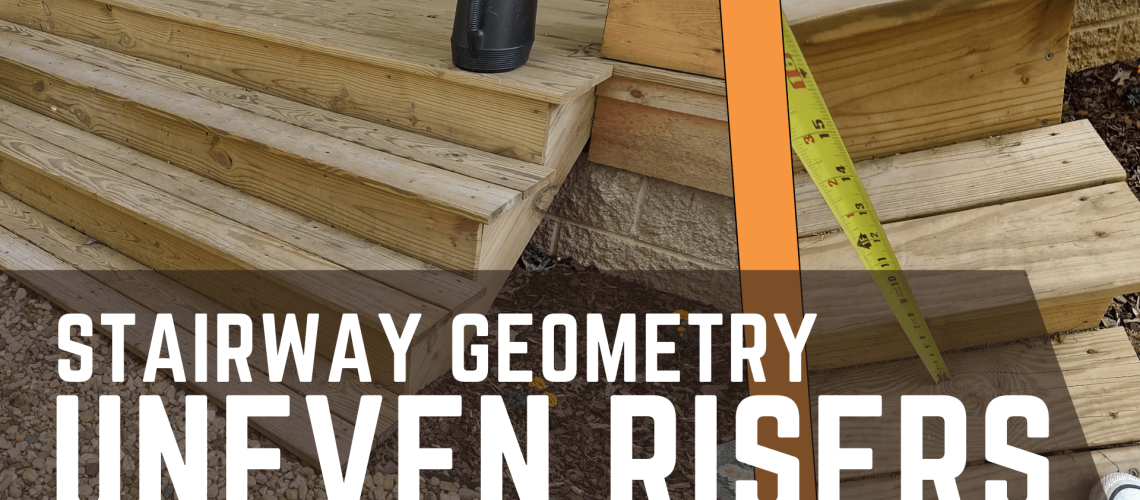
Your body learns that rhythm after the first step. When one riser breaks the pattern — even slightly — that’s when people stumble.
Why Small Differences Cause Big Falls
Here’s the part that surprises people:
A difference of ⅜ inch can be enough to trip someone.
Not because they’re careless. Because their foot expects one thing and gets another.
I’ve seen stairs where:
- One step is taller than the rest
- A landing throws off spacing
- Flooring was added without adjusting risers
- A remodel changed the bottom step only
Those stairs look fine. They just don’t feel right — until someone catches a toe.
A Real Inspection Where the Steps Told on Themselves
We inspected a home in the Jonesboro area where the staircase felt “off” the moment you started down.
Nothing dramatic. No loose rails. No broken treads.
Measured it anyway.
The bottom riser was nearly an inch shorter than the rest — added after new flooring went in upstairs. Every other step was consistent. That one wasn’t.
That’s the step people fall on.
Remodels Are the Biggest Culprit
Most stair problems I see aren’t original. They’re introduced later.
Common causes:
- New flooring installed at the top or bottom
- Finished basements changing floor height
- DIY stair rebuilds without proper measurements
- Landings added or altered
- Carpet removed without correcting risers
I reviewed an inspection report from one of our inspectors in the Little Rock area where a finished basement conversion created uneven risers at the bottom of the stair run. The house passed casual inspection — but the stairs didn’t pass physics.
Why Your Brain Is the Problem (Not Your Feet)
Humans don’t look at each step once we start moving.
We assume consistency. That’s how stairs are supposed to work.
When one riser breaks that assumption, your foot lands early or late. Balance goes. Gravity wins.
That’s why stair-related falls are so common — even among healthy adults.
Handrails Don’t Fix Bad Geometry
Good handrails help. They don’t solve everything.
I’ve seen stairs with solid rails and perfect grip — and still dangerous because the steps themselves were inconsistent.
Rails help you recover. Geometry helps you not fall in the first place.
What I Look For During an Inspection
I don’t eyeball stairs.
I:
- Walk them slowly
- Feel for rhythm changes
- Measure riser heights
- Check tread depth
- Look for flooring transitions
- Watch how handrails align with movement
If one step feels different, it gets measured. Period.
Why This Matters to Buyers
Stair fixes aren’t always cheap — and they’re rarely simple.
Depending on the cause, correction can involve:
- Rebuilding the stair run
- Adjusting landings
- Modifying framing
- Reworking finished surfaces
Knowing before you buy lets you plan instead of react.
The Inspector’s Bottom Line
Stairs should feel boring.
If you notice them while walking, something’s probably wrong.
Uneven risers don’t announce themselves with cracks or noise. They wait for a distracted moment — a box in your arms, a dark stairwell, a rushed morning.
That’s why I take stair geometry seriously. Because falls don’t care whether a step “almost” matched the rest.