
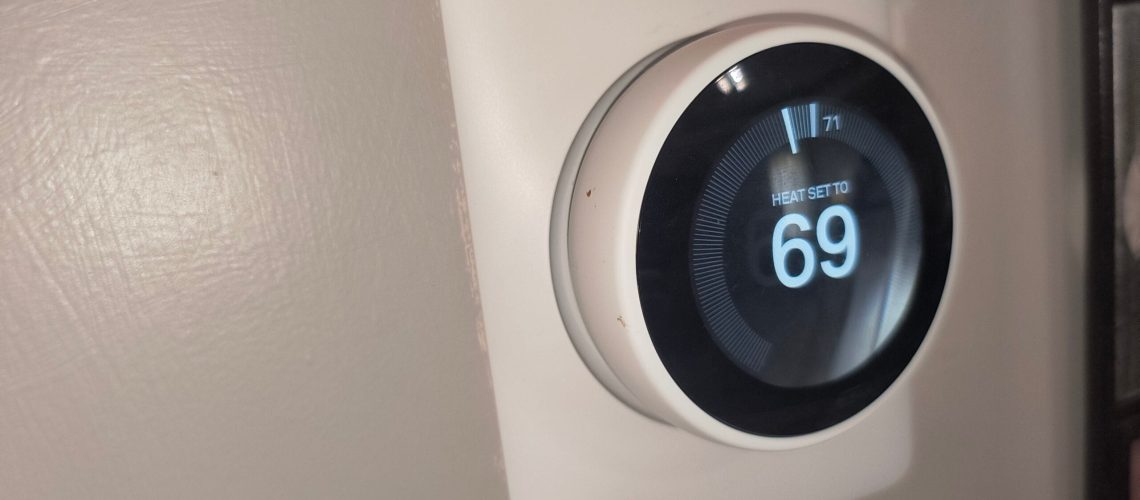
Smart thermostats are one of the most common “upgrades” I see — and one of the most common sources of HVAC damage.
The box makes it look easy. The YouTube video makes it look foolproof. The system doesn’t complain right away.
Then I open the panel.
Why Smart Thermostats Get People in Trouble
Older systems were simple. Newer ones aren’t.
Modern HVAC equipment depends on:
- Low-voltage control boards
- Proper common (C-wire) connections
- Correct staging signals
- Equipment-specific wiring logic
One wrong move can send voltage where it doesn’t belong.
A Real Inspection Where DIY Did Real Damage
I inspected a home in Southaven where the AC kept tripping and resetting. Seller said the problem started “around the time we upgraded the thermostat.”
Pulled the air handler panel and immediately saw burn marks on the control board. The C-wire had been tied into the wrong terminal, sending power through a circuit that wasn’t designed for it.
The thermostat worked. The system didn’t.
That board was already failing — and replacement wasn’t cheap.
The Most Common Wiring Mistakes I See
DIY thermostat installs usually fail in predictable ways:
- No C-wire, so people improvise
- Jumpers left in place incorrectly
- Heat pump wiring confused with conventional systems
- Multiple systems tied into one thermostat
- Smart thermostats installed on incompatible equipment
I’ve also seen wires doubled up, loose connections, and wire nuts inside return plenums.
None of that belongs there.
Why Damage Isn’t Always Immediate
This is what makes these mistakes dangerous.
A fried control board doesn’t always fail instantly. Sometimes it limps along for months, overheating components slowly until it finally quits on the hottest or coldest day of the year.
In Arlington, I inspected a system where the thermostat had been replaced two years earlier. The board finally failed during the inspection when the system cycled under load.
Bad timing — but good information for the buyer.
Why Smart Doesn’t Mean Compatible
Not every system plays nice with every thermostat.
I see smart thermostats installed on:
- Older furnaces without proper control circuits
- Dual-fuel systems wired incorrectly
- Zoned systems missing required interfaces
- Variable-speed equipment forced into basic operation
The thermostat might power on, but the system suffers.
How I Evaluate Thermostat Installations
I don’t stop at the wall.
- I verify wiring at the thermostat
- I trace connections at the air handler or furnace
- I look for heat damage or discoloration
- I check system response across modes
- I watch behavior during cycling
If something doesn’t add up, I dig.
What Buyers Need to Understand
A smart thermostat doesn’t add value if it damages the system behind it.
If wiring is wrong, you’re not just risking comfort — you’re risking expensive electronic components that don’t tolerate mistakes.
The Inspector’s Bottom Line
DIY saves money until it doesn’t.
I’ve seen too many control boards sacrificed in the name of convenience. Smart thermostats are fine when installed correctly — but HVAC electronics don’t forgive guesswork.
If the wiring looks suspect, I call it out. Because fried boards always start with one bad connection.