
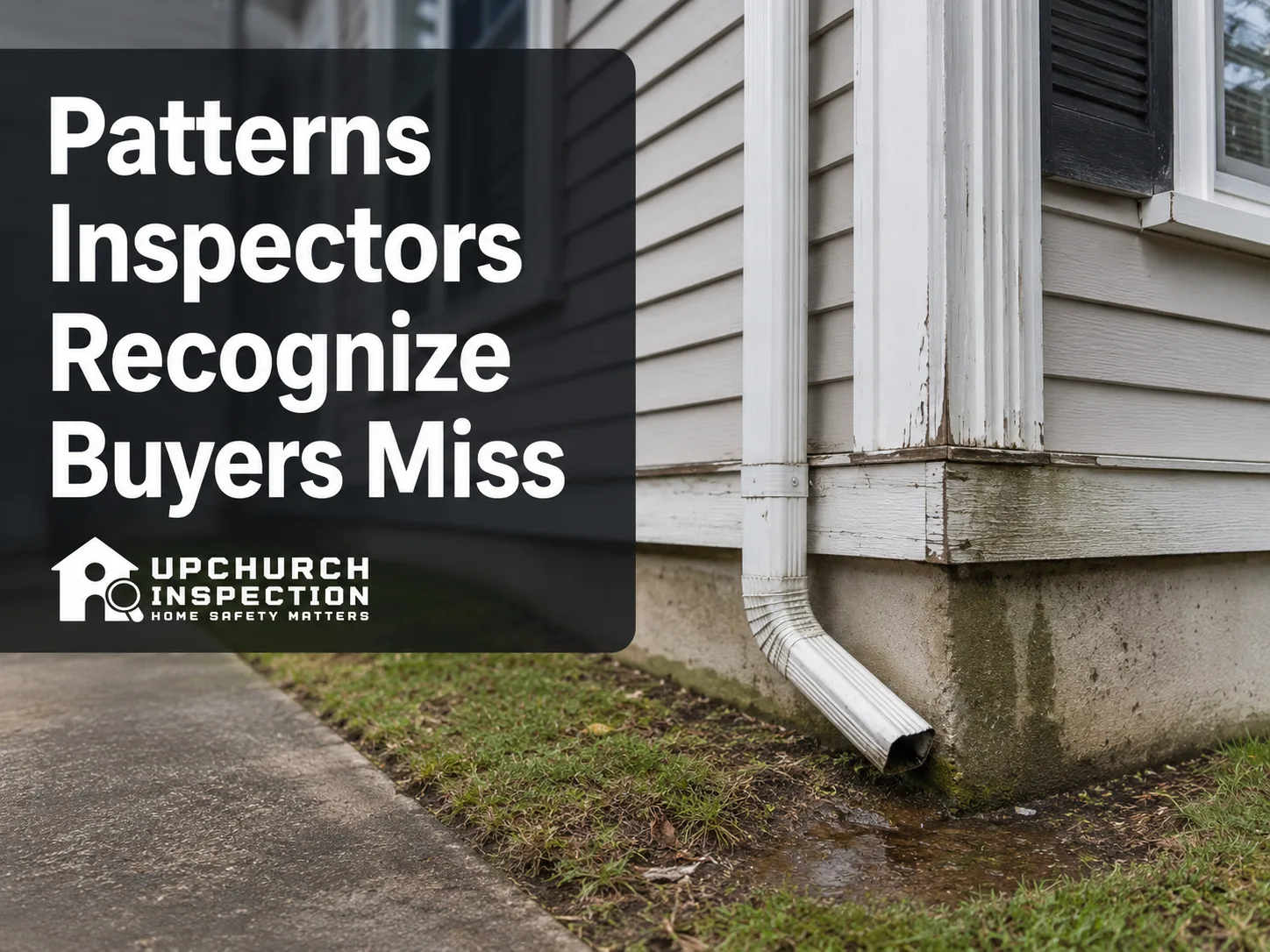
Most buyers focus on individual findings in an inspection report. A cracked tile. A loose handrail. An aging water heater. Each item is evaluated on its own, weighed emotionally, and often judged by how easy it looks to fix.
Inspectors don’t look at houses that way.
At Upchurch Inspection, experience teaches you that homes rarely fail because of a single issue. They fail because of patterns—relationships between conditions that tell a larger story about how the house was built, used, maintained, and stressed over time. These patterns are easy to miss if you’re only looking at isolated defects.
Houses Tell Stories Through Repetition
One issue can be coincidence. Multiple similar issues form a narrative.
A single cracked wall may mean nothing. Cracks in the same orientation across multiple rooms suggest movement. One patched repair could be routine. Several different repairs clustered in the same area suggest an ongoing condition that hasn’t been fully addressed.
Inspectors learn to notice repetition:
- The same type of damage appearing in multiple locations
- The same system showing stress in different ways
- Repairs that solve symptoms but not causes
Buyers often see individual fixes. Inspectors see patterns trying to break through.
Moisture Patterns Are More Important Than Individual Leaks
A single water stain might be old. Multiple moisture indicators tell a different story.
Inspectors pay attention when they see:
- Efflorescence in more than one foundation area
- Rusting hardware combined with organic growth
- Insulation deterioration paired with humidity indicators
- Drainage features that consistently move water toward the structure
Even when everything appears dry on inspection day, these patterns suggest how the house behaves over time.
Buyers may focus on whether something is actively leaking. Inspectors focus on whether the house handles water well.
System Age Clustering Is a Quiet Red Flag
One aging system is normal. Several aging systems reaching the same stage together is a pattern.
When HVAC, roofing, water heating, and electrical components are all original or nearing replacement windows, inspectors recognize an ownership reality forming. Nothing may be defective. Everything may be functioning.
But the house is entering a phase where capital expenses tend to stack rather than stagger.
Buyers often react to systems individually. Inspectors think about timing and accumulation.
Repairs Tell You How Problems Were Solved
Inspectors pay close attention to how repairs were made, not just that they exist.
Patterns like:
- Multiple generations of patching
- Cosmetic repairs layered over structural areas
- Temporary fixes repeated over time
- Inconsistent workmanship styles
…suggest whether issues were addressed thoughtfully or repeatedly deferred.
A home with visible, well-documented repairs often carries less risk than a home with pristine finishes and no evidence of problem-solving.
Layout and Design Patterns Matter
Some issues aren’t defects—they’re design decisions that create predictable outcomes.
Inspectors recognize patterns like:
- Long roof valleys directing water to vulnerable areas
- Additions that interrupt original load paths
- HVAC layouts that create uneven comfort zones
- Plumbing routes that increase failure likelihood
These patterns don’t always violate standards. They still influence how the house performs year after year.
Buyers rarely notice these until ownership begins.
Cosmetic Calm Can Mask Functional Stress
Fresh finishes often quiet visual cues without changing behavior.
Inspectors notice when cosmetic updates are paired with:
- Older infrastructure
- Marginal ventilation
- Inconsistent floor planes
- Mixed framing methods
That combination doesn’t mean the house is unsafe. It means the visual calm may not reflect functional simplicity.
Patterns matter more than presentation.
Why Reports Don’t Always Spell Patterns Out
Inspection reports document observations. Patterns require interpretation.
Inspectors are careful not to overstate conclusions without sufficient evidence. That means patterns may be implied rather than explicitly stated, especially when no single condition crosses a defect threshold.
This is where experience—and conversation—fill the gap.
Buyers who ask, “What does this combination of findings suggest?” often get far more value than buyers who ask, “Is this bad?”
Patterns Predict Ownership Experience
Inspectors don’t look for patterns to scare buyers. They look for patterns to predict what ownership will feel like.
Will maintenance be occasional or constant?
Will systems fail one at a time or together?
Will problems show up seasonally or unpredictably?
Those questions matter more than whether a particular outlet needs replacement.
What Buyers Should Learn to Watch For
Instead of focusing only on individual defects, buyers benefit from asking:
- Do multiple findings point to the same underlying issue?
- Are repairs solving causes or symptoms?
- Are systems aging independently or simultaneously?
- Does the house behave consistently across spaces?
Those questions align buyer thinking with how inspectors actually evaluate homes.
The Practical Reality
Homes don’t fail randomly. They fail in predictable ways, shaped by design, environment, and maintenance history.
Inspectors learn to read those patterns through repetition and experience. Buyers usually see them only after ownership begins—unless they learn how to look.
An inspection report shows you the pieces.
Pattern recognition shows you how they fit together.
That’s where inspections stop being a checklist and start becoming insight.