An appraisal tells your lender what the house is worth. An inspection tells you what shape it’s actually in. Most buyers need both, and you should schedule your inspection as soon as your contract allows, since it protects your right to walk away or negotiate if the house has real problems. The appraisal is the lender’s safeguard against overlending; the inspection is yours.
TL;DR:
- Appraisals rely on recent sales data and may involve shortened or remote visits, especially for FHA or VA loans, which can affect timing and scope.
- Home inspections focus on visible safety and material issues, examining around 400 to 500 components across multiple systems, typically costing between $300 and $450.
- Buyers should schedule inspections early within contract deadlines and treat inspection and appraisal processes as separate steps to avoid delays.
- Significant issues like major structural defects or safety hazards warrant negotiations or repairs, while minor wear typically does not justify major concessions.
- Skipping inspections might be acceptable for cash investors or “as-is” flips, but owners financing their primary residence should never forego due diligence due to costly unseen risks.
Table of Contents
- Home Inspection vs Appraisal: How Appraisals Actually Work
- Home Inspection vs Appraisal: What a Home Inspection Actually Covers
- Who Orders and Pays for Each, and When
- What to Do When One Report Comes Back Bad
- Reading Both Reports Without Overtrusting Either One
- Field Notes From the Mid-South: What Actually Shows Up
- When It Might Make Sense to Skip One (and the Risk You’re Taking)
- Get a Clear Picture Before You Close
- Sources
- FAQ
Home Inspection vs Appraisal: How Appraisals Actually Work
An appraisal exists for one audience: your mortgage lender. Before a bank hands over hundreds of thousands of dollars, it wants an independent opinion that the collateral is worth roughly what you’re paying for it. The appraiser builds that opinion using the sales-comparison approach, which means pulling recent sales of similar nearby properties and adjusting for differences in size, condition, and features. Fannie Mae’s guidance calls for appraisers to analyze multiple comparable sales rather than leaning on a single data point.
On-site, the appraiser walks the property, takes photos, notes square footage, bedroom and bathroom count, and any obvious condition issues like a sagging roofline or water staining. That visit typically runs 30 to 60 minutes, with the finished report landing with your lender anywhere from a few days to two weeks later depending on the appraiser’s workload and the lender’s process.
A few things shift this timeline and scope:
- Some lenders now accept desktop or hybrid appraisals that skip or shorten the physical visit, relying more on public records and photos.
- FHA and VA loans carry extra appraisal requirements, including wood-destroying insect reports in many areas for VA loans.
- Appraisal fees are generally billed to the buyer as part of closing costs and vary by location and property size.
Home Inspection vs Appraisal: What a Home Inspection Actually Covers
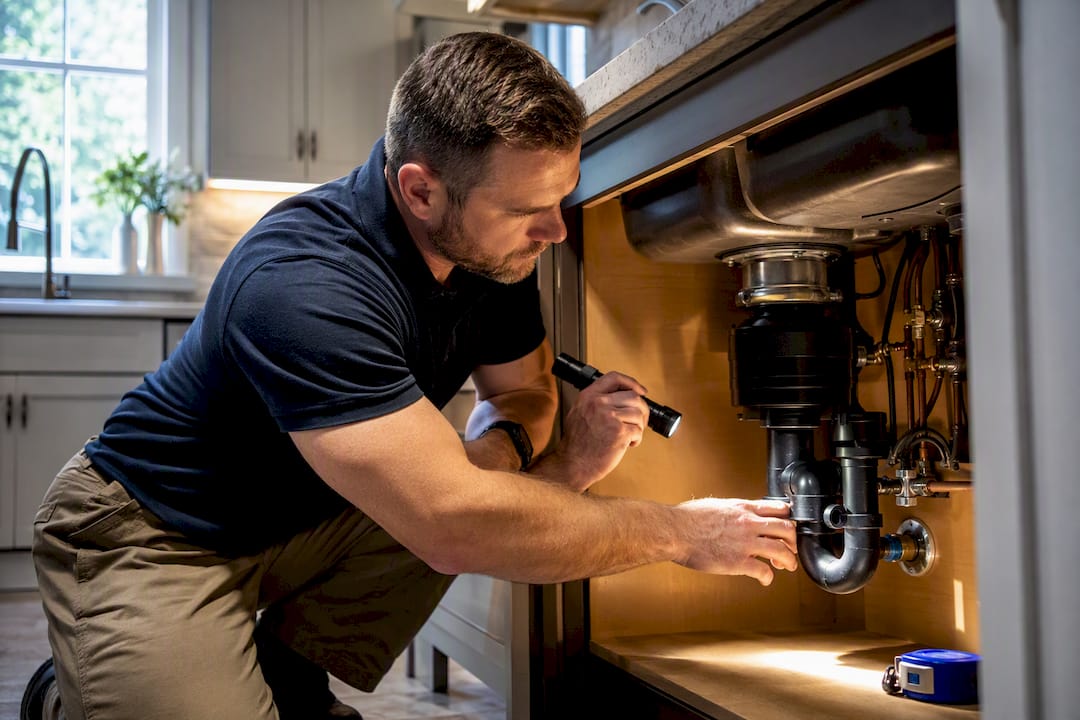
If the appraisal answers “what’s it worth,” the inspection answers “what’s wrong with it.” A licensed home inspector performs a non-invasive, visual exam of the property’s accessible systems and components, looking for material defects and safety hazards that would affect your decision to buy. The InterNACHI Standards of Practice spell out exactly what that exam does and does not include, which matters because inspectors aren’t cutting into walls or running diagnostic tests. They’re documenting what’s visible and reachable.
A typical inspection walks through:
- Roof covering, flashing, gutters, and visible attic ventilation
- Foundation, grading, and drainage around the structure
- Electrical panel, visible wiring, and outlet safety
- Plumbing supply and drain lines, water heater, and fixtures
- HVAC equipment age, condition, and basic function
- Interior walls, ceilings, floors, doors, and windows
- Attached structures like decks, garages, and crawl spaces
Inspectors typically examine roughly 400 to 500 individual components across those systems. Base inspections generally cost between $300 and $450 nationally, and the visit itself often takes three to four hours or longer depending on the home’s size and age. Add-ons like radon testing, sewer scoping, and mold testing run separately and can add anywhere from $100 to $500 depending on what’s tested.
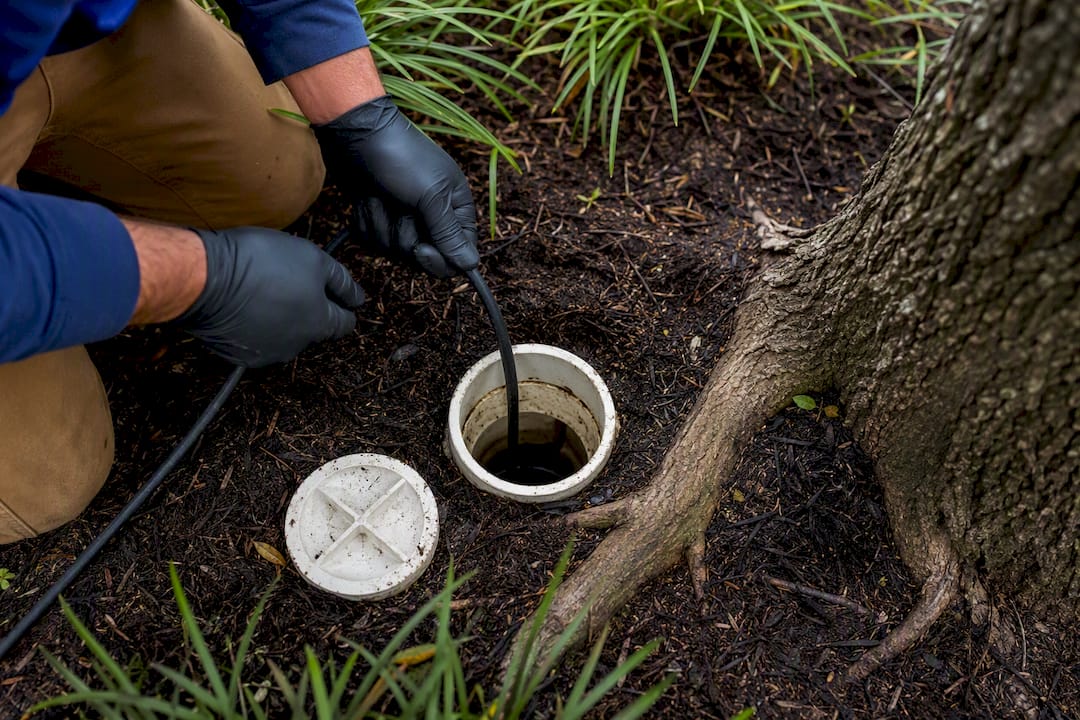
Pro Tip: If you’re buying in the Mid-South, don’t skip the sewer scope on any home built before the 1980s. Mature trees near clay or cast-iron sewer lines are one of the most common repair surprises we see, and a scope costs far less than a collapsed line discovered six months after closing.
Who Orders and Pays for Each, and When
Your lender orders the appraisal, but you pay for it, usually as part of your closing costs. You, the buyer, choose and pay for your own home inspector, which means you control that timeline far more than the appraisal schedule.
- Schedule your inspection within the inspection contingency window in your contract, often 7 to 14 days after acceptance.
- Get the inspection done first when possible, since major defects found late can force a scramble against your closing date.
- The appraisal usually happens after your loan moves into underwriting, sometimes weeks after your inspection wraps.
- Delays in either report can push your closing date, so confirm timelines with your lender and agent early.
Because these two processes run on different clocks controlled by different people, a smart buyer treats them as separate projects rather than one combined step. The homebuying timeline from contract to closing makes this sequencing clearer if you want the full escrow picture.
What to Do When One Report Comes Back Bad
A low appraisal and a rough inspection report call for different playbooks, and mixing them up costs buyers leverage.
- Low appraisal: Ask your agent to challenge it with additional comps, renegotiate the sale price with the seller, increase your down payment to cover the gap, or exit through your financing contingency if the lender won’t budge.
- Major inspection defects: Request repairs before closing, negotiate a seller credit toward the cost, or use your inspection contingency to walk away entirely.
- Sort findings by severity: Safety hazards, structural issues, and failing major systems (roof, HVAC, foundation) are worth negotiating hard over. Cosmetic wear and routine maintenance items usually aren’t.
- Call in a specialist before you negotiate when the inspector flags something ambiguous, like foundation cracking or roof framing that needs a structural engineer’s read before you know the real repair scope.
Both outcomes commonly reshape the deal, so knowing which lever to pull, and when to bring in outside expertise, keeps you from either overreacting to a minor issue or underreacting to a serious one.
Reading Both Reports Without Overtrusting Either One
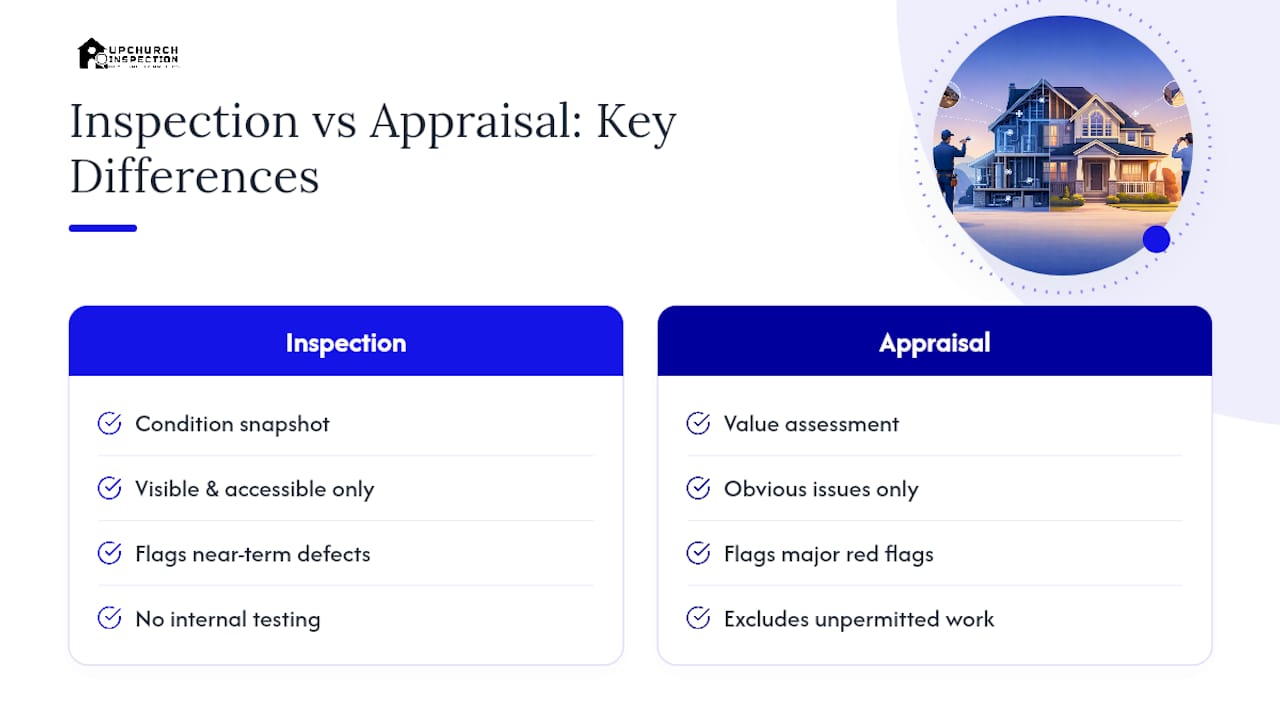
Your inspection report is a snapshot of what was visible and accessible on one specific day. It doesn’t test what’s inside your walls, and it can’t promise how long your roof or water heater will last. Budget for near-term repairs based on what the inspector flags rather than assuming a clean report means a maintenance-free house.
Your appraisal report documents obvious condition issues but was never designed to be a diagnostic exam. Appraisers note big red flags, not hidden ones, and they typically exclude unpermitted additions or upgrades from the value calculation even when those improvements make the home more livable, a detail that catches a lot of buyers of renovated properties off guard. Use the inspection to prioritize repair requests and the appraisal to confirm your financing is sound. Confusing the two roles, expecting the appraiser to catch defects or the inspector to confirm value, is where most negotiation mistakes start.
Field Notes From the Mid-South: What Actually Shows Up
Across Tennessee, Arkansas, Mississippi, Missouri, and Kentucky, the same handful of issues turn up again and again on inspections. Deferred maintenance on HVAC systems past 12 to 15 years old is common, and replacement often runs into the thousands per unit. Homes near mature trees on older sewer laterals carry real risk of root intrusion, which a scope catches before it becomes a yard excavation. We categorize findings by whether they’re a safety issue, a material defect, or routine wear, since that ranking is what actually drives negotiation leverage with a seller.
Pro Tip: Ask your inspector directly which findings they’d walk away from personally. Their honest answer usually tells you more than the written report’s technical language.
— Holly
When It Might Make Sense to Skip One (and the Risk You’re Taking)
A cash investor buying an “as-is” flip with a tight repair budget might reasonably skip the inspection and accept the risk. An owner-occupant financing their only home almost never should. Older homes, flood-prone lots, and septic-dependent properties are especially poor candidates for skipping due diligence, since the failure modes are expensive and often invisible until you own the problem. The simplest rule holds: inspection protects you from repair risk, appraisal protects your lender from finance risk. Skip one, and you’re carrying that risk yourself.
Get a Clear Picture Before You Close
Reports are built around the questions buyers actually ask after the walkthrough: what’s this going to cost me, and how urgent is it? Whether you need a pre-purchase home inspection on a single-family home or a full home inspection service that covers roof to foundation, our certified inspectors document findings in enough detail to support real negotiation, not vague checklist language. If your property sits near mature trees, has an older well or septic system, or you just want peace of mind on air quality, our specialized inspections cover radon, mold, water, and sewer scoping across Tennessee, Arkansas, Mississippi, and Southeast Missouri. Book your inspection through service pages and get a report built to help you decide, not just check a box.
Sources
- Inspection vs. Appraisal for Home Buyers (Chase)
- InterNACHI Standards of Practice for Home Inspections
- Inspection vs. Appraisal for Home Buyers (Zillow)
FAQ
Is It Better to Be a Home Inspector or an Appraiser?
Neither role is objectively “better,” since they serve different purposes: inspectors assess condition for buyers, while appraisers assess market value for lenders. Career-wise, both require licensing, but the day-to-day work and client relationships differ significantly.
What Is the Biggest Red Flag in a Home Inspection?
Structural issues, active water intrusion, and electrical or HVAC systems that are unsafe or near failure top the list, since these carry both safety risk and high repair cost. A single crack or worn fixture rarely qualifies; patterns of deferred maintenance across multiple systems usually do.
Is a Home Inspection the Same Thing as an Appraisal?
No. An inspection assesses condition for the buyer, while an appraisal assesses market value for the lender. They’re ordered by different parties, focus on different questions, and neither substitutes for the other.
How Much Is an Appraisal for a 2,000 Square Foot House?
Appraisal fees typically run a few hundred dollars and are paid by the buyer, though the exact amount varies by lender, region, and property type. Current pricing for Upchurch Inspection’s own home inspection services is available on our service pages.