
Think of a professional home inspection report format as the complete story of a property, from its foundation all the way up to the roof. It’s built to clearly point out any major defects, potential safety hazards, and significant upcoming expenses, giving you a detailed roadmap for the home you're about to buy.
Your Guide to Understanding the Inspection Report
Getting your first home inspection report can feel a little intimidating. It’s often a dense, technical document that runs dozens of pages long, packed with specific terms, photos, and recommendations. But its goal is actually quite simple: to translate a complex property assessment into clear, actionable information.
Don't think of it as just a list of flaws. A better way to see it is as an owner’s manual for your potential new home.
The structured format is completely intentional. It makes sure that the most critical information is presented logically, helping you prioritize what really matters. Instead of just a random collection of notes, a quality report walks you from a high-level overview right down to the nitty-gritty details of each system. This approach keeps you from getting bogged down in minor cosmetic issues and helps you focus on the big picture.
The Evolution of the Modern Report
Today’s organized, easy-to-read reports are actually a fairly recent development. Before the mid-1970s, inspection documents were often informal and varied wildly from one inspector to the next.
The industry really started to formalize with the founding of organizations like the American Society of Home Inspectors (ASHI) in 1976. ASHI introduced standards of practice that helped create a more consistent and reliable home inspection report format. You can learn more about how the profession has evolved from industry experts who have tracked these changes.
Here’s a quick look at how modern software has changed the game, making reports much easier to access and understand.
This screenshot shows the leap from simple paper checklists to interactive digital reports, which has become a key part of the modern inspection process.
Why a Standard Format Is Crucial
A standardized structure offers huge value to everyone involved in a real estate deal. It’s not just about listing problems; it’s about creating a common language that everyone can understand.
A consistent format ensures that:
- Buyers can quickly spot major concerns and make informed decisions.
- Sellers understand exactly what repair requests are based on and can address issues proactively.
- Real estate agents can help negotiations run more smoothly with clear, factual evidence to work from.
Since these documents are so comprehensive, learning effective strategies for reading and summarizing dense reports is a key skill for absorbing the critical details without feeling overwhelmed. Think of this guide as your translator—we’ll break down each section so you can move forward with total confidence.
Breaking Down the Key Components of Your Report
Think of a professional home inspection report as a well-organized book telling the story of a house. Each chapter builds on the last, guiding you from a high-level overview to the nitty-gritty details. While every inspector might have a slightly different layout, a professional home inspection report format always follows a logical structure designed for absolute clarity.
This structure isn't just for show; it’s a critical communication tool. It ensures you, your agent, and the seller are all speaking the same language by presenting complex information in a predictable, digestible way.
The Opening Act: Cover Page and General Info
Every professional report kicks off just like a formal document: with a cover page. This section sets the stage, clearly identifying the property address, the client's name, the inspection date, and even the weather conditions on that day. These aren't just filler details; they provide crucial context for the findings.
Right after the cover, you’ll find general property information. This includes things like the approximate age of the home, the type of foundation, and other basic characteristics. It’s the "who, what, where, and when" of the inspection, getting everyone on the same page before diving into what we found.
A single home inspection can save a buyer an average of $14,000 in future repair costs. The report's format is designed to highlight these potential savings by making major issues impossible to miss.
This upfront information ensures the report stands as a clear, official record of what was inspected on a specific day under specific conditions.
The Executive Summary: The Movie Trailer
If you only have five minutes, the executive summary (sometimes called a summary of findings) is the single most important section you'll read. Think of it as the movie trailer for the full report—it won't show you every scene, but it will definitely highlight all the major plot points and critical action sequences.
Inspectors use this section to list the most significant issues discovered during their assessment. These are typically sorted by urgency and importance.
- Major Defects: These are the big-ticket problems that require immediate attention or are expensive to fix, like a failing roof system or a cracked foundation.
- Safety Hazards: This category flags any condition that poses a risk to occupants, such as faulty electrical wiring, a potential carbon monoxide leak, or missing safety railings.
- Items to Monitor: These are less urgent issues that don't need immediate repair but should be watched over time—think minor plumbing drips or early signs of wear on an appliance.
This summary is your quick-glance guide. It allows you to immediately grasp the home's overall condition and spot any potential deal-breakers right from the start.
The Main Feature: A System-by-System Breakdown
After the summary, the report dives deep into the "main feature"—a detailed, system-by-system analysis of the entire property. This is where the inspector provides a comprehensive look at each component of the home, documenting its condition with clear notes and, most importantly, photos.
This methodical approach ensures nothing gets overlooked. A standard home inspection report format organizes these findings into logical categories, making it easy to find information about a specific part of the house when you need it.
Common System Categories
- Structural Components: This covers the foundation, floors, walls, and framing—the very bones of the house.
- Exterior: The inspector examines siding, windows, doors, walkways, and drainage to assess how the home stands up to the elements.
- Roofing: This section details the condition of shingles, flashing, gutters, and chimneys.
- Plumbing System: Includes an evaluation of pipes, drains, water heaters, and fixtures.
- Electrical System: A close look at the service panel, wiring, outlets, and grounding.
- Heating, Ventilation, and Air Conditioning (HVAC): The report will cover the furnace, air conditioner, and ductwork.
- Interior: This includes walls, ceilings, floors, doors, windows, and stairs.
- Insulation and Ventilation: Assesses the condition of insulation in attics and crawlspaces and checks for proper ventilation.
- Built-in Appliances: The inspector will typically run major appliances like the dishwasher, oven, and garbage disposal to ensure they are functional.
Each of these sections will contain specific observations, explaining what was inspected and what was found. To see a real-world example of how these sections are laid out, you can view a sample home inspection report to better visualize the structure.
This hierarchy shows how an inspection's core purpose is to identify potential defects, safety issues, and future expenses.
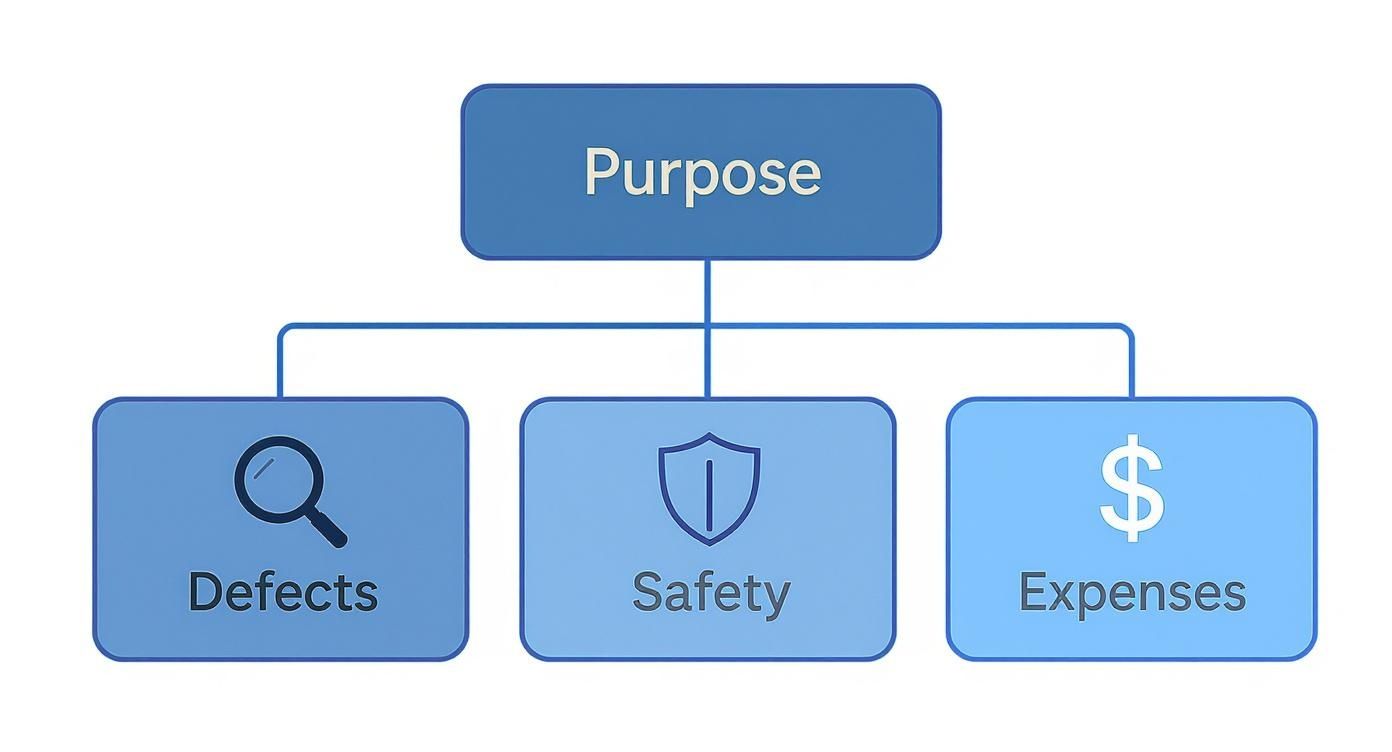
Ultimately, the report's format is designed to translate these three core areas into a clear and actionable document for the homebuyer.
Why Photos and Captions Tell the Real Story
If the executive summary is the highlight reel, then the photos and captions are the undeniable, frame-by-frame proof. Imagine trying to understand a news story without any images—you get the basic facts, sure, but you miss the full impact. Visual evidence is the absolute heart of a clear and effective home inspection report format, turning abstract descriptions into concrete problems you can actually see and understand.
A photograph does so much more than just point out a problem; it tells a story. A good photo freezes a specific moment, creating a permanent record of the home’s condition on the day of the inspection. This visual proof is gold during negotiations because it shifts the conversation from "the inspector said there was an issue" to "here is the evidence of the issue."

The Power of a Well-Crafted Image
Let’s be clear: not all photos are created equal. A blurry, dark picture of some random corner in an attic? That’s useless to you. A high-quality inspection photo, on the other hand, is clear, well-lit, and—most importantly—annotated so there’s zero room for confusion.
Inspectors have a few tricks up their sleeve to make their photos as informative as possible:
- Arrows and Pointers: These immediately draw your eye to the exact point of concern, whether it’s a hairline crack in the foundation or a disconnected HVAC duct.
- Circles and Outlines: By highlighting a specific area, like water staining on a ceiling or a patch of frayed wiring, we can isolate the issue from everything around it.
- Contextual Shots: A great report will often include a wider-angle shot to show you where the problem is, followed by a close-up for all the gritty details. This helps you understand both the "what" and the "where."
These simple additions transform a basic photo into a powerful diagnostic tool, making sure you see exactly what the inspector saw.
Captions: Translating Pictures into Actionable Information
Beneath every good photo is an equally important caption. A vague note like "Leaky pipe" doesn't help anyone. A professional caption delivers the critical details you need to fully grasp the finding. It’s the narrative that gives the visual evidence meaning.
A great caption doesn't just describe what's in the photo; it explains the implication. It answers the crucial "So what?" question, connecting a visual defect to a potential consequence for you as the homeowner.
For instance, just look at the difference between these two captions for the same photo of a rusted pipe:
Vague Caption: "Pipe is rusted."
Effective Caption: "Finding: Active corrosion on the galvanized steel drain pipe under the kitchen sink. Implication: This indicates an ongoing leak, and the pipe has likely reached the end of its service life. Recommendation: A licensed plumber should evaluate and replace this section of pipe to prevent future water damage to the cabinet and subfloor."
See the difference? The second example clearly lays out the problem, its location, the potential risk, and the next step you should take. That level of detail is exactly what you need to make smart decisions. To really see how we put this into practice, it helps to understand how we build our reports from the ground up, an approach we cover in our guide on communicating findings to home buyers.
The Role of Modern Technology
Technology has completely changed the game for visual documentation in our reports. Since the early 2000s, inspections have moved way beyond a simple camera and a flashlight. We now use high-resolution digital cameras, infrared thermal imaging to spot hidden moisture behind walls, and even drones to safely capture crystal-clear images of hard-to-reach roofs.
This integration means the modern home inspection report format is more detailed and accurate than ever, giving buyers an incredibly comprehensive look at their potential investment. This shift to digital, photo-rich reports ensures you get a final product that is clearer, more interactive, and far more useful.
Turning Inspection Findings Into Actionable Steps
Finding a problem in a home inspection report is only half the battle; the real value comes from knowing what to do next. A professional home inspection report format is specifically designed to bridge that exact gap, turning a long list of technical findings into a clear, prioritized plan of action. It's what keeps you from feeling completely overwhelmed.
The report’s structure is like a filter, helping you sort out the true emergencies from the simple weekend projects. It’s the difference between discovering a dangerously faulty electrical panel that needs an electrician right now and noting some gutters that need cleaning out before the next big rain. Without that clarity, every single item can feel like a five-alarm fire.

Decoding the Hierarchy of Issues
A good inspector doesn't just hand you a random list of problems—they classify them. This hierarchy is one of the most powerful features of a modern report. It gets you, your agent, and the seller all speaking the same language when it's time to prioritize repairs and negotiate.
Think of it like a traffic light system for your potential new house. Some reports even use literal color-coding—red for urgent, yellow for caution, and so on—while others use clear, descriptive labels.
Here are some of the common classifications you'll run into:
- Safety Hazard: This is always the top priority. It means a condition exists that could pose a direct risk to you or your family, like exposed live wiring, a gas leak, or a missing guardrail on a high deck. These are non-negotiable items that demand immediate professional attention.
- Major Defect / Significant Issue: This label is reserved for problems that are structurally or financially significant. We're talking about a failing HVAC system, a roof that's clearly at the end of its life, or signs of foundation movement. These issues often become the centerpiece of repair negotiations.
- Repair or Replace: This category points to components that are flat-out broken, not working as intended, or have simply worn out. A water heater that isn't making hot water is a perfect example.
- Monitor / Maintenance Item: This bucket is for routine upkeep tasks or minor issues that don't need immediate action but shouldn't be ignored forever. Things like recaulking windows, trimming tree limbs away from the siding, or cleaning a clogged dryer vent fall in here.
Getting a handle on this system is absolutely key. It allows you to focus your energy where it matters most, making sure that small stuff doesn’t derail the big picture.
A well-structured report will assign an urgency level to each finding, helping everyone understand the priorities. This not only guides the buyer's next steps but also provides a clear basis for any repair requests made to the seller.
Understanding Urgency Levels in Your Report
| Urgency Level | Typical Description | Example Finding | Recommended Action |
|---|---|---|---|
| Immediate Safety Hazard | Poses a direct risk of injury or property damage. | Exposed live electrical wiring in the attic. | Contact a licensed electrician immediately. Do not attempt to fix yourself. |
| Major Concern / Repair | A significant defect that impacts the function or value of the home. | The HVAC system is 25 years old and not producing cold air. | Get an estimate from a qualified HVAC technician for repair or replacement. |
| Recommended Repair | A component is not functioning correctly or is nearing the end of its life. | A bathroom faucet has a persistent drip. | Hire a plumber to repair or replace the faucet to prevent water waste. |
| Maintenance / Monitor | Routine upkeep or a minor issue to keep an eye on. | Gutters are full of leaves and debris. | Clean the gutters before the next heavy rain to ensure proper drainage. |
These classifications are what transform a simple list of defects into a powerful tool for decision-making and negotiation.
From Recommendation to Repair
Once you understand the priority of each finding, the next step is to translate the report's recommendations into real-world action. A quality report won't just say, "The furnace is old." It will recommend that a qualified HVAC technician evaluate the system to determine its remaining lifespan and recommend either service or replacement.
This specific, actionable language is crucial. It gives you a clear directive for who to call and what to ask them. For buyers, this creates a straightforward path for getting repair quotes—essential for negotiating with the seller. For sellers, it provides a roadmap for addressing issues proactively.
The ultimate goal of the report isn't just to find problems—it's to provide a clear, step-by-step guide for resolving them. Each recommendation should feel like a direct instruction, removing the guesswork from the repair process.
After you've sorted through the immediate repairs, modern tools are also changing how homeowners manage these tasks for the long haul. For those interested in planning ahead, resources on AI property maintenance solutions offer a look at how technology can help streamline future upkeep.
Ultimately, a well-structured home inspection report format empowers you by turning a list of findings into a manageable checklist. It helps you see beyond the issues and envision the path to making the house a safe, sound, and well-maintained home. This clarity is what allows you to move forward in your real estate transaction with confidence.
How to Use the Report in Your Real Estate Transaction
Getting your home inspection report isn't the finish line—it's more like the starting gun. A detailed report is a powerful tool, but its real value comes from how you use it. This document is your best asset for negotiating, planning your finances, and making a confident final decision on the property.
Everyone involved in the deal—the buyer, the seller, and the real estate agent—looks at the report from a different angle. The key for all parties is to turn the technical findings into a clear, fact-based plan for what comes next.
For the Home Buyer: Your Negotiation Blueprint
As a buyer, the report is your roadmap for the critical steps ahead. It's the hard evidence you need to go from simply identifying problems to actually resolving them. Your main goal is to use this information to protect your investment and make sure you're truly comfortable with the home's condition.
The first thing to do is sit down with your agent and go over the summary. Zero in on the major defects and safety hazards—these are the big-ticket items that will form the core of your negotiation strategy.
From there, you can put the report into action:
- Build a Repair Request List: Focus on the most significant issues. You don’t need to sweat every minor cosmetic flaw, but major electrical problems, a failing HVAC unit, or a roof on its last legs are absolutely fair game.
- Budget for Future Costs: The report gives you a heads-up on systems that are getting old. If the water heater is 15 years old, you can start putting money aside for its replacement, even if it’s still working for now.
- Make the Go/No-Go Decision: Sometimes, the number or severity of the problems is just too much. The report gives you the power to walk away from a deal if the issues uncovered are more than you're willing to handle.
This process ensures you’re not just buying a house, but making a smart, well-informed financial decision. For a deeper dive into this crucial step, check out our detailed guide on how to negotiate after a home inspection.
For the Seller: A Tool for a Smoother Sale
If you're a seller, getting a home inspection report can feel a little nerve-wracking, but it’s actually an opportunity. Getting a pre-listing inspection, in particular, puts you in the driver's seat. Instead of reacting to a buyer's findings under a tight deadline, you can tackle issues on your own time and budget.
A pre-listing inspection effectively eliminates surprises. It allows sellers to either make repairs beforehand or disclose the issues and price the home accordingly, leading to a more transparent and faster transaction.
This proactive approach helps you avoid last-minute scrambles and puts you in a much stronger negotiating position. When buyers see that known issues have already been fixed, it builds trust and often leads to a cleaner, more appealing offer.
For the Real Estate Agent: Guiding the Conversation
As an agent, your job is to be the calm, objective voice of reason. A well-organized home inspection report format is your best friend here because it provides clear, factual evidence to guide conversations and keep emotions from running high.
You're there to help your client see the big picture. This means translating technical jargon into plain English, helping them prioritize what to ask for based on importance, and steering a fair negotiation. By keeping the focus on the facts presented in the report, you can guide the transaction to a successful close that truly protects your client's interests.
Common Questions About Home Inspection Reports
Even after you've gone through a home inspection report page by page, it's completely normal to have a few questions lingering. After all, it's a ton of information to digest. Let's tackle some of the most common points of confusion I hear from clients.
Think of this as a quick FAQ to clear up any final uncertainties. My goal is to make sure buyers, sellers, and agents can all move forward with total confidence.
Inspection vs. Appraisal: What Is the Difference?
This is a big one. People often use these terms interchangeably, but they are worlds apart and serve totally different functions. A home inspection is a deep dive into the physical condition of the property—its bones, its systems, its overall health. The goal is to find defects and safety issues for you, the buyer.
An appraisal, on the other hand, is all about the money. It's an assessment of the property's market value, and it's done for the lender. To put it simply: the inspector works for you, while the appraiser works for the bank to make sure its investment is sound.
Does a Bad Report Mean I Should Not Buy the House?
Absolutely not. Let me be clear: no home is perfect. I’ve been doing this for a long time, and I can tell you that every single report will turn up something. A "bad" report isn't a red flag telling you to run away; it's an incredibly valuable roadmap.
The home inspection report is a starting point for negotiation, not an automatic deal-breaker. It empowers you to request repairs, ask for a credit, or simply budget for future costs with your eyes wide open.
The only time you might genuinely reconsider are cases with major structural defects or severe safety hazards. Most findings are completely manageable.
How Long Is an Inspection Report Valid?
A home inspection report is a snapshot in time—it reflects the condition of the house on the exact day and time it was conducted. That's it. A home's condition can change in a heartbeat due to a bad storm, a sudden system failure, or even just normal wear and tear.
If your real estate deal gets delayed for several months, getting a follow-up inspection is a smart move. It's a small investment to ensure nothing significant has changed since the first look.
At Upchurch Inspection, we provide the clarity you need to make one of life's biggest decisions with confidence. Our detailed, easy-to-understand reports give you a complete picture of your potential property, empowering you with the knowledge to negotiate effectively and plan for the future. Schedule your Memphis or West Tennessee inspection today by visiting us at https://upchurchinspection.com.