
Floors don’t have to be perfectly level to be perfectly fine.
That’s the part people miss.
What matters isn’t whether a floor is flat. It’s whether it’s moving, continuing to move, or telling a story that hasn’t finished yet.
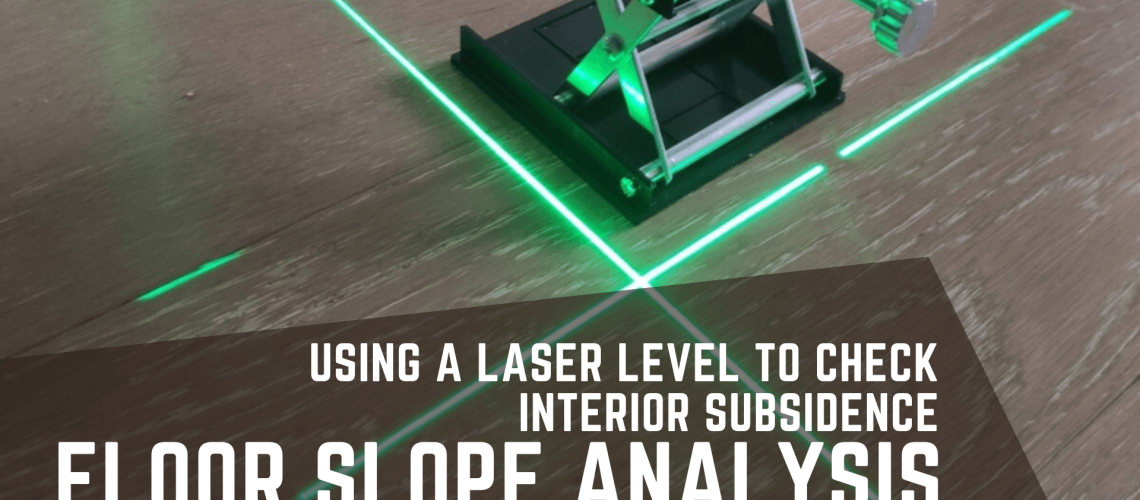
That’s why I don’t rely on eyeballing or the old marble-on-the-floor trick. I use a laser. Floors don’t argue with lasers.
Why “It Feels Sloped” Isn’t Enough
Human perception is unreliable. Furniture tricks your eye. Long hallways exaggerate angles. Older homes settle unevenly and still perform just fine.
I’ve walked into houses where buyers swore the floor was sinking — and the measurements said otherwise. I’ve also been in homes that felt normal until the laser said, “Nope. Something’s off.”
Feelings don’t diagnose subsidence. Numbers do.
What I’m Actually Measuring
When I check floor slope, I’m looking for:
- Consistent plane vs. directional drop
- Sudden elevation changes
- Slopes that worsen across rooms
- Patterns that line up with foundation layout
A gradual slope across an entire house often points to age or original construction. A sharp dip in one area is a different conversation entirely.
A Real Inspection Where the Laser Changed the Tone
I inspected a home near Selmer where the buyer said the dining room floor felt “a little soft.”
Nothing obvious at first glance. No cracks screaming for attention.
Laser told a different story.
There was a measurable drop over a short span, isolated to one corner of the room. Crawlspace inspection confirmed a settled pier that had lost bearing due to moisture-softened soil.
That wasn’t cosmetic slope. That was active subsidence.
Why Direction Matters More Than Degree
A half-inch slope over twenty feet is one thing.
A half-inch drop over four feet is another.
I’m watching for:
- Changes that stop abruptly
- Slopes that reverse direction
- Low points that collect furniture movement
- Elevation loss that lines up with exterior drainage
Subsidence leaves fingerprints if you know how to look.
Older Homes vs. Newer Homes
Older homes get more grace — but not a free pass.
In pre-1960 construction around Jackson, I often see long-term settlement that stabilized decades ago. Laser readings show slope, but not progression.
In newer homes, slope is more concerning. It usually means:
- Inadequate compaction
- Poor drainage
- Improper pier placement
- Soil movement that hasn’t finished
New houses shouldn’t still be finding their footing.
Why I Don’t Rely on Cracks Alone
Cracks lag behind movement.
By the time drywall shows it, the floor already moved. Laser measurements catch problems before finishes start complaining.
That’s why floor slope analysis often explains:
- Why doors stick
- Why cabinets pulled apart
- Why tile cracked
- Why patch jobs keep reappearing
The floor moved first.
What the Laser Can’t Tell Me
Important note: a laser doesn’t diagnose the cause by itself.
It tells me:
- Where movement exists
- How much
- In what direction
The “why” comes from correlating that data with:
- Foundation type
- Crawlspace or basement conditions
- Exterior grading
- Moisture patterns
Data without context is just numbers.
What Buyers Should Understand
Not every sloped floor is a problem.
But every unexplained slope deserves an explanation.
Sometimes the answer is:
- “Old house, stable condition”
Sometimes it’s:
- “This needs further evaluation”
The inspection is where that distinction gets made — not after closing.
The Inspector’s Bottom Line
Floors don’t slope randomly.
They move because something underneath changed — or is still changing.
Using a laser takes opinion out of it. It replaces “I think” with “Here’s what’s happening.” And when you’re deciding whether a house is settling, sinking, or simply aging gracefully, that difference matters more than anything else.