
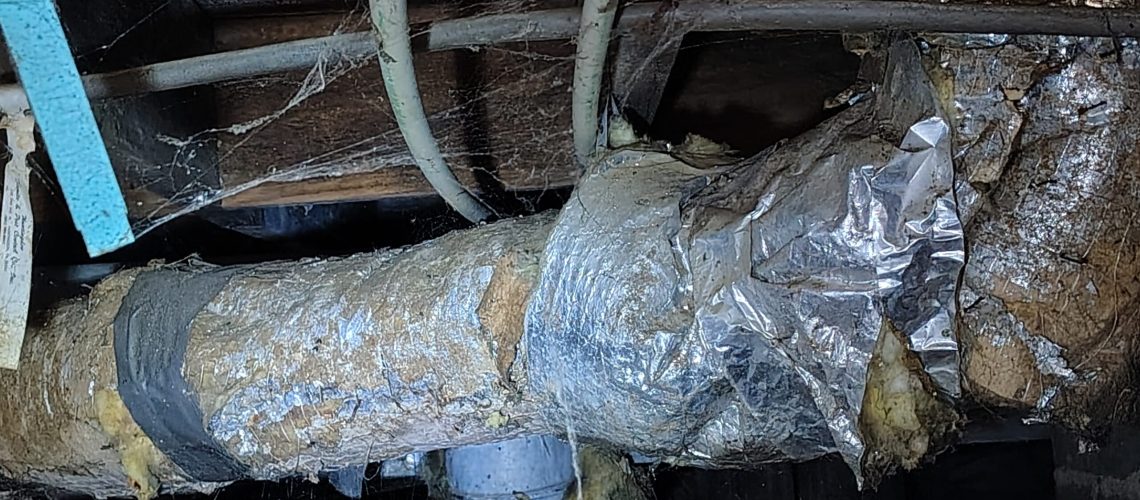
If a home has comfort issues, high utility bills, or rooms that never seem to match the thermostat, I almost always end up in the crawlspace.
That’s where the money usually leaks out.
I’ve lost count of how many times I’ve told a buyer, “Your HVAC isn’t the problem — your ductwork is.”
Why Ductwork Gets Ignored
Most homeowners never see their duct system. It’s hidden, dirty, and uncomfortable to crawl through, so it gets forgotten.
Meanwhile:
- Conditioned air is spilling into crawlspaces
- Return air is pulling moisture and odors
- The system runs longer than it should
- Energy bills climb year after year
All without anyone noticing.
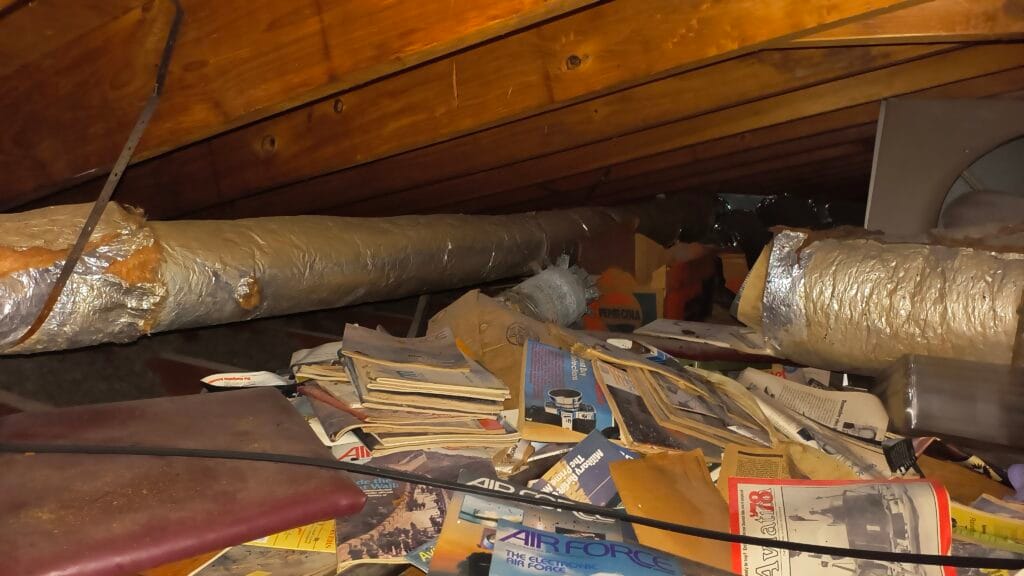
A Real Inspection Where the Crawlspace Told the Story
I inspected a home in Mt. Juliet where the buyer complained the upstairs was always hot in summer. The AC had been replaced recently, but nothing improved.
Crawled the space and immediately saw the issue.
Multiple supply ducts were completely disconnected — just blowing cold air straight into the crawlspace. One flex run had collapsed on itself, and another had been chewed open by rodents.
That homeowner wasn’t cooling bedrooms. They were cooling dirt.
What I Commonly Find Under Homes
When I inspect ductwork, these problems show up again and again:
- Disconnected or poorly taped joints
- Crushed or kinked flex duct
- Missing insulation
- Ducts lying directly on damp soil
- Return leaks pulling in crawlspace air
I’ve even seen duct runs terminate six feet short of the register boot.
Why Leaky Ducts Cost More Than You Think
Every leak forces the system to work harder.
That leads to:
- Longer run times
- Increased wear on blowers and compressors
- Poor humidity control
- Hot and cold spots throughout the house
In Jackson, TN, I inspected a 1970s split-level where nearly 30% of the airflow was lost before it ever reached the living space. The HVAC unit was fine — the duct system wasn’t.
Why Newer Homes Aren’t Immune
New construction doesn’t mean good ductwork.
I inspected a new build in Spring Hill where ducts were installed before the crawlspace encapsulation. Afterward, no one went back to reseal or support them.
The system technically “worked,” but efficiency was terrible from day one.
How I Evaluate Duct Systems
I don’t just glance at them.
I look for:
- Proper support and hangers
- Airtight connections
- Insulation coverage
- Signs of condensation or mold
- Airflow consistency at registers
If the ducts are accessible, they get inspected — period.
What Buyers Should Know
If your inspection report mentions duct issues, that’s not cosmetic.
It affects:
- Comfort
- Indoor air quality
- Energy costs
- System lifespan
Fixing ducts often gives better results than replacing the HVAC equipment itself.
The Inspector’s Bottom Line
You can install the best HVAC system money can buy and still be uncomfortable if the ductwork is a mess.
When ducts leak, your crawlspace gets climate control and your living space gets leftovers.
That’s why I always go where the air goes — even when it means getting dirty to find the real problem.