
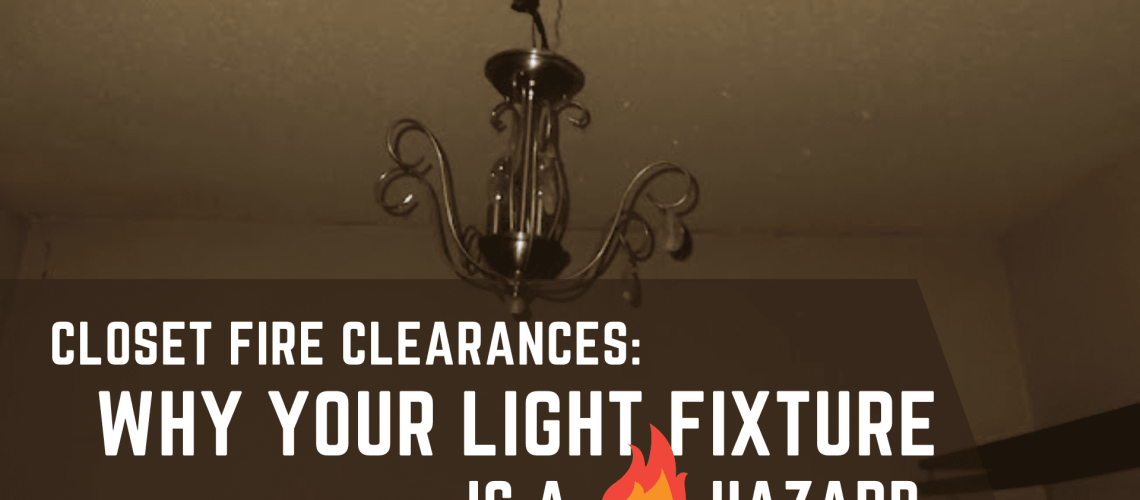
Closets look harmless. Quiet. Boring. Out of the way.
Which is exactly why fire hazards love them.
I’ve lost count of how many times I’ve opened a closet door and immediately taken a step back. Not because something was on fire — but because if conditions lined up just right, it absolutely could be.
Why Closets Are a Perfect Storm
Closets combine three things fire doesn’t need much encouragement from:
- Confined space
- Combustible materials
- Heat sources placed too close
Add clothes, cardboard boxes, blankets, or plastic storage bins, and you’ve created a low-ventilation ignition zone that nobody thinks about until it’s too late.
The Light Fixture Problem
The biggest offender is almost always the light.
Older closets — and plenty of newer ones too — still have:
- Bare incandescent bulbs
- Bulbs with broken or missing globes
- Fixtures mounted too close to shelves
- Pull-chain lights surrounded by clothing
Incandescent bulbs get hot. Not warm. Hot.
Close enough to fabric, that heat doesn’t need a spark.
A Real Inspection Where the Risk Was Obvious
I inspected a home near Oakfield where the master closet had a bare bulb hanging inches from winter coats.
No cover. No protection. Just fabric brushing the glass.
Nothing had happened yet — but it didn’t need much imagination to see how it could.
That’s not hypothetical risk. That’s physics waiting patiently.
Clearance Isn’t Optional
There are minimum clearance expectations for a reason.
Generally:
- Enclosed fixtures are required in closets
- Bulbs must be shielded
- Fixtures must be set back from shelving and storage areas
- Surface-mounted fixtures are preferred over hanging ones
If clothing can touch the bulb, it’s wrong. Full stop.
LED Doesn’t Automatically Fix It
This is where people get tripped up.
Yes, LEDs run cooler.
No, that doesn’t mean clearance stops mattering.
I still see:
- LED bulbs installed in old open fixtures
- Improper fixtures assumed safe because “it’s LED now”
- Plastic housings that aren’t rated for closet use
Fixture type matters just as much as bulb type.
The Closet Ceiling Trap
Another common issue: ceiling height.
In shallow closets, the light ends up right where storage naturally stacks up. Boxes creep closer over time. Someone adds a shelf. Then another.
I reviewed photos from one of our inspectors near Henderson where a closet light was buried behind stacked shoe boxes. The homeowner didn’t even realize the bulb was there anymore.
That’s how fires start quietly.
What I Actually Look For
When I inspect closets, I’m checking:
- Fixture type
- Bulb exposure
- Distance to shelving
- Evidence of heat damage
- Scorching or discoloration
- Signs items have contacted the fixture
I don’t need flames to call it out. Proximity alone is enough.
Why This Gets Dismissed Too Easily
Closet fire hazards don’t feel urgent because they’re not dramatic.
They don’t leak. They don’t trip breakers. They don’t make noise.
They just sit there — surrounded by fuel — waiting for time and heat to do what they always do.
What Buyers Should Take Away
This is usually an easy fix:
- Swap fixtures
- Install enclosed, closet-rated lights
- Relocate shelving
- Replace outdated bulbs
Cheap changes. High payoff.
Ignoring it because “nothing’s happened yet” isn’t worth the risk.
The Inspector’s Bottom Line
Closets don’t need much to become dangerous.
If a light fixture can touch clothing — or even come close — it’s a problem whether it’s burned before or not.
Fire safety isn’t about reacting to damage. It’s about removing conditions that make damage possible.
That’s why I always open closet doors.