
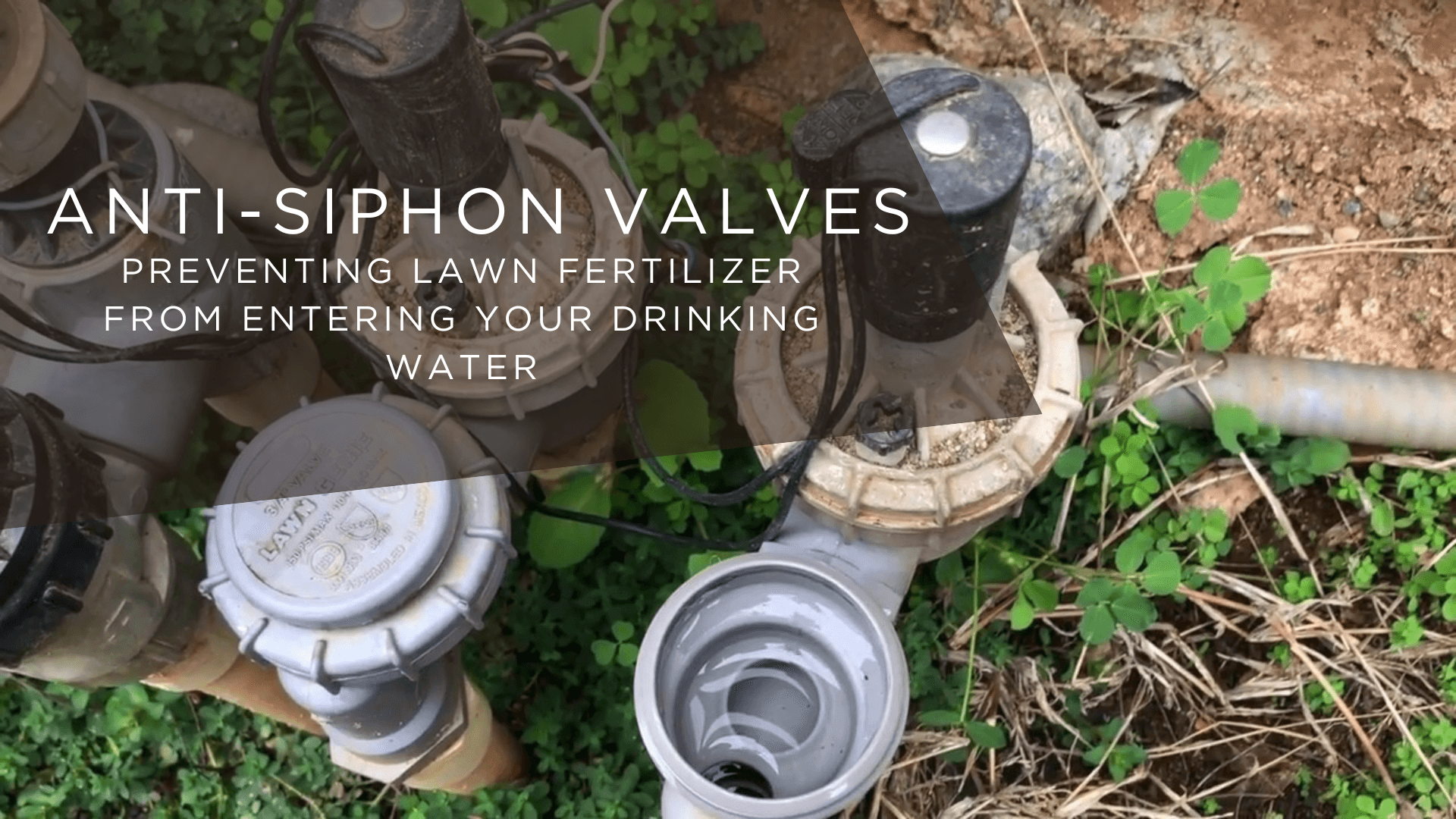
This is one of those components nobody thinks about until it’s missing — and then it’s a problem you can’t unsee.
Anti-siphon valves aren’t flashy. They don’t make noise. They don’t leak when they fail. Most of the time, they just quietly do their job.
When they’re not there, though, the risk is bigger than most homeowners realize.
What an Anti-Siphon Valve Actually Does
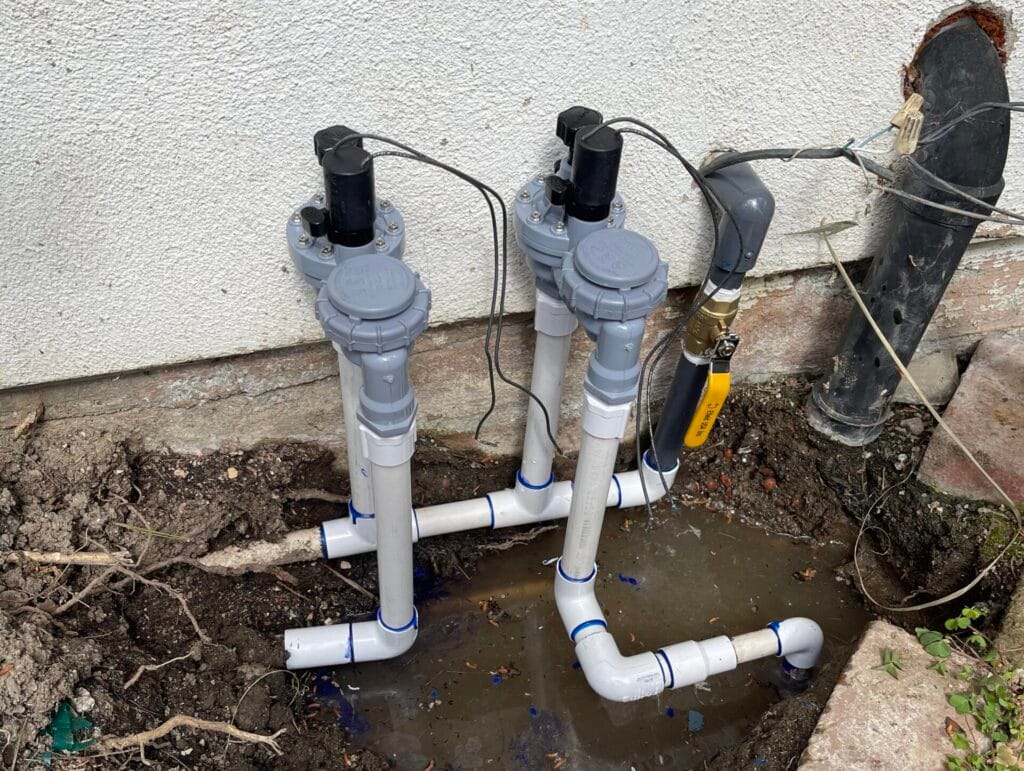
An anti-siphon valve is a type of backflow prevention device. Its entire job is to stop contaminated water from flowing backward into your clean water supply.
That matters because irrigation systems are connected directly to:
- Fertilizers
- Herbicides
- Pesticides
- Soil bacteria
- Standing water
If pressure drops in the municipal supply — and it absolutely can — water doesn’t politely stay where it belongs.
It moves backward.
How Backflow Actually Happens
People assume backflow is rare. It isn’t.
It can occur during:
- Water main breaks
- Fire department usage
- Nearby construction
- Sudden high demand in the system
When pressure drops, untreated water from irrigation lines can be siphoned back into the potable supply.
That’s not theoretical. That’s plumbing physics.
A Real Inspection Where the Risk Was Invisible
We inspected a home in the Clarksville area with a well-maintained irrigation system. Clean heads. Good coverage. Everything worked.
But there was no anti-siphon device anywhere on the supply line.
That meant the same water spraying fertilizer across the lawn had a direct path back toward the home’s drinking water under the right conditions.
Nothing had gone wrong yet — but the protection wasn’t there.
Why Hose Bibs Matter Too
This isn’t just about in-ground irrigation.
I still find exterior hose bibs without vacuum breakers attached, especially on older homes or after plumbing repairs.
That matters because:
- Hoses get left submerged in buckets
- Hoses sit in puddles
- Hoses connect to sprayers with chemicals
Without protection, that contamination can move backward through the system.
The “But I’ve Never Had a Problem” Trap
I hear this all the time:
“We’ve lived here for years and never had an issue.”
Backflow events don’t announce themselves.
You don’t smell them. You don’t taste them. You don’t get a warning label on your faucet.
The problem isn’t that it hasn’t happened yet — it’s that you wouldn’t know if it did.
Where I See This Missing Most Often
Missing or improper anti-siphon protection shows up a lot in:
- Older homes with added irrigation
- DIY sprinkler installs
- Systems modified over time
- Properties with multiple hose connections
- Homes in expanding suburbs
I reviewed inspection notes from one of our inspectors in the Little Rock area where an irrigation system had been tapped into a hose bib with zero backflow protection of any kind.
Simple install. Big risk.
What I Actually Look For
When I inspect exterior plumbing, I’m checking for:
- Anti-siphon valves on irrigation supply lines
- Vacuum breakers on hose bibs
- Proper installation height and orientation
- Signs of tampering or removal
- Freeze damage or bypassing
If it’s missing, it gets documented clearly.
Why This Is Usually an Easy Fix
The good news: correcting this is usually straightforward.
Often it’s:
- Adding a vacuum breaker
- Installing a proper anti-siphon valve
- Correcting improper connections
Small upgrade. Major protection.
What Buyers Should Understand
Backflow protection isn’t about convenience or code trivia.
It’s about protecting the one system in your house you assume is safe without thinking — your drinking water.
If something can siphon backward, it eventually will.
The Inspector’s Bottom Line
Anti-siphon valves exist because pressure changes happen, people forget hoses in buckets, and irrigation water is not clean water.
When that protection is missing, the risk isn’t visible — but it’s real.
Clean water is something you only notice once it’s compromised. That’s why I take missing backflow protection seriously, even when everything else looks fine.