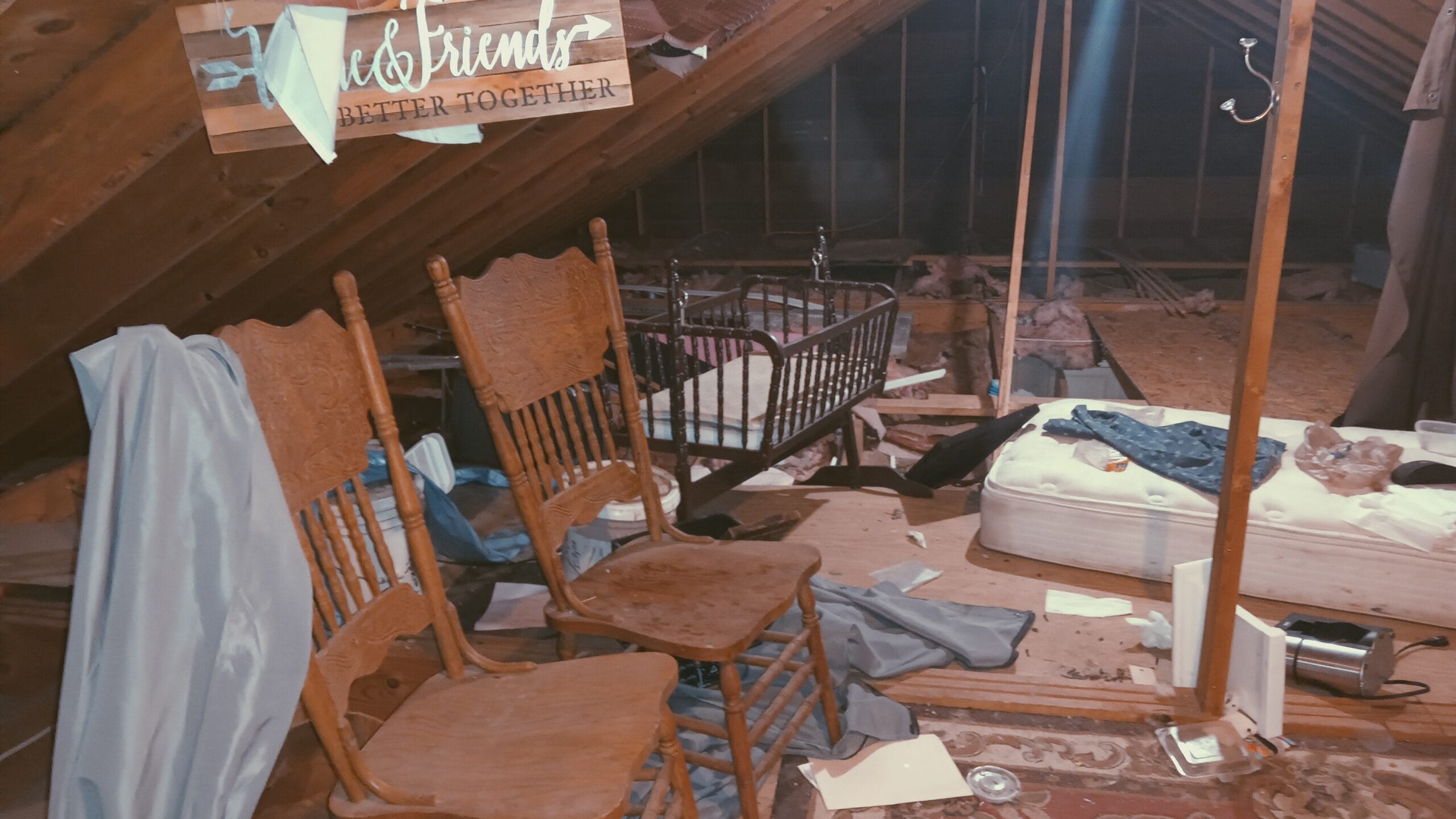
Attics aren’t dangerous because they’re spooky.
They’re dangerous because people treat them like storage closets with insulation.
Every inspection, I see the same thing: a scuttle hole shoved in a corner, a pull-down ladder blocked by boxes, or a narrow catwalk that disappears five feet in. And then someone says, “The attic’s up there if you want to look.”
I do want to look. I just need to be able to do it safely.
Why Attic Access Actually Matters
If I can’t reach the attic, I can’t evaluate:
- Roof framing
- Insulation depth and coverage
- Venting
- Electrical junctions
- Signs of roof leaks
- Fire hazards
- Bathroom fan terminations
That’s not nitpicking. That’s half the house.
An attic inspection isn’t optional. It’s foundational.
What I Commonly Walk Into
Here’s the usual setup:
- Pull-down ladder partially installed or loose
- Stored items stacked directly under the opening
- No clear landing area
- No walkway beyond the opening
- Insulation covering joists with no safe path
I’ve opened attic accesses in homes near Alamo where the first step past the opening was straight onto drywall. One wrong move and you’re in the living room.
Why “I’ve Been Up There Before” Doesn’t Help
I hear this a lot:
“I go up there all the time.”
That’s great — you know where to step.
I don’t.
Inspectors don’t get a practice run. We’re evaluating unfamiliar spaces, often with limited visibility, exposed nails, low clearances, and truss webs at eye level.
A safe inspection requires a clear, intentional path — not memory and luck.
The Hidden Hazards People Forget
Attics hide more than insulation.
I regularly encounter:
- Open electrical junction boxes
- Improperly supported wiring
- Loose ductwork
- Sharp truss plates
- Roofing nails protruding through the deck
- Weak or damaged framing members
Without a safe path, those hazards don’t disappear. They just go undocumented.
A Real Example Where Access Changed the Findings
We inspected a home outside Humboldt where attic access technically existed — but there was no walkway past the opening.
Once access was improved, our inspector documented:
- Improper bath fan venting into the attic
- Compressed insulation
- Early signs of roof leakage near a valley
- Exposed splices buried under insulation
None of that was visible from the hatch.
Why Inspectors Have to Draw the Line
This part matters.
If attic access is unsafe or obstructed, the inspection becomes limited by conditions. That gets documented. Period.
It’s not refusal. It’s reality.
No inspection is worth a fall, an injury, or punching through a ceiling.
What Proper Attic Access Looks Like
A proper setup usually includes:
- A stable ladder or hatch
- Clear space below the opening
- Adequate lighting or visibility
- At least a short walkway or platform
- No loose boards or hidden drops
It doesn’t need to be perfect. It just needs to be intentional.
What Buyers Should Pay Attention To
Limited attic access isn’t just an inspection inconvenience.
It can mean:
- Deferred maintenance
- Hidden defects
- DIY work that was never reviewed
- Future access problems for contractors
If no one can safely get up there, problems tend to grow quietly.
The Inspector’s Bottom Line
Attics don’t need to be comfortable. They need to be accessible.
A house can look great from below and still be hiding its biggest issues above the ceiling. Clear access isn’t about making my job easier — it’s about making the inspection complete.
If I can’t safely reach it, I can’t responsibly evaluate it. And that’s something buyers deserve to know.