
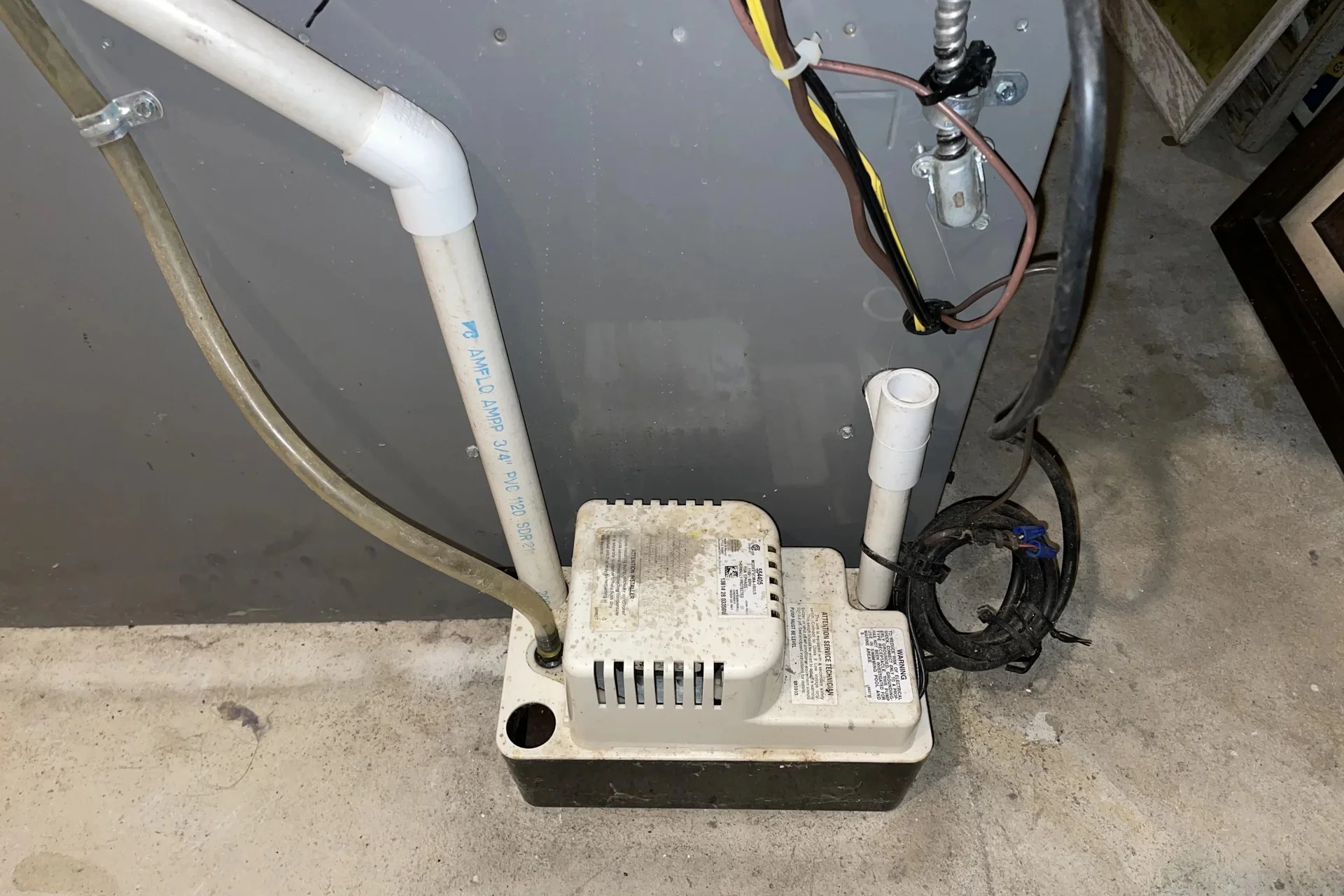
If I hear gurgling, clicking, or a faint buzzing coming from a mechanical room, I already know where I’m headed.
Condensate pumps are small, cheap, and easy to ignore — until they fail and dump water where it doesn’t belong.
What a Condensate Pump Actually Does
Anytime an air handler or high-efficiency furnace can’t drain by gravity, a condensate pump steps in.
Its job is simple:
- Collect condensate water
- Pump it up and out to a drain line
- Shut the system down if it can’t keep up
When it doesn’t do those things reliably, problems show up fast.
A Real Inspection Where the Noise Was the Warning
I inspected a home in Cordova where the buyer mentioned a “weird aquarium noise” near the furnace.
The pump reservoir was half full, float switch cycling constantly, and the discharge line was partially clogged. Every few minutes, the pump would struggle, click, and barely push water out.
That pump was on borrowed time — and so was the ceiling below it.
Why Pumps Fail So Often
Condensate pumps fail for boring reasons:
- Algae buildup
- Sludge accumulation
- Failed float switches
- Burned-out motors
- Kinked or blocked discharge lines
I’ve pulled pump covers off and found them packed with black slime. No maintenance. No cleaning. Just waiting to overflow.
The Gurgling Sound Isn’t Normal
A healthy pump:
- Runs briefly
- Sounds smooth
- Shuts off cleanly
The sounds that raise flags for me:
- Continuous humming
- Rapid clicking
- Gurgling or bubbling
- Long run times without discharge
In Germantown, I inspected a system where the pump ran constantly but never emptied. The homeowner thought it was “just how it sounded.”
It wasn’t.
Why Overflow Protection Matters
Many pumps include a safety shutoff wired into the HVAC system. When the pump fails, the system shuts down instead of flooding the house.
I’ve seen:
- Safety wires disconnected
- Pumps replaced without rewiring the shutoff
- Older pumps with no protection at all
In one Lakeland inspection, the pump had failed previously and been replaced — but the safety switch was never reconnected. The next failure would’ve meant water everywhere.
How I Inspect Condensate Pumps
I look for:
- Proper pump sizing
- Clean reservoir
- Secure discharge line
- Functional check valve
- Safety shutoff wiring
- Signs of past overflow or staining
If the pump is buried behind shelving or drywall, that gets noted. Pumps need access because they will need attention.
What Buyers Should Know
Condensate pumps aren’t expensive — until they fail quietly.
When they do, you’re looking at:
- Ceiling damage
- Flooring damage
- Mold growth
- Electrical hazards
All because a small pump couldn’t move water fast enough.
The Inspector’s Bottom Line
If your mechanical room is talking to you, listen.
Gurgling, clicking, and constant humming are warning signs, not background noise. Condensate pumps don’t fail dramatically — they fail slowly, then suddenly make a mess.
That’s why I pay attention to the little stuff. It’s usually what causes the biggest damage.