
The Short Answer (Here’s the Risk)
Yes—many “repurposed” warehouses in Cape Girardeau work fine as empty shells but fail the moment you put real equipment inside them.
I see this most often when old retail or light-industrial buildings are converted into logistics, storage, or light manufacturing spaces without anyone asking a critical question:
Can the building actually handle the load you’re about to put on it?
In Southeast Missouri, that question gets skipped a lot.
Why Cape Girardeau Is Seeing This Trend
In and around Cape Girardeau and nearby towns like Jackson, older big-box retail and warehouse buildings are being reused because:
- Land is cheaper than metro markets
- Buildings already exist
- Zoning is often favorable
- Speed matters more than suitability
The problem is that many of these buildings were designed for:
- Retail foot traffic
- Light storage
- Seasonal use
Not for:
- Forklifts
- Racking systems
- Concentrated equipment loads
- 24/7 operations
Floor Load Capacity: Where Deals Go Sideways
This is the failure point nobody wants to talk about.
Wes-ism:
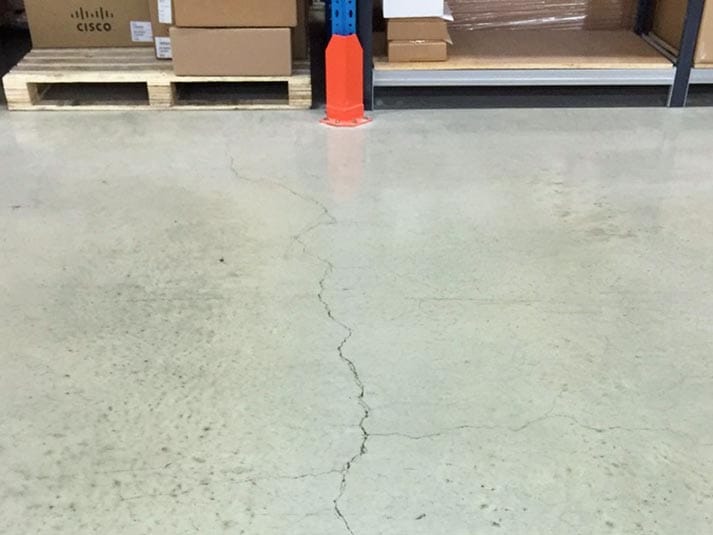
If a warehouse floor looks flat but has hairline map cracking everywhere, I assume it was never meant to carry point loads — until proven otherwise.
Common issues I see during industrial inspections:
- Slabs poured thin by modern standards
- No documentation of load ratings
- Unreinforced or lightly reinforced concrete
- Differential cracking where equipment was later added
A “flat” floor is not the same thing as a strong floor.
Once racking and forklifts go in, slab repairs get expensive fast.
Power Problems: “We’ll Just Upgrade It”
That sentence usually means the buyer hasn’t priced it yet.
Older industrial buildings in Cape Girardeau often have:
- Limited or outdated three-phase power
- Panels sized for previous tenants
- Transformers that won’t support expansion
- Long lead times for utility upgrades
And here’s the kicker:
Power upgrades can delay operations months, not weeks.
Roof Structure: The Silent Liability
Repurposed buildings often get new equipment added to old roofs:
- HVAC units
- Make-up air units
- Exhaust systems
- Solar prep
But many older roofs were never designed for:
- Additional dead load
- Concentrated equipment weight
- Repeated service traffic
I’ve inspected warehouses where the roof membrane looked new — and the structure beneath it was already overstressed.
Why Standard Inspections Miss This Entirely
A residential-style inspection focuses on condition.
An industrial inspection focuses on use-case compatibility.
Those are not the same thing.
What we evaluate differently:
- Slab performance relative to intended equipment
- Structural framing relative to added loads
- Electrical capacity relative to operational plans
- Roof structure relative to mechanical expansion
This is why CCPIA-style inspections matter.
The Investor Mistake I See Over and Over
Buyers assume:
“If it’s standing, it’s usable.”
Industrial buildings don’t fail immediately.
They fail after you move in and start operating.
At that point:
- Repairs are disruptive
- Leases are binding
- Equipment is already purchased
That’s the worst time to find out the building can’t keep up.
The Next Step (Before You Sign or Retrofit)
If you’re buying or leasing a repurposed warehouse in Southeast Missouri:
- Don’t assume retail = industrial
- Don’t rely on visual condition alone
- Don’t skip load and capacity discussions
Our findings integrate into your ISN-powered commercial report, giving you:
- Clear documentation of use-case risks
- Support for further engineering review when warranted
- Leverage before commitments are locked in
It’s cheaper to ask hard questions than to reinforce concrete later.
Bottom Line
Repurposed warehouses don’t fail because they’re old.
They fail because nobody asked what they were about to be used for.
In Cape Girardeau, that question separates smart investments from expensive lessons.